wayground logo

Free Printable Worksheets

Font size

S
M
L
XL
Worksheets

8 AEP Mr Coumbe The Rock Cycle

Total questions: 90

Worksheet time: 53mins

Name
Class
Date
1.
Which type of rock results from melting and cooling of magma?
a)
Igneous
b)
Metamorphic
c)
Sedimentary
d)
Extrusive
2.
Which type of rock forms from extreme heat and pressure?
a)
Igneous
b)
Sedimentary
c)
Organic
d)
Metamorphic
3.
A metamorphic rock changes into an igneous rock by what two processes?
a)
Melting and cooling
b)
Extreme heat and pressure
c)
Compaction and cementation
d)
Weathering and erosion
4.
Wind, water, and ice breaking down rock is called
a)
Erosion
b)
Deposition
c)
Compaction
d)
Weathering
5.
True/False: Igneous rocks can only turn into metamorphic rocks.
a)
True
b)
False
6.
The process in which dissolved minerals crystallize and glue sediment together.
a)
compaction
b)
deposition
c)
organic rock
d)
cementation
7.
When sediments are pressed together tightly, this is called ____________.
a)
Compaction
b)
Cementation
c)
Weathering
d)
Erosion
8.
This rock was found near the mouth of a volcano. What type of rock is this?
a)
Sedimentary
b)
Igneous
c)
Metamorphic
9.
This rock was formed by smaller pieces of rock that settled at the bottom of a lake millions of years ago. What type of rock is this?
a)
Sedimentary
b)
Igneous
c)
Metamorphic
10.
This rock started as lava that cooled and then was heated and put under pressure over time. What type of rock is this?
a)
Sedimentar
b)
Igneous
c)
Metamorphic
11.
This rock started as molten magma. What type of rock is this?
a)
Sedimentary
b)
Igneous
c)
Metamorphic
12.
This rock is made from tiny pieces of other rocks that settled to the bottom of a valley millions of years ago. What type of rock is this?
a)
Sedimentary
b)
Igneous
c)
Metamorphic
13.

This rock was molten magma that slowly cooled under the ground. What type of rock is this?

a)

Sedimentary

b)

Igneous

c)

Metamorphic

14.
This rock cooled on the outside of a volcano and contained air bubbles when it was forming. What type of rock is this?
a)
Sedimentary
b)
Igneous
c)
Metamorphic
15.
After lots of time, pressure, and heat, you get this kind of rock. What type of rock is this?
a)
Sedimentary
b)
Igneous
c)
Metamorphic
16.
Each rock type can follow only one pathway of the rock cycle.
a)
True
b)
False
17.
Fossils are often found in ____________ because it is formed from the remains of once living things.
a)
metamorphic
b)
magma
c)
igneous
d)
sedimentary
18.
This rock was formed by lots of fossils that settled on top of each other over time. What type of rock is this?
a)
Sedimentary
b)
Igneous
c)
Metamorphic
19.
This rock was formed when magma cooled very slowly inside the Earth. What specific type of rock is it?
a)
Intrusive Igneous Rock
b)
Extrusive Igneous Rock
c)
Foliated Metamorphic Rock
d)
Clastic Sedimentary Rock
20.
This rock formed when lava cooled very quickly on Earth's surface. What specific type of rock is it?
a)
Extrusive Igneous Rock
b)
Intrusive Igneous Rock
c)
Non-Foliated Metamorphic Rock
d)
Biochemical Sedimentary Rock
21.
When you watch a volcano erupt molten rock, you are seeing _____
a)
Lava
b)
Magma
c)
Mineral Crystals
d)
Igneous Rocks
22.
When you are describing the sizes of the mineral grains in a rock, you are detailing the rock's _____
a)
Texture
b)
Composition
c)
Sedimentation
d)
Igneous-ness
23.
The individual particles that make up a rock are known as _____
a)
Grains
b)
Textures
c)
Metamorphs
d)
Lava
24.
Two ways to describe types of igneous rocks are _____
a)
Extrusive and Intrusive
b)
Foliated and Non-Foliated
c)
Clastic and Biochemical
d)
Black and Gray
25.
What process is used to form sedimentary rocks?
a)
Lava cools and hardens to form a rock.
b)
Weathering, Erosion, Deposition, Compaction, Cementation
c)
Extreme heat and pressure from inside the Earth turn rocks into new rocks.
d)
Magma trapped under the Earth's surface cools and solidifies.
26.
What is deposition?
a)
Dropping off sediment
b)
Movement of sediment
c)
Breaking down of sediment 
27.
The process when rocks break into smaller pieces due to exposure to natural elements is called
a)
erosion
b)
weathering
c)
sediments
d)
deposition
28.
The movement of weathered material (sediment) is called?
a)
weathering
b)
erosion
c)
deposition
d)
cementation
29.
Sedimentary rock that is made of fragments of rocks cemented together by a mineral are called...
a)
chemical
b)
organic
c)
clastic
30.
Sedimentary rock made from fossils are called...
a)
organic
b)
chemical
c)
stratified
31.
An igneous rock can become ______.
a)
metamorphic
b)
sedimentary
c)
igneous
d)
all of these
32.
Compacting and cementing of sediments can also be called
a)
stratification
b)
sedimentariation
c)
lithification
d)
metamorphism
33.
Which type of metamorphic rock has minerals in bands or stripes?
a)
Nonfoliated
b)
Coarse grained
c)
Fine grained
d)
Foliated
34.
What type of texture does a SLOWLY cooling, intrusive igneous rock have?
a)
Foliated
b)
Nonfoliated
c)
Coarse grained
d)
Fine grained
35.
Texture is determined by
a)
the chemicals in a rock
b)
the color of a rock
c)
the bumpiness of a rock
d)
the size and shape of  the rock's mineral grains
36.
When grains of a metamorphic rock are arranged randomly.
a)
foliated
b)
non-foliated
c)
chemical
d)
rock cycle
37.
What is the most common Extrusive igneous rock?
a)
Granite
b)
Basalt
c)
Pumice
d)
Scorie
38.
What is the most common Intrusive Igneous rock?
a)
Basalt
b)
Gabbro
c)
Diorite
d)
Granite
39.
If a rock is formed from lava, what will the grains be?
a)
coarse
b)
fine
40.
How do Intrusive Igneous rocks cool?
a)
quickly
b)
slowly
c)
really fast
41.
How is Pumice used?
a)
countertops
b)
skin abrasive
c)
gravel
d)
weapons
42.
Where can we find Basalt?
a)
mountains
b)
valleys
c)
deserts
d)
ocean floor
43.
which of the following igneous rocks is this? 
a)
Granite
b)
Pumice
c)
Basalt
44.
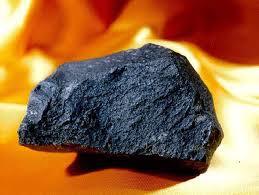
which of the following igneous rocks is this? 
a)
Obsidian 
b)
Granite
c)
Scoria
45.
which of the following igneous rocks is this? 
a)
Rhyolite
b)
Obsidian
c)
Basalt
46.
which of the following igneous rocks is this? 
a)
Scoria
b)
Andesite
c)
Obsidian 
47.
which of the following igneous rocks is this? 
a)
Pumice
b)
Diorite
c)
Granite
48.
Which of the following best describes the conditions of contact metamorphism?
a)
Depths are fairly shallow, but temperatures and pressures are so high that the rocks begin to partially melt
b)
Pressures are fairly low, the rock is in the upper part of the crust, and heat is supplied from a nearby magma body
c)
Heat is generated by shearing and mechanical movements along faults
d)
Pressures are very high, the rock is deeply buried, and temperatures raised by the Earth's internal heat
49.

_____ forms from the metamorphism of limestone or dolostone

a)

Marble

b)

Quartzite

c)

Gneiss

d)

Schist

50.
_____ is characterized by the segregation of light and dark-colored minerals into thin layers or bands
a)
Granitic gneiss
b)
Garnet hornfels
c)
Slate
d)
Quartzite
51.
_____ is typically formed by metamorphism of a sandstone.
a)
Amphibolite
b)
Quartzite
c)
Slate
d)
Marble
52.
What is the major source of heat for contact metamorphism?
a)
Heat from a nearby magma body
b)
Heat from the spontaneous decomposition of micas and feldspars
c)
Deep burial and heat from the Earths interior
d)
Heat from grinding and shearing on faults
53.
In which setting would regional metamorphism be most likely?
a)
At shallow depths below an oceanic ridge or rift zone
b)
At great depths in the crust where two continents are colliding
c)
At shallow depths along major transform faults in the continental crust
d)
At shallow depths beneath the seafloor where water pressures are immense
54.
Coarse-grained, metamorphic rock with altering bands or stringers of light and dark minerals
a)
Hornfels
b)
Marble
c)
Gneiss
d)
Phyllite
55.
Granite forms what type of metamorphic rock?
a)
slate
b)
marble
c)
gneiss
d)
quartzite
56.
When metamorphic rocks are formed, the extreme pressure is usually caused by the _______.
a)
gravity in the atmosphere
b)
collision of tectonic plates
c)
the fiery hot magma in the Earth's mantle
d)
weight of the mountains
57.
What metamorphic rock is good for sculptures?
a)
Slate
b)
Gneiss
c)
Marble
d)
Quartzite
58.
__________  metamorphic rocks have mineral grains that are not arranged in distinct bands.
a)
Conglomerate
b)
Non-foliated
c)
Foliated
d)
Permeated
59.
Metamorphic rocks can be used for which of the following
a)
buildings
b)
sculptures
c)
flooring
d)
all of the above
60.
What is the name of this Metamorphic Rock?
a)
Marble
b)
Schist
c)
Slate
d)
Anthracite
61.
Which texture best describes the rock above?
a)
porphyritic 
b)
nonfoliated
c)
foliated
d)
clastic
62.
The Tower of Pisa is made out the metamorphic rock marble.
a)
False
b)
True
63.

Most rocks that form from fragmental rock particles

are classified as

a)

extrusive igneous

b)

intrusive igneous

c)

clastic sedimentary

d)

chemical sedimentary

64.

student classified the rock above as sedimentary.

Which observation about the rock best supports this

classification?

a)

The rock is composed of several minerals.

b)

The rock has a vesicular texture.

c)

The rock contains fragments of other rocks.

d)

The rock shows distorted and stretched pebbles.

65.

Which type of rock is most likely to contain fossils?

a)

granite

b)

gneiss

c)

shale

d)

metaconglomerate

66.

Base your answer to the following question on the

diagram above, which represents a rock sample

containing fossilized Coelophysis footprints. The siltstone layer containing the dinosaur footprints was turned into rock by

a)

folding and faulting

b)

burial and cementation

c)

weathering and erosion

d)

deformation and melting

67.

Which sedimentary rocks are clastic and consist of

particles that have diameters smaller than 0.006

centimeter?

a)

conglomerate and sandstone

b)

siltstone and shale

c)

bituminous coal and breccia

d)

fossil limestone and chemical limestone

68.

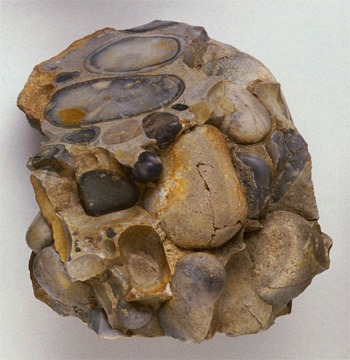
Base your answer to the following question on

the rock sample shown above. The rounded pebbles of this rock have been cemented together to form

a)

granite, an igneous rock

b)

conglomerate, a sedimentary rock

c)

siltstone, a sedimentary rock

d)

Weiss, a metamorphic rock

69.

The diagram above shows three stages in the formation of a specific rock. Which rock is formed as a result of these three stages?

a)

limestone

b)

gneiss

c)

schist

d)

coal

70.

Which phrase best describes coal?

a)

low density, mafic

b)

chemical precipitate

c)

organic plant remains

d)

glassy texture, volcanic

71.

The diagram above represents the fossils found in a

bedrock formation located in central Rhode Island. In which type of rock were the fossils most likely

found?

a)

sedimentary rock that formed in an ocean environment

b)

sedimentary rock that formed in a land environment

c)

igneous rock that formed in an ocean environment

d)

igneous rock that formed in a land environment

72.

What are the types of sedimentary rock?

a)

Igneous; Metamorphic; Sedimentary

b)

Clastic; Igneous; Sedimentary

c)

Chemical; Clastic; Inorganic

d)

Organic; Clastic; Chemical

73.

What is the most common sedimentary rock?

a)

Chemical

b)

Clastic

c)

Organic

74.

Clastic rocks are...

a)

Made from heat

b)

Made when water evaporates and minerals crystallize

c)

Made from dead animals/plants

d)

Made from pieces of other rocks

75.

Chemical rocks are...

a)

Made from heat

b)

Made when water evaporates and minerals crystallize

c)

Made from dead animals/plants

d)

Made from pieces of other rocks

76.

Organic rocks are...

a)

Made from heat

b)

Made when water evaporates and minerals crystallize

c)

Made from dead animals/plants

d)

Made from pieces of other rocks

78.

A layer of sediment composed of particles of similar size is said to be _____________

a)

organized

b)

well-sorted

c)

poorly-sorted

d)

pretty

78.

A layer of sediment composed of particles of similar size is said to be _____________

a)

organized

b)

well-sorted

c)

poorly-sorted

d)

pretty

79.

Why would an area be free of overlying sediments?

a)

due to plate tectonics

b)

because other life forms live there

c)

strong currents cause the sediments to move away

d)

All areas of the ocean floor are covered in sediment

80.

What characteristic of the ocean causes sediments to travel?

a)

Life forms in the ocean

b)

Currents (movement of water)

c)

Weather

d)

Sediment does not travel

81.

If a sediment is very fine, well-sorted, and rounded, what does this tell you about where the sediment is in relation to its source?

a)

It is very close to its original source

b)

It is very far from its original source

c)

It is somewhat close to its original source

d)

It has not traveled at all

82.

If a sediment is poorly-sorted and angular, what does this tell you about the energy level in its environment?

a)

The sediment is in a place of high energy (lots of water movement)

b)

The sediment is in a place of very consistent energy

c)

The sediment is in a place of very low energy (not a lot of water movement)

d)

The sediment is in the ocean

83.

Lots of biogenous material in a sediment means the sediment could be from _____________________________

a)

A tropical island

b)

The north pole

c)

A temperate, continental area (like where we live)

d)

Europe

84.
Which layer is the oldest?
a)
A
b)
B
c)
D
d)
F
85.
Which layer is the youngest?
a)
A
b)
B
c)
D
d)
F
86.
Put the sediments in order from smallest sized particles to largest
a)
clay, silt, sand, gravel
b)
silt, clay, gravel, sand
c)
gravel, sand, silt, clay
87.
What is silt?
a)
fine bits of clay and sand
b)
mud at the bottom of the river
c)
decomposed plants and animals
d)
rocks in riverbeds
88.
The ocean floor is made of this kind of rock.
a)
basalt
b)
sandstone
c)
slate
d)
conglomerate
89.
If you walk out onto a beach in Alaska, the sand in your toes will have MOST LIKELY come from 
a)
a rock inland
b)
fish skeleton
c)
a glacier
d)
meteorite
90.
True or False:
Clay will travel farther out into the ocean than sand will.

a)
True
b)
False