wayground logo

Free Printable Worksheets

Font size

S
M
L
XL
Worksheets

Science Fair Quiz

Total questions: 65

Worksheet time: 1hrs 13mins
Name
Class
Date
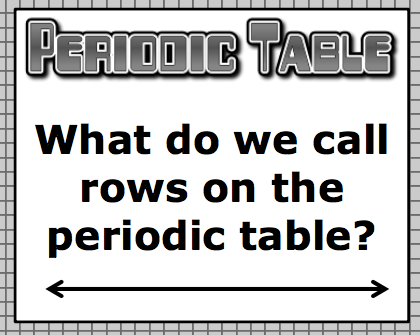
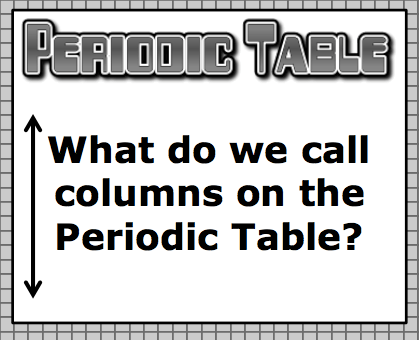
1.
a)
Periods
b)
Groups
2.
a)
Periods
b)
Groups
3.
The number at the bottom of each square on the periodic table is the ...
a)
atomic number
b)
atomic mass
c)
chemical symbol
d)
element name
4.
The atomic number tells you what?
a)
number of electrons
b)
number of protons
c)
number of neutrons
d)
both electrons and protons in an atom.
5.
A proton is....
a)
A negatively charged subatomic particle
b)
A positively charged subatomic particle
c)
A neutrally charged subatomic particle
d)
The only subatomic particle located in the nucleus
6.
How many protons are in Beryllium?
a)
4
b)
9
c)
5
d)
2
7.
What is the formula to calculate speed?
a)
S = t/d
b)
S = d/t
c)
S = d x t
d)
S = t x d
8.
A runner races in the 100 meter dash.  It takes her 10 seconds to finish.  What is her average speed?
a)
10 m/s
b)
1000 m/s
c)
100 seconds
d)
10 seconds
9.
Alan travels 100 km in 5hrs. Find his average speed in km/h
a)
5km/hr
b)
10km/hr
c)
50km/hr
d)
20km/hr
10.
Which of the following energy transformations occur when a lamp that is plugged into a wall socket is functioning correctly?
a)
Chemical to light
b)
Electrical to chemical
c)
Electrical to light
d)
Chemical to electrical
11.
Which of the following shows an energy transformation from chemical energy to electrical to light energy?
a)
A bolt of lightning lights the night sky.
b)
A candle glows brightly in the dark.
c)
A fire in a fireplace lights up a room.
d)
A battery causes a flashlight to shine.
12.
People get energy from the food that they eat and transform that energy as they move. Which energy transformations occur as a student rapidly rubs the palms of his hands together?
a)
mechanical to thermal to electrical
b)
chemical to mechanical to thermal
c)
mechanical to chemical to sound
d)
chemical to sound to electrical
13.

Hippo

a)

Organism

b)

Population

c)

Community

d)

Ecosystem

14.

Hippos, Zebras, Giraffes, Trees, Body of Water, Grass

a)

Organism

b)

Population

c)

Community

d)

Ecosystem

15.

Pig

a)

Organism

b)

Population

c)

Community

d)

Ecosystem

16.

Hippos, Zebras, Giraffes

a)

Organism

b)

Population

c)

Community

d)

Ecosystem

17.

Polar Bears

a)

Organism

b)

Population

c)

Community

d)

Ecosystem

18.
Earth and the other planets closest to the Sun are made mostly of _______
a)
gas
b)
metal
c)
water
d)
rock
19.
The moon is a natural  ______ of Earth.
a)
comet
b)
axis
c)
satellite
d)
space probe
20.
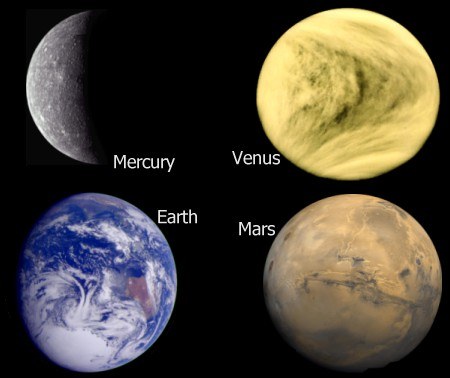
Which is the second closest planet to the sun?
a)
Earth
b)
Saturn
c)
Venus
d)
Mercury
21.

The Mass of a crayon ins best measured in what unit?

a)

Ounces

b)

Grams

c)

Milimeters

d)

Inches

22.

If an object is in motion, what type of energy does it have?

a)

Potential

b)

Gravitational

c)

Kinetic

d)

Mathematical

23.

Which of the following is an example of a renewable resource?

a)

Coal

b)

Petroleum

c)

Nuclear

d)

Wind

24.

Energy being generated by water being held back in a dam is what type of energy?

a)

Geothermal

b)

Hydropower

c)

Solar

d)

Biofuel

25.

By flipping a switch and turning on a light, you are converting electrical energy into ____ energy.

a)

Chemical

b)

Sound

c)

Light

d)

Mechanical

26.

Which of the following colors does not exist on the visible light spectrum?

a)

Blue

b)

Red

c)

Gold

d)

Yellow

27.

The nucleus of an atom contains protons and _______.

a)

Electrons

b)

Neutrons

c)

Cells

d)

Carbon

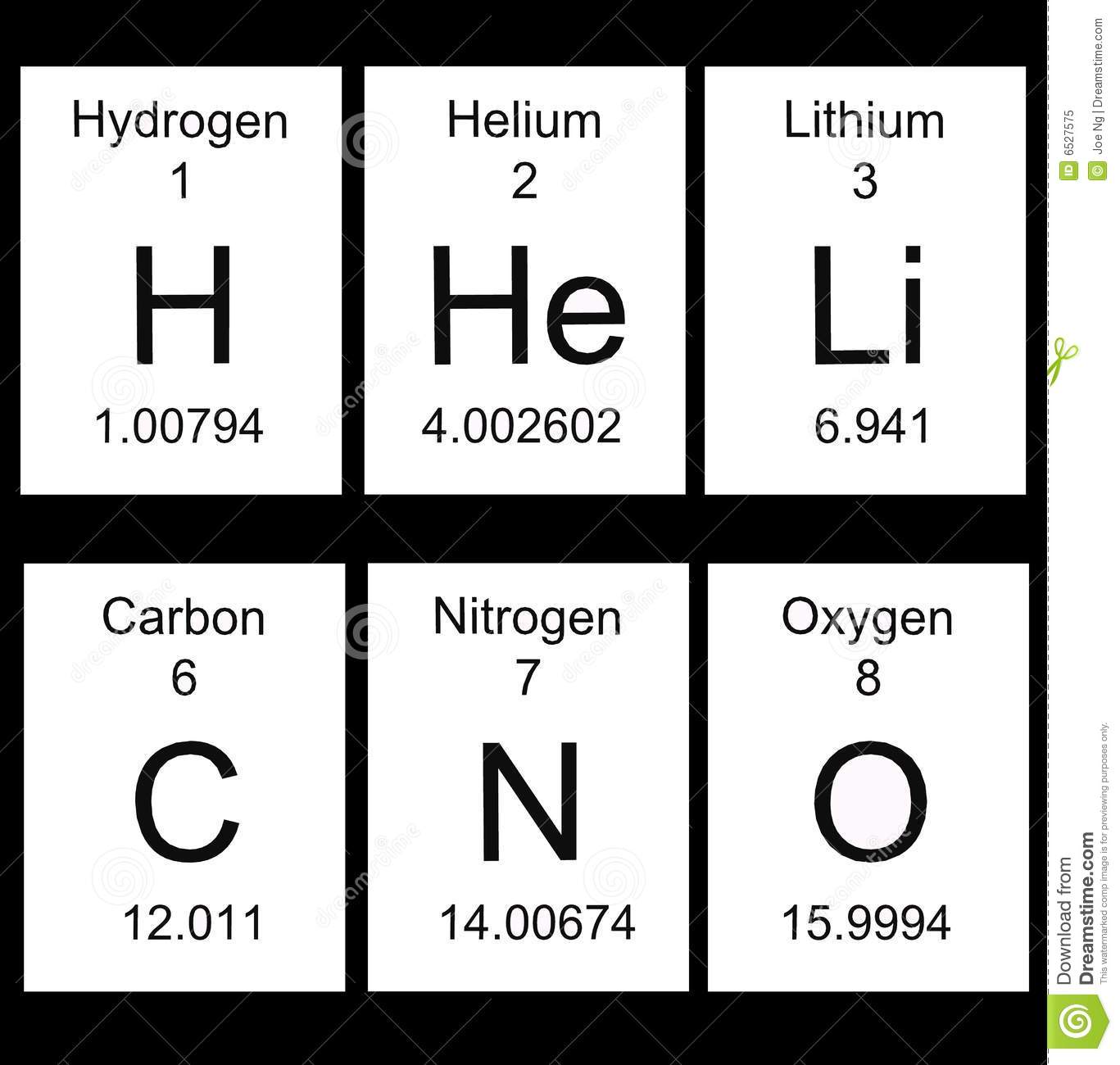
28.

Looking at the wall, how many protons does the element nitrogen have?

a)

7

b)

8

c)

14

d)

10

29.

Why is water known as the universal solvent?

a)

It dissolves all known substances

b)

It dissolves only solid substances

c)

It dissolves the greatest number of substances

d)

It dissolves substances faster than all other solvents.

30.

This layer of atmosphere contains weather.

a)

Troposphere

b)

Stratusphere

c)

Exosphere

d)

Mesosphere

31.

What kind energy do the kids on the swings have?

a)

Potential

b)

Kinetic

c)

Electrical

d)

Chemical

32.

What is happening here?

a)

Convection

b)

Condition

c)

Concussion

d)

Conclusion

33.

How many atoms are in this chemical formula?

NaAlSi3O8

a)

4

b)

13

c)

15

d)

7

34.

Waves have different characteristics depending on their frequency, wavelength and speed. These features vary from one wave to another.


What controls the speed at which a wave travels though a medium?

a)

The wave frequency

b)

The wavelength of the wave

c)

The type of substance through which the wave is travelling

d)

Waves can travel at all different speeds

35.

Nuclear energy can be used instead of fossil fuels to produce heat to turn water into steam and thus to generate electricity in power stations. Nuclear energy is produced in a nuclear reactor using a fission reaction.


What occurs in a fission reaction to cause nuclear energy to be released?

a)

X-rays generate heat

b)

Radioactive waves generate heat

c)

Alpha and beta particles are released from the nuclei or large atoms

d)

The nuclei of large atoms break apart into smaller atoms with a lower total mass

36.

The Periodic Table used by scientists today contains about 115 elements. Each of these elements has different chemical properties.


What gives these elements their different chemical properties?

a)

The number and arrangement of neutrons

b)

The number and arrangement of electrons

c)

The number of protons

d)

The number of protons and neutrons

37.

In multicellular plants and animals, the cells need to obtain oxygen, water and nutrients, and to dispose of carbon dioxide and other wastes. How is this brought about?

a)

By the movement of materials into the cells

b)

The various systems working together

c)

Through respiration and photosynthesis

d)

By the roots, stems and leaves

38.

What happens when tissue is damaged in a multicellular organism?

a)

The damaged cells repair themselves

b)

Evolution occurs

c)

Healthy cells near the damaged cells divide to form new cells

d)

Cells near the damaged area get bigger
39.
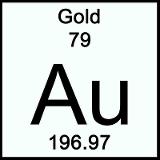
Which number is the atomic mass?
a)
79
b)
196.97
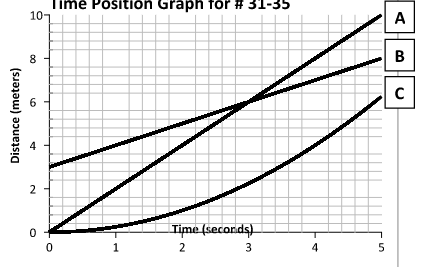
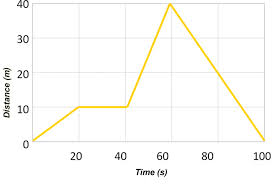
40.
Which runner had a head start?
a)
A
b)
B
c)
C
41.

from 3rd second to 5th second, the object is

a)

moving at a constant speed

b)

speeding up

c)

not moving

d)

slowing down

42.
How long did it take this object to travel back to its reference/starting point?
a)
20 s
b)
30 s
c)
60 s
d)
100 s
43.

The reason why you fly out of your car when it suddenly stops is due to ...

a)

Law of Inertia

b)

Newton's Second Law

c)

Newton's First Law

d)

Conservation of energy

44.

What type of energy is Kinetic energy

a)

Movement energy

b)

Heat energy

c)

Wind energy

d)

Gravitational energy

45.

Energy can be created and destroyed in the universe

a)

True

b)

False

46.
What force slows objects down and keeps them from moving?
a)
Friction
b)
Acceleration
47.
An object in motion will stay in motion and an object at rest will stay at rest unless acted upon by an outside force.  Which law does this describe?
a)
Newton's 1st Law
b)
Newton's 2nd Law
48.
If you are driving forward and suddenly break, what would happen to your body and which law does that demonstrate?
a)
go back, 1st Law
b)
move forward, 1st Law
49.
Forces always act in equal and opposite pairs.
a)
Newton's 1st Law
b)
Newton's 3rd Law
50.
Chemical compound with a pH < 7 that tastes sour and contains at least one hydrogen atom
a)
acid
b)
aciid
c)
accid
d)
aced
51.
A compound that forms hydroxyl ion when dissolved in water and has a pH > 7
a)
base
b)
bass
c)
bace
d)
bas
52.
Substance that changes colour in the presence of an acid or base
a)
indicator
b)
indicater
c)
indikator
d)
indikater
53.
When an acid and a base react to form a salt and water
a)
neutralisation
b)
nuetralisation
c)
nutralisation
d)
neutralisacion
54.
Substance that is neither an acid nor a base; pH = 7
a)
neutral
b)
nutral
c)
nuetral
d)
neutrel
55.
What element is Na ?
a)
Sodium
b)
Nanium
c)
Silicon
d)
Nastium
56.
What is the element symbol for potassium?
a)
P
b)
Pt
c)
Ps
d)
K
57.
Which of the following is NOT a property of metals?
a)
Malleable
b)
Lustre
c)
Good electrical conductivity
d)
Brittle
58.
Which of the following is not a group 1 metal?
a)
Lithium
b)
Sodium
c)
Potassium
d)
Calcium
59.
Which of the following is a transition metal?
a)
Magnesium
b)
Aluminium
c)
Iron
d)
Neon
60.
An atom has an atomic number of 17. How many electrons would there be on each shell? (From inner to outer shell)
a)
2, 10, 5
b)
8, 8, 1
c)
2, 8, 7
d)
8, 7, 2
61.
How many neutrons does this element have?
a)
10
b)
9
c)
19
d)
0
62.
What charge does an atom have if it GAINS an electrons?
a)
Positive (+)
b)
Negative (-)
c)
atoms can not gain electrons
63.
Oxygen with a negative two charge is an example of
a)
a cation
b)
an anion
c)
a polar molecule
d)
a nonpolar molecule
64.
When becoming an ion, an element with 6 valence (outer) electrons would have a charge of...
a)
2-
b)
2+
c)
6-
d)
6+
65.
Carbon-12 and Carbon-11 are
a)
isotopes 
b)
different elements
c)
compounds 
d)
neutrons