wayground logo

Free Printable Worksheets

NEW

Font size

S
M
L
XL
Worksheets

Tuesday Quiz

Total questions: 75

Worksheet time: 1hrs 1mins

Name
Class
Date
1.

Acceleration of an object happens when the object ________ (R19/R20)

a)

slows down

b)

goes faster

c)

changes direction (turn)

d)

All of the above

2.

Velocity is best defined as - (R20)

a)

speed with direction (70 mph north)

b)

a change in speed, direction, or both (turning, curving)

c)

distance traveled over time (how fast or slow)

3.

How many Al atoms are in this compound? (R13) 4Al2O3

a)

2

b)

8

c)

6

d)

4

4.

How many F atoms are in this compound? (R13)

6MgF2

a)

2

b)

6

c)

8

d)

12

5.

What is the net force?(R18)

a)

20 N

b)

0 N

c)

400 N

d)

40 N

6.

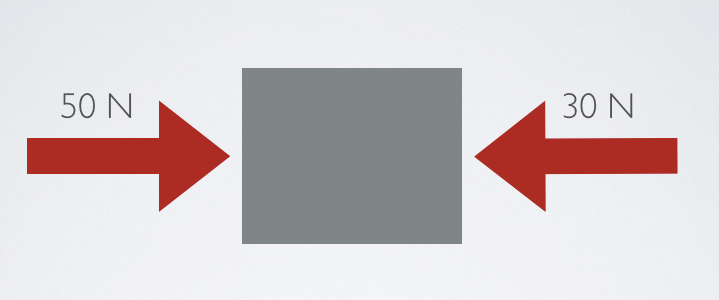
What is the net force? (R18)

a)

30 N

b)

25 N

c)

5 N

d)

55 N

7.
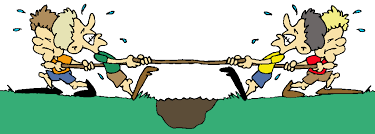
If these teams are pulling with the same amount of force what will happen?
a)
The boy in blue will win.
b)
They will not move at all.
c)
The boy in red will win.
d)
Both will fall down.
8.

Forces that have a net force of zero (R18)

a)

Balanced force

b)

Unbalanced force

9.
How will this object move? 
a)
It won't move. 
b)
It will move to the right. 
c)
It will move to the left. 
d)
It will move up. 
10.
Which could be an example of a balanced force?
a)
An asteroid moving at a constant speed through space 
b)
A car accelerating from a stop sign
c)
A box of dishes falling from a counter 
d)
A rocket taking off 
11.

How many different elements are represented in the compound Na2CO3? (R10,R11)

a)

1

b)

2

c)

3

d)

4

12.
How many hydrogen atoms are in this chemical formula: 2H2O?
a)
4 hydrogen atoms
b)
1 hydrogen atom
c)
2 hydrogen atoms
d)
3 hydrogen atoms
13.
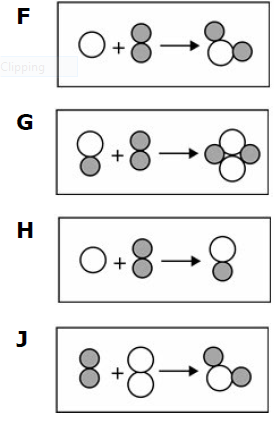
Which of the following models best demonstrates a balanced chemical equation?
a)
F
b)
G
c)
H
d)
J
14.

How many atoms of carbon (C) are in C6H12O6? (R11)

a)

3

b)

6

c)

12

d)

24

15.

What evidence of a chemical reaction does this image represent? (R17)

a)

Gas production and light production

b)

Gas production

c)

Color change and precipitate

d)

Light production and color change

16.
As a cart rolls down a ramp, the cart's speed - 
a)
increases due to unbalanced forces
b)
decreases due to ubalanced forces
17.

A person not paying attention while skateboarding hits a rock. The skateboard stops...they don't. (R21/22/23)

a)

The Law of Inertia (1st)

b)

The Law of Acceleration(2nd)

c)

The Law of Action-Reaction(3rd)

18.
When all the forces on an object are equal and opposite, & the net force is zero, that's...
a)
balanced forces
b)
unbalanced forces
c)
terminal velocity
d)
reaction forces
19.
What is the net force?
a)
400 N Up
b)
400 N Down
c)
- 400 N Down
d)
800 N Down
20.

When the Earth is between the moon and sun as shown in the diagram, it is most likely a (R40):

a)

new moon

b)

full moon

c)

waxing crescent

d)

waxing gibbous

21.

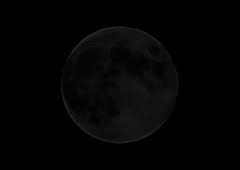
Define New Moon (R40)

a)

None of moon is visible from Earth

b)

All of moon visible from Earth

c)

Moon is 1/2 visible from Earth

d)

Moon is more than Half Visible from Earth

22.

Name the moon phase (R40)

a)

Waxing Gibbous

b)

Waxing Crescent

c)

Waning Crescent

d)

Waning Gibbous

23.

Name the moon phase (R40)

a)

Waning Crescent

b)

Waxing Crescent

c)

Waning Gibbous

d)

Waxing Gibbous

24.

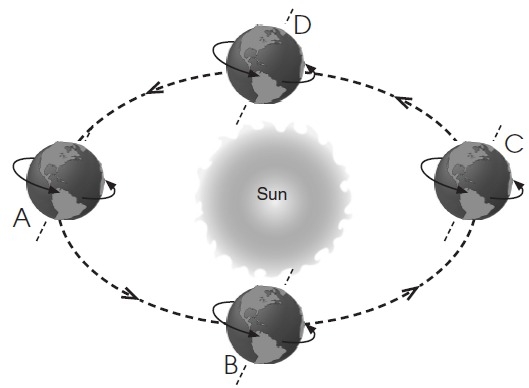
What are the reasons for the seasons? (R38)

a)

Earth's tilt and rotation.

b)

Earth's rotation and revolution.

c)

Earth's tilt and revolution.

d)

Earth's tilt and resolution

25.
Name the moon phase
a)
First Quarter
b)
Last Quarter
c)
New Moon
d)
Full Moon
26.

What season is letter A in the Northern Hemisphere? (LR38)

a)

Winter

b)

Summer

c)

Spring

d)

Fall

27.
Red-shift light means
a)
galaxies are moving towards each other
b)
galaxies are moving away from each other
28.
In relation to us, most galaxies are
a)
Moving toward us
b)
Moving away from us
c)
Not moving
29.
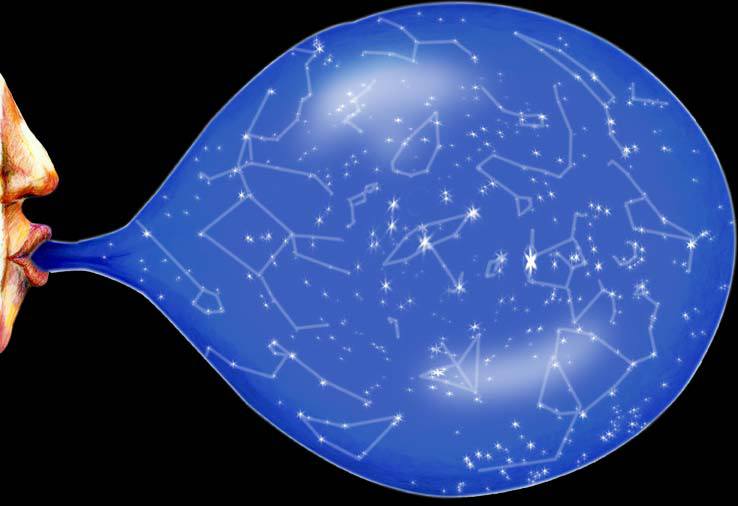
What does the Big Bang theory suggest?
a)
The universe was just there
b)
The Milky Way is the only solar system
c)
The universe is continually expanding
d)
The universe started as a point and is moving towards each other
30.
Which of the following is evidence of the Big Bang Theory?
a)
Cavemen heard a loud bang at the beginning of time.
b)
The universe isn't moving
c)
The universe is expanding
d)
The universe is getting smaller
31.
Which season is taking place in the Northern Hemisphere in Position 3?
a)
Winter
b)
Spring
c)
Summer
d)
Fall
32.
Why is the light from distant galaxies red-shifted?
a)
They produce more red light than nearby galaxies
b)
They are moving away from us
c)
The longer wavelengths are filtered out more by dust
d)
They are moving toward us
33.

In order for a hurricane to form, the water must be ________. (R36)

a)

Cool

b)

Warm

c)

Cold

d)

Hot

34.

This image represents (R41)

a)

spring tide/low tide

b)

spring tide/high tide

c)

neap tide/low tide

d)

neap tide/high tide

35.
This symbol represents what type of weather?
a)
cold front bringing warmer weather
b)
cold front bringing cooler weather
c)
warm front bringing warmer weather
d)
warm front bring cooler weather
36.
Balanced or Unbalanced?
a)
Balanced 
b)
Unbalanced
37.
A _____ is a pull or a push.
a)
force
b)
friction
c)
gravity
d)
speed
38.
How many total atoms are in the compound C2H8O ?
a)
11
b)
2
c)
8
d)
1
39.

The positive particles of an atom are (L3)

a)

electrons

b)

positrons

c)

neutrons

d)

protons

40.

Particles in an atom that are neutral and have no charge are (L3)

a)

negatrons

b)

electrons

c)

neutrons

d)

protons

41.

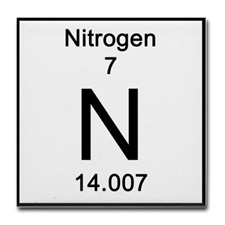
What is the number of protons that the element in this image contain? (R4)

a)

14

b)

7

c)

15

d)

18

42.

What part of an atom is NEGATIVELY charged? (L3)

a)

protons

b)

neutrons

c)

electrons

d)

atoms

43.
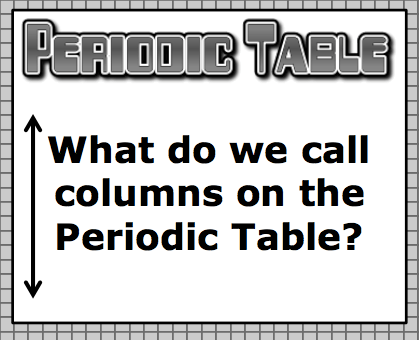
a)
Periods
b)
Groups
44.

What is the reactivity of this atom? (R8/R9)

a)

Highly reactive because it has 7 valence electrons

b)

Nonreactive because it has 7 valence electrons

45.
Name the moon phase
a)
First Quarter
b)
Last Quarter
c)
New Moon
d)
Full Moon
46.

What type of tide would this arrangement of earth-moon-sun create? (R41)

a)

full moon tide

b)

new moon tide

c)

neap tide

d)

spring tide

47.

What subatomic particles would you find in the nucleus of an atom? (R2)

a)

Protons only

b)

Protons and Neutrons

c)

Neutrons and Electrons

d)

Protons and Electrons

48.

Which letter represents an electron? (R3)

a)

A

b)

B

c)

C

d)

D

49.
Which letter represents the nucleus?
a)
A
b)
B
c)
D
d)
E
50.

What is the atomic number of the atom pictured?(R4)

a)

9

b)

10

c)

18

d)

19

51.
Which subatomic particle has a positive (+) charge?
a)
Neutron
b)
Proton
c)
Electron
52.
Where is the nucleus located in an atom?
a)
Near the electron shells/levels
b)
Near the center of an atom
53.

How many electrons does this picture show? (R3)

a)

4

b)

5

c)

6

d)

3

54.

What are valence electrons? (R8)

a)

electrons on the first orbital always

b)

nucleus

c)

the outermost shell

d)

the number of electrons on the outermost orbital

55.

What is the reactivity of Neon

a)

High

b)

Low

c)

Non-reactive

56.

What is the reactivity of the atom shown in the diagram?

a)

highly reactive

b)

nonreactive

57.
Our galaxy is called the
a)
Earth Nebula
b)
The Hubble Galaxy
c)
The Milky Way
d)
The Snickers
58.
Galaxies are composed of (best answer)
a)
stars
b)
stars and gas
c)
stars, dust, and gas
d)
stars, dust, and gas held together by gravity
59.
The Milky Way Galaxy is a 
a)
spiral
b)
lenticular
c)
elliptical 
d)
irregular
60.
What type of galaxy is this?
a)
Spiral
b)
Elliptical
c)
Irregular 
d)
Irrational
61.
What is not a galaxy?
a)
Optical Galaxy
b)
Spiral Galaxy
c)
Elliptical Galaxy
d)
Irregular Galaxy
62.
What type of galaxy is this?
a)
Spiral
b)
Elliptical
c)
Irregular
d)
Irrational
63.
Place these objects in order from smallest to largest.
a)
Planets, solar system, universe, galaxy
b)
Solar system, planets, galaxy, universe
c)
Planets, solar system, galaxy, universe
d)
Galaxy, solar system, planets, universe
64.
All existing matter and space considered as a whole is called what?
a)
Galaxy
b)
Planet
c)
Universe
d)
Milky Way
65.
 A large cloud of gas and dust in interstellar space; a region in Space where stars are born.
a)
Protostar 
b)
Nebula
c)
Galaxy 
d)
Star
66.
The sun is a _______.
a)
star
b)
planet
c)
satellite
67.

What holds Earth and all other planets together?

a)

Heat and Light

b)

Magnetisim

c)

Gravitational Pull

d)

Electricity

68.

Why do we get more light, energy, and heat from the Sun than from all the other stars in the universe?

a)

The Sun is bigger than all the other stars

b)

The Sun is the closest star to Earth

c)

The Sun is yellow

d)

The Sun is a red giant star

69.
A consumer that hunts is called:
a)
a producer.
b)
an omnivore.
c)
a predator.
d)
a herbivore.
70.

Non-living factor that affects an ecosystem (R49)

a)

biotic factor

b)

abiotic factor

c)

food chain

d)

biome

71.
This is an image of a _________.
a)
consumer
b)
scavenger
c)
decomposer
d)
producer
72.

A frog eats a fly. The frog and fly are demonstrating ________.

a)

mutualism

b)

competition

c)

predator/prey

d)

parasitism

73.

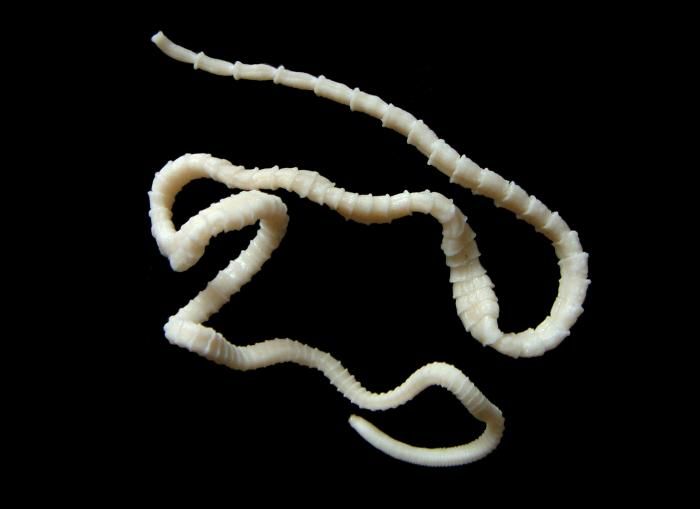
A tapeworm and a cat have this type of relationship.

a)

mutualism

b)

parasitism

c)

commensalism

d)

competition

74.
Which two types of organisms have a producer-consumer relationship in this African savanna?
a)
Zebras and hyenas
b)
Hyenas and cheetahs
c)
Trees and elephants
d)
Fungi and dung beetles
75.

What is the producer in this food chain?

a)

Python

b)

Frog

c)

Grasshopper

d)

Grass