wayground logo

Free Printable Worksheets

Font size

S
M
L
XL
Worksheets

Earth, Moon, Sun Unit

Total questions: 61

Worksheet time: 52mins

Name
Class
Date
1.
The spinning of an object on its axis is called______
a)
orbit
b)
rotation
c)
revolution
d)
tide
2.
Day and night is caused by the _____________ of earth on its axis.
a)
revolution
b)
orbit
c)
rotation
3.
The earth orbits around...
a)
the sun.
b)
the moon
c)
other planets
d)
the Milky Way
4.
What are the reasons for the seasons?
a)
Earth's tilt and rotation.
b)
Earth's rotation and revolution.
c)
Earth's tilt and revolution.
d)
Earth's tilt and resolution
5.
How long does it take the Earth to make one REVOLUTION around the Sun?
a)
12 hours
b)
24 hours
c)
365 days
d)
29.5 days
6.
The motion of one object around another object
a)
rotation
b)
revolution
7.
Takes about 24 hours to complete one
a)
rotation
b)
revolution
8.
Completed in one year
a)
rotation
b)
revolution
9.

What would change if Earth rotated on its axis more slowly than it does now?

a)

There would be only two seasons in a year.

b)

There would be more days in a year.

c)

There would be a longer day.

d)

There would be a shorter day.

10.

Which materials would most accurately model the light from the Sun causing the day / night cycle on Earth and the Moon phases?

a)

A laser pointer for the Sun, a large beach ball for the Earth, and a large beach ball for the Moon.

b)

A laser pointer for the Sun, a large beach ball for the Earth, and a small golf ball for the Moon.

c)

A flashlight for the Sun, a large beach ball for the Earth, and a large beach ball for the Moon.

d)

A flashlight for the Sun, a large beach ball for the Earth, and a small golf ball for the Moon.

11.

A student has three spheres that each have a different size. How should the student label the spheres to model the size differences between the Sun, Earth, and Moon?

a)
b)
c)
d)
12.
Which moon phase is when you can't see the moon at all?
a)
Waning crescent
b)
Full moon
c)
Waxing gibbous
d)
New moon
13.
As the moon's shape appears to get smaller, we say that the moon is _.
a)
swelling
b)
waxing
c)
waning
d)
disappearing
14.
The moon seems to change shape from day to day in a cycle that lasts about a month as it goes through _.
a)
revolutions
b)
phases
c)
rotations
d)
eclipses
15.
What causes the phase of the Moon to change each night?
a)
The Moon changes its acutal shape throughout the course of the month.
b)
The alignment between the Earth, Moon, and Sun determines the amount of light reflected by the Moon.
c)
The season of the year determines the phase of the Moon.
d)
The closer the Moon is to Earth, the more light the Moon reflects.
16.
The cycle of the moon lasts about a _.
a)
day
b)
year
c)
week
d)
month
17.
What part of the moon do we see from Earth?
a)
all of it
b)
the same side
c)
none of it
d)
only one quarter
18.
As the moon's shape appears to get smaller, we say that the moon is _.
a)
swelling
b)
waxing
c)
waning
d)
disappearing
19.
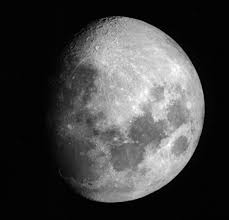
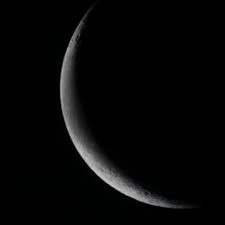
Name the moon phase
a)
waning crescent
b)
waxing crescent
c)
waning gibbous
d)
waxing gibbous
20.
Name the moon phase
a)
waning crescent
b)
waxing crescent
c)
waning gibbous
d)
waxing gibbous
21.
Name the moon phase
a)
waning crescent
b)
waxing crescent
c)
waning gibbous
d)
waxing gibbous
22.
Name the moon phase
a)
waning crescent
b)
waxing crescent
c)
waning gibbous
d)
waxing gibbous
23.
Name the moon phase
a)
waning crescent
b)
waxing crescent
c)
waning gibbous
d)
waxing gibbous
24.
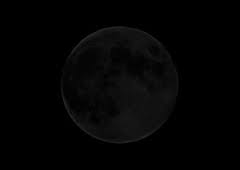
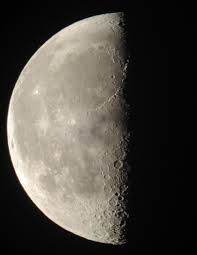
Name the moon phase
a)
First Quarter
b)
Last Quarter
c)
New Moon
d)
Full Moon
25.
Name the moon phase
a)
First Quarter
b)
Last Quarter
c)
New Moon
d)
Full Moon
26.
Name the moon phase
a)
First Quarter
b)
Last Quarter
c)
New Moon
d)
Full Moon
27.
Name the moon phase
a)
First Quarter
b)
Last Quarter or (third quarter)
c)
New Moon
d)
Full Moon
28.
Name the moon phase
a)
First Quarter
b)
Last Quarter
c)
New Moon
d)
Full Moon
29.
How much of the moon is always lit?
a)
can't tell
b)
always changes
c)
half
d)
3/4
30.
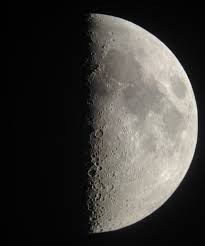
Name the moon phase that would come AFTER this moon.
a)
waning crescent
b)
waxing crescent
c)
waning gibbous
d)
waxing gibbous
31.
What is the difference between a gibbous moon and a crescent moon?
a)
The gibbous shows more than half of the bright side of the moon.
b)
The crescent shows more than half of the bright side of the moon.
c)
The gibbous shows less than half of the bright side of the moon. 
32.
How many phases does the moon go through?
a)
4
b)
8
c)
10
d)
16
33.
As the moon's shape appears to get smaller, we say that the moon is _.
a)
swelling
b)
waxing
c)
waning
d)
disappearing
34.
Phases of the moon in which the moon appears to be getting larger are referred to as _.
a)
waxing
b)
waning
c)
new
d)
eclipse
35.
Name the moon phase that would come AFTER this moon.
a)
waning crescent
b)
waxing crescent
c)
waning gibbous
d)
waxing gibbous
36.
The moon ____________ around the Earth.
a)
revoloves
b)
rotates
c)
up
d)
down
37.
discovered Jupiter's four moons
a)
Copernicus
b)
Galileo
c)
Brahe
d)
Aristotle
38.
This astronomer confirmed the heliocentric theory with his telescope.
a)
Galileo
b)
Kepler
c)
Copernicus
d)
Aristotle
39.
These two astronomers were convinced the Geocentric Model is accurate.
a)
Kepler, Brahe
b)
Ptolemy, Galileo
c)
Copernicus, Aristotle
d)
Aristotle, Ptolemy
40.
"Sun-Centered" universe model
a)
heliocentric
b)
geocentric
41.
What model is where the earth is in the middle of our universe?
a)
Heliocentric Model
b)
Geocentric Model
c)
Moon phases
d)
Tidal Phases
42.
What Model is where the sun is the center of the universe?
a)
Geocentric
b)
Heliocentric
c)
Earth's rotations
d)
Earth's planets
43.
  What does "geo-" mean?
a)
Earth
b)
sun
c)
Center
44.

What is the name of this model?

a)

Heliocentric Model

b)

Geocentric Model

c)

Circle Model

d)

Aristotle Model

45.

what does helio mean

a)

Sun

b)

Earth

c)

Moon

46.
Which planet is the largest?
a)
Jupiter
b)
Saturn
c)
Uranus
d)
Neptune
47.
Which planet is fifth from the sun?
a)
Saturn
b)
Jupiter
c)
Mars
d)
Earth
48.
Which planet is seventh from the sun?
a)
Saturn
b)
Earth
c)
Venus
d)
Uranus
49.
which planet is the third from the sun?
a)
Mercury 
b)
Neptune 
c)
Pluto 
d)
Earth 
50.
Which is the fourth planet from the sun?
a)
Mars
b)
Saturn
c)
Earth
d)
Jupiter
51.
Which is the second closest planet to the sun?
a)
Earth
b)
Saturn
c)
Venus
d)
Mercury
52.
Which Planet comes after Earth in the solar system?
a)
Mercury
b)
Mars 
c)
Venus 
d)
Eros
53.
How long does it take for Earth to complete on full rotation?
a)
365 days
b)
23 hours
c)
24 hours
d)
1 month
54.
How long does it take the Earth to make one REVOLUTION around the Sun?
a)
12 hours
b)
24 hours
c)
365 days
d)
29.5 days
55.

A student draws this model of the solar system. What are the names, in order, of the first four planets from the sun?

a)

Mercury, Venus, Earth, Mars

b)

Mars, Earth, Venus, Mercury

c)

Venus, Mercury, Mars, Earth

d)

Earth, Mercury, Venus, Mars

56.

Which planet is identified by the letter B?

a)

Mercury

b)

Saturn

c)

Mars

d)

Neptune

57.

Which planet is seventh from the sun?

a)

Venus

b)

Jupiter

c)

Uranus

d)

Neptune

58.

The planet closest to the Sun is...

a)

Uranus

b)

Jupiter

c)

Mercury

d)

Earth

59.

Which of the following is a question that can be answered by using the model constructed?

a)

How long does it take the moon to orbit Earth?

b)

Which planet is closest to the sun?

c)

How far away is Earth from the sun?

d)

How long would it take a spacecraft to get to Neptune?

60.

Which statement best explains the relationship between the planets and the sun?

a)

The planets rotate around the sun in the same direction.

b)

The planets revolve around the sun.

c)

The sun supplies the same amount of heat to all the planets.

d)

All of the above.

61.
Which planet is the largest?
a)
Jupiter
b)
Saturn
c)
Uranus
d)
Neptune