wayground logo

Free Printable Worksheets

Font size

S
M
L
XL
Worksheets

W-E-D

Total questions: 82

Worksheet time: 1hrs 15mins

Name
Class
Date
1.

the general terms for the movement of sediment by wind, water, glaciers

a)

weathering

b)

erosion

c)

deposition

2.
the breakdown of rock into smaller pieces of the same rock without any change in its composition
a)
mechanical weathering
b)
chemical weathering
c)
erosion
d)
deposition
3.
the process by which layers or sheets of rock gradually break off
a)
exfoliation
b)
abrasion
c)
erosion
d)
deposition
4.

the process of wearing down by friction - like sand blasting

a)

exfoliation

b)

abrasion

c)

erosion

d)

deposition

5.
the breakdown or decomposition of rock that takes place when minerals change through chemical processes
a)
chemical weathering
b)
mechanical weathering
c)
erosion
d)
deposition
6.
decayed organic matter in soil
a)
abrasion
b)
exfoliation
c)
humus
d)
erosion
7.
a soil layer with physical and chemical properties that differ from those soil layers above and below it
a)
soil profile
b)
soil horizon
c)
humus
d)
deposition
8.
the soil horizon in a specific location; a cross section of soil layers that display all soil layers
a)
soil profile
b)
soil horizon
c)
humus
d)
deposition 
9.
the process in which sediment particles are picked up and moved from one place to another
a)
mechanical weathering
b)
chemical weathering
c)
erosion
d)
deposition
10.
the part of the erosion process in which sediment travels to a new location and is laid down or dropped off
a)
chemical weathering
b)
mechanical weathering
c)
erosion
d)
deposition
11.
Roots grow into cracks of a rock and pry them apart
a)
mechanical weathering
b)
chemical weathering
c)
erosion
d)
deposition
12.
oxidation produces rust on some rocks containing iron
a)
chemical weathering
b)
mechanical weathering
c)
erosion
d)
deposition
13.
rock is broken by the freezing and thawing of ice
a)
chemical weathering
b)
mechanical weathering
c)
erosion
d)
deposition
14.
rock particles wear away rock
a)
mechanical weathering
b)
chemical weathering
c)
erosion
d)
deposition
15.
plants produce weak acids that slowly dissolve the rock they are growing on
a)
chemical weathering
b)
mechanical weathering
c)
erosion
d)
deposition
16.
fossil fuels react with water producing acid rain that wears minerals away in the rock
a)
chemical weathering
b)
mechanical weathering
c)
erosion
d)
deposition
17.
animals break up the ground by burrowing
a)
mechanical weathering
b)
chemical weathering
c)
erosion
d)
deposition
18.
carbon dioxide dissolves in water then weathers marble and limestone
a)
chemical weathering
b)
mechanical weathering
c)
erosion
d)
deposition
19.
How does freezing water cause the weathering of rocks?  The freezing water—
a)
keeps the rocks in place.
b)
makes the rocks last longer.
c)
expands cracks and breaks rocks.
d)
causes rocks to fall in landslides.
20.
The process that breaks down rocks and other materials on Earth's surface is called
a)
Weathering
b)
Erosion
c)
Deposition
d)
Decomposition
21.
Over long periods of time, deposition may change the Earth’s surface by _____.
a)
forming new land features.
b)
breaking down large rocks into smaller ones.
c)
washing away beaches.
d)
moving topsoil.
22.
A cliff formed near the ocean.  Which statement best describes how this cliff formed?
a)
Warm air melted the rock.
b)
Sun rays evaporated the rock.
c)
Ocean waves washed away rock.
d)
Plant roots pushed away the rock.
23.
What is the process that picks up and moves weathered rocks?
a)
Deposition
b)
Landslide
c)
Weathering
d)
Erosion
24.
Deposition changes the Earth’s surface because bits of broken rock and soil _____.
a)
stop rivers from flowing.
b)
make rich farmlands.
c)
are dropped in new places.
d)
move very slowly.
25.
What causes the greatest erosion effect on our beaches?
a)
Waves
b)
Gravity
c)
Glaciers
d)
Wind
26.
The process by which water, ice, wind, or gravity moves weathered rock and soil from one place to another.
a)
Weathering
b)
Erosion
c)
Deposition
d)
Crop Rotation
27.
Layers of sediment forming at the bottom of the ocean floor is an example of
a)
Weathering
b)
Erosion
c)
Deposition
d)
Awesome Science
28.
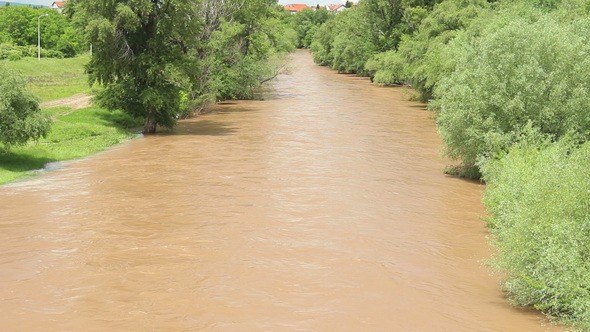
Muddy water being carried away by a fast-moving river is an example of
a)
Weathering
b)
Erosion
c)
Deposition 
d)
A nice place to swim
29.

Which agent of erosion is mainly responsible for the formation of the depressions occupied by both the kettle lakes and finger lakes found in New York State?

a)

wind

b)

waves

c)

streams

d)

glaciers

30.

Which landscape feature was most likely formed by glacial activity?

a)

an eroded plateau

b)

a flat floodplain

c)

a U-shaped valley

d)

a V-shaped valley

31.

Base your answer on the diagram which represents a profile of a mountain glacier in the northern United States. The downhill movement of mountain glaciers such as the one shown in the diagram is primarily caused by

a)

evaporation of ice directly from the glacier

b)

snow blowing across the top of the glacier

c)

the force of gravity pulling on the glacier

d)

water flowing over the glacier

32.

What will be the most probable arrangement of rock particles deposited directly by a glacier?

a)

sorted and layered

b)

sorted and not layered

c)

unsorted and layered

d)

unsorted and not layered

33.

Base your answer on the diagram below, which shows the edge of a continental glacier that is receding. R indicates elongated hills. The ridge of sediments from X to Yrepresents a landscape feature.

Which feature will most likely form when the partially buried ice block melts?

a)

drumlin

b)

moraine

c)

kettle lake

d)

finger lake

34.

An elongated hill that is composed of unsorted sediments deposited by a glacier is called

a)

a delta

b)

a drumlin

c)

a sand dune

d)

an outwash plain

35.

The diagram below represents a side view of a hill (drumlin) that was deposited by a glacier on the Atlantic coast. This hill is most likely composed of

a)

cemented sediments

b)

unsorted sediments

c)

vertically layered sediments

d)

horizontally layered sediments

36.

The sediment deposited by the valley glacier at position X is best described as

a)

sorted according to particle size

b)

unsorted

c)

sorted according to particle density

d)

sorted according to particle texture
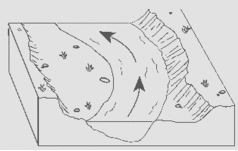
37.
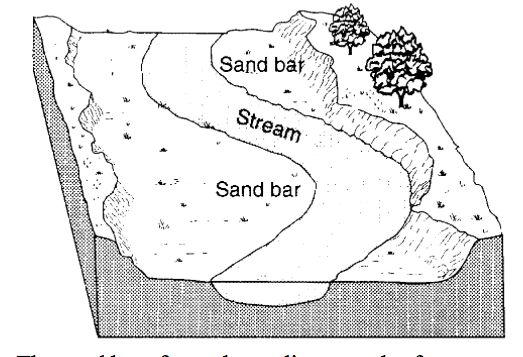
The diagram below shows a portion of a stream. The sand bar formed as a direct result of 
a)
erosion due to a decrease in stream velocity 
b)
erosion due to an increase in stream velocity
c)
deposition due to a decrease in stream velocity
d)
deposition due to an increase in stream velocity 
38.
Sediments are deposited in a river delta because the 
a)
velocity of the river decreased
b)
force of gravity decreased
c)
volume of the river increases
d)
gradient of the river increases
39.
The entire area drained by a river and its tributaries is called a 
a)
Delta
b)
Watershed
c)
Valley
d)
Floodplain
40.
At which location is the greatest amount of sediment most likely being deposited?
a)
A
b)
B
c)
C
d)
D
41.
The diagram below shows a section of a meander in a stream. The arrow shows the direction of stream flow. The stream bank on the outside of this meander is steeper than than the stream bank on the inside of this meander because the water on the outside of the meander is moving
a)
Slower, causing deposition
b)
Faster, causing deposition
c)
Slower, causing erosion
d)
Faster, causing erosion
42.
A stream’s velocity decreases from 100 cm/s to 5cm/s. Which size sediment particles will still be transported by the stream?
a)
pebbles, sand, silt and clay
b)
sand, silt and clay only
c)
silt and clay only
d)
clay only
43.
Flash flooding often occurs in city areas because
a)
runoff decreases during preciptiation
b)
ground water storage is usually very large
c)
roads, pavements and buildings reduce the infiltration of water into the ground
d)
the heat generated by the city areas decreases actual evapotranspiration 
44.
Porosity refers to...
a)
the shape of the particles
b)
The sorting of the particles
c)
% of pore space in a material
d)
% of cement in a material
45.
Impermeable materials...
a)
have an abundance of pores.
b)
let water in.
c)
have little to no pores.
46.
Porosity is dependent on all of the following EXCEPT...
a)
Particle shape
b)
Amount of cement
c)
Sorting
d)
Hardness
47.
Which of the following has the lowest porosity?
a)
Clay
b)
Silt
c)
Gravel
d)
Sand
48.
Water flows through permeable materials ____________________ than impermeable materials.
a)
slower
b)
faster
49.
If porosity is low then permeability is ______________.
a)
low
b)
high
50.
The ___________________ the grain size, the faster the water will move through the soil.
a)
more mixed
b)
smaller
c)
larger
51.
Poorly sorted soil...
a)
has low porosity
b)
has high porosity
c)
has high pore space
d)
means water will move through quickly
52.
Well sorted soil...
a)
has low porosity
b)
has low pore space
c)
has high porosity
d)
means water will move through slowly
53.
The measure of how easily water can flow through an aquifer. 
a)
porosity
b)
permeability
c)
gradient
d)
divide
54.
A sponge has high porosity.  A rock can have it too.  Porosity is...
a)
the inability to hold water
b)
the ability to hold water
c)
allowing water to pass through
55.
A soil sample with a large amount of space between the particles will have a
a)
High Porosity
b)
Low permeability rate
c)
High capillarity
d)
Low infiltration rate
56.
Flash flooding often occurs in city areas because
a)
Roads, pavements, and buildings reduce the infiltration of water into the ground
b)
Ground water storage is usually very large
c)
unoff decreases during precipitation
d)
The heat generated by city areas decreases actual evapotranspiration
57.
Which soil-property measurement usually is greater when particles are fine than when particles are coarse?
a)
Porosity
b)
Permeability
c)
Infiltration
d)
Capillarity
58.
The diagram shows two identical containers filled with uniform particles that were sorted by size.  Which characteristic is most likely the same for these particle-filled containers?
a)
Water retention
b)
Capillarity
c)
Infiltration rate
d)
Porosity
59.

Which event is the BEST example of erosion

a)

breaking apart of shale as a result of water freezing in a crack

b)

rolling of a pebble along the bottom of a stream

c)

dissolving of rock particles on a limestone gravestone by acid rain

d)

crumbling of bedrock in one area to form soil

60.

which set of surface soil conditions on a hillside would result in the MOST infiltration of rainfall?

a)

gentle slope, saturated soil, no vegetation

b)

steep slope, unsaturated soil, no vegetation

c)

steep slope, saturated soil, vegetation

d)

gentle slope, unsaturated soil, vegetation

61.

A stream is transporting the particles W, X, Y and Z show Below.


Which particle will most likely settle to the bottom FIRST as the velocity of this stream decreases

a)

W

b)

Z

c)

X

d)

Y

62.

The Diagram below shows sand particles being moved by wind.


At which Earth Surface location is this process usually the most dominant type of erosion

a)

mountain peaks and escarpments

b)

deltas and floodplains

c)

glaciers and moraines

d)

deserts and beaches

63.

The diagram below shows the stump of a tree whose root grew into a small crack in bedrock and split the rock apart.


The action of the root splitting the bedrock is an example of

a)

deposition

b)

erosion

c)

physical weathering

d)

chemical weathering

64.

The map below shows a portion of a stream that flows southward. Letters A through E represent locations in the stream. Line XY is the location of a cross section.


Which Cross section along line XY BEST represents the shape of the stream bottom

a)
b)
c)
d)
65.

the photo shows a large boulder of metamorphic rock in a field in the Allegheny Plateau region of New York State


The boulder was most likely moved to this location by

a)

volcanic action

b)

prevailing wind

c)

glacial ice

d)

stream flow

66.

The cross section below shows a V-shaped valley and the bedrock beneath the valley.


Which agent of erosion is responsible for cutting MOST V-shaped valleys into bedrock

a)

Running Water

b)

Surface winds

c)

ocean waves

d)

glacial ice

67.

The photograph below shows a sand dune that formed in a coastal area.


The sand dune was most likely formed by

a)

water flowing from the left

b)

water flowing from the right

c)

wind blowing from the left

d)

wind blowing from the right

68.

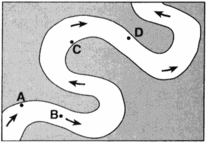
The diagram below shows a meandering stream. Letters A, B, C, and D indicate locations on the streambed.


At which two locations in the diagram is the rate of erosion GREATER than the rate of deposition?

a)

A and B

b)

C and D

c)

D and A

d)

B and C

69.

The diagram below shows a section of a meander in a stream. The arrows show the direction of stream flow.


The stream bank on the outside of this meander is steeper than the stream bank on the inside of this meander because of the water on the outside of this meander is moving

a)

slower, causing erosion

b)

faster, causing deposition

c)

faster, causing erosion

d)

slower, causing deposition

70.

which condition is most likely to cause surface runoff during a rainstorm?

a)

the permeability of the soil is greater than the rate of rainfall

b)

The porosity of the soil is greater than the amount of rainfall

c)

the surface slope allows for maximum infiltration

d)

the surface soil is saturated

71.

in which sediments is the capillary action of water greatest?

a)

silt and sand

b)

sand and pebbles

c)

pebbles and cobbles

d)

cobbles and boulders

72.

water will infiltrate surface material if the material is

a)

impermeable and saturated

b)

impermeable and unsaturated

c)

permeable and saturated

d)

permeable and unsaturated

73.

apartment buildings and parking lots completely cover an area that was once an open, grass covered field. What factor most likely increased because of this construction?

a)

runoff

b)

capillarity

c)

the level of the local water table

d)

infiltration into the ground

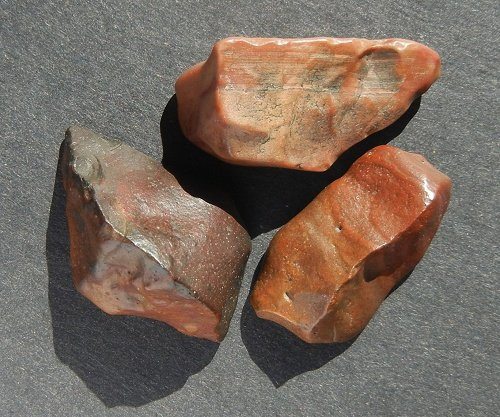
74.
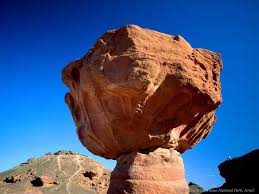
These rocks were made smooth by wind blowing smaller rock particles across their surface.  This is an example of:
a)
ice wedging
b)
chemical weathering
c)
acid rain
d)
abrasion
75.
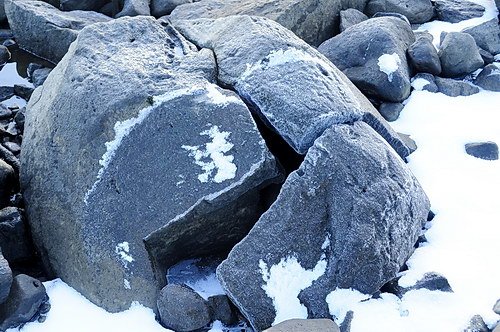
These rocks were broken apart from the continuous freeze/thaw of water in the cracks of the rocks. This is an example of:
a)
ice wedging
b)
acid rain
c)
permeability
d)
abrasion
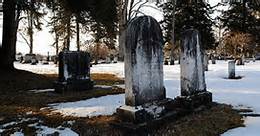
76.
These gravestones have slowly broken down and turned a blackish color due to the action of:
a)
ice wedging
b)
abrasion
c)
acid rain
d)
mechanical weathering
77.
How might a weathered mountain appear different than an unweathered mountain?
a)
Weathered mountain would be taller.
b)
Weathered mountain would be rounder and less jagged.
c)
Weathered mountain would be more jagged and less rounded.
d)
Weathered mountain would have no trees.
78.
How is mechanical weathering different from chemical weathering?
a)
Chemical weathering happens over much shorter time frame than mechanical weathering.
b)
Chemical weathering changes the chemical composition of rocks; mechanical weathering does not.
c)
Chemical weathering occurs only in tropical climates; mechanical weathering occurs only in cool climates.
d)
Chemical weathering occurs only in the mountains; mechanical weathering occurs only on flat land.
79.
Potholes forming in the road after a cold winter is an example of:
a)
mechanical weathering
b)
chemical weathering
80.
Rocks along a riverbed that are smoothed from continuously moving water and sediment rubbing against them is an example of:
a)
mechanical weathering
b)
chemical weathering
81.
Exposure to rain and oxygen causes the metal minerals in rocks to rust and fall apart.  This is an example of:
a)
mechanical weathering
b)
chemical weathering
82.
Lichens (small green plants) growing on a large boulder release enzymes and other acids that slowly break the rock apart. This is an example of:
a)
mechanical weathering
b)
chemical weathering