wayground logo

Free Printable Worksheets

Font size

S
M
L
XL
Worksheets

Chemical Reactions

Total questions: 50

Worksheet time: 53mins
Name
Class
Date
1.
4Si + S8 --> 2Si2S4
a)
Synthesis
b)
Decomposition
c)
Single displacement
d)
Double displacement
2.
3Ca + 2AlCl3 --> 3CaCl2 + 2Al
a)
Synthesis
b)
Decomposition
c)
Single diplacement
d)
Double displacement
3.
3KOH + H3PO4 --> K3PO4 + 3H2O
a)
Synthesis 
b)
Decomposition
c)
Single displacement
d)
Double displacement
4.
2Pb(NO3)2 --> 2PbO + 4NO2 + O2
a)
Synthesis 
b)
Decomposition
c)
Single displacement
d)
Combustion
5.
Which chemical reaction breaks down into 2 substances?
a)
Double Replacement
b)
Single Replacement
c)
Synthesis
d)
Decomposition
6.
Which chemical reaction takes place when 2 substances react to form a single product?
a)
Decomposition
b)
Double Replacement
c)
Single Replacement
d)
Synthesis
7.
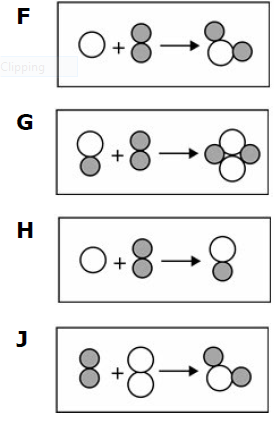
Which of the following models best demonstrates a balanced chemical equation?
a)
F
b)
G
c)
H
d)
J
8.
The reactants are on the left side of the chemical equation.
a)
True
b)
False
9.
What is the mass of H2O in the reaction above?
a)
70.01
b)
24.11
c)
21.44
d)
48.22
10.

Which of the following BEST describes a chemical reaction?

a)

A compound is crushed into a fine powder.

b)

Atoms break apart into even smaller particles.

c)

Existing electron bonds break and reattach to other atoms

d)

Molecules move faster until they fly apart from each other

11.

In a ___________change, a substance changes into a different substance.

a)

Physical

b)

Chemical

12.

The Law of Conservation of Mass states

a)

that matter exists in all states and reacts the same

b)

that matter can only be changed into new substances by introducing a catalyst

c)

that matter exists in the same state throughout any chemical change

d)

that matter cannot be created or destroyed and that the mass of the products must equal the mass of the reactants

13.

How many Al atoms are in this compound? 4Al2O3

a)

2

b)

8

c)

6

d)

4

14.

An gel ice pack getting cold after you put it in the freezer for an hour.

a)

Chemical change

b)

Physical change

15.
In writing a chemical equation that produces hydrogen gas, the correct representation of hydrogen gas is
a)
2H
b)
OH
c)
H
d)
H2
16.
What type of reaction is this?
2 C6H14 + 19 O2 --> 12 CO2 + 14 H2O
a)
Single Replacement
b)
Double Replacement
c)
Combustion
d)
Decomposition
17.
3KOH + H3PO4 --> K3PO4 + 3H2O
a)
Synthesis 
b)
Decomposition
c)
Single displacement
d)
Double displacement
18.
Write the balanced equation for octane (C8H18) combusting
a)
C8H18 + 8O2 --> 8CO2 + 9H2O
b)
C8H18 + 17O2 --> 8CO2 + 9H2O
c)
2C8H18 + 25O2 --> 16CO2 + 18H2O
d)
C8H18 + O2 --> CO2 + H2O
19.
What is the name for the solid formed during a reaction?
a)
Precipitate
b)
Rocks
c)
Bubbles
d)
Aqueous 
20.
An enzyme acts as a catalyst to a chemical reaction by
a)
lowering the activation energy needed to get the reaction started.
b)
making one of the substrates needed for the reaction.
c)
regulating the temperature at which the reaction takes place.
d)
regulating the pH at which the reaction takes place.
21.
How do enzymes control chemical reactions in the body?
a)
Enzymes speed up chemical reactions.
b)
Enzymes slow down chemical reactions.
c)
Enzymes increase the activation energy of a reaction.
d)
Enzymes inhibit the catalysts of a reaction.
22.
Chemical reactions always involve
a)
the breaking of bonds in reactants.
b)
the formation of new bonds in products.
c)
the breaking of bonds in reactants and the formation of new bonds in products.
d)
enzymes. 
23.
An enzyme speeds up a reaction by
a)
lowering the activation energy.
b)
raising the activation energy.
c)
releasing energy.
d)
absorbing energy.
24.
The substances that are present before a reaction are the...
a)
reactants
b)
products
c)
both of these
d)
neither of these
25.
Chemical reactions that absorb energy are known as ________________________.
a)
Endothermic
b)
Exothermic
c)
Boring
d)
Explosive
26.
Chemical reactions that release energy are known as ________________________.
a)
Endothermic
b)
Exothermic
c)
Boring
d)
Reactions
27.
In a chemical equation, the substances that are on the right side of the arrow are the...
a)
reactants
b)
products
c)
catalysts
d)
inhibitors
28.
Which type of reaction will feel warm?
a)
endothermic
b)
exothermic
c)
endergonic
d)
none of these
29.
In the equation,          2Mg + O2 ---> 2MgO, which are the reactants?
a)
Mg and O
b)
MgO
c)
Mg and MgO
d)
O and MgO
30.

Substance that decreases the rate of a chemical reaction without being consumed in the reaction

a)

bonding

b)

catalyst

c)

chemical reaction

d)

activation energy

31.
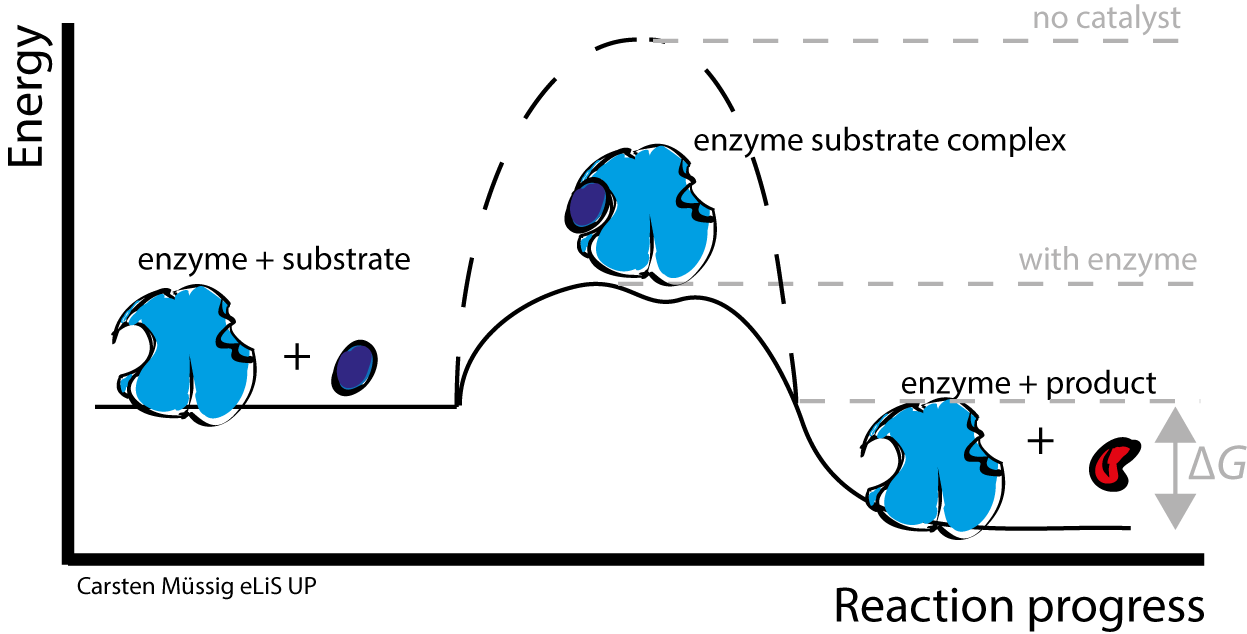
Which line represents an enzyme-catalyzed reaction? 
a)
Line 1
b)
Line 2
32.
What kind of reaction is this?
a)
Endothermic
b)
Exothermic
c)
Cannot be determined
33.

The rate of a reaction is how _____________ a reaction occurs.

a)

Quickly

b)

Easily

c)

Unusually

d)

Differently

34.

Increasing the concentration increase the number of particles per unit _____________.

a)

Mass

b)

Area

c)

Volume

d)

Space

35.

Increasing the temperature gives particles more __________.

a)

Time

b)

Energy

c)

Space

d)

Frequency

36.

As the frequency of ______________ increases, the rate of reaction increases.

a)

Time

b)

Reactions

c)

Collisions

d)

Reactants

37.

List four factors that affects the rate of a reaction

a)

temperature

b)

concentration

c)

surface area

d)

season

e)

catalysts

38.

A temperature increase causes the particles ......

a)

to slow down

b)

move faster

c)

collide higher

d)

in the right order

39.

Why does a higher concentration increase the rate of reaction?

a)

it increases the amount of reactants

b)

it lowers the activation energy

c)

it increases the energy of particle collisions

d)

it increases the frequency of particle collisions

40.

The ______________is required to break the bonds of the reactants.

a)

Carbonic energy

b)

Activation energy

c)

Plutonic energy

d)

Energi Gaib

41.
Grinding a seltzer tablet into powder increases the rate of reaction due to increased
a)
concentration
b)
surface area
c)
temperature
d)
reactants
42.

The only definite way to know a chemical reaction has taken place

a)

heat is conserved

b)

bubbles can be seen

c)

a new substance is produced

d)

the color changes

43.

Na2CO3

a)

chemical reaction

b)

chemical formula

c)

chemical equation

d)

chemical symbol

44.

Which of the following shows lithium reacting with sulfur in a 2 to 1 ratio to produce lithium oxide?

a)

4Li + O2 --> 2Li2O

b)

2Li + O2 --> 2LiO

c)

Li2O+ O2 --> 2LiO

d)

Li2 + O2 -->Li2O2

45.

The law of conservation of mass is true for open and for closed systems.

a)

true

b)

false

46.

Activation energy is usually supplied as

a)

heat

b)

a catalyst

c)

an inhibitor

d)

ice

47.

When existing bonds break and new bonds form

a)

a catalyst is used up

b)

a precipitate always forms

c)

a physical change has occurred

d)

a chemical reaction has occurred

48.

Every chemical reaction involves a change in

a)

mass

b)

energy

c)

volume

d)

concentration

49.

The amount of material in a given volume

a)

catalyst

b)

surface area

c)

concentration

d)

products

50.

A substance used to decrease the rate of a chemical reaction

a)

catalyst

b)

enzyme

c)

precipitate

d)

inhibitor