wayground logo

Free Printable Worksheets

NEW

Font size

S
M
L
XL
Worksheets

Plate Tectonics and Topographic Maps Review

Total questions: 52

Worksheet time: 41mins

Name
Class
Date
1.
What is the elevation of point B?
a)
800 ft
b)
850 ft
c)
900 ft
d)
1000 ft
2.
What is the elevation of Y?
a)
Between 120-140 meters
b)
Between 100-120 meters
c)
Between 140-160 meters
d)
Between 80-100 meters
3.
The distance from D to E is...
a)
A little over 2 km
b)
A little over 3 km
c)
A little over 4 km
d)
A little over 5 km
4.
What is the elevation of A?
a)
10 meters
b)
20 meters
c)
40 meters
d)
120 meters
5.
What feature is formed at B?
a)
river
b)
rift valley
c)
sink hole
d)
mountain
6.
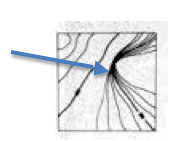
What feature is at the arrow?
a)
volcano
b)
mountain
c)
cliff
d)
river
7.
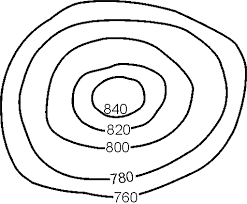
Determine the contour interval:
a)
5 m
b)
10 m
c)
15 m
d)
20 m
8.
Which of the following pairs is correctly matched?
a)
6 and F
b)
1 and A
c)
1 and B
d)
2 and C
9.
Which topographic map matches formation C?
a)
1
b)
2
c)
3
d)
4
10.
If contour lines are close together, then the slope is
a)
gentle
b)
steep
c)
flat
d)
going up and down
11.
What are the curved lines on a topographic map called?
a)
contour lines
b)
contour intervals
c)
slope
d)
elevation
12.
Name this boundary
a)
Convergent
b)
Divergent
c)
Transform
d)
Sergent
13.
Name the boundary
a)
divergent
b)
convergent
c)
transform
d)
sergent
14.
Name the boundary
a)
convergent
b)
transform
c)
divergent
d)
sergent
15.
Mountains form from....
a)
Plates sliding past one another
b)
collision of plates
c)
plates moving away from each other
d)
none of these
16.
Oceanic crust is.....
a)
Younger and less dense than continental crust
b)
Thinner, younger, and more dense than continental crust
c)
older, thicker, and less dense than continental crust
d)
Bigger and younger than continental crust
17.
Earth's plates are....
a)
Constantly moving and changing the face of the Earth
b)
Never moved
c)
Move seldom and very fast
d)
move when they feel like it
18.
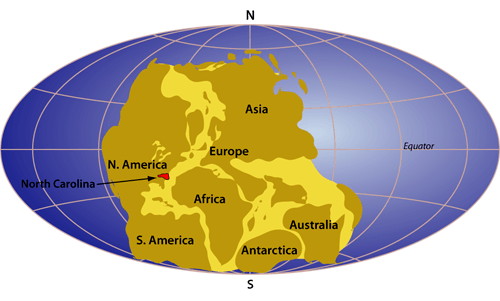
What was the name given to all the continents when they were joined as one super continent?
a)
Supreme Continent
b)
Eurasia
c)
Plate tectonics
d)
Pangea
19.
Plate movement is caused by _____
a)
The rotation of the Earth
b)
Ocean tides
c)
Convection current in the mantle
d)
The moon's gravity
20.
Plates moving apart would be...
a)
convergent
b)
divergent
c)
transform
21.
Which is subducted in an ocean-continental convergent boundary?
a)
continental plate
b)
oceanic plate
22.
What type of boundary creates a new seafloor?
a)
convergent continental to continental
b)
convergent ocean to continental
c)
convergent ocean to ocean
d)
divergent 
23.
A subduction zone is formed....
a)
when one tectonic plate sinks below another
b)
at all plate boundaries
c)
when plates diverge
d)
at transform boundaries
24.

What is the thinnest and outer most layer of the Earth, that we live on?

a)

Outer Core

b)

Crust

c)

Mantle

d)

Inner core

25.

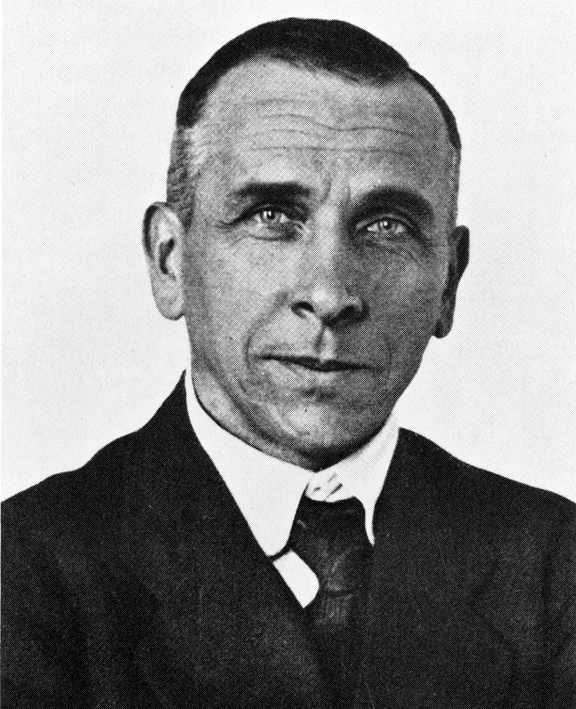
Alfred Wegener used __________ to prove that Pangea once existed ?

a)

graham crackers and frosting

b)

math

c)

a metal detector

d)

fossils

26.

Tectonic plates that are coming together or colliding?

a)

Convergent

b)

Divergent

c)

Transform

d)

Sedergent

27.

Tectonic plates that are spreading or pulling apart.

a)

Convergent

b)

divergent

c)

transform

d)

merging

28.

Tectonic plates that are sliding past each other.

a)

Divergent

b)

Convergent

c)

Transform

d)

collusion

29.

A map is provided that presents information on a certain region of the Earth. Based on the information on the map, at which location are mountains most likely to form?

a)

A

b)

B

c)

C

d)

D

30.

Tectonic plates float on top of the ________

a)

Crust

b)

Mantle

c)

Inner Core

d)

Outer Core

31.
What does the theory of continental drift state?
a)
The continents were once joined in a super-continent and have moved over time
b)
Continents are stationary and do not move
c)
The Earth is broken into lithospheric plates that move due to convection currents
d)
none of the above
32.
Scientists recently discovered that rocks collected from the Franklin Mountains in West Texas and rocks collected from mountains in eastern Antarctica were exactly the same age. Further research showed that the rocks were chemically and geologically the same and came from the same magma source. This discovery provides evidence of —
a)
coastal erosion.
b)
plate tectonics.
c)
ocean currents.
d)
glacial melting.
33.
what is an convergent boudary
a)
when they spread away
b)
when they move into each other
c)
when they slide past one another
34.
what is an transform boundary
a)
when the plates slide past eachother
b)
when they bust into echother
35.
who proposed pangea
a)
Alexander Fleming
b)
Alfred wegener
c)
James Nathsmith
36.

What is the type of plate movement where plates collide?

a)

convergent

b)

divergent

c)

transform

d)

subduction

37.

What is the type of plate movement where plates pull apart?

a)

convergent

b)

divergent

c)

transform

d)

subduction

38.

What is the type of plate movement where plates grind past each other?

a)

convergent

b)

divergent

c)

transform

d)

subduction

39.

What happens at a convergent boundary?

a)

Earthquakes & Mountain Ranges

b)

Volcanoes & Rift Valleys

c)

Volcanoes & Trenches

d)

Earthquakes & Faults

40.

What is the type of plate movement where an oceanic plate moves under another plate?

a)

convergent

b)

divergent

c)

transform

d)

subduction

41.

What happens at a transform boundary?

a)

Earthquakes & Mountain Ranges

b)

Volcanoes & Rift Valleys

c)

Volcanoes & Trenches

d)

Earthquakes & Faults

42.

The supercontinent that existed 250 million years ago

a)

Pangea

b)

Magma

c)

SuperContinent

d)

Earth

43.

Huge wave caused by an underwater earthquake

a)

Fault

b)

Tsunami

c)

Hurricane

44.

A crack in the earth's surface

a)

earthquake

b)

fault

c)

volcano

45.
Who is the person credited with developing the theory of continental drift?
a)
Harry Hess
b)
Galileo
c)
Alfred Wegener
d)
Newton
46.
What is this a picture of?
a)
plate tectonics
b)
continental drift
c)
pangea
d)
glacier scaring
47.
What evidence did Wegener use in his theory?
a)
Continents and fossils fitting together/matching-up like puzzle pieces 
b)
glacier scars and evidence from temperature
c)
mountain ranges and coal deposits line up across continents
d)
all of the above
48.
Why did no one believe Wegener's thoery?
a)
He could not explain HOW the continents moved
b)
He didn't have evidence
c)
His data was wrong
d)
He didn't use the right technology to gather data
49.
What are the two types of crust?
a)
continental and oceanic
b)
ocean and basin
c)
lower and upper
d)
thick and thin
50.
Transform boundaries are most likely to produce what phenomenon?
a)
volcanoes
b)
deep sea trenches
c)
underwater mountain ranges
d)
earthquakes
51.
Two tectonic plates collide at a ___ plate boundary.
a)
convergent
b)
divergent
c)
transform
d)
transformer
52.
A place where two plates slide past each other, moving in opposite directions, is known as a
a)
transform boundary
b)
divergent boundary
c)
convergent boundary
d)
rift valley