wayground logo

Free Printable Worksheets

Font size

S
M
L
XL
Worksheets

Oceans

Total questions: 105

Worksheet time: 3hrs 57mins

Name
Class
Date
1.
Surface currents are a result of
a)
Global Wind Patterns
b)
Earth's Rotation
c)
Density
d)
All of the above
2.
Deep Ocean currents are a result of
a)
Global Wind Patterns
b)
Earth's Rotation
c)
Density
d)
All of the above
3.
The Coriolis Effect is caused by
a)
Earth rotating around the sun
b)
Earth rotating on its axis
c)
The tides
d)
Gravity
4.
The Gulf stream carries _____________ water from the east coast of The United States to the West coast of Europe.
a)
Cold
b)
Warm 
c)
Freezing
d)
Fresh
5.
What happens to a current when it comes in contact with a continent or landmass?
a)
It continues over the continent
b)
It stops
c)
It changes direction
d)
It is absorbed by the land
6.
As you go deeper in the ocean, the water is colder and less salty.
a)
True
b)
False
7.
Due to the Coriolis Effect, water in the northern hemisphere moves
a)
clockwise
b)
counter clockwise
c)
both
d)
neither
8.
Warm ocean currents generally come from
a)
The North Pole
b)
The South Pole
c)
The Equator
d)
Both A and B
9.
The California Current (west coast) carries _________ water from canada
a)
Cold 
b)
Warm
c)
Freezing
d)
Fresh
10.
Two types of water currents are
a)
local and global
b)
sea and land
c)
surface and deep
d)
warm and cold
11.
Ocean currents have an affect on which two things
a)
climate and weather
b)
temperature and density
c)
land and sea
d)
equator and poles
12.
A strong surface current that runs along the east coast of the United States and carries warm water to Europe.
a)
California Current
b)
Global Conveyor Belt
c)
Gulf Stream
d)
Surface Current
13.
Constantly moving system of deep-ocean circulation driven by temperature and salinity. It moves water around the globe.
a)
California Current
b)
Global Conveyor Belt
c)
Surface Currents
d)
Gulf Stream
14.
A horizontal movement of ocean water that is caused by wind and that occurs at or near the ocean's surface.
a)
Gulf Stream
b)
Global Conveyor Belt
c)
Surface Current
d)
Gyre
15.
The large, circular surface-current pattern found in each ocean.
a)
California Current
b)
Surface Current
c)
Gyre
d)
Global Conveyor Belt
16.
What process brings the deep cold ocean currents up to the surface?
a)
Conduction
b)
Global Wind Patterns
c)
Convection Currents
d)
Temperature and salinity
17.
Why are surface currents at the surface of the ocean?
a)
colder temperature
b)
colder temperature & more salinty
c)
warmer temperature & less salinty
d)
less salinty
18.
A cool current in the Pacific Ocean near North America that brings cold water down from Canada.
a)
California Current
b)
Global Conveyor Belt
c)
Gulf Stream
d)
Surface Current
19.
Cold ocean currents generally come from
a)
The North Pole 
b)
The South Pole
c)
The Equator
d)
Both A and B
20.
Due to the Coriolis Effect, water in the southern hemisphere moves
a)
clockwise
b)
counter-clockwise
c)
both
d)
neither
21.
What are underwater mountain ranges called?
a)
continental shelf
b)
mid-ocean ridges
c)
abyssal plains
d)
continental slopes
22.
What are valleys between the mountain ridges?
a)
rift zones
b)
trenches
c)
abyssal plains
d)
continental slope
23.
Where is the shallowest part of the ocean floor?
a)
continental slope
b)
continental shelf
c)
abyssal plains
d)
rift zones
24.
What is the deepest part of the ocean basin?
a)
abyssal plains
b)
trenches
c)
rift zones
d)
mid-ocean ridge
25.
What is the flat land located on either side of the mid-ocean ridge?
a)
continental slope
b)
continental shelf
c)
abyssal plain
d)
ocean basin
26.
What is an opening in the surface where lava may flow?
a)
trench
b)
seamount
c)
rift zone
d)
valley
27.
Which of the following is the corresponding Continental land form for the Abyssal Plain. 
a)
Plains
b)
Mountain
c)
Dessert 
d)
Valley 
28.
A rift zone or valley is what?
a)
An opening in the surface where lava may flow
b)
Wide-Flat areas of land
c)
Low land between hills or mountians
d)
Land which rises high about the ground
29.

What is the underwater border of each continent?

a)

coastal plain

b)

continental shelf

c)

continental slope

d)

oceanic ridge

30.

What is the steep area where the ocean rapidly gets deeper ?

a)

coastal plain

b)

continental shelf

c)

continental slope

d)

oceanic ridge

31.

What is the lower portion of the continental slope?

a)

continental shelf

b)

continental slop

c)

continental rise

d)

oceanic ridge

32.

What is the range of underwater mountains and valley?

a)

coastal plain

b)

continental shelf

c)

continental slope

d)

oceanic ridge

33.

What is the land at the edge of the ocean?

a)

jetty

b)

shore

c)

tide

d)

current

34.

What is the periodic change of the ocean water level?

a)

jetty

b)

shore

c)

tide

d)

current

35.

What is the continuous flow of ocean water in a regular pattern?

a)

shore

b)

tide

c)

current

d)

wave

36.

What is the transfer of energy through the water?

a)

shore

b)

tide

c)

current

d)

wave

37.

What is an abnormally high water level during a hurricane?

a)

storm surge

b)

El Nino

c)

high tide

d)

low tide

38.

What is a severe weather season caused by an unusually warm South Pacific current?

a)

storm surge

b)

El Nino

c)

high tide

d)

low tide

39.

What is the point at which the water reaches its highest regular place on the shore?

a)

storm surge

b)

El Nino

c)

high tide

d)

low tide

40.

What is the point at which the water reaches its lowest regular place on the shore?

a)

storm surge

b)

El Nino

c)

high tide

d)

low tide

41.
The ocean layers are divided by the amount of __________________ in each layer.
a)
animals
b)
salt
c)
light
d)
people
42.
True or False: Salt water is less dense than regular tap water?
a)
True
b)
False
43.

salinity

a)

bottom layer of ocean water

b)

the amount of dissolved salts in a liquid

c)

warm, top layer of ocean water

d)

2nd layer of ocean water

44.
How many continents are there in the world?
a)
4
b)
5
c)
6
d)
7
45.
How many oceans are there in the world?
a)
7
b)
6
c)
5
d)
4
46.
Which is the largest continent in the world?
a)
Asia
b)
Africa
c)
North America
d)
Antarctica
47.
On this continent, you can find animal species such as penguins, seals and some birds. This is the coldest continent.
a)
North America
b)
Antarctica
c)
South America
d)
Europe
48.
This is the smallest continent, farthest away from the others where you may find koalas and kangaroos.
a)
Europe
b)
Africa
c)
South America
d)
Australia
49.
This continent contains major historic cities like Paris, London and Rome.
a)
Africa
b)
Europe
c)
Asia
d)
North America
50.
Identify the ocean at location #3
a)
Atlantic Ocean
b)
Arctic Ocean
c)
Pacific Ocean
d)
Indian Ocean
51.
Identify the ocean at location #5
a)
Atlantic Ocean
b)
Southern Ocean
c)
Pacific Ocean
d)
Arctic Ocean
52.
Identify the ocean at location #2
a)
Indian Ocean
b)
Pacific Ocean
c)
Southern Ocean
d)
Arctic Ocean
53.
Identify the ocean at location #1
a)
Southern Ocean
b)
Arctic Ocean
c)
Atlantic Ocean
d)
Indian Ocean
54.
Identify the ocean at location #4
a)
Indian Ocean
b)
Pacific Ocean
c)
Arctic Ocean
d)
Atlantic Ocean
55.
What is the continent that is pink?
a)
North America
b)
South America
c)
Asia
d)
Australia
56.
What is the continent that is blue?
a)
Africa
b)
Australia
c)
Antarctica
d)
Asia
57.
What is the continent that is red?
a)
North America
b)
Europe
c)
Africa
d)
Australia
58.
What is the continent that is dark green?
a)
North America
b)
South America
c)
Europe
d)
Australia
59.
What is the continent that is yellow?
a)
Africa
b)
Australia
c)
Asia
d)
Antarctica
60.
What is the continent that is orange?
a)
Africa
b)
Australia
c)
Antarctica
d)
Asia
61.
What is the continent that is light green?
a)
North America
b)
South America
c)
Africa
d)
Australia
62.

Masses of ocean water that flow from one place to another

a)

surface current

b)

ocean current

c)

gyres

d)

upwelling

63.

The deflection of currents to the right in the northern hemisphere and to the left in the southern hemisphere is caused by the

a)

coriolis effect

b)

holden effect

c)

earths gravity

d)

the moons gravity

64.

Currents that start in low latitude regions and move to high latitude regions effect the climate by

a)

bringing cold water to warm water areas

b)

bringing warm water to cold water areas

c)

currents do not affect climate

d)

who cares

65.

Currents that bring water from high latitude regions to low latitude regions effect climate by

a)

bringing colder water to warm regions regulating temperature

b)

bringing even warmer water to hot areas creating tropical climates

c)

currents dont affect the climate

d)

i hate the ocean

66.

When winds blow surface water in a direction cold, nutrient rich water moves upward from the deep, this is called

a)

upwelling

b)

water replacement

c)

oh my god shoot me now

d)

conveyor belt

67.

Most ocean waves obtain their energy and motion from the

a)

earths rotation

b)

wind

c)

moon

d)

mr holdens giant ego

68.

Oceans circulate in large circular patterns called

a)

whirlpools

b)

vortexs

c)

gyres

d)

oceans don't circulate

69.

An ocean current moving from the equator toward a pole is

a)

cold

b)

warm

c)

cold in the northern hemisphere and warm in the southern hemisphere

d)

warm in the northern hemisphere and cold in the southern hemisphere

70.

What is the real reason why salty water sinks?

a)

It has higher density

b)

It has more molecules and adds to its mass

c)

The molecules have more kinetic energy

d)

It has more salt than regular water

71.

What is the real reason why cold water sinks?

a)

It has more molecules than warm water

b)

The molecules have higher kinetic energy

c)

The molecules have lower kinetic energy, making it more compact and heavier

d)

The mass is heavier which makes its density higher than warm water

72.

Water makes up what percent of the surface of the planet?

a)

50%

b)

60%

c)

70%

d)

80%

73.

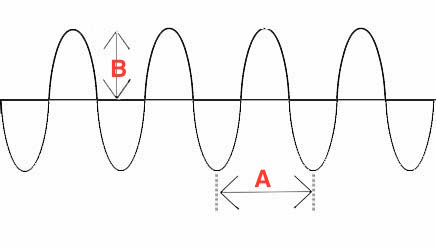
What property of this wave is represented by the letter "B"

a)

amplitude

b)

crest

c)

trough

d)

wave height

74.
Which vocabulary term is used to identify the distance between points C & G?
a)
Amplitude
b)
Crest
c)
Frequency
d)
Wavelength
75.

The distance from the crest to the trough is known as the wavelength

a)

true

b)

false

76.
The highest point on a wave is:
a)
the crest
b)
the trough
c)
the top
d)
the coast 
77.

Which letter represents a trough

a)

A

b)

F

c)

H

d)

D

78.

Which letter represents a crest (select all that are correct)

a)

A

b)

B

c)

F

d)

E

79.

A spring tide causes the following

a)

Higher high tides and no low tides

b)

Higher high tides and Lower low tides

c)

Small High Tides and High Low Tides

d)

Low high tides and Low low tides

80.

When asked to measure and find the wave height you need to measure the distance between

a)

Crest and Crest

b)

Trough and Crest

c)

Crest and Trough

81.

Which continent does most of the plastic go to?

a)

North America

b)

South America

c)

Europe

d)

Asia

82.

Why is plastic used so extensively?

a)

Because it is durable

b)

Because it is strong

c)

Because it is cheap

d)

All of the above

83.

Why does large debris matter?

a)

it breaks down into smaller debris

b)

It takes up a lot of space

c)

fish live there

84.

Why do microplastics deteriorate?

a)

sun exposure

b)

waves

c)

temperature changes

d)

all of the above

85.

How many major gyres are found in the world's oceans?

a)

2

b)

3

c)

5

d)

6

86.

What do scientists call plastics when they break down into tiny pieces?

a)

Microtrash

b)

Microplastics

c)

Microparticles

d)

Macroplastics

87.

What are the three main factors that cause plastics in the ocean to break down?

a)

Waves

b)

Salt

c)

Sunlight

d)

Animals

88.

Which ocean contains the largest amount of trash pollution?

a)

Atlantic Ocean

b)

Indian Ocean

c)

Arctic Ocean

d)

Pacific Ocean

89.

How does plastic trash cause marine life and sea birds to starve?

a)

They mistake plastic for food, which clogs their stomachs and doesn't leave any room for real food.

b)

Plastic takes up space in the water so marine animals have no place to live.

c)

The plastic in the ocean is so dense that the marine life cannot find food easily.

d)

Plastic doesn't cause marine life or sea bird to starve: they're smart enough to know the difference between plastic and food.

90.

According to the article, humans are also ingesting plastic that has ended up in the ocean. How is this possible.

a)

The tiny plastic particles in the ocean end up coming through the faucets in our sinks once the salt water is converted to fresh water.

b)

The fish in the ocean eat the plastics and humans eat the fish, causing the toxic chemicals from the plastics to spread from the fish to humans.

c)

Humans are mistaking plastics in the ocean for food just as the marine life and sea birds are.

d)

All of the above.

91.

Warm air __________.

a)

is not part of the atmosphere

b)

has less energy

c)

sinks

d)

rises

92.

Winds that blow over long distances in predictable patterns are called ____________.

a)

seasonal winds

b)

strong winds

c)

global winds

d)

local winds

93.

Temperature differences between the equator and the poles produce giant __________________ in the atmosphere.

a)

clouds

b)

global warming

c)

Greenhouse Effect

d)

convection currents

94.
What causes wind to blow?
a)
Differences in longitude 
b)
Shock waves from clouds 
c)
Differences in air temperature and pressure 
d)
The rotation of the earth
95.
What is the Coriolis Effect and how does it effect global winds?
a)
Curving of winds due to rotation of earth curves wind counterclockwise in Northern Hemisphere and clockwise in the Southern Hemisphere
b)
Movement of ocean currents caused by earth rotation' counterclockwise in Northern Hemisphere and clockwise in Southern Hemisphere
c)
curve of global winds caused by global rotation clockwise in Northern Hemisphere and counterclockwise in Southern Hemisphere
96.
Why does most of the ocean life live in or at least visit the ocean surface?  
a)
that is where the majority of the oxygen and sunlight occurs
b)
that is where chemo-synthesis occurs and therefore more life
c)
the water pressure is higher there and is more enjoyable
d)
the temperatures are colder and most animals need cooler temperatures
97.
True or false: Phytoplankton is the first link in the food chain.
a)
true
b)
false
c)
i don't know
d)
wasn't listening
98.
What is Phytoplankton
a)
A microscopic thing that lives in watery places.
b)
a dumb plant
c)
A food source for all animals
d)
something that you eat
99.
A[n] ______________ tide occurs when the sun is at right angles to the line between Earth and the moon. 
a)
high
b)
neap
c)
low
d)
spring
100.
Differences in the moon's and sun's pull on different sides of the Earth cause _________.
a)
gravity
b)
lunar phases
c)
tides
d)
dabbing
101.
A[n] ___________ tide occurs when the sun, Earth, and the moon are nearly in a line. 
a)
spring
b)
high
c)
low
d)
neap
102.
The bulge of water on the side of the Earth closest to the moon produces ___________.
a)
high tide
b)
low tide
c)
neap tide
d)
spring tide
103.
Tides are the cycle of rising and falling ocean water that repeats automatically every
a)
24 hours
b)
12.5 hours
c)
25 hours
d)
6.25 hours
104.
Tides are caused mainly by the differences in how much gravity from the moon and the sun pulls on different parts of the Earth. 
a)
True
b)
False
105.
Changes in the positions of Earth, the moon, and the sun affect the height of high tides during a month. 
a)
True
b)
False