
NEW
Font size
S
M
L
XL
 Worksheets
3rd Quarter CSA Review
Total questions: 35
Worksheet time: 26mins
Name
Class
Date
1.
The pH scale is a range from:
a)
1-7
b)
0-14
c)
1-5
d)
1-20
2.
A(n) ______ is a substance with a pH less than 7
a)
Acid
b)
Alkaline
c)
Base
d)
Buffer
3.
A(n) _______ is a substance with a pH greater than 7.
a)
Base
b)
Acid
c)
Buffer
d)
Water
4.
HBr is an example of a(n)
a)
Acid
b)
Base
c)
Neutral
5.
Which of the following statements is correct?
a)
Blue litmus paper turns red when placed in a base.
b)
Red litmus paper turns blue when placed in a base.
c)
Blue litmus paper stays blue when placed in an acid.
d)
Red litmus paper stays red when placed in a base.
6.
Which of the following is a base?
a)
NaOH
b)
HCl
c)
HF
d)
H2O
7.
This particle is found in the nucleus and has no charge
a)
Neutron
b)
Proton
c)
Electron
8.
This particle is found in the nucleus and has a positive charge
a)
Electron
b)
Proton
c)
Neutron
9.
This is a negatively charged particle found outside the nucleus
a)
Electron
b)
Proton
c)
Neutron
10.
The first person to ever talk about an atom was
a)
Democritus
b)
Rutherford
c)
Dalton
11.

What scientist is best known for his "Plum Pudding" model of the atom?
a)
J.J. Tomson
b)
Ernest Rutherford
c)
John Dalton
d)
Democritus
12.
Rutherford's gold foil experiment provided evidence that...
a)
negative and positive charges are spread evenly throughout the atom.
b)
alpha particles have a positive charge.
c)
gold is not a dense as previously thought.
d)
there is a dense positively charged nucleus at the center of an atom.
13.

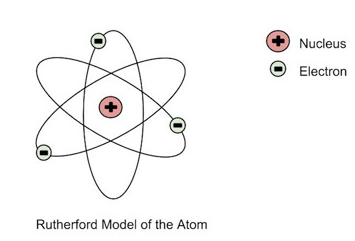
Who came up with this model of an atom?
a)
J.J. Thompson
b)
Ernest Rutherford
c)
Neils Bohr
d)
James Chadwick
14.
The majority of an atom's mass exists where?
a)
In the nucleus
b)
In the electron cloud
c)
In the space between the nucleus and the electrons
d)
In the neutrons
15.

What element is pictured?
a)
Hydorgen
b)
Boron
c)
Beryllium
d)
Arsenic
16.
Which model below is Dalton's original idea for the atom?
a)
b)
c)
d)
17.
Thomson believed the atom was a smooth, hard marble with a positive charge. And trapped within this marble were negatively charged particles. Which picture below matches this?
a)
b)
c)
d)
18.
Who stated that electrons move in layers or shells?
a)
Bohr
b)
Chadwick
c)
Rutherford
d)
Dalton
19.

Which scientist proposed that the atom looked like the above image?
a)
John Dalton
b)
JJ Thomson
c)
Ernest Rutherford
d)
Niels Bohr
20.
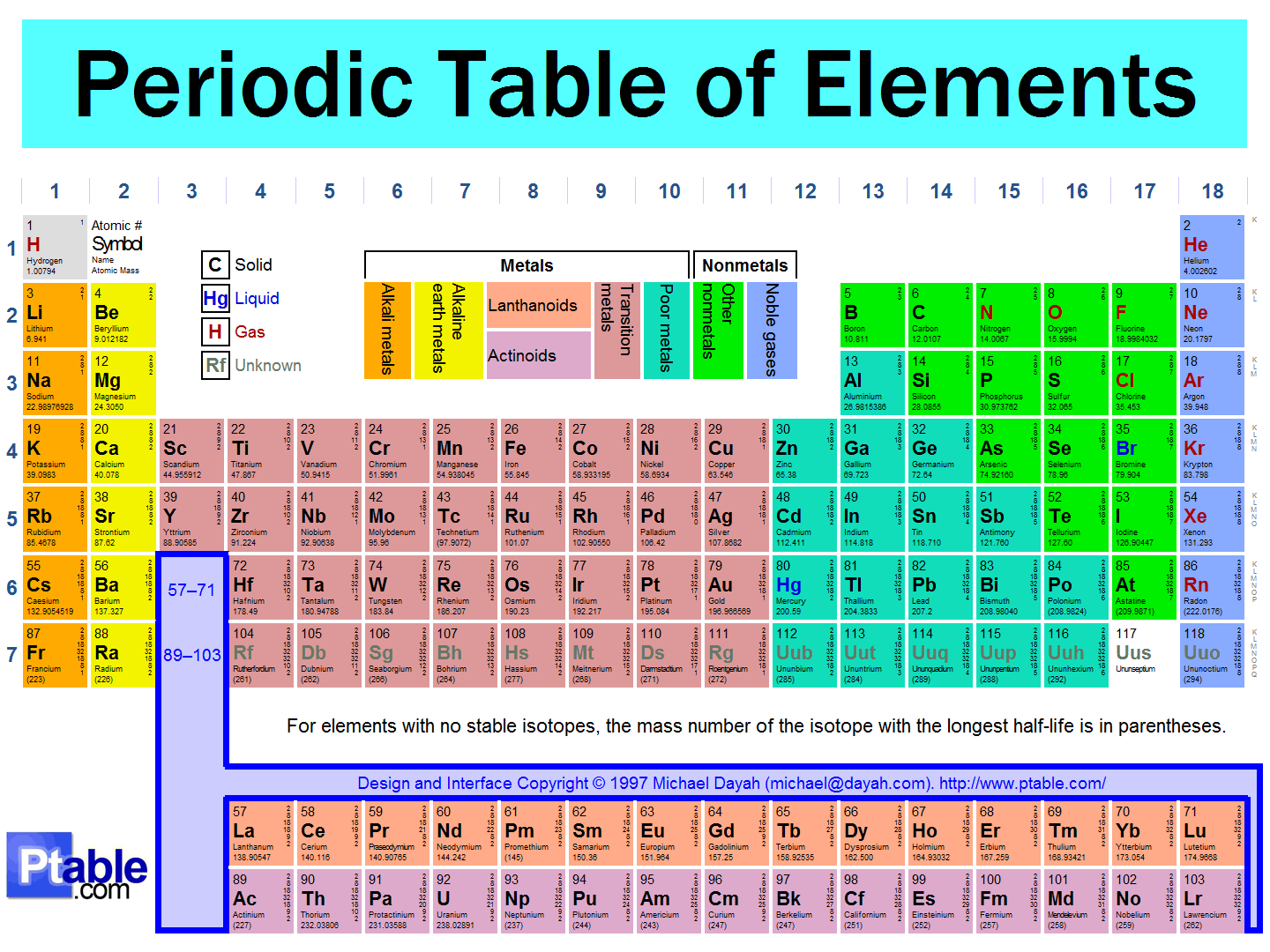
The horizontal row on the periodic table is called a
a)
group
b)
family
c)
period
d)
atomic number
21.

A vertical column is called...
a)
group
b)
tower
c)
period
d)
crew
22.
What do atoms that form positive ions tend to do?
a)
Tend to lose electrons
b)
Tend to lose protons
c)
Tend to gain electrons
d)
Tend to gain protons
23.
What happens when the sodium atom loses an electron?
a)
It become negatively charged
b)
It become positively charged
c)
none
24.
What usually forms the negative ion?
a)
nonmetals
b)
metal
c)
none
25.
Covalent compounds
a)
Share electrons
b)
transfer electrons
c)
contain a sea of electrons
d)
conduct electricity
26.
What two types of atoms make a covalent bond?
a)
2 Nonmetals
b)
1 Nonmetal and 1 Metal
c)
2 Metals
d)
2 Noble Gases
27.
What charges attract?
a)
Opposite
b)
Same
28.

What elements generally make an ionic bond?
a)
metal and nonmetal
b)
2 or more nonmetals
c)
metal
d)
none of the above
29.
Predict the bond that will form between Be and F.
a)
Ionic
b)
Covalent
30.
What is a valence electron?
a)
an electron that is found in the outermost shell of an atom.
b)
an electron found in the innermost shell of an atom.
c)
an electron found in the middle shell.
31.
What does the Law of Conservation of Mass state?
a)
Matter cannot be gained or lost in a chemical reaction.
b)
Matter can only be lost in a chemical reaction.
c)
Matter can only be gained in a chemical reaction.
d)
Matter can be gained and lost in a chemical reaction.
32.
What is the left part of a chemical equation called?
2H2 + O2 --> 2H2O
2H2 + O2 --> 2H2O
a)
Reactants
b)
Products
c)
Yields
d)
Chemical Equation
33.
What is the right part of a chemical equation called...
2H2 + O2 --> 2H2O
2H2 + O2 --> 2H2O
a)
Reactants
b)
Products
c)
Yields
d)
Chemical Equation
34.
What is the total number of atoms present in 5Na3PO4
a)
5
b)
40
c)
55
d)
8
35.
Is the following equation balanced?...
Al + O2 --> 2Al2O3
Al + O2 --> 2Al2O3
a)
Yes!
b)
No!
Reset

