
 Worksheets
Seasons, Moon Phases and Eclipses
Total questions: 45
Worksheet time: 38mins
Name
Class
Date
1.

Does the sun orbit around Earth or does Earth orbit around the sun?
a)
Earth orbits around the sun.
b)
The sun orbits Earth.
2.

The equator is an imaginary line that divides the earth into ______ hemispheres and ______ hemispheres.
a)
East and West
b)
North and East
c)
Northern and Southern
d)
South and West
3.
Which way does the Earth rotate?
a)
Clockwise
b)
Counterclockwise
4.

At which position is Tennessee experiencing summer?
a)
Position 1, because North America receives the most direct sun
b)
Position 2, because North America is tilted toward the sun
c)
Position 3, because North America is parallel to the sun
d)
Position 4, because North America is tilted away from the sun
5.

What would be the result if the Earth's axis was not tilted but straight up and down?
a)
Nothing would change
b)
There would be no seasons
c)
Days would get longer
d)
The Equator would burn up and the poles would freeze
6.

Which season is picture A for the Northern Hemisphere?
a)
Vernal Equinox
b)
Summer Solstice
c)
Winter Solstice
d)
Autumnal Equinox
7.
Which season is it nine months after picture B for the Southern Hemisphere?
a)
Vernal Equinox
b)
Summer Solstice
c)
Winter Solstice
d)
Autumnal Equinox
8.

6.6 What season is the Southern Hemisphere experiencing?
a)
Fall
b)
Winter
c)
Spring
d)
Summer
9.

What happens on solstice days?
a)
The Sun's rays shine straight down on the equator
b)
Day and night hours are equal
c)
Earth's North Pole leans toward or away from the Sun
10.

6.6 At position A, which hemisphere would have summer?
a)
Northern hemisphere
b)
Southern hemisphere
c)
neither, it would be vernal equinox
d)
neither, it would be an autumnal equinox
11.
What has the greatest affect on tides?
a)
moon
b)
sun
c)
temperature
d)
time of year
12.
When the sun's light is blocked by the moon and makes a shadow on earth, this is called a...
a)
lunar eclipse
b)
solar eclipse
13.
When the moon passes behind the Earth into the shadow, this is called a...
a)
lunar eclipse
b)
solar eclipse
14.
The darkest part of the shadow during an eclipse is the...
a)
umbra
b)
penumbra
c)
area of totality
15.
Equinoxes occur in...
a)
summer/winter
b)
spring/fall
16.
A solar eclipse only happens during a ________ moon.
a)
New
b)
Cresent
c)
Gibbous
d)
Full
17.
A lunar eclipse only happens during a ________ moon.
a)
New
b)
Cresent
c)
Gibbous
d)
Full
18.
Where must you be to see a total solar eclipse?
a)
a corona
b)
an orbit
c)
the moon's shadow
d)
the earth's shadow
19.

What happens during a solar eclipse?
a)
The sun blocks the moon from Earth.
b)
The moon blocks the light from the sun from Earth.
c)
The Earth blocks the moon from the sun.
d)
The Earth blocks the light from the sun on the moon.
20.
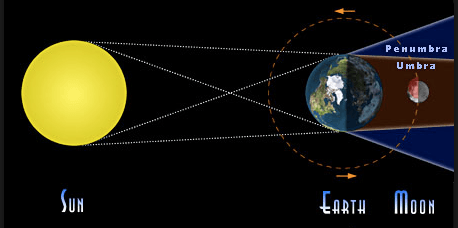
Which type of eclipse is shown in the diagram?
a)
Solar Eclipse
b)
Lunar Eclipse
c)
Total Eclipse
d)
Partial Eclipse
21.
What part of the moon do we see from Earth?
a)
all of it
b)
the same side
c)
none of it
d)
only one quarter
22.
As the moon's shape appears to get smaller, we say that the moon is _.
a)
swelling
b)
waxing
c)
waning
d)
disappearing
23.
About how long does it take the moon to make one complete cycle around the earth?
a)
65 days
b)
8 days
c)
365 days
d)
28 days
24.
Which moon phase is when you can't see the moon at all?
a)
Waning crescent
b)
Full moon
c)
Waxing gibbous
d)
New moon
25.
Phases of the moon in which the moon appears to be getting larger are referred to as _.
a)
waxing
b)
waning
c)
new
d)
eclipse
26.
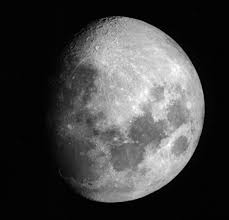
Name the moon phase
a)
waning crescent
b)
waxing crescent
c)
waning gibbous
d)
waxing gibbous
27.
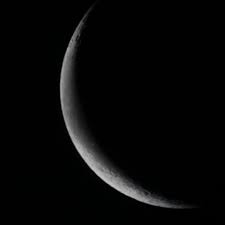
Name the moon phase
a)
waning crescent
b)
waxing crescent
c)
waning gibbous
d)
waxing gibbous
28.
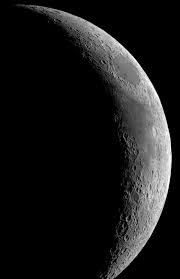
Name the moon phase
a)
waning crescent
b)
waxing crescent
c)
waning gibbous
d)
waxing gibbous
29.
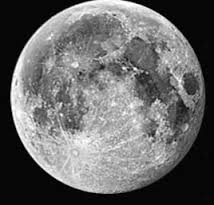
Name the moon phase
a)
First Quarter
b)
Last Quarter
c)
New Moon
d)
Full Moon
30.
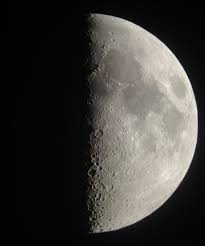
Name the moon phase
a)
First Quarter
b)
Last Quarter
c)
New Moon
d)
Full Moon
31.
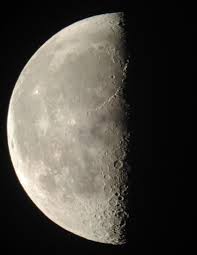
Name the moon phase
a)
First Quarter
b)
Last Quarter
c)
New Moon
d)
Full Moon
32.

Name the phase of the moon for letter a
a)
First Quarter
b)
Last Quarter
c)
Waxing Gibbous
d)
Waning Gibbous
33.

Name the phase of the moon for letter f
a)
Waning Gibbous
b)
Waxing Gibbous
c)
Waning Crescent
d)
Waxing Crescent
34.

What phase comes AFTER this one?
a)
Waxing Crescent
b)
Waning Gibbous
c)
Waxing Gibbous
d)
Third Quarter
35.

What moon phase would be seen from Earth when the moon is at position 1?
a)
new moon
b)
first quarter
c)
third quarter
d)
full moon
36.

What moon phase would be seen from Earth when the moon is at position 5?
a)
new moon
b)
first quarter
c)
full moon
d)
third quarter
37.
What side of the moon is the light on when the moon is waning?
a)
left
b)
right
c)
front
d)
back
38.
How much of the moon is always lit?
a)
can't tell
b)
always changes
c)
half
d)
3/4
39.

Name the moon phase that would come AFTER this moon.
a)
waning crescent
b)
waxing crescent
c)
waning gibbous
d)
waxing gibbous
40.

What moon phase came right BEFORE this one?
a)
First Quarter
b)
Last Quarter
c)
New Moon
d)
Full Moon
41.

Does this picture represent a waxing or waning moon?
a)
waxing
b)
waning
42.
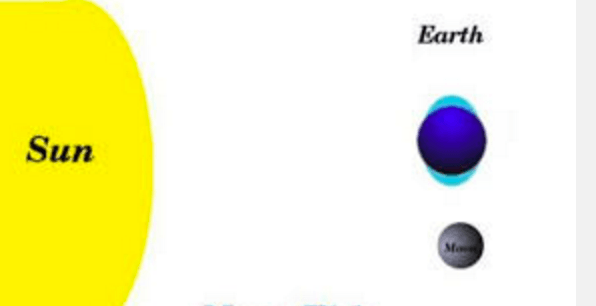
Which moon phase is shown in this diagram?
a)
new moon
b)
1st quarter
c)
full moon
d)
last quarter/3rd quarter
43.

What phase is this?
a)
Waning Gibbous Moon
b)
Waxing Gibbous Moon
c)
Waning Crescent Moon
d)
Waxing Crescent Moon
44.
Identify the correct order of the Moon's phases.
a)
Full > First Quarter > New > Third Quarter
b)
First Quarter > New > Full > Third Quarter
c)
New > First Quarter > Full > Third Quarter
d)
First Quarter > Third Quarter > Full > New
45.

What are the correct phases of the Moon from position 2 through 5?
a)
Waning Crescent, First Quarter, Waning Gibbous, Full Moon
b)
Waning Gibbous, Third Quarter, Waning Crescent, New Moon
c)
Waxing Crescent, First Quarter, Waxing Gibbous, Full Moon
d)
Waxing Gibbous, Third Quarter, Waxing Crescent, New Moon
100 %

