wayground logo

Free Printable Worksheets

NEW

Font size

S
M
L
XL
Worksheets

Quiz Prep: Seasons, Big Bang and Galaxies

Total questions: 41

Worksheet time: 52mins

Name
Class
Date
1.
The most commonly accepted theory that explains the beginning of our known universe is the -
a)
Theory of Evolution
b)
Big Bang Theory
c)
Cell Theory
d)
Blackhole theory
2.
What does the Big Bang theory suggest?
a)
The universe was just there
b)
The Milky Way is the only solar system
c)
The universe is continually expanding
d)
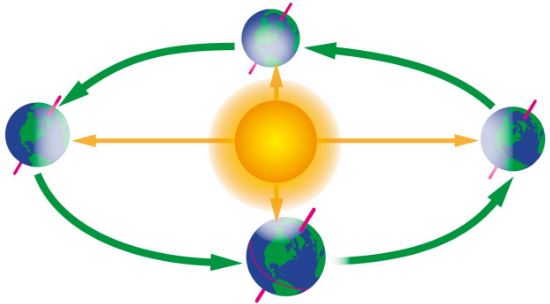
The universe started as a point, expanded, and will return to a point
3.

The term big bang refers to _______________.

a)

The origin of the universe

b)

The ultimate fate of the universe

c)

A supernova explosion

d)

The formation of a quasar

4.
What theory states the universe began from an explosion and has been explanding ever since?
a)
Big Bang Theory
b)
Oscillating Theory
c)
Big Crunch Theory
d)
Binary Star Theory
5.

To what did the article and brainpop compare the way the galaxies move?

a)

raisins

b)

an oven

c)

raisin-bread

d)

bread

6.

How old is the universe?

a)

13.8 billion years old

b)

13.8 trillion years old

c)

13.8 million years old

d)

13.8 years old

7.
In 1929, he used his telescope to observe that distant galaxies are moving away from the Milky Way Galaxy and moving away from each other.  Proving the Universe is expanding.
a)
Einstein
b)
Hoyle
c)
Hubble
d)
Lemaitre
8.

Hubble observed that galaxies are

a)

exploding

b)

moving away from us

c)

moving towards us

d)

standing still

9.
How big was the universe at the Big Bang?
a)
Really small - like a tennis ball
b)
A single point called the singularity
c)
A hot state as large as the sun
d)
A cold state as large as the moon
10.
The existence of the cosmic background radiation implies that
a)
the big bang model is wrong.
b)
the universe began in a hot, dense state.
c)
the universe did not have a moment of creation.
d)
the universe began in a cold, low-density state. 
11.
According to the Big Bang Theory how old is the universe?
a)
Thousands of years.
b)
Millions of years.
c)
Billions of years.
d)
Eternal.
12.

Most scientists believe the Big Bang Theory explains which of the following questions?

a)

How our planets and moons formed

b)

How our universe began

c)

How the sun turns hydrogen into helium

d)

How fast light travels through space

13.

What was contained in the singularity that gave rise to the Big Bang? Choose the best answer.

a)

Gamma rays

b)

Electrons in a highly excited state

c)

One atom of every known element in our universe

d)

All the mass, energy, and time in our universe

14.

What do the initial moments after the Big Bang have in common with the universe as it exists now? Choose the best answer.

a)

All the stars, galaxies, and planets that exist today were formed just a few moments after the Big Bang.

b)

The universe back then could not sustain life, and it cannot sustain life now.

c)

The universe was extremely hot then, and it is still extremely hot now.

d)

The universe began expanding then, and it is still expanding today.

15.

The explosion that sent the universe flying out is called _____.

a)

The Big Bang

b)

The Milky Way

c)

The Solar System

d)

The Sun

16.

What was the temperature of the universe after the Big Bang?

a)

Extremely hot

b)

Hot

c)

Warm

d)

Cool

17.

Since the Big Bang, and even today, the universe is still _____.

a)

Expanding

b)

Shrinking

c)

Cooking

d)

Spinning

18.

To prove that a theory is true, scientists need _____.

a)

Evidence

b)

Money

c)

A judge

d)

To argue with each other

19.
Our galaxy is called the
a)
Earth Nebula
b)
The Hubble Galaxy
c)
The Milky Way
d)
The Snickers
20.
The Milky Way Galaxy is a 
a)
spiral
b)
lenticular
c)
elliptical 
d)
irregular
21.
What type of galaxy is this?
a)
Spiral
b)
Elliptical
c)
Irregular 
d)
Irrational
22.
Place these objects in order from smallest to largest.
a)
Planets, solar system, universe, galaxy
b)
Solar system, planets, galaxy, universe
c)
Planets, solar system, galaxy, universe
d)
Galaxy, solar system, planets, universe
23.
All existing matter and space considered as a whole is called what?
a)
Galaxy
b)
Planet
c)
Universe
d)
Milky Way
24.
One full orbit of an object around another object is called a ________.
a)
axis
b)
rotation
c)
revolution
d)
satellite
25.
Day and night is caused by the _____________ of earth on its axis.
a)
revolution
b)
orbit
c)
rotation
26.
As the Earth travels around the sun, this tilt causes different areas of the Earth’s surface to get different amounts of daylight at different times of the year. The angle of the Sun’s rays to the surface also causes areas to have more or less of the Sun’s energy. This causes the ________.
a)
months
b)
day and night
c)
seasons
d)
years
27.
A spiral galaxy of stars that contains our Sun
a)
Planisphere
b)
Intensity
c)
Star
d)
Milky Way
28.
The Earth's axis is tilted _____ degrees.
a)
23.5
b)
25.3
c)
30.2
d)
24
29.
The term equinox means....
a)
equal amount of day light and equal amount of night
b)
Equal amount of winter and summer
c)
Equal amounts of hot dogs for everyone
d)
The longest day of the year
30.
What do June 21 and December 21 have in common?
a)
equinox dates
b)
the moon is full
c)
solstice dates
d)
the cold fronts blow in
31.
What is the longest day of the year?
a)
winter solstice
b)
summer solstice
c)
fall equinox
d)
spring equinox
32.
Why is the Equator warmest?
a)
Because it is closest to the sun.
b)
Because it receives the most direct sunlight
c)
Because no clouds form here.
d)
Because it is far from the sun
33.
In spring/summer, the axis of the earth is pointed away or toward the sun?
a)
towards
b)
Neither away or toward
c)
away
34.
Which season is taking place in the Southern Hemisphere in Position 1?
a)
Winter
b)
Spring
c)
Summer
d)
Fall
35.
Which season(s) have the same amount of daylight hours as nighttime hours?
a)
More hour of light during spring, less in fall
b)
More hours of light during summer, less in winter
c)
None of the seasons have equal daylight hours
d)
All are equal
36.
How long does it take the earth to revolve once around the sun?
a)
12 hours
b)
24 hours
c)
30 days
d)
365.25 days
37.

3. Reasons For_______ in the northern hemisphere and _______in the southern Hemisphere: because Earths tilt is sideways to the sun, and hours of daylight and darkness are the same in both hemispheres on about September 22.

a)

Seasons

b)

Summer solstice, Winter Solstice

c)

Night and Day

d)

Fall Equinox, Spring equinox

38.

Which position of Earth represents the date December 21st?

a)

A

b)

B

c)

C

d)

D

39.

Which position of Earth represents the first full day of Autumn for an observer in New York?

a)

A

b)

B

c)

C

d)

D

40.
Why do globes lean sideways?
a)
To allow them to spin easier.
b)
To demonstrate the tilt of Earth's axis.
c)
To demonstrate the effects of gravity.
d)
To demonstrate day and night.
41.
We have seasons because...
a)
Fairies use pixie dust to change the seasons
b)
The moon's gravitational pull changes the seasons.
c)
The earth's axis is tilted and it's revolution around the sun.
d)
The earth orbiting the Moon changes the seasons.