wayground logo

Free Printable Worksheets

NEW

Font size

S
M
L
XL
Worksheets

Test: Ecosystems

Total questions: 60

Worksheet time: 4hrs 18mins

Name
Class
Date
1.
What is a desert?
a)
a place that is very hot
b)
a place that is very sandy
c)
a place that is very dry
2.
What is one thing both "hot" and "cold" deserts have in common?
a)
All the land is made of sand
b)
Underground water filters impurities from the sand.
c)
There is a dramatic change between night and day temperatures.
d)
Both get regular predictable rainfall. 
3.
What kind of plants grow in the ocean?
a)
roses
b)
cactus
c)
algae
d)
trees
4.

What is the definition of camouflage?

a)

body coverings that blend in with the environment

b)

everything that surrounds a living thing.

c)

a feature or behavior that helps a living thing survive in its environment.

d)

the place where a living thing makes its home.

5.
What is it called when an animal only comes out at night?
a)
hibernate
b)
environment
c)
nocturnal
d)
habitat
6.
What is it called when an animal has a feature or behavior that helps it survive in its environment? 
a)
habitat
b)
environment
c)
adaptation
d)
climate
7.

A sea cucumber is an animal that lives in the ocean. An imperial shrimp will ride on the back of the sea cucumber as a way of easy travel through the ocean. The sea cucumber is not helped or harmed. Which type of relationship do these animals have?

a)

Commensalism

b)

Parasitism

c)

Predation

d)

Mutualism

8.

In which relationship do organisms kill and eat other organisms to obtain energy and nutrients?

a)

Predation

b)

Commensalism

c)

Mutualism

d)

Parasitism

9.

Both cheetahs and lions hunt for gazelle on the African Savannah. The type of relationship between the lion and cheetah is...

a)

Parasitism

b)

Commensalism

c)

Competition

d)

Mutualism

10.

A person eats undercooked meat from an animal infected with tapeworms. The tapeworm then lives in the person’s intestines and absorbs important nutrients that the person needs. This tapeworm causes harm to the person. Which type of relationship is described?

a)

Predation

b)

Commensalism

c)

Parasitism

d)

Mutualism

11.
Which of the following is the ultimate source of energy for the pyramid shown?
a)
Grass
b)
Heat
c)
Sunlight
d)
Water
12.
In the energy pyramid shown, which level has the smallest number of organisms?
a)
Birds
b)
Fox
c)
Grasshoppers
d)
Grass
13.
The image provided is an example of a(n):
a)
Producer
b)
Autotroph
c)
Consumer
d)
Insect
14.
Water temperature would be an example of ...
a)
A biotic factor
b)
An abiotic factor
15.
A collection of organisms that make up a community as well as all of the nonliving aspects of the environment.
a)
Population
b)
Community
c)
Habitat
d)
Ecosystem
16.
How is carbon dioxide in the air turned into the carbon in food molecules?
a)
cellular respirations
b)
mitosis
c)
digestions 
d)
photosynthesis
17.
What is the most important role of earthworms, pill bugs, and bacteria in an ecosystem?
a)
to serve as a major food source for large animals
b)
 to withstand extreme temperature and drought conditions
c)
to return dead plant and animal nutrients to the soil
d)
to convert the Sun's light energy into stored energy
18.
An area in which fresh water from a river mixes with salt water from the ocean
a)
Mangrove Swamp
b)
Estuary
c)
Marshes
d)
Wetland
19.
A microscopic organism that float or drift freely in the waters of aquatic environments is 
a)
Benthos
b)
Plankton
c)
Nekton
d)
Littoral Zone
20.
What is NOT an effect humans are having on animals in ocean ecosystems
a)
Polluting their water
b)
Over fishing areas
c)
Trapping Marine life in nets
d)
Increasing habitats
21.
Which biome is pictured below?
a)
ocean
b)
freshwater
c)
coral reef 
d)
wetland
22.
Runoff fertilizer and livestock waste from farms can add to the ____ of a pond?
a)
nutrients
b)
oxygen
c)
pollution
d)
biotic factors
23.

This large brown algae grows on the floor of continental shelf.

a)

Kelp Forest

b)

Coral Reef

c)

Deciduous Forest

d)

Mushrooms

24.
Bacteria kill organisms in eutrophic lakes by reducing _______ dissolved in the lake
a)
Oxygen
b)
Food
c)
Bacteria
d)
Sunlight
25.

What special adaptations do species living in estuaries have?

a)

to resist UV rays

b)

to survive exposure to air

c)

to survive heavy waves

d)

adapted to varying amounts of salinity

26.

Runoff fertilizer and livestock waste from farms can result in ____ in a river, pond or lake.

a)

excess nutrients (nitrogen and phosphorus)

b)

excess oxygen

c)

excess carbon dioxide

d)

lower amounts of nutrients (nitrogen and phosphorus)

27.
_______ are consumers that eat only meat.
a)
Herbivore
b)
Omnivore
c)
Carnivore
28.
________ are consumers that eat plants and meat.
a)
Herbivore
b)
Omnivore
c)
Carnivore
29.
Which organism make their own food through the process of photosynthesis? 
a)
decomposer
b)
consumer
c)
herbivore
d)
producer 
30.
Which describes a decomposer?
a)
an organism that eats only plants
b)
an organism that makes its own food
c)
an organism that breaks down dead matter
d)
an organism that recieves energy from the sun
31.
What are interconnected food chains called?
a)
consumers
b)
predators
c)
food web
32.
Examples of how humans negatively affect local ecosystems are
a)
Building dams, deforestation (cutting down trees), adding point sources to nearby streams to allow for run-off, building roads and structures, and salting roads.
b)
Creating laws to prohibit fishing from local streams.
c)
Planting trees and other plants to attract native species.
d)
Removing non-native species from the environment.
33.
All food chains_____________________
a)
have more consumers than producers
b)
produce and use same amount of energy
c)
begin with a producer
d)
are unhealthy 
34.
A lion, captures and eats other animals. What is he considered? 
a)
prey
b)
predator
c)
producer 
d)
healthy 
35.

All the members of one species that live within an area of an ecosystem is a?

a)

population

b)

community

c)

niche

d)

species

36.
The availability of shelter, food,water and space can change plant and animal survival. These are called
a)
multiplying factors
b)
competitive factors
c)
limiting factors
d)
survival factors
37.
Which organisms are in competition for the same food?
a)
fox and owl 
b)
spider and fly 
c)
rabbit and mouse
d)
deer and owl 
38.
What is an adaptation?
a)
A feature or behavior that helps an animal survie.
b)
The food that an animal eats.
c)
How energy moves in a food web.
39.
An animal that is hunted by other animals for food is called _____________________ .
a)
Victim
b)
Sally
c)
Predator
d)
Prey
40.
The place where an organism lives is its __________.
a)
habitat
b)
ecosystem
c)
organism
d)
population
41.
Carnivores, herbivores, omnivores, and scavengers are all examples of __________.
a)
producers
b)
consumers
c)
decomposers
d)
abiotic factors
42.
What are organism that use sunlight or energy stored in chemical compounds to make food?
a)
a. heterotrophs
b)
b. autotrophs
c)
c. algae
d)
d. mitrochondria
43.
What term defines the number of individuals per unit area if a population has abundant space and food, and is protected from predators and disease.
a)
a. population sample
b)
b.  population density
c)
c.  population 
d)
d. all of above
44.
What are threats to biodiversity?
a)
a. extinction and habitat degradation
b)
b. invasive species
c)
c. endangered species 
d)
d. all of above
45.
The shrew provides energy for the _______?
a)
cricket
b)
grasshopper
c)
frog
d)
snake
46.
Which organism do the owl and the weasel compete for in the food web?
a)
Hawk
b)
Spider
c)
Grasshopper
d)
Shrew
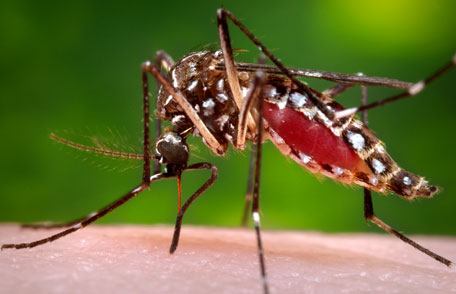
47.
When a mosquito bites you, you are the __________ and the mosquito is the  ____________.
a)
host, hostess
b)
parasite, host
c)
host, parasite
d)
prey, predator
48.
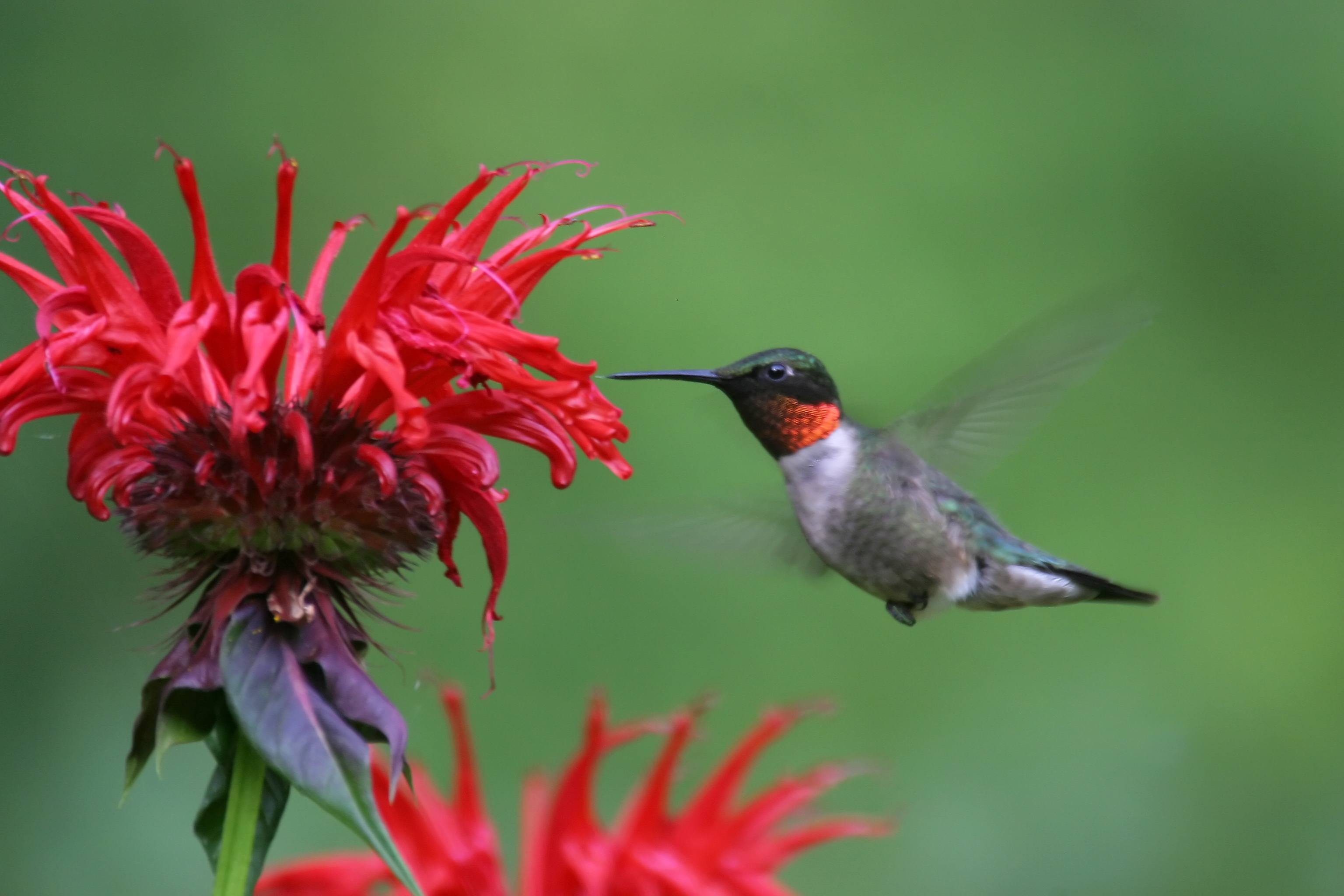
What type of symbiosis?  Hummingbirds feed on nectar from flowers.  The flowers are pollinated by hummingbirds as they move from flower to flower.
a)
commensalism
b)
mutualism
c)
parasitism
d)
predation
49.

Consider this food web: Where is the largest amount of energy found in this food web?

a)

Hawk

b)

Grass

c)

Mouse

d)

Grasshopper

50.
Which of the following organisms is a herbivore.
a)
butterfly
b)
snake
c)
fox
d)
ladybird
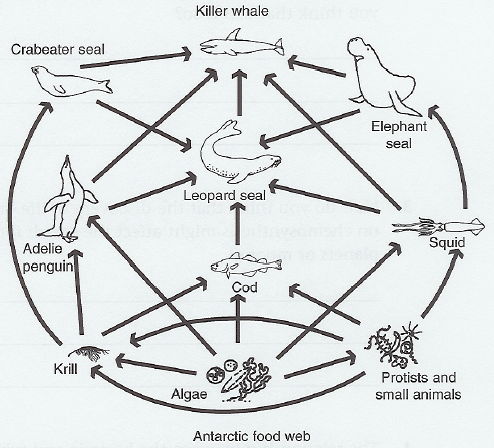
51.
Which organism is the top predator in this food web?
a)
leopard seal
b)
killer whale
c)
elephant seal
d)
crabeater seal
52.
How many primary consumers are there in this food web?
a)
1
b)
2
c)
3
d)
4
53.
The fox in this food web would be considered a:
a)
Tertiary Consumer
b)
Producer
c)
Secondary Consumer
d)
Primary Consumer
54.
Penguin
a)
Heterotroph
b)
Autotroph
55.
Willow Tree
a)
Heterotroph
b)
Autotroph
56.
In the energy pyramid here, how much of the energy in each level gets lost as heat or used by the organism for survival?
a)
80%
b)
90%
c)
10%
d)
20%
57.
In the energy pyramid here, which organisms have the most energy available?
a)
Producers
b)
Carnivores
c)
Herbivores
d)
Top Predator
58.
If there is 1000 Kcal available in the producers in trophic level 1, how much energy is available in the herbivores in trophic level 2?
a)
10 Kcal
b)
1 Kcal
c)
100 Kcal
d)
1000 Kcal
59.

The role an organism plays in an ecosystem

a)

consumer

b)

producer

c)

niche

d)

photosynthesis

60.
The arrows in a food chain or web represents what?
a)
They point to the organism that is being eaten.
b)
It shows how sunlight flows within an ecosystem.
c)
They show what direction the energy is flowing between organisms. 
d)
They represent how water is transferred within a habitat.