

wayground logo

Free Printable Worksheets

Font size

S
M
L
XL
Worksheets

IBESS 3.3-3.4 Biodiversity Threats & Conservation (long)

Total questions: 67

Worksheet time: 47mins

Name
Class
Date
1.
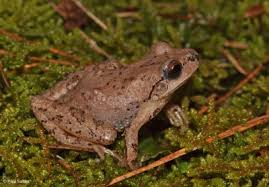
In a population of spiders there are three different sizes: small, medium, and large.
---The large spiders are easily seen by predators.
---Small spiders have a difficult time finding food.
What will most likely happen to this population of spiders after many generations?
a)
Small and large spiders will mutate
b)
Medium spiders will be the most plentiful
c)
Large spiders will learn to hide from predators
d)
Small and medium spiders will be the least plentiful
2.
When taken to a new habitat, non-native plants often threaten native plants of the new habitat.  Why do they do this?
a)
Non-native plants are able to mutate rapidly
b)
Non-native  plants cause native animals to relocate
c)
Non-native plants are able to be used for medicine
d)
Non-native plants compete with native plants for resources
3.
Kudzu has overgrown many parts of southern Missouri and native ground plants have disappeared from the area. This is an example of:
a)
Parasitism between kudzu and the native plants
b)
A predator prey relationship between ground plants and kudzu
c)
Competition occurring between the native and invasive species
d)
Commesalism occurring between the kudzo and native plants
4.
How did the zebra mussels end up in the Great Lakes?
a)
In ballast tanks of ships
b)
They were intentionally released
c)
They have always been in the Great Lakes
d)
That's not a zebra mussel
5.
These were released in Australia to eat cane beetles, but now they are an invasive species and number in the millions.
a)
dingo
b)
Kangaroo
c)
Cane toad
d)
Rabbits
6.
1. What makes a species invasive?
a)
Moving to a new ecosystem and taking resources from natives 
b)
Not having papers
c)
Species that can't adapt
d)
Plants that take up too much space
7.
Which of the following is a key characteristic of most invasive species?
a)
Ability to breathe in the air & in the water
b)
Large, sharp teeth
c)
Produce many offspring
d)
Is a top predator
8.
Invasive species have a negative impact on...
a)
the ecosystem
b)
the economy
c)
Both the ecosystem and the economy
d)
None of these
9.
What's one EFFECT of pythons invading the Everglades?
a)
the number of small mammals, like mice, are decreasing
b)
the number of white-tailed deer is increasing
c)
pythons can grow to be 18 feet long
10.
The science or practice of planting, managing, and caring for forests.
a)
Forestry
b)
Silviculture
c)
Reforestation
d)
Deforestation
11.
The process of replanting an area with trees.
a)
Forestry
b)
Silviculture
c)
Reforestation
d)
Deforestation
12.
Trees that lose their leaves every year.
a)
Timberland
b)
Forest Land
c)
Deciduous Trees
d)
Evergreen Trees
13.
Trees that do not lose their leaves every year.
a)
Timberland
b)
Forest Land
c)
Deciduous Trees
d)
Evergreen Trees
14.
The cutting down of selected trees in a forest so the growth of other trees is not affected.
a)
Selective Cutting
b)
Controlled Burn 
c)
Thinning
d)
Clear Cutting
15.
A technique sometimes used in forest management, farming, or prairie restoration to improve habitat and reduce wildfire risk.
a)
Selective Cutting
b)
Controlled Burn 
c)
Thinning
d)
Clear Cutting
16.
Removal of all marketable trees from an area.
a)
Selective Cutting
b)
Controlled Burn 
c)
Thinning
d)
Clear Cutting
17.

When an entire stand is removed except a few of the best trees are left to produce seeds

a)

Shelterwood

b)

Seed-tree

c)

Coppice

d)

Clear

18.

Cutting down only some trees in a forest, leaving a mix of tree sizes and species standing, is called

a)

selective cutting

b)

clear-cutting

c)

certified cutting

d)

patch cutting

19.

Some developing countries with smaller population can successfully deploy "slash and burn" agriculture, this is an example of

a)

monoculture

b)

shifting agriculture

c)

mechanized agriculture

d)

biomagnification

20.

Agricultural land that is cleared by "slash and burn" has fertile soil for about

a)

1 growing season

b)

10-15 years

c)

2-3 years

d)

20 + years

21.

Planting many different crop types on a single farm.

a)

monoculture

b)

polyculture

c)

developing

d)

none of these

22.
The agricultural practice of growing a single crop, plant, or livestock species at one time. 
a)
Uniculture
b)
Biculture
c)
Monoculture
d)
low input farming
23.
True or False:  Monoculture has no disadvantages.
a)
True
b)
False
24.
Monoculture farming techniques use less fertilizer compared to organic farming.
True or False
a)
True
b)
False
25.
True or False:  Monoculture produces high crop yields.
a)
True
b)
False
26.

These animals are not choosy about what they eat or where they live

a)

Endangered

b)

Specialists

c)

Extinct

d)

Generalists

27.

Based on the description, the house sparrow is a

a)

generalist

b)

specialist

28.

Based on the description, the raccoon is a

a)

generalist

b)

specialist

29.

These animals might be in trouble if their habitat changes

a)

Generalists

b)

Specialists

c)

Endangered

d)

Extinct

30.

The koala living high in a tree eating eucalytus leaves is a _____, while a mouse will live in almost any environment and consume seeds, nuts, and grains is a ______.

a)

herbivore, primary consumer

b)

generalist, specialist

c)

primary consumer, scavenger

d)

specialist, generalist

31.
An endangered species is
a)
One whose numbers are so small that it is at risk of extinction
b)
One whose not been spotted after many years.
c)
One whose numbers are abundant.
32.
A species is defined as endangered when it
a)
suffers from damage to its habitat.
b)
suffers from disease or predation.
c)
when there are hazards to the continued life of the species.
d)
all of the above
33.
The Endangered Species Act of 1973 protects registered endangered species by removing them from the "take" list which makes it unlawful to
a)
shoot
b)
capture
c)
trap
d)
all of the above
34.
What does it mean when an animal is extinct?
a)
Something once lived but no longer exists.
b)
Animals that is at risk of extinction.
c)
Place that protects animals at risk.
35.
What term describes the positive benefits that wildlife or ecosystems provides to people?
a)
ecosystem services
b)
ecosystem
c)
biodiversity
36.
Which of the following is NOT a conservation strategy?
a)
sediment control pond
b)
crop harvesting
c)
critical area planting
37.
What is the variety of genes present?
a)
bidiversity
b)
species diversity
c)
extinction
d)
genetic diversity
38.
Species that are only found in a specific geographic area are _______.
a)
Introduced species
b)
Local species
c)
Endemic 
d)
Biodiversity hot spot
39.
The practice of harvesting or hunting to such a degree that remaining individuals may not be able to replenish the population is called _____.
a)
biomagnification
b)
overexploitation
c)
edge effects
d)
natural resource
40.

the breaking of habitats into smaller pieces is called...

a)

habitat division

b)

habitat pollution

c)

habitat corruption

d)

habitat fragmentation

41.
The Convention on International Trade in Endangered Species of Wild Fauna and Flora (CITES) and the Convention on Biological Diversity are examples of
a)
organizations that promote poaching.
b)
polls measuring American opinion about biodiversity.
c)
treaties to protect biodiversity.
d)
laws to increase the number of species
42.
Extinction rates are significantly __________ in recent decades than before.
a)
Lower
b)
Higher
43.
Biologists put extra effort into protecting these because they have many species living in them.
a)
Cities
b)
Biodiversity Hotspots
c)
Farms
d)
Conservation stations
44.
Programs that breed animals in captivity then release them to the wild are called...
a)
Kidnapping
b)
Breeding Buildings
c)
Captive Breeding Programs
d)
Catch and Release Programs
45.
If a species is only found in one place on Earth we call it a(n)...
a)
Local species
b)
Lonesome species
c)
Allopatric species
d)
Endemic species
46.
The excessive use of a species that has economic value.
a)
Biodiversity
b)
Natural resources
c)
Overexploitation
d)
population growth
47.
The species that plays the biggest role in the habitat is?
a)
Smaller species
b)
Larger species 
c)
Keystone Species
d)
Evolving species 
48.
An event  in which a large percentage of all living species become extinct in a relatively short period of time.
a)
Habitat fragmentation 
b)
Mass extinction
c)
Overexploitation
d)
Background extinction
49.
Which of the following is a term for a group of similar organisms that can reproduce fertile offspring?
a)
individual
b)
population
c)
species
d)
fossil
50.
Why are advantageous traits more likely to be passed onto offspring?
a)
Because they are more likely to survive and reproduce.
b)
Because they come from dominant alleles.
c)
Because they come from recessive alleles.
d)
Because the trait is an acquired phenotype.
51.
What is the name of a common biodiversity index?
a)
Living
b)
Carr
c)
Elton
d)
Simpson
52.
What is THE most major cause of extinction today?
a)
habitat destruction by humans
b)
poaching
c)
disease
d)
hunting
53.
Which of the following is a good reason for valuing diversity?
a)
Diversity isn’t valuable; it’s easier to manage the same species in an area.
b)
Diversity can’t be defined so we can’t value it.
c)
Diversity is valuable because we don’t fully know the benefits and use of each species
d)
Diversity is valuable only if it brings a benefit of money
54.
What does wilderness do for us?
a)
Ensures species diversity
b)
Provides free services like clean water, fresh air
c)
Adds beauty and peace to the Earth
d)
All are correct
55.
Why is conservation sometimes controversial?
a)
Because conserving one thing usually costs money somewhere else
b)
Conservation can be difficult and time consuming
c)
Because conserving wildlife, often seems to compete with helping mankind
d)
All are correct
56.
The California Condor population once dropped so low that there were only 8 individuals in the wild.  What term best describes their legal status at that time?
a)
Reduced
b)
Threatened
c)
Endangered
d)
Extinct
57.
What is the main cause of extinction of tigers?
a)
hunting
b)
climate change.
c)
disease.
d)
building of new homes
58.
What are the greatest problems facing plants, animals, and people?
a)
introducing new species that  can cause problems 
b)
habitat destruction
c)
illegal hunting 
d)
all of the above
59.
Which of the following does not destroy habitats?
a)
building homes
b)
pollution
c)
nature reserves
d)
hunting and trading
60.

What is a negative consequence of clearing land

a)

more oxygen

b)

more usable crop land

c)

more erosion

d)

more jobs

61.

One or more rows of trees or other tall, perennial plants planted along the edge of a field to prevent wind erosion.

a)

Erosion

b)

Weathering

c)

Shelterbelt

d)

Conservation Tillage

62.
Are deforestation and desertification related?
a)
Desertification and deforestation are the same thing.
b)
Deforestation contributes to desertification
c)
They are not related to one another.
d)
Desertification leads to deforestation.
63.
Desertification is: 
a)
a naturally occurring event due to continual droughts
b)
both natural and a man made activity caused by lack of precipitation and continual overuse of the land and its resources 
c)
is man made  but the impact on Earth is very limited
d)
is permanent and nothing can be done to prevent the causes or effects
64.
What causes desertification?
a)
Over-cultivation of the land
b)
Not letting the land rest
c)
Overgrazing
d)
All of these options
65.
Why does desertification lead to economic decline?
a)
Lack of forests gives countries less timber to harvest and sell.
b)
Lack of forests increases the likelihood of diseases, which harm laborers.
c)
Lack of agriculture creates new jobs in the technology industry.
d)
Lack of agriculture negatively impacts the health and development of a nation.
66.
Why does overgrazing lead to desertification?
a)
Loss of grass destroys the soil.
b)
Loss of grass causes droughts.
c)
Increase in vegetation destroys the soil.
d)
Increase in vegetation protects against droughts.
67.
What does boreal mean?
a)
It means boring cereal
b)
It means northern
c)
It means cold
