wayground logo

Free Printable Worksheets

Font size

S
M
L
XL
Worksheets

Heredity and Space review

Total questions: 68

Worksheet time: 1hrs 6mins
Name
Class
Date
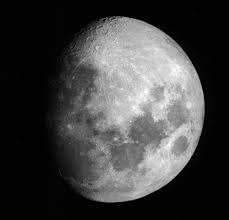
1.
Name the moon phase
a)
full moon
b)
waxing crescent
c)
waning gibbous
d)
waxing gibbous
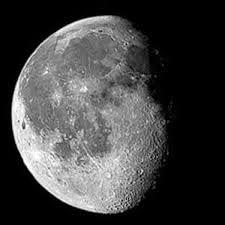
2.
Name the moon phase
a)
waning crescent
b)
waxing crescent
c)
last quarter
d)
waxing gibbous
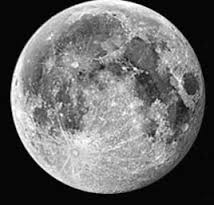
3.
Name the moon phase
a)
waning crescent
b)
first quarter
c)
waning gibbous
d)
waxing gibbous
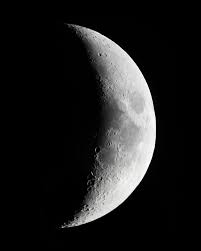
4.
Name the moon phase
a)
waning crescent
b)
waxing crescent
c)
waning gibbous
d)
full moon
5.
Name the moon phase
a)
First Quarter
b)
Last Quarter
c)
New Moon
d)
Full Moon
6.
Name the moon phase
a)
First Quarter
b)
Last Quarter
c)
New Moon
d)
Full Moon
7.
How many phases does the moon go through?
a)
4
b)
8
c)
10
d)
16
8.
The cycle of the moon lasts about a _.
a)
day
b)
year
c)
week
d)
month
9.
The moon ____________ around the Earth.
a)
orbits
b)
rotates
c)
up
d)
down
10.
This is a diagram of the moon phases Which moon phase would a lunar eclipse occur in?
a)
New Moon
b)
1st quarter
c)
Full moon
d)
3rd quarter
11.
What type of solar eclipse is this?
a)
Total
b)
partial
c)
annular
12.
What type of eclipse is being shown in the diagram?
a)
Total solar eclipse
b)
Total lunar eclipse
c)
partial solar eclipse
d)
partial lunar eclipse
13.
A solar eclipse only occurs during which moon phase?
a)
1st Quarter
b)
New Moon
c)
Full Moon
d)
3rd Quarter
14.
A lunar eclipse only occurs during which moon phase?
a)
New Moon
b)
3rd Quarter
c)
Full Moon
d)
1st Quarter
15.
What does number 1 in the image to the left represent?
a)
Umbra
b)
Penumbra
16.
What does number 2 in the image to the left represent?
a)
Umbra
b)
Penumbra
17.
Tides are caused mainly by what?
a)
Moon’s gravitational pull
b)
Sun’s gravitational pull
c)
Earth’s gravitational pull
18.
The hemisphere where you live 
a)
equator
b)
southern
c)
northern
d)
eastern
19.
In winter, the axis of the earth is pointed away or toward the sun?
a)
towards
b)
up
c)
down
d)
away
20.
Why is it warmer in the summer?
a)
Closer to the sun
b)
More direct light from Earth's tilt
c)
Stronger light from the sun
d)
Earth spins slower
21.
Why is the Equator warmest?
a)
Because it is closest to the sun.
b)
Because it receives the most direct sunlight
c)
Because no clouds form here.
d)
Because it is far from the sun
22.

The brightness of a star depends on its:

a)

distance and temperature

b)

color and temperature

c)

distance and color

d)

size and distance

23.

The force that tends to pull together the matter in stars is:

a)

dark energy

b)

gravity

c)

nuclear fusion

d)

dark matter

24.

Select all ingredients a comet is composed (made) of

a)

Dust

b)

Iron

c)

Ice

d)

Small rocky particles

25.

Asteroids are found in a region called the

a)

Kuiper Belt

b)

Asteroid Belt

c)

Oort Cloud

d)

Earth's surface

26.

The asteroid belt is located between which 2 planets?

a)

Mercury and Venus

b)

Jupiter and Saturn

c)

Uranus and Neptune

d)

Mars and Jupiter

27.

Which object in space is larger?

a)

Asteroid

b)

Meteoroid

28.

A comet forms a tail when

a)

It is deep in outer space and begins to melt

b)

It gets close to the sun and begins to melt

29.

Where do comets from/where are they found?

a)

Kuiper Belt and Oort Cloud

b)

Asteroid Belt

c)

Earth's atmosphere

d)

Earth's surface

30.

Which object in space looks like a "dirty snowball" because of its composition of ice, gas and dust?

a)

Asteroid

b)

Meteoroid

c)

Comet

d)

Meteor

31.

A small rock in space that is orbiting the sun. This object is similar to an asteroid, but it is smaller in size. It will become a meteor once it enters Earth's atmosphere

a)

Meteoroid

b)

Meteor

c)

Meteorite

32.

A meteor that does not burn up in Earth's atmosphere and reaches Earth's surface

a)

Meteorite

b)

Meteoroid

c)

Meteor

33.
What planet is the smallest?
a)
Mercury
b)
Venus
c)
Mars
d)
Jupiter
34.
What is the largest planet?
a)
Jupiter
b)
the moon
c)
Saturn
d)
the Sun
35.
What planet is closest to the sun?
a)
Mercury
b)
Mars
c)
Venus
d)
Sun
36.
Almost Earth’s twin in size and mass, this planet has very thick atmosphere.
a)
Venus
b)
Mars
c)
Mercury
d)
Neptune
37.
The surface of this planet appears red due to rusting iron in the rocks.
a)
Mercury
b)
Mars
c)
Pluto
d)
Venus
38.

This cold, blue planet was discovered by a mathematical prediction.

a)

Neptune

b)

Jupiter

c)

Mars

d)

Venus

39.

Saturn

a)

5th

b)

6th

c)

7th

d)

8th

40.
Which is the smallest terrestrial planet?
a)
Mercury 
b)
Mars
c)
Earth
d)
Venus
41.
Saturn's rings are made of chunks of 
a)
volcanoes
b)
ice and rock
c)
nitrogen and helium 
d)
ice and 
42.
The order of the planets is:
a)
Mars,Venus,Earth,
Mercury,Saturn
Jupiter, Uranus, Neptune
b)
Earth,Venus,Mars
Jupiter, Neptune,
Mercury,Saturn,
Uranus
c)
Mercury,Venus,Earth
Mars,Jupiter,
Saturn,Uranus
Neptune
43.
Which is the second closest planet to the sun?
a)
Earth
b)
Saturn
c)
Venus
d)
Mercury
44.
The earth orbits around...
a)
the sun.
b)
the moon
c)
other planets
d)
the Milky Way
45.
Which planet is covered in water?
a)
Mercury
b)
Venus
c)
Earth
d)
Mars
46.
Which planet rotates on its side?
a)
Jupiter
b)
Saturn
c)
Uranus
d)
Neptune
47.

Which planets have a Great Dark Spot?

a)

Jupiter

b)

Saturn

c)

Uranus

d)

Neptune

48.

What type of galaxy is the Milky Way?

a)

Spiral

b)

Super twist

c)

Irregular

d)

Elliptical

49.
On what arm of the Milky Way is our Solar System found?
a)
Scutum-Crux Arm
b)
Carina-Sagitarius Arm
c)
Great Orion Arm
d)
Outer Cygnus Arm
50.
Most of the mass of the Milky Way galaxy is thought to be...
a)
The black hole at its center
b)
Dark matter
c)
Dust and gas
d)
Main-sequence stars and planets
51.
There is a super massive black hole in the center of the Milky Way galaxy. 
a)
True
b)
False
52.

Which of the following galaxies is closest to the Milky Way?

a)

Triangulum

b)

The Milky Way

c)

Andromeda

53.
Which of these describes a species that has become extinct?
a)
fewer members of the species are dying than being born
b)
more members of the species are dying than being born
c)
very few members of a species are alive
d)
all members of a species have died
54.
Which of the following species is extinct?
a)
woolly mammoth
b)
giant panda
c)
bald eagle
d)
green sea turtle
55.
Which of the following is NOT a reason a species may become extinct?
a)
competition
b)
reproducing
c)
habitat loss
d)
overhunting
56.
_______ are the preserved remains or traces of living things.
a)
bones
b)
fossils
c)
artifacts
d)
organic matter
57.
In what type of rock would you typically find fossils?
a)
igneous
b)
metamorphic
c)
sedimentary
d)
rocky
58.
A dinosaur track, a trail, and burrow are all examples of
a)
casts
b)
molds
c)
trace fossils
d)
preserved remains
59.
How far back in time can geologists study the history of the earth?
a)
1.6 billion years
b)
46 million years
c)
4.6 billion years
d)
160 billion years
60.
Why scientists think dinosaurs became extinct?
a)
Climate change
b)
Frozen Oceans
c)
Forest Fire
d)
Cloud Dust
61.
According to the law of superposition, which layer is the youngest?
a)
A
b)
B
c)
C
62.

According to the law of superposition, which layer is the oldest?

a)

A

b)

B

c)

C

63.
If a child develops a liking for sports because she practices playing soccer every day with her dad, it would be evidence of 
a)
nature
b)
nurture
64.
If a child has brown eyes when she is born, it would be an example of...
a)
nature
b)
nurture 
65.
People are...
a)
a product of their genetics
b)
a product of their environment
c)
a product of their environment and the traits they were born with
66.
Nature versus Nurture means what?
a)
Genetics versus Environment
b)
Technology versus Books
c)
Educated versus Noneducated
d)
Psychology versus Sociology
67.
What was the name of the scientist who had the theory of evolution?
a)
Lamarck
b)
Einstein
c)
Washington
d)
Darwin
68.

Polar bears have compact ears, a small tail, and thick fur to keep themselves warm. Are these examples of physical (structural) or behavioural adaptations?

a)

Structural

b)

Behavioral