
 Worksheets
RKCS-Science-G5-S1-Review
Total questions: 70
Worksheet time: 1hrs 10mins
Which body parts hold you up and help you move?
the heart and lungs
the stomach and brain
the muscles and bones

Look at the picture. What does it show?
muscles
skeleton
stomach

Look at the picture. The brain is found in your head. What does the brain do?
It digests food
It pumps blood
It lets you remember and feel

The diagram below is of a heart. What is the job of this body part?
it digest food
it pumps blood
it tells your other body parts what to do
What body part is the control center of the body?
the brain
the muscles
the skeleton

What am I?
brain
muscle
skeleton
heart

What bone protects the brain?
muscle
skull
rib cage
face
True or False
Muscles are only found in the arms and legs
True
False
Bones can move by themselves.
True
False
Our bones are connected by _________.
ligaments
joints
our skeleton
our spine
Where are the two easiest places to find your pulse?
foot and leg
neck and wrist
finger and thumb
arm and leg
What can cause your heart rate to increase?
medication
heat
stress
all of the above
Which will increase your heart rate more?
Running
Walking
Why does your heart beat faster when you run around?
To catch up with your legs.
Your body needs more oxygen from your blood
Your body needs more Carbon Monoxide

What does BMI stand for?
Body Metaphorical Index
Body Mass Index
Bring My Iphone
Body Mass Increase
To calculate BMI, you will need to know the person’s:
Weight & Height
Temperature & Age
Skin color
Gender
Which of the following describes underweight?
a person who has a BMI below 50
a person who has a BMI below 18.5
a person who has a BMI under 20.4

Identify the stimulus..."A person shivers because it is cold outside"
Cold temperature
The shivering
The part of your brain that controls balance and movement.
cerebrum
cerebellum
brain stem
amygdala
Sedimentary rock is formed through...
pressure applied to sediment
when magma cools and hardens
crystals
wind erosion
Igneous rocks are formed by...
layers of broken sediment
heat and preassure
hot lava cools and harden
elements

What do granite and basalt have in common?
They're sedimentary rocks
They're metamorphic rocks
They're igneous rocks
They're formed by erosion
What is the difference between magma and lava?
Magma is very hot, lava is cool.
Magma is molten rock within the earth; lava is molten rock on earth's surface.
Magma is molten rock on the earth's surface; lava is molten rock within the earth.
Magma is cool, lava is very hot.
Which of these is a sedimentary rock?
Granite
Obsidian
Sandstone
Quartzite
Sedimentary rock is most similar to which of the following?


When does a sedimentary rock become a metamorphic rock?
When it's left alone over a long period of time
When it erupts out of a volcano
When its sediments bond together
When it's subjected to intense heat and pressure
Which characteristic is found in sedimentary rocks?
Crystals
Fossils
Gas bubbles
Glassy surface
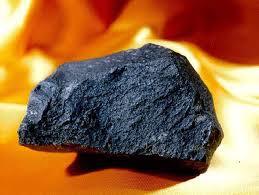
Weathering changes the Earth´s surface
slowly
quickly
True or False: Weathering does NOT change the Earth's surface.
True
False
When an object blocks the source of light, what is formed?
reflection
shadow
image
nothing
As the object moves closer to the source of light, the size of the shadow
increases
decreases
remains the same
is too small to see

Opaque or transparent. What is this bottle?
Transparent
Opaque
Luminiscent
Source of light
Why do shadows made by the Sun move over the course of a day?
Because the weather changes
Because someone moves the objects
Because the Sun appears to move across the sky
Because it is magical!

A student placed a pencil in a glass of water. The pencil appears broken because..
light always travels in a straight line
the pencil cuts through the water
light bends when it passes through water
light reflects the pencil on the surface of water


What is the best explanation for Mickey seeing himself in the mirror?
refraction
absorbed
reflection
flipped
What do we call a material that light can travel through?
air
water
medium
pathway


How many components of white light?
5
6
7
8
Which of the following is NOT a source of light?
eyes
lit candle
sun
firefly

How will this object appear when looking at it through a blue filter?
Blue
Green
Black
Orange

Which color(s) does this filter transmit?
No colors are transmitted.
All colors but green
Only green

Which color will transmit through the filter?
Red only
Blue and Violet
Green
All colors
Which colors make up white light?
Red, Orange, and Yellow
All colors
Reds and Violets

How will this object appear when looking at it through a yellow filter?
Black
Yellow
Purple
Green
Shadows are shortest ...
at night
in the morning
in the middle of the day
in the evening
When the sun gets higher in the sky, shadows get ______.
longer
gone
shorter
darker
When the Sun is behind you, your shadow is ...
behind you
in front of you
at the side of you
not there
12.Translucent is?
When light bounces off an object
Material that only allows a little light to pass through
Our main source of light

