wayground logo

Free Printable Worksheets

Font size

S
M
L
XL
Worksheets

Water & the Water Cycle

Total questions: 70

Worksheet time: 1hrs 12mins

Name
Class
Date
1.
What is the water cycle?
a)
the 3 forms of water
b)
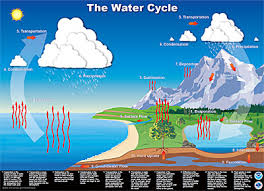
the movement of water on, above, or below the surface of the Earth
c)
when water melts
d)
when clouds form
2.
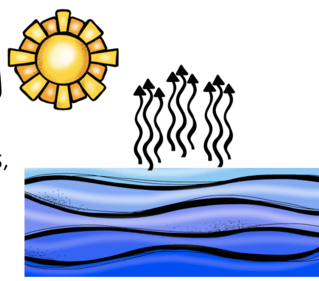
What part of the water cycle does this picture show?
a)
condensation
b)
precipitation
c)
evaporation
3.
Which is the opposite of condensation?
a)
runoff
b)
evaporation
c)
precipitation
d)
transpiration
4.
Which best explains why runoff is important?
a)
It returns water to other locations on Earth
b)
It increases the chance of flooding
c)
It makes evaporation occur faster
d)
It increases condensation
5.
Snow, sleet, hail, and rain are all examples of  ________________. 
a)
evaporation
b)
condensation
c)
accumulation
d)
precipitation
6.
What is it called when plants give off water vapor as a waste product?
a)
condensation
b)
evaporation
c)
sublimation
d)
transpiration
7.
When water _________, dew forms.
a)
Melts
b)
Evaporates
c)
Condenses
d)
Precipitates
8.
What is the energy source for the water cycle?
a)
the sun
b)
the earth
c)
water
d)
the moon
9.
Precipitation happens when clouds of water droplets are too ______________.
a)
cold
b)
light
c)
heavy
d)
hot
10.
Evaporation happens when the sun ___________ water and turns it into vapor.
a)
cools
b)
heats up
c)
freezes
d)
lights up
11.
During which stage do clouds form?
a)
condensation
b)
evaporation
c)
precipitation
12.
What is a man-made hole drilled below water table?
a)
natural spring
b)
lake
c)
wetlands
d)
well
13.
What is a layer of rock or sediment that holds water?
a)
glacier
b)
well
c)
aquifer
d)
natural spring
14.
What is the process during which water changes from a liquid to a gas as it heats up?
a)
Condensation
b)
Runoff
c)
Precipitation
d)
Evaporation
15.
What is the process during which water cools and turns from a gas to a liquid?
a)
Condensation
b)
Runoff
c)
Precipitation
d)
Evaporation
16.
True or False: Water vapor is the name given to water in liquid form.
a)
True
b)
False
17.
What is NOT an example or precipitation?
a)
Rain
b)
Snow
c)
Sleet
d)
Wind
18.
True or False: Most runoff eventually travels back to the ocean.
a)
True
b)
False
19.

What is the correct order of the water cycle?

a)

Evaporation, Condensation, Precipitation, Runoff

b)

Runoff, Precipitation, Condensation, Evaporation

c)

Evaporation, Precipitation, Runoff, Condensation

d)

Condensation, Evaporation, Runoff, Precipitation

20.

True or False: Clouds form during condensation.

a)

True

b)

False

21.
True or False: Water is constantly being recycled because of the water cycle.
a)
True
b)
False
22.

What step of the water cycle does this picture show?

a)

Condensation

b)

Runoff

c)

Precipitation

d)

Evaporation

23.

What is it called when water droplets form on the outside of a cool glass?

a)

Condensation

b)

Transpiration

c)

Precipitation

d)

Evaporation

24.

What step of the water cycle is shown in this picture?

a)

Condensation

b)

Runoff

c)

Precipitation

d)

Evaporation

25.

What step of the water cycle is shown in this picture?

a)

Condensation

b)

Runoff

c)

Precipitation

d)

Evaporation

26.

Water in its gas form is called ____________________,

a)

water vapor

b)

precipitation

c)

ice

d)

air

27.
What is A?
a)
Evaporation
b)
Condensation
c)
Precipitation
d)
Runoff
28.

Which of the following are types of freshwater that can be used by people?


Select all that are true.

a)

groundwater

b)

ice caps and glaciers

c)

oceans

d)

rivers

e)

lakes

29.

What happens once groundwater reaches a layer of rock in the ground that it cannot pass through?

a)

it is soaked up by that layer of rock and dirt

b)

it creates an aquifer

c)

it creates a reservoir

d)

it evaporates

30.

People get fresh water from

a)

reservoirs

b)

lakes and rivers

c)

pumping groundwater up from aquifers using wells

d)

all of the above

31.

Why does groundwater usually require less treatment than surface water?

a)

The layers of Earth protect groundwater from pollutants.

b)

As groundwater sinks into the ground, the layers of rock act like a natural filter and remove pollutants from the water.

c)

Surface water has more exposure to pollutants in runoff and the atmosphere.

d)

all of the above

32.

What is the energy source for the water cycle?

a)

sun

b)

wind

c)

rain

d)

oceans

33.

What type of precipitation will fall if the temperature is 0 degrees celsius, but the precipitation freezes along the way to Earth's surface?

a)

rain

b)

snow

c)

sleet

d)

hail

34.
What is B?
a)
Evaporation
b)
Condensation
c)
Precipitation
d)
Runoff
35.
On which kind of day would you expect the most evaporation from the surface of a pond?
a)
cold, rainy
b)
cold, sunny
c)
warm, rainy
d)
warm, sunny
36.
Which of the following causes all of the water on the planet to change its state (solid, liquid, gas) and move through the water cycle?
a)
amount of plant matter
b)
location of ice caps
c)
size of ocean
d)
temperature
37.
What cloud is found at ground level? 
a)
Cirrus
b)
Stratus
c)
Culumlus 
d)
Fog
38.
What is      D?
a)
Evaporation
b)
Condensation
c)
Precipitation
d)
Runoff
39.
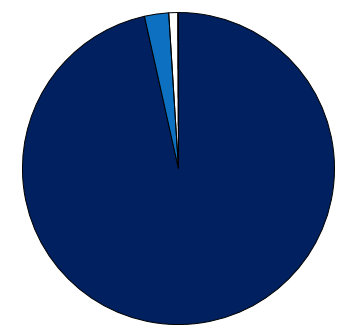
What percentage of Earth’s water is freshwater?
a)
75%
b)
3%
c)
1%
d)
97%
40.

When water GAINS energy it turns from

a)

a gas to a liquid

b)

a liquid to a solid

c)

a gas to a solid

d)

a liquid to a gas

41.
The chemical compound of water is
a)
HO
b)
H2O
c)
H3O
d)
HO2
42.
Water is a universal solvent
a)
True
b)
False
43.
What percent of Earth is covered by water and ice?
a)
85%
b)
90%
c)
75%
d)
97%
44.
The water cycle has...
a)
a beginning and an end. 
b)
no beginning and no end. 
c)
only a beginning. 
d)
only an end. 
45.
What are the three states of water found on Earth?
a)
solid, liquid & gas
b)
oceans, lakes & streams
c)
evaporation, transpiration
d)
rain, sleet & hail
46.
When water _________, dew and clouds can form.
a)
Melts
b)
Evaporates
c)
Condenses
d)
Precipitates
47.
Which of the following is the reason why ice can float?
a)
The air bubbles in the frozen water make it rise.
b)
The water molecules in ice are closer together and more dense than liquid water.
c)
When water molecules expand, they take up more space and are less dense.
d)
All frozen things will float in liquid water.
48.
Water is made up of these two colorless, odorless gases.
a)
Helium and Oxygen
b)
Oxygen and Carbon Dioxide
c)
Hydrogen and Helium
d)
Hydrogen and Oxygen
49.
What percent of Earth's water is the oceans?
a)
70%
b)
85%
c)
90%
d)
97%
50.
What percent is Earth's water is found in glaciers?
a)
2%
b)
10%
c)
6%
d)
25%
51.

What percent of Earth's water is ACCESIBLE fresh water?

a)
5%
b)
3%
c)
1%
d)
20%
52.
What percent is Earth's water is found in glaciers?
a)
2%
b)
10%
c)
6%
d)
25%
53.
Which of these is a method for conserving fresh water?
a)
Taking long showers and baths
b)
Taking short showers and baths
c)
Leaving the water running while brushing your teeth
d)
Washing your car with a running hose
54.
Which of the following is a characteristic of saltwater?
a)
Things do not float as easy
b)
It is safe for humans to drink
c)
Ponds are made of it
d)
Things float easier
55.
Which of the following is a characteristic of freshwater?
a)
It can be safe for humans to drink
b)
It contains salt
c)
Oceans are made out of it
d)
Things float easier
56.
Oceans are made of:
a)
Saltwater
b)
Freshwater
c)
Both
57.
True or False: Some animals can only live in saltwater, some can only live in freshwater, and some animals can live in both
a)
True
b)
False
58.

What is the process that brings water to the farm areas where farmers do not have access to water?

a)

An extra long soaker hose

b)

hydroelectric power

c)

irrigation

d)

desalination

59.

What is the process that electricity is produced from energy of running water?

a)

desalination

b)

hydroelectric power

c)

irrigation

d)

windmills

60.

A process that removes salt from the ocean water.

a)

desalination

b)

hydroelectricity

c)

irrigation

d)

fossil water

61.

What is it called when creeks and smaller rivers join together to make a larger river?

a)

River Systems

b)

Topography

c)

Watershed

d)

Groundwater

62.
All of the following are examples of wetlands except:
a)
Bogs
b)
Prairies
c)
Marshes
d)
Swamps
63.
What is a watershed?
a)
Water in an area
b)
Water that flows into a river or stream
c)
Land that water flows over and through
d)
Water that is salty
64.

Water on Earth is found naturally as a solid, a liquid, and a gas. Where is MOST of the solid water of Earth?

a)

deep in Earth’s mantle

b)

in Earth’s polar regions

c)

in the outer atmosphere

d)

at the bottom of the ocean

65.
What is a water molecule composed of?
a)
1 Hydrogen atom and 2 Oxygen atoms
b)
2 Hydrogen atoms and 1 Oxygen atom
c)
3 Oxygen atoms
d)
2 Helium atoms and 1 Oxygen atom
66.
The illustration provided shows a river and four cities on that river. When the water from the river was sampled at location X, it was determined to be polluted with various chemicals. What would be the most likely source for this pollution?
a)
City 1 and City 2
b)
City 2 and City 3
c)
City 3 and City 4
d)
City 1 and City 4
67.
What is a river?
a)
A large body of freshwater
b)
A saltwater inlet of the ocean
c)
A natural large stream of flowing freshwater
d)
An underground waterway
68.
Brackish water is:
a)
Salty
b)
Fresh
c)
Found only in extremely cold water
d)
A mix of salty and fresh
69.
The Chesapeake Bay is the largest ________ in the contiguous United States.
a)
Watershed
b)
River System
c)
Estuary
d)
Water Park
70.
What is an example of something that dissolves in water
a)
Yourself
b)
Sugar
c)
A rock
d)
A boat