wayground logo

Free Printable Worksheets

Font size

S
M
L
XL
Worksheets

milestone review 1

Total questions: 208

Worksheet time: 6hrs 53mins
Name
Class
Date
1.
At higher temperatures
a)
particles in an object have less energy
b)
particles in an object move faster
c)
a gas contracts
2.

When a substance has physical change, what happens to the mass of the original substance?

a)

It increases

b)

It decreases

c)

It stays the same

d)

None of the above

3.

When a substance changes from a liquid to a gas, this is a

a)

chemical change

b)

chemical property

c)

physical change

d)

change in mass

4.

Find the volume of a small object if the starting volume of water is 42 mL, but after the object is dropped in the graduated cylinder, the new volume of the water is 48 mL.

a)

6 mL

b)

5 mL

c)

4 mL

d)

6 g

5.
To change matter from solid to liquid, thermal energy must be
a)
added
b)
removed
c)
released
6.
A chemical change
a)
doesn't really change much.
b)
creates a new substance
c)
is a change in the state of matter
7.
A physical change is...
a)
a change that doesn't change the identity
b)
a change that makes something new.
c)
a chemical reaction
8.
What happens when my glass of water is sitting in the sun and disappears into a gas?
a)
evaporation
b)
burning
c)
melting
d)
freezing
9.
The state of matter that has no definite size or shape is
a)
Solid
b)
Liquid
c)
Gas
10.
Molecules are closest together in a 
a)
Solid
b)
Liquid
c)
Gas
11.
Things that take up space are called?
a)
Toys
b)
Liquids
c)
Matter
d)
Space
12.
A substances state of matter is determined by
a)
the chemicals in the substance
b)
the speed of the particles and the attraction between them
c)
the size of the particles
d)
the amount of matter in the substance
13.
Why does a liquid take the shape of the container it is poured in but an ice cube does not?
a)
Because the molecules of liquid water are softer than the molecules of a solid
b)
Because the molecules of a liquid are smaller than the particles of a solid
c)
Because the molecules of the liquid are moving but the molecules of the solid are not
d)
Because the molecules of the liquid can easily slide past each other but the particles of a solid cannot 
14.
What state of matter is lightening?
a)
Gas
b)
Plasma
c)
Liquid
d)
Solid
15.
A dry metal plate was placed in the refrigerator for 10 minutes.  It was brought into warm air.  After 10 minutes, Jesus looked at the metal plate through a magnifying glass. This is what he saw.   What process could be explained what Jesus saw? 
a)
melting
b)
freezing
c)
condensation
d)
evaporation
16.
Examine following sequence of phase changes:  Solid --> Liquid -->  Gas -->.  Would we need to ADD or TAKE AWAY thermal energy?
a)
Add thermal energy
b)
Add and take away thermal energy.
c)
Take away thermal energy.
d)
More information is needed to answer the question.
17.
Which conclusion could be drawn by observing the change from ice to water to water vapor?
a)
The kinetic energy of the particles increase as thermal energy is taken away.
b)
The kinetic energy of the particles increase as thermal energy is added.
c)
The kinetic energy of the particles decreases as thermal energy is added.
d)
The kinetic energy of the particles never decreases.
18.
When a gas forms directly from a solid, skipping the liquid phase. it is called
a)
deposition
b)
sublimation
c)
evaporation
d)
condensation
19.
How do you make matter change state?
a)
Add energy to it
b)
Take energy away from it
c)
Both of these
20.
What variable is on the y-axis?
a)
Time
b)
Temperature
c)
Heat
d)
Phases
21.
What variable is on the x-axis?
a)
Time
b)
Temperature
c)
Heat
d)
Phases
22.
What is the state of the substance at point A?
a)
Liquid
b)
Solid
c)
Gas
d)
Plasma
23.
What is the state of the substance at point C?
a)
Liquid
b)
Solid
c)
Gas
d)
Plasma
24.
What is the state of the substance at point E?
a)
Liquid
b)
Solid
c)
Gas
d)
Plasma
25.
What phase change is happening at point B?
a)
Vaporization
b)
Sublimation
c)
Condensation
d)
Melting
26.
What phase change is happening at point D?
a)
Vaporization
b)
Sublimation
c)
Freezing
d)
Melting
27.
When the surface of water causes a needle to float, what property is the water demonstrating?
a)
viscosity
b)
evaporation
c)
surface tension
d)
condensation
28.
Both the melting point and __________ point occur at the same temperature.
a)
condensation
b)
boiling
c)
freezing
d)
sublimation
29.
An _______________ change happens when a substance loses energy (heat exits the substance).
a)
endothermic
b)
exothermic
30.
An _______________ change happens when a substance gains energy (heat goes into the substance).
a)
endothermic
b)
exothermic
31.

Which statement is true about the particles in a solid, liquid and gas?

a)

Gas particles have the lowest volume, but more energy than solids and liquids.

b)

They all are in constant motion, but solids have the least energy (vibrate in place) and gases have the most (bounce off of one another)

c)

Solids have no motion, but liquids and gases do

d)

None of the statements are true

32.
Is mold growing on cheese a physical or chemical change?
a)
Physical 
b)
Chemical
33.
The Law of Conservation of Mass tells us matter can't  ______________.
a)
change color
b)
change state of matter
c)
be created or destroyed
d)
change temperature
34.
Iron + oxygen = rust is an example of a ___________.
a)
physical property/change
b)
chemical property/change
c)
mass
d)
volume
35.

Which is NOT a physical property?

a)

odor

b)

reacts with acid or exygen

c)

electrical conductivity

d)

solubility

36.
Which of the following is not a chemical property? 
a)
rusting 
b)
boiling 
c)
rotting 
d)
burning 
37.

The tips of matches are very combustible. What type of property does this represent?

a)

Physical

b)

Chemical

38.

If I have a small steel pan, a medium size steel frying pan, and a large steel pot, which physical property stays the same?

a)

Mass

b)

Volume

c)

Flammability

d)

Density

39.
Which of the following is a pure substance?
a)
CO
b)
C02
c)
Co
d)
H2O
40.
These can be found on the periodic table.
a)
Element
b)
Compound
c)
MIxture
41.
Which of the following chemical formulas represents a compound? 
a)
C
b)
O2
c)
CaCO3
d)
H2
42.
Which of the following represents an element?
a)
H2O
b)
H2
c)
NaCl
d)
CaCO3
43.
This picture represents which of the following?
a)
element
b)
compound
c)
mixture
44.
This picture represents which of the following?
a)
element
b)
compound
c)
mixture
45.
Elements are made of 
a)
Many types of atoms 
b)
the Periodic Table
c)
One type of atom or molecule
d)
Many types of molecules
46.
Iron is a good conductor, malleable and magnetic. What type of element is Iron? 
a)
Metal
b)
Nonmetal
c)
Metalloid
d)
Pretty
47.
Silicon is a semiconductor and has properties of both metals and nonmetals. What type of element is Silicon? 
a)
Metal
b)
Nonmetal
c)
Metalloid
d)
Pretty
48.
Which elements are found on the right side of The Periodic Table?
a)
Metals
b)
Nonmetals
c)
Metalloids
d)
Water
49.
Which elements are found on the left and middle of The Periodic Table? 
a)
Metals
b)
Nonmetals
c)
Metalloids
d)
Candles
50.
Which element is least likely to conduct heat and electricity? 
a)
O
b)
Si
c)
Po
d)
Ca
51.
Which correctly shows the 3 main groups of elements listed from least conductive to most conductive?
a)
Metals, Nonmetals, Metalloids
b)
Nonmetals, Metalloids, Metals
c)
Metalloids, Metals, Nonmetals
d)
Nonmetals, Metals, Metalloids 
52.
Which element is a metalloid?
a)
Titanium
b)
Selenium
c)
Potassium
d)
Polonium
53.
How is Selenium classified?
a)
Metal
b)
Nonmetal
c)
Metalloid
d)
Sedimentary
54.
How would this element be classified?
a)
Metal
b)
Nonmetal
c)
Metalloid
d)
Metamorphic
55.
What is the smallest particle of an element?
a)
Molecule
b)
Atom
c)
Proton
d)
Electron
56.
Which statement is NOT true about a compound?
a)
random ratio of elements
b)
Have their own unique properties 
c)
2 or more chemically combined elements
d)
specific ratio of elements
57.
Elements and compounds are BOTH
a)
made of 2 different types of atoms
b)
cannot be broken down into a simpler substance
c)
pure substances
d)
can be found on the periodic table
58.

Which force produces a change in motion and has a net force greater than zero?

a)

unbalanced force

b)

balanced force

c)

gravitational force

d)

frictional force

59.
What is Newton's First Law known as? The Law of
a)
Friction
b)
Mass
c)
Inertia
d)
Gravity
60.
What is Newton's Third Law?
a)
Object in motion stays in motion and an object at rest stays at rest unless acted on by a outside force
b)
Force = mass x acceleration
c)
For every action there is an equal and opposite reaction
61.
According to Newton's second law, if you increase the force applied to an object :
a)
it accelerates more
b)
it doesn't move
c)
you get more inertia
d)
it decelerates
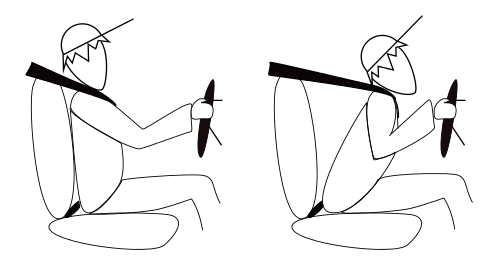
62.
What Newtons law does this picture represent
a)
Newtons 2nd law 
b)
Law of gravity 
c)
Newtons 1st law
d)
Newtons 5th law
63.
A distance vs. time graph shows an object's
a)
frame of reference
b)
speed
c)
acceleration
d)
favorite food
64.
Speed =
a)
distance / time
b)
time / distance
c)
distance * time
65.
Change in speed over a given period of time is
a)
velocity
b)
motion
c)
speed
d)
acceleration
66.
When something has speed in a certain direction it is called ___________.
a)
motion
b)
position
c)
velocity
d)
speed
67.
Acceleration of an object happens when things ________
a)
slow down
b)
go faster
c)
change direction (turn)
d)
All of the above
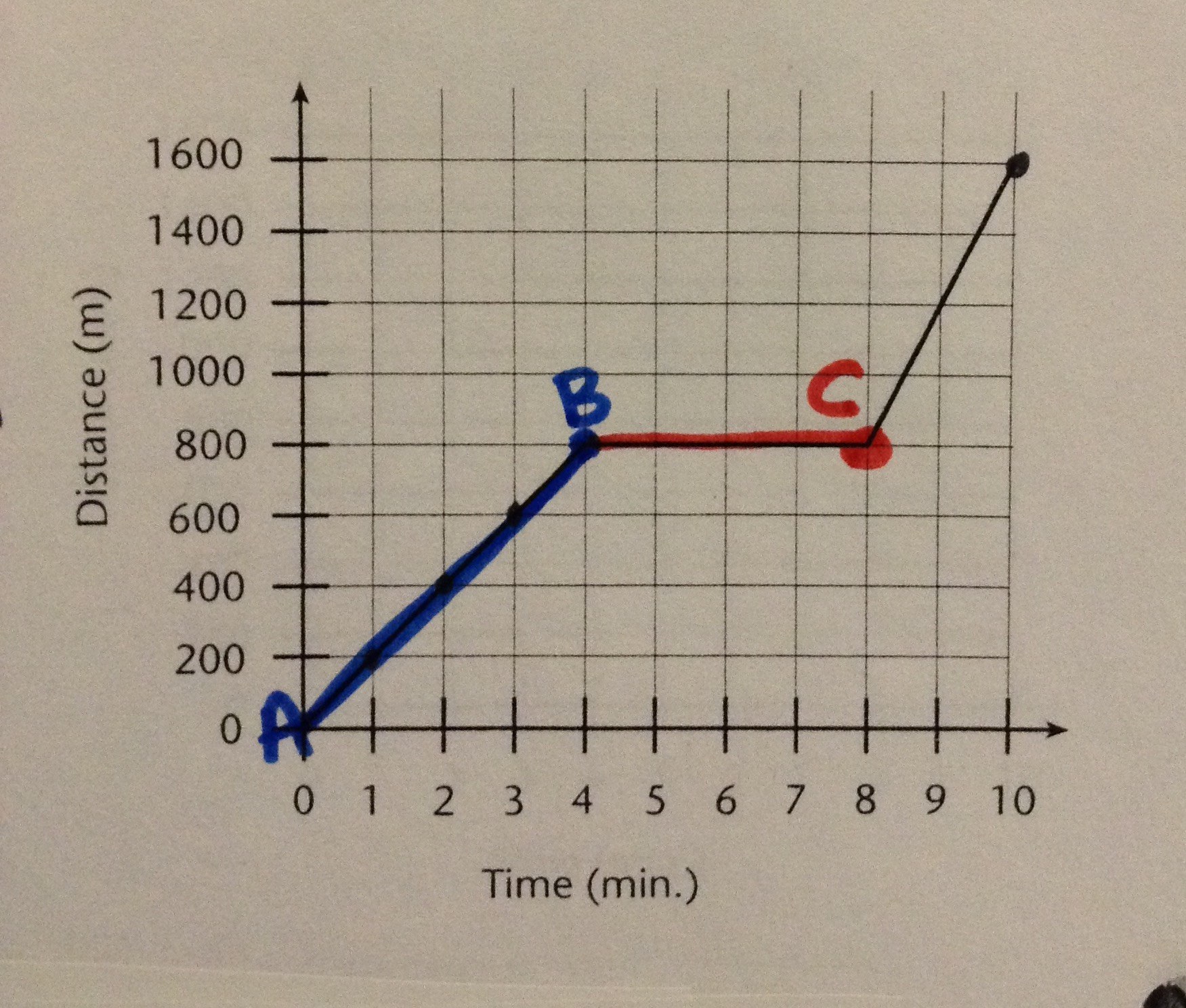
68.
LT4: The graph shows Ashley riding her bike to Maria's house. 
What was occurring from point B to point C?
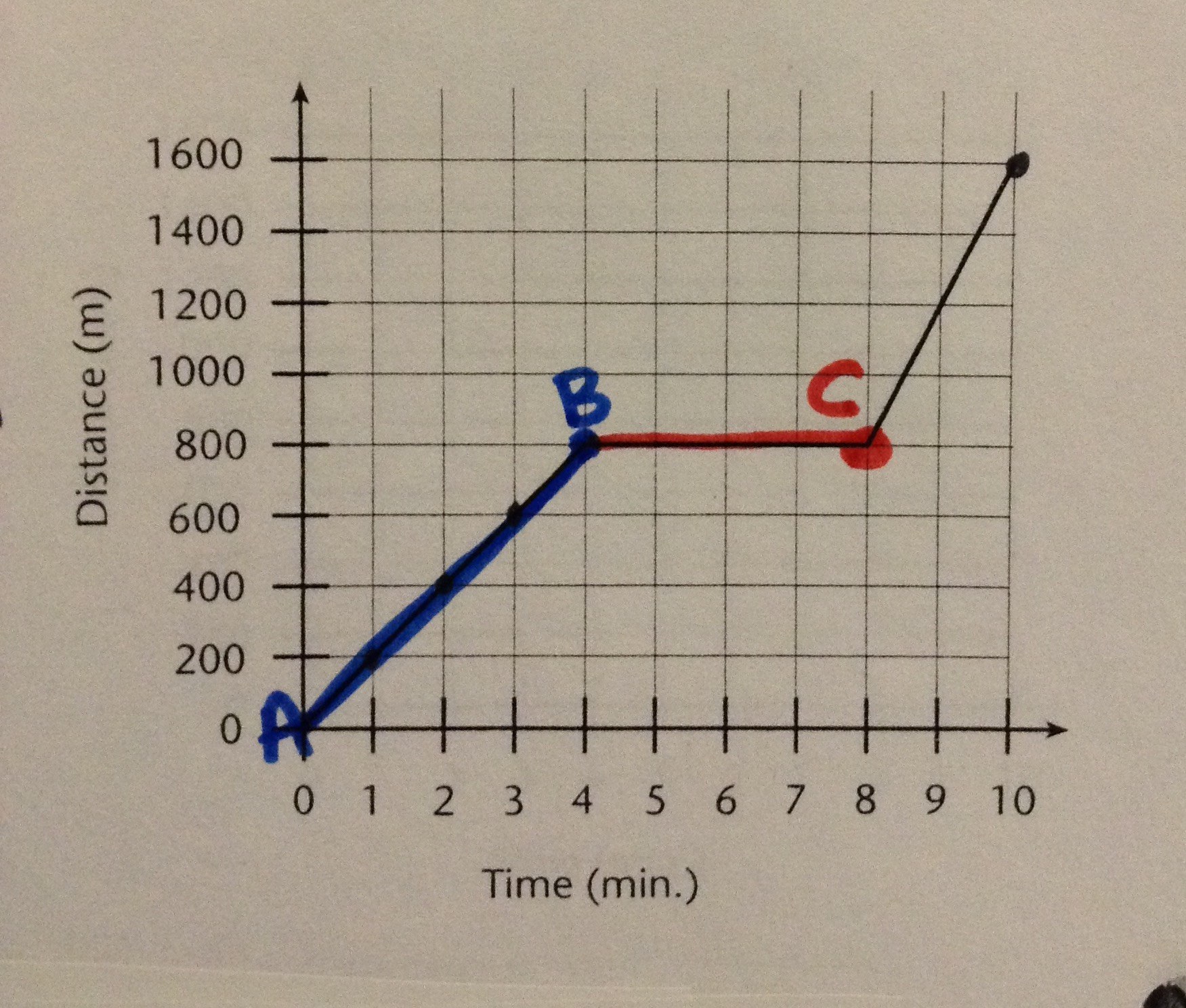
a)
She was increasing her speed.
b)
She stopped for 4 minutes
c)
She was decreasing in speed
69.
LT4: The graph shows Ashley riding her bike to Maria's house. 
What is occurring from point A to point B?
a)
they are traveling at a constant speed
b)
they are decreasing in speed
c)
they stopped to take a break
70.
An empty truck and a fully loaded truck are next to each other at a traffic light. When the light turns green, the lighter truck increases speed more quickly. Which of these best explains this situations
a)
Newton's first law
b)
Newton's second law
c)
Newton's third law
d)
Conservation of momentum
71.
Newton's first law of motion states that __________.
a)
when a force is applied on an object, there is an equal force applied by the object in the opposite direction
b)
hen a force acts on an object, its acceleration is in the same direction as the force
c)
an object will remain at rest or keep moving with a constant velocity unless a force acts on it
d)
cceleration is calculated by dividing the force exerted on an object by the mass of the object
72.
What is the net force?
a)
40 N left
b)
0 N Balalnced
c)
400 N right
d)
40 N right
73.
How will this object move? 
a)
It won't move. 
b)
It will move to the right. 
c)
It will move to the left. 
d)
It will move in both directions. 
74.
What is the net force?
a)
400 N Up
b)
400 N Down
c)
- 400 N Down
d)
800 N Down
75.
The sum of all forces acting on an object and direction
a)
Contact Force
b)
Balanced Force
c)
Unbalanced Force
d)
Net Force
76.
Balanced or Unbalanced?
a)
Balanced 
b)
Unbalanced
77.
Are forces balanced or unbalanced when a marble rolls down a ramp?
a)
Balanced
b)
Unbalanced
78.
Are forces balanced or unbalanced when a car is moving at a constant speed in a straight line?
a)
Balanced
b)
Unbalanced
79.
What type of force?
a)
Magnetic
b)
Gravitational
c)
Applied
d)
Normal
80.
What type of force is holding this balloon to the wall?
a)
Applied
b)
Gravitational
c)
Magnetic
d)
Electrical
81.
What force holds the planets in motion around the sun?
a)
Magnetic
b)
Electrical
c)
Gravitational
d)
Air Resistance
82.
What does the strength of gravity between two objects depend upon?
a)
Mass & distance
b)
Mass & weight
c)
Gravity & inertia
d)
Inertia & mass
83.
All objects in the universe have a gravitational attraction to each other. 
a)
True
b)
False
84.
What force ultimately slows the roller coaster to a stop?
a)
Applied
b)
Normal
c)
Friction
d)
Magnetic
85.
Which has more gravitational force acting upon it?
a)
a bus
b)
a train
c)
a car
d)
a person
86.
The unit of force is
a)
m/s
b)
m/s^2
c)
newton
d)
kg
87.
Which of the following is a unit of speed?
a)
km/hr
b)
hr
c)
km
d)
s
88.
Mr. Rudman drives his race car for 4 hrs at 150 miles/hr. How far will he travel?
a)
600 km
b)
60 miles
c)
6 miles
d)
600 miles
89.
A 10 kg object is accelerated upward at 2 m/s2.  What force is required? 
a)
20 N
b)
2 N
c)
5 N
d)
0 N
90.
How much force is needed to accelerate a 25kg bowling ball at 2m/s2?
a)
50N
b)
5N
c)
12.5N
d)
100N
91.
What does this graph represent?
a)
Constant speed
b)
Acceleration
c)
Not moving
92.
What does this graph represent?
a)
Constant Speed
b)
Acceleration
c)
Not moving
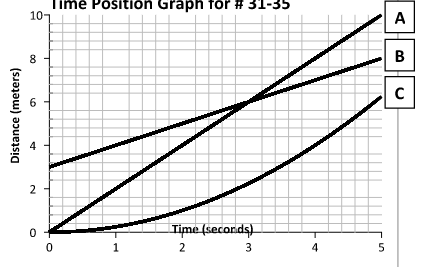
93.
Which runner had a head start?
a)
A
b)
B
c)
C
94.
This is a velocity-time graph.  What is the object doing in segment C?
a)
Positive acceleration
b)
Negative acceleration
c)
Constant Velocity
d)
Not moving
95.
This is a velocity-time graph.  What is the object doing in segment B?
a)
Positive acceleration
b)
Negative acceleration
c)
Constant Velocity
d)
Not moving
96.
How long did one of the runner's rest?
a)
8 seconds
b)
13 seconds
c)
5 seconds
d)
50 seconds
97.
What does this graph represent?
a)
Constant speed
b)
Acceleration
c)
Not moving
98.

If I push a bowling ball (10 kg) and a tennis ball (2 kg) across the floor using the same amount of force (10 N), which one will accelerate quicker?

a)

bowling ball

b)

tennis ball

c)

neither

d)

they will accelerate at same rate

99.
Positive ions form when atoms _________ valence electrons.
a)
lose
b)
gain
c)
share
d)
gain or share
100.
Negative ions form when atoms _________ valence electrons.
a)
lose
b)
gain
c)
share
d)
gain or share
101.
Ionic compounds form because _______ charges attract.
a)
opposite
b)
like
102.
In an ionic compound, the total positive charge of all the positive ions ___________ the total negative charge or all the negative ions.
a)
equals
b)
is greater than
c)
is less than
d)
is larger than
103.
Nonmetals are most likely to _____________ valence electrons in order to have a stable arrangement.
a)
lose
b)
gain
c)
gain or share
d)
share
104.
Which is most likely to form an ion of -1?
a)
an element from group 17
b)
a metal
c)
an element from group 1
d)
an element with atoms that have eight valence electrons
105.
Atoms are neither created or destroyed (gained or lost) is known as the 
a)
Law of Conservation of Energy
b)
Law of Conservation of Matter
c)
Law of Conservation of Atoms
106.
What is the ONLY part of the atom that makes a chemical bond
a)
Nucleus
b)
electrons
c)
valence electrons
d)
protons
107.
What is the charge of a Beryllium ion with 4 protons and 2 electrons? 
a)
Positive
b)
Negative
c)
Neutral
108.
What is the charge of a molecule? 
a)
Positive
b)
Negative
c)
Neutral
109.
Noble gases will form chemical bonds with other elements
a)
True
b)
False
c)
Sometimes
110.

What kind of magnet can be turned on and off? (Man-made magnet)

a)

refrigerator magnet

b)

electromagnet

c)

magnetite

d)

iron

111.

If you wrap more coils around an electromagnet, it will become...

a)

brighter

b)

stronger

c)

weaker

d)

invisible

112.
When you put the poles of two magnets together they will either attract or repel each other.  Which of these sentence is correct?
a)
If the two poles are the same the magnets repel each other.
b)
If the two poles are the same the magnets attract each other.
c)
If the two poles are different the magnets repel each other.
113.

A device that converts kinetic (mechanical) energy into electrical energy

a)

A. electric generator

b)

B. electric motor

c)

C. electromagnetic induction

d)

D. electricity

114.

A device that converts electrical energy into kinetic (mechanical) energy

a)

A. electromagnet

b)

B. electromagnetic induction

c)

C. electric motor

d)

D. electromagnetism

115.

The attraction or repulsion created by spinning electrons?

a)

magnetic poles

b)

magnetic field

c)

magnetic force

d)

electromagnetism

116.

What can demagnetize a magnet?

a)

A. high altitudes

b)

B. high temperatures

c)

C. low altitudes

d)

D. low temperatures

117.

What is created when a magnet moves through a coil of wire?

a)

A. an electromagnet

b)

B. a ferromagnet

c)

C. a solenoid

d)

D. an electric current

118.

Which of the following are two effects of Earth’s magnetic field?

a)

A. compass points to geographic north, auroras seen at both poles

b)

B. compass points to magnetic north, auroras seen at both poles

c)

C. compass points to geographic south, auroras seen at the equator

d)

D. compass points to geographic north, auroras seen at the equator

119.

Increasing the number of loops per meter in the coils of a solenoid is one way to

a)

A. increase the wire’s electric current

b)

B. strengthen the solenoid’s magnetic field.

c)

C. decrease the wire’s electric current.

d)

D. weaken the solenoid’s magnetic field.

120.

What did Faraday’s experiments with magnets and electromagnetic induction demonstrate?

a)

A. Magnetic fields are made when the electric field changes.

b)

B. Strong electric current makes electromagnets.

c)

C. Electric current is made when the magnetic field changes.

d)

D. Strong electromagnets make electric current.

121.

What would increase the strength of an electromagnet?

a)

Increasing the amount of current flowing through the wire.

b)

Inserting a wooden core inside the coil

c)

Changing the direction of the current

d)

Decreasing the number of coils of wire

122.

When a bar magnet is broken in half, what is the result?

a)

Two N poles

b)

Two S poles

c)

Two N poles and two S poles

d)

The bar loses its magnetic properties

123.

A tiny region in a magnet where all the atoms are grouped together and their poles are aligned.

a)

Domain

b)

North

c)

South

d)

Commutator

124.

This material is hard to magnetize, but stays magnetized

a)

temporary

b)

permanent

c)

ferromagnet

d)

electromagnet

125.

How are electromagnets different from magnets?

a)

magnets can be turned on/off

b)

you can turn an electromagnet on/off

c)

magnets are more powerful

d)

magnets have a North and South pole

126.

The process of creating a current in a circuit by changing a magnetic field

a)

A. electric generator

b)

B. electric motor

c)

C. electromagnetic induction

d)

D. magnet

127.

Earth acts like a giant magnet because its center is made up MOSTLY of

a)

granite

b)

limestone

c)

iron

d)

nickel

128.

A magnet that is only magnetic when in contact with another magnet or an electric current.

a)

permanent magnet

b)

temporary magnet

c)

a stinky magnet

129.

The area around a charged object that can affect other charged objects is

a)

magnetic charge

b)

magnetic field

c)

magnetization

130.
Warm air rises and the cool air sinks demonstrates this type of heat transfer. 
a)
conduction
b)
convection
c)
radiation
d)
Insolation 
131.
Conduction is heat transfer by -
a)
Touch
b)
Circles
c)
Waves
132.
The heat from a hot burner to a pot is transferred by ______.
a)
convection
b)
insulation
c)
radiation
d)
conduction
133.
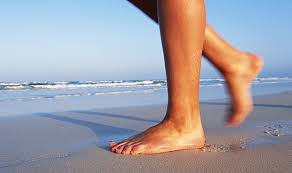
Walking on the warm sand sand with your bare feet demonstrates this type of heat transfer. 
a)
conduction
b)
convection
c)
radiation
134.
What happens to particles as they cool down?
a)
They slow down
b)
Nothing
c)
They don't move
d)
They speed up
135.
Conductors are materials that...
a)
Allow heat to pass through
b)
Stop heat from passing through
c)
Allow cold to pass through
d)
Stop cold from passing through
136.
Mittens help keep your hands warm in winter because:
a)
They are conductors of heat.
b)
They are fuzzy.
c)
They are conductors of electrical energy.
d)
They are insulators.
137.
This is an example of-
a)
Conduction
b)
Convection
c)
Radiation
138.
What type of material makes the best insulators?
a)
Aluminum
b)
Copper
c)
Styrofoam
d)
Metal
139.
Which example below is an example of conduction?
a)
Boiling macaroni
b)
The attic is warmer than the basement
c)
The Sun heating the Earth
d)
Touching hot sand with your feet
140.
What evidence demonstrates that convection currents are at work?
a)
Food coloring spreads throughout a glass when the water in the glass is stirred
b)
Smoke rises from a lighted candle wick
c)
The handle of a pan on a stove gets hot
d)
Your face feels warm sitting beside a fire
141.
Which sentence explains why a cold metal spoon placed in a pot of boiling water becomes hot?
a)
Thermal energy is transferred from the spoon to the water.
b)
Thermal energy is transferred from the water to the spoon.
c)
Thermal energy in the water is transformed into kinetic energy in the spoon.
d)
Thermal energy in the spoon is transformed into kinetic energy in the water.
142.

Which of the following is true of the Celsius scale?

a)

212 degrees is the boiling point of water

b)

0 degrees is absolute zero

c)

0 degrees is the freezing point of water

d)

32 degrees is the freezing point of water

143.

What would be the effect on the particles if heat is removed from the system?

a)

They would slow down

b)

They would stop moving

c)

They would speed up

d)

There would be no effect

144.

Thermal energy depends on

a)

Phase

b)

Mass

c)

Temperature

d)

All of the above

145.
Which of the following is NOT a part of the Kinetic Theory of Matter?
a)
All matter is made up of tiny particles.
b)
Occasionally, particles stop moving.
c)
Particles are always moving in random paths.
d)
The type of movement of particles depends on the amount of energy.
146.
When thermal energy is added to a substance, the substance's particles move:
a)
More rapidly at an increased diestance from each other.
b)
More rapidly with less distance between each other.
c)
More slowly with a greater distance between each other.
d)
More slowly with a reduced distance between each other.
147.
Railroad tracks have gaps between rails so they don't buckle in hot weather because
a)
thermal conductivity
b)
specific heat
c)
thermal expansion
d)
thermal insulation
148.
Device/Object that measures temperature. 
a)
Thermal energy
b)
Temperature
c)
Thermometer
d)
Heat
149.
The faster molecules move, 
a)
the higher the temperature
b)
the less temperature
c)
the same temperature
d)
I don't know
150.
What is the difference between a conductor and an insulator?
a)
An insulator allows electricity to flow through it easily and a conductor does not
b)
A conductor allows electricity to flow through it easily and an insulator does not.
c)
An insulator is magnetic and a conductor is not
d)
A conductor is magnetic and an insulator is not
151.
When birds fluff up their feathers in the cold weather,
they are using what to act as an insulator to help keep them warm?
a)
water
b)
oil
c)
tree bark
d)
air
152.
What material would be safest to use as an insulator to cover electrical wires?
a)
aluminum
b)
tin
c)
rubber
d)
water
153.

Iced tea is what kind of mixture?

a)

Homogeneous

b)

Heterogeneous

c)

Both homogeneous and heterogenous

d)

None of the above

154.
Can an element be broken down into a simpler substance 
a)
yes 
b)
No
155.
What is made up two or more elements that are chemically combined?
a)
Element
b)
Mixture
c)
Compound
d)
Solids
156.
Classify the picture with the correct label.
a)
Element
b)
Compound
c)
Mixture of Elements
d)
Mixture of Compounds
157.
Classify the picture with the correct label.
a)
Compounds
b)
Mixture of Elements
c)
Mixture of Compounds
d)
Mixture of Elements & Compounds
158.
Classify the picture with the correct label.
a)
Element
b)
Compound
c)
Mixture of Elements and Compounds
d)
Mixture of Elements
159.
which one only has one type of atom In it.
a)
Element
b)
compound
160.
What cannot be broken down into other substances?
a)
Compound
b)
Mixture
c)
Solids
d)
Element
161.
These can only be separated by chemical means. 
a)
element 
b)
compound 
c)
mixture 
d)
stuff 
162.

All compounds have a specific ratio of elements

a)

True

b)

False

c)

Neither

163.

If a substance is soluble is means...

a)

that it can dissolve into another substance

b)

that it cannot dissolve into another substance

c)

it must be a concentrated substance

d)

it must be a diluted substance

164.

The three types of mixtures are..

a)

solutions, solutes, solvents

b)

solutions, colloids, suspensions

c)

solutions, colloids, sediments

d)

concentrates, dilutes, dissolvers

165.

Solutions are made up of..

a)

a soluble and a solvent

b)

a solute and a solvent

c)

a suspension and a sediment

d)

a suspension and a colloid

166.

The word concentrated means a mixture is..

a)

weak

b)

strong

c)

disappearing

d)

reappearing

167.

If you wish to dilute a mixture you can..

a)

add more solute

b)

add more solution

c)

add more solvent

d)

add more sediment

168.

Solutions have ______________ sized particles, colloids have _________________ sized particles, and suspensions have _________________________ sized particles.

a)

small, medium, large

b)

large, medium, small

c)

medium, small, large

d)

medium, large, small

169.
Which of the following is a pure substance? 
a)
Soil 
b)
Salt
c)
Water and sand
d)
Vanilla ice cream with chocolate
170.

Classify this object.

a)

Element

b)

Compound

c)

Heterogeneous mixture

d)

Homogeneous Mixture

171.

This type of mixture can look cloudy or gel like and has moderate sized particles that are suspended but do not settle out

a)

Suspension

b)

Solute

c)

Colloid

d)

Solvent

172.
This type of mixture has particles that settle. 
a)
Suspension
b)
Colloid 
c)
Emulsion
d)
Solution 
173.
Sand floating in water, but most of the sand is settled at the bottom this an example of which type of mixture?
a)
A solution
b)
A colloid
c)
A suspension
d)
A compound
174.
Letter B is the...
a)
Solute
b)
Solvent
175.
Letter A is the...
a)
Solute
b)
Solvent
176.
How are suspensions and colloids different?
a)
Suspensions settle out and colloids do not settle.
b)
Colloids settle out and suspensions do not settle.
c)
Suspensions dissolve and colloids do not.
d)
Colloids dissolve and suspensions do not.
177.
All are heterogeneous mixtures except...
a)
Italian dressing
b)
Sandy water
c)
Cereal and milk
d)
Salt water
178.

Sandy ocean water can be separated by first separating the solids from the liquids through ________. Then separating the remaining solution by ______________:

a)

evaporation ; filtration

b)

distillation ; decanting

c)

filtration ; evaporation

d)

filtration ; decanting

179.
Which one of the following would you use to separate sand from iron filings?
a)
a bar magnet
b)
filter paper
c)
chromatography paper
d)
alum
180.
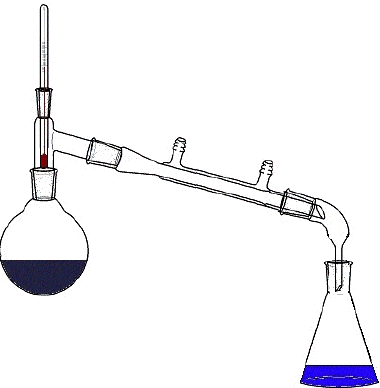
Water and alcohol are easily separated by distillation because of their
a)
 different melting points
b)
different colours
c)
different densities
d)
different boiling points
181.
Energy of motion is which type of energy?
a)
Potential
b)
Kinetic
c)
Sound
d)
Gravitational
182.
What type of energy is in this picture?
a)
Kinetic
b)
Potential
c)
Chemical
d)
Sound
183.
When plants convert the sun's energy into food, which type of energy is it?
a)
kinetic
b)
chemical
c)
thermal
d)
radiant
184.
What kind of energy is represented in this picture?
a)
Thermal
b)
Potential
c)
Nuclear
d)
Mechanical
185.
A battery converts what type of energy to another?
a)
sound to kinetic
b)
light to heat
c)
mechanical to electrical
d)
chemical to electrical
186.
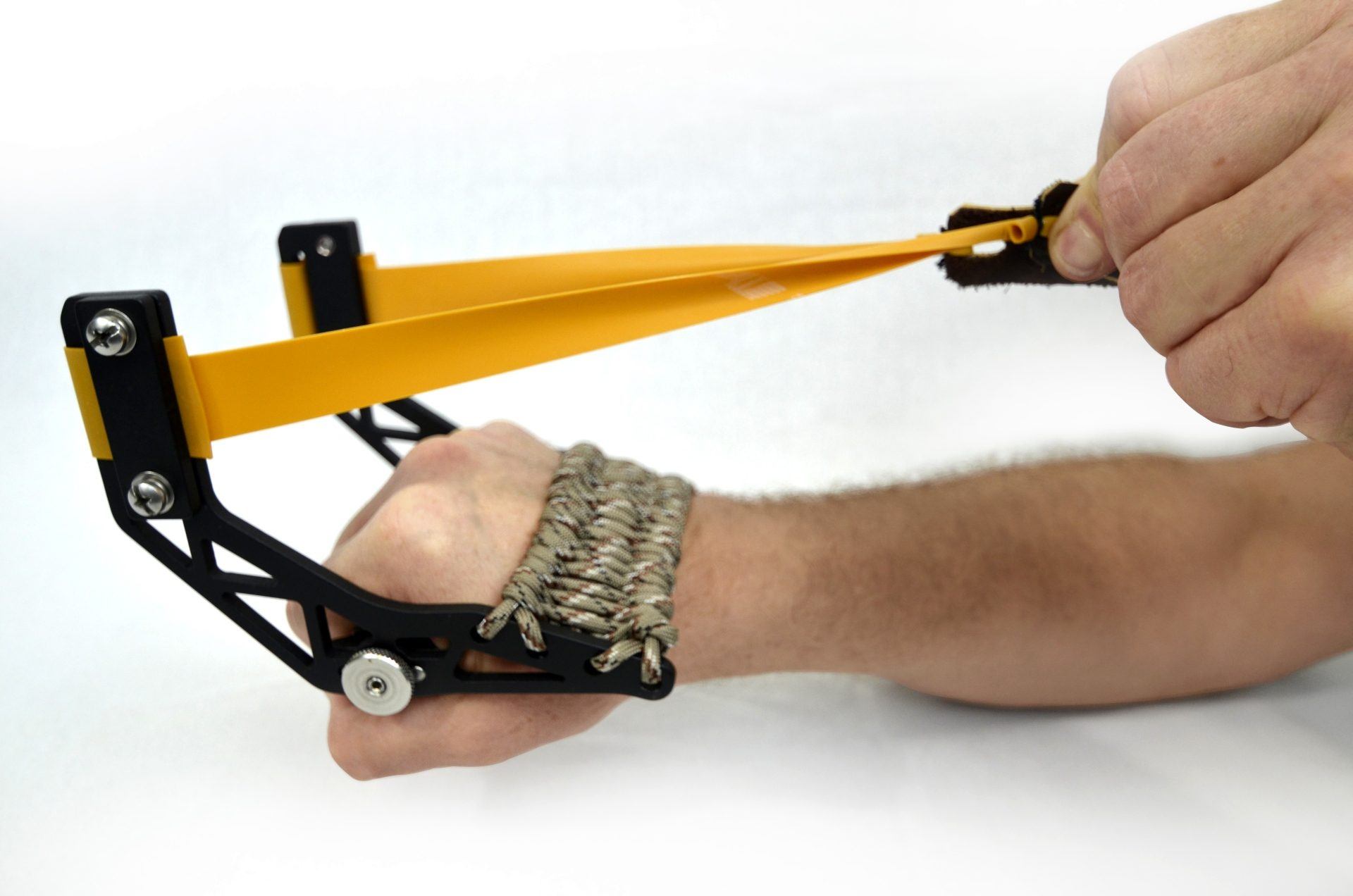
On a roller coaster, where is maximum potential energy?
a)
At the bottom of a big hill
b)
When going around a corner
c)
When going upside down
d)
At the top of a big hill
187.
On a roller coaster, where is maximum kinetic energy?
a)
At the bottom of a big hill
b)
When going around a corner
c)
When going upside down
d)
At the top of a big hill
188.

Energy that comes from the nucleus of an atom when it is split.

a)

chemical energy

b)

Nuclear energy

c)

Sound energy

d)

Electrical energy

189.

According to which law of energy, energy can't be created or destroyed?

a)

First law of motion

b)

The law of tacos

c)

Laws of Energy

d)

Law of Conservation of Energy

190.

At what position does the rock have the greatest kinetic energy?

a)

A

b)

B

c)

D

d)

E

191.

Energy due to lifting something to a height is

a)

kinetic

b)

gravitational potential

c)

elastic potential

d)

chemical potential

192.

Energy due to stretching a spring is

a)

kinetic

b)

gravitational potential

c)

elastic potential

d)

chemical potential

193.

The sum of the potential energy and kinetic energy is

a)

nuclear energy

b)

mechanical energy

c)

sound energy

d)

light energy

194.

Energy produced by an object's vibrations is called

a)

mechanical

b)

radiant

c)

sound

d)

nuclear

195.

Energy that is made by vibrations of electrically charged particles

a)

radiant (light) energy

b)

electrical energy

c)

nuclear every

d)

kinetic energy

196.
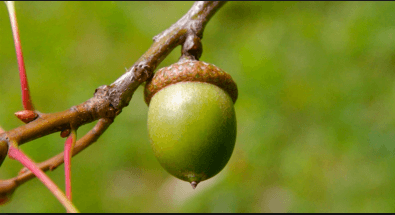
An acorn hanging from an oak tree.
a)
Potential
b)
Kinetic
197.

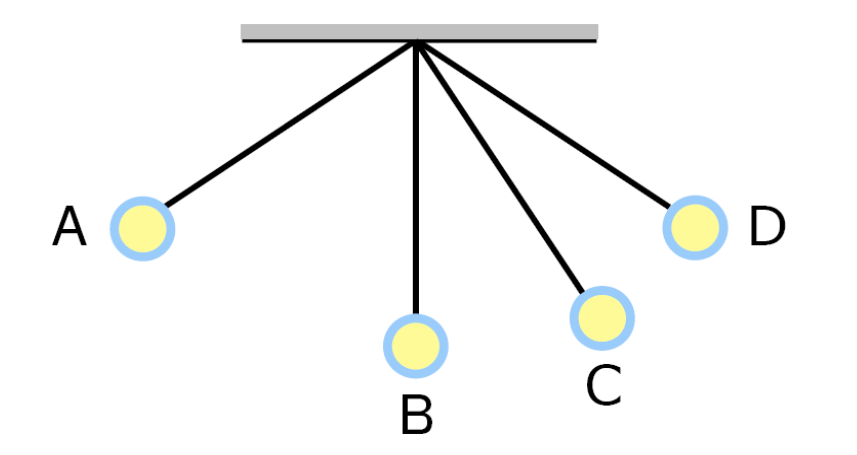
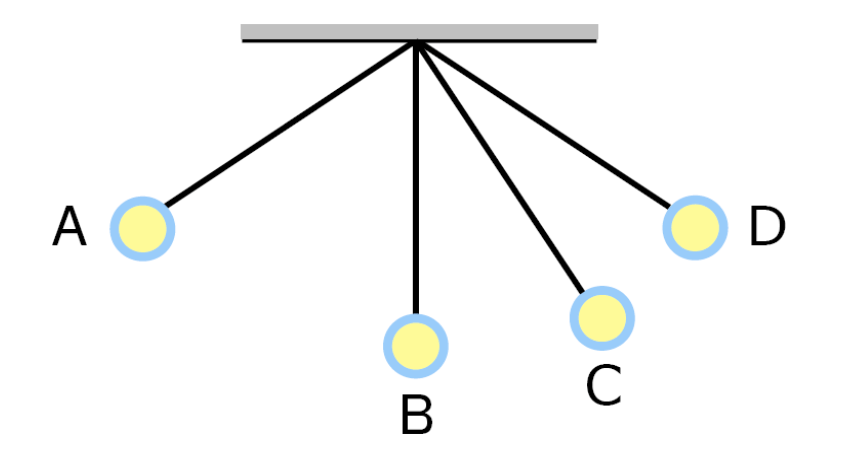
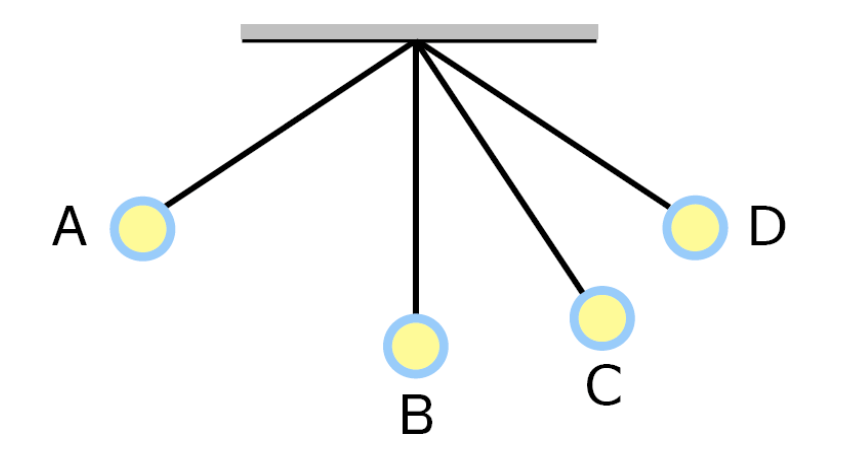
Maximum kinetic energy

a)

A

b)

B

c)

C

d)

D

198.

Maximum gravitational potential energy (choose all that apply)

a)

A

b)

B

c)

C

d)

D

199.

Minimum kinetic energy (choose all that apply)

a)

A

b)

B

c)

C

d)

D

200.

Minimum gravitational potential energy

a)

A

b)

B

c)

C

d)

D

201.

The coaster at A has -

a)

Maximum PE, Minimum KE

b)

Minimum PE, Maximum KE

c)

Minimum PE, High KE

d)

Maximum PE, Maximum KE

202.

The coaster at B is at -

a)

Maximum PE, Minimum KE

b)

Minimum PE, Minimum KE

c)

Minimum PE, Maximum KE

d)

Maximum PE, Maximum KE

203.
The faster an object moves, the ________ kinetic energy it has. 
a)
more
b)
less
c)
none of the above
d)
all of the above 
204.

Gravitational potential energy depends on the ________ and ________ of the object.

a)

Position and mass

b)

Friction and movement

c)

Mass and Movement

d)

Height and Friction

205.
What is energy?
a)
The ability to do work or cause change
b)
The rate at which work is done
c)
The rate at which energy is transferred 
206.
What unit is energy measured in?
a)
Newtons 
b)
Joules 
c)
Grams 
207.

Which of the following is an example of potential energy?

a)

a person swimming in the ocean

b)

a book sitting on a table

c)

going down a roller coaster

d)

spiking a volleyball

208.

Friction causes what type of energy?

a)

thermal

b)

kinetic

c)

potential

d)

chemical