wayground logo

Free Printable Worksheets

Font size

S
M
L
XL
Worksheets

G8 Integrated Science: Year in Review Quiz - Homeo and Forces

Total questions: 205

Worksheet time: 4hrs 35mins

Name
Class
Date
1.
The two types of feedback systems that help organisms maintain homeostasis are:
a)
positive and negative 
b)
receptor and effector
c)
static and dynamic
d)
minor and major
2.
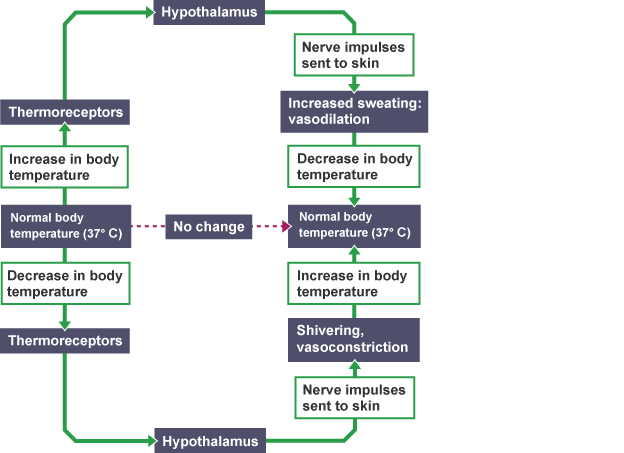
Maintaining body temperature is an example of a:
a)
negative feedback loop
b)
positive feedback loop
3.

When glucose levels in the blood rise, your brain sends a signal to your pancreas. The pancreas releases insulin, which opens channels in cell membranes to allow glucose to enter the cell, lowering blood sugar levels. This is an example of a:

a)

Positive Feedback Loop

b)

Negative Feedback Loop

4.

An example of a negative feedback loop is ...

a)

Blood glucose regulation

b)

Blood pressure regulation

c)

Thermoregulation

d)

All of the above

5.

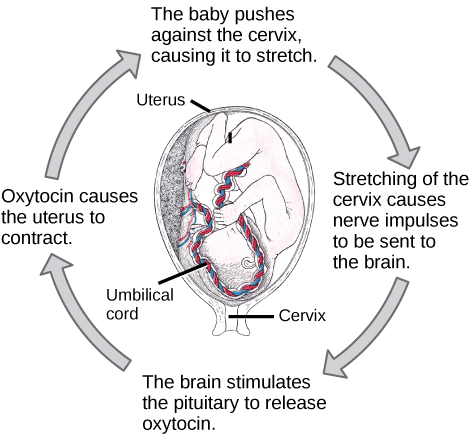
An example of a positive feedback loop is ____________.

a)

Childbirth

b)

Blood Pressure regulation

c)

Body Temperature regulation

d)

All of the above

6.
Homeostasis
a)
allows for a wildly fluctuating internal environment
b)
is impossible in vertebrates
c)
is the maintenance of a relatively stable internal environment and often incorporates a form of feedback regulation
d)
is the maintenance of a relatively stable external environment and often incorporates a form of feedback regulation
7.
If the environment gets cold, we will often shiver in order to:
a)
keep body temperature the same as the external temperature
b)
decrease body temperature
c)
increase body temperature
d)
regulate blood pressure
8.
What type of feedback loop is shown?
a)
negative
b)
neutral 
c)
positive
9.
What type of feedback loop is shown?
a)
Positive
b)
Neutral
c)
Negative
10.
Humans have ___ for body temperature, blood glucose concentrations, electrolyte concentrations, pH levels, tendon tension and variables.
a)
positive feedback mechanisms
b)
set points
c)
a wide internal range
d)
no regulation
11.

When you get cut, your skin cells release hormones that signal platelets to come and stop the bleeding. Platelets then release more hormones that signal even more platelets to help stop bleeding. The hormone signals continue until the cut is closed. This is an example of what type of feedback?

a)

Positive Feedback Response

b)

Negative Feedback Loop

12.
Rapid growth during puberty causes your body to release more and more growth hormones. As you grow, more and more growth hormones are released until puberty is reached, and then the hormones stop.
a)
Positive Feedback Response
b)
Negative Feedback Loop 
13.

If the calcium in your blood decreases below homeostasis levels, a gland in the brain will sense the decrease and send a chemical message to your bones. Your bones will release calcium into the blood, bringing blood calcium levels back up. This is an example of what type of feedback?

a)

Positive Feedback Response

b)

Negative Feedback Loop

14.

As you get dehydrated, your blood becomes thicker and harder to pump. Your kidneys will respond by stopping urine production, sending the water from urine into your bloodstream to thin your blood back to normal level. This is an example of what type of feedback?

a)

Positive Feedback Response

b)

Negative Feedback Loop

15.
This organ produces the hormones that help regulate blood glucose levels.
a)
pancreas
b)
liver
c)
small intestine
d)
gall bladder 
16.
What hormone is produced in the pancreas that raises blood sugar?
a)
Insulin
b)
Glucagon
c)
Ketones
d)
Glucose
17.

Detects change and sends a message to the control center

a)

receptor

b)

control center

c)

effector

d)

regulation

18.

Receives the message from the receptor and coordinates a response

a)

control center

b)

effector

c)

glucagon

d)

homeostasis

19.

The organ/cells that carry out the response

a)

control center

b)

receptor

c)

thermoregulation

d)

effector

20.

The temperature regulation center in the brain of a human

a)

hypothalamus

b)

thermoregulation

c)

receptor

d)

negative feedback

21.

_____________ is released by your pancreas when blood glucose levels get too high.

a)

glucose

b)

glucagon

c)

oxygen

d)

insulin

22.

Homeostasis

a)

Changes like crazy in the environment

b)

Is impossible in vertebrates

c)

Maintains a stable condition for the organisms

d)

Incorporates a form of feedback regulation

23.
Maintaining body temperature is an example of a:
a)
negative feedback loop
b)
positive feedback loop
24.
The "effect" of a given stimulus is the...
a)
response
b)
stimulus
c)
cause
d)
result
25.

Identify the stimulus..."A loud noise causes you to cover your ears"

a)

A loud noise

b)

You cover your ears

26.

Identify the stimulus..."A person shivers because it is cold outside"

a)

Cold temperature

b)

A person shivers

27.

Identify the response..."An organism is hungry so it eats some food"

a)

Feeling hungry

b)

Eating food

28.

Identify the response..."A squirrel scratches at a flea bite"

a)

A flea bite

b)

A squirrel scratches

29.

Which component of homeostasis does this image represent?

a)

Receptor

b)

Control Center

c)

Effector

30.

Which component of homeostasis does this image represent?

a)

Receptor

b)

Control Center

c)

Effector

31.

Which component of homeostasis does this image represent?

a)

Receptor (sensor)

b)

Control Center

c)

Effector

32.
What is involuntary contractions of voluntary muscles to warm up?
a)
Shivering
b)
Sweating
c)
Vasodilation
d)
Vasoconstriction
33.
What is another word that can be used to describe "homeostasis"?
a)
STABLE
b)
EQUAL
c)
COMPLETE
d)
CORRECT
34.

This component of the feedback loop determines/maintains the controlled conditions of our body. (The Brain)

a)

Receptor

b)

Glands

c)

Effector

d)

Control center

35.
This component of the feedback loop carries out the actual response. 
a)
Receptor 
b)
Enhancer 
c)
Effector
d)
Brain 
36.

This component of the feedback loop monitors/detects controlled cond. (The sensor)

a)

Control center

b)

Negative feedback

c)

Receptor

d)

Effector

37.
The receptor reports back to this feedback loop component. 
a)
Effector 
b)
Protein Sensors 
c)
Positive feedback 
d)
Control center 
38.

What happens if the person's insulin levels get too high?

a)

The glucose level decreases alot.

b)

Glucagon remain turned off.

c)

The blood glucose levels increases

d)

More insulin is added to the person's body

39.
Identify the stimulus
a)
hunger
b)
thirst
c)
blinking
d)
eating
40.
Identify the response
a)
hunger
b)
thirst
c)
eating
d)
smelling
41.
What is the evaporation of a liquid to cool the body?
a)
Shivering
b)
Sweating
c)
Vasodilation
d)
Vasoconstriction
42.
If the environment gets cold, we will often shiver in order to:
a)
keep body temperature the same as the external temperature
b)
decrease body temperature
c)
increase body temperature
d)
regulate blood pressure
43.
The "cause" for something to happen is the
a)
response
b)
effect
c)
stimulus
d)
homeostasis
44.
The "effect" of a given stimulus is the...
a)
response
b)
stimulus
c)
cause
d)
result
45.

A feedback loop best fits which characteristic of life?

a)

Cells

b)

Organization

c)

Homeostasis

d)

Adaptation

46.
Failure to maintain homeostasis could result in:
a)
lack of internal balance
b)
eventual death
c)
difficulty carrying on metabolism 
d)
all three
47.
diabetes is a disease that affects your body's ability to produce or use ___.
a)
energy
b)
insulin
c)
oil
48.
Insulin
a)
lowers your blood sugar levels
b)
blocks the sugar in your bloodstream from doing what it is supposed to do
c)
gives you diabetes
49.

What is low blood sugar called?

a)

Hypoglycemia

b)

Hyperglycemia

50.

This is the name of the simple sugar that is found in your blood?

a)

water

b)

glucose

c)

sodium

d)

sugar

51.

Cold-blooded animals get their warmth from ________?

a)

Jackets

b)

Their surroundings/ environment

c)

By sweating and panting

d)

Heaters

52.

What is an example of a cold-blooded animal?

a)

Human

b)

Skunk

c)

Frog

d)

Rabbit

53.

What is an example of a warm-blooded animal?

a)

Fish

b)

Lizard

c)

Polar Bear

d)

Frog

54.

Glycogen is stored in the

a)

Liver

b)

Kidneys

c)

Stomach

d)

Pancreas

55.

Vasoconstriction means the blood vessels

a)

Become narrower

b)

Become wider

c)

Changes color

d)

Are distroyed

56.

When sweat is produced by the sweat glands

a)

The sweat will prevent the heat from escaping the body

b)

The sweat evaporates carrying heat away from the body

c)

The sweat evaporates to create more heat for the body

d)

The sweat makes the skin fresh and good

57.

What is a reference point?

a)

A place or object that is staying still, that is used to determine if something else is moving.

b)

A place or spot where something is located

c)

The action of moving or being moved

d)

Shortest distance between starting position and ending position

58.

Motion can be described through a change in _____.

a)

temperature

b)

distance

c)

position

d)

speed

59.

In order to determine an object’s location, you need a _____.

a)

time

b)

displacement

c)

speed

d)

reference point

60.

To determine if an object has changed position, you need to know its position relative to another object. _______________

a)

True

b)

False

61.

You need Distance, a reference point, and a reference direction to determine the position of an object

a)

True

b)

False

62.

Velocity is speed with direction

a)

True

b)

False

63.

20 km/hr is an example of

a)

direction

b)

velocity

c)

speed

d)

distance

64.

300 km/hr North is an example of

a)

Velocity

b)

Speed

c)

Direction

d)

Reference point

65.

You should NOT use a moving object as a reference point

a)

True

b)

False

66.

If you leave home and travel a million miles around the world and stop back home, what is your displacement?

a)

One million miles

b)

0

c)

two million miles

d)

none of the above

67.

You can find speed and velocity by

a)

Distance / Time

b)

Time/ Distance

c)

Time/Time

68.

You are in a car going 20 km/h and another car passes you going in the opposite direction at 20 km/h. Do both cars have the same velocity?

a)

Yes, because they are both going 20 km/h

b)

No, because they are going in different directions

69.

Which is the best reason for not using a moving car as a reference point?

a)

It is difficult to determine which direction motion is occurring.

b)

The car will get out of sight too quickly

c)

It is difficult to tell other people which car you are using

d)

The car has moving parts, like rolling tires, that can be distracting.

70.

_______ is the length of the path between two points.

a)

distance

b)

reference

c)

statistic

d)

law

71.

The SI unit for measuring distance is the ______.

a)

Meter

b)

liter

c)

gram

d)

foot

72.

An object is in ____ if its position changes relative to another object.

a)

motion

b)

reference

c)

gravity

d)

stationary

73.

1,000m - ______km

a)

1

b)

1,000

c)

10

d)

.01

74.

1,000cm = _______meters

a)

10

b)

100

c)

1

d)

1,000

75.

Jeff is in a stationary school bus. Which is the best reference point for him to use to determine when the bus starts to move?

a)

the front entrance of the school

b)

the school bus sitting next to him

c)

a car waiting to pick up another student

d)

a student walking on the sidewalk

76.

A ______ is a place or object used for comparison to determine if something is in motion.

a)

reference point

b)

potent potable

c)

cross interestion

d)

slope

77.

Which of the following is the best reference point for describing the motion of the planets in our solar system?

a)

The sun

b)

Mars

c)

Jupiter

d)

The Moon

78.

Suppose you are in a train. What objects would make good reference points to determine whether or not the train is moving?

a)

Signs on streets

b)

Parked cars

c)

Trees

d)

the seat next to you

79.
A dog runs on the sidewalk 9 mi/hr.
a)
Speed
b)
Acceleration
c)
Velocity
80.
While going to school, a student walks an average of 5 km/hr west for 12 blocks.
a)
Speed
b)
Acceleration
c)
Velocity
81.
While on a trip, a family travels east from San Antonio to Houston going 70 mph.
a)
Speed
b)
Acceleration
c)
Velocity
82.
Speed in a given direction is the definition of ____. 
a)
Speed
b)
Velocity
c)
Acceleration
d)
Direction
83.
A car traveling 300 miles in 5 hours is an example of _____. 
a)
Speed
b)
Velocity
c)
Acceleration
d)
Direction
84.
A ball rolling west at 5 cm per second is an example of ____. 
a)
Speed
b)
Velocity
c)
Acceleration
d)
Direction
85.
Distance over Time is the definition of ___. 
a)
Speed
b)
Velocity
c)
Acceleration
d)
Direction
86.
What is the formula to calculate speed?
a)
Speed = time/distance
b)
Speed = distance/time
c)
Speed = distance x time
d)
Speed = time x distance
87.
A car travels 30 miles/hr for 3 hours, calculate the distance it will travel
a)
90 miles
b)
10 miles
c)
600 miles
d)
90 km
88.
Which of the following is a unit of speed?
a)
km/hr
b)
hr
c)
km
d)
s
89.
Find the velocity of a plane that traveled 3000 miles west in 5 hours.
a)
65 mph west
b)
6 mph west
c)
600 mph west
d)
6000 mph west 
90.
88 m/s north
a)
Speed
b)
Velocity
c)
Acceleration
91.
88 m/s
a)
Speed
b)
Velocity
c)
Acceleration
92.
Which of the following is a unit of speed ?
a)
sec
b)
mi
c)
m/s
d)
min
93.
A truck driving at 60 miles per hour travels 150 miles. How long is it driving for?
a)
9000 hours
b)
0.4 hours
c)
210 hours
d)
2.5 hours
94.
A roller coasters accelerates from an initial velocity of of 6.0 m/s to a final velocity of 70 m/s over 4 seconds.  What's the acceleration?
a)
24 m/s2
b)
18 m/s2
c)
16 m/s2
d)
16 m/s
95.
A car starts from rest at a stop light and reaches 20 m/s in 3.5 s. Determine the acceleration of the car.
a)
2.2m/s2
b)
7.0m/s2
c)
5.7m/s2
d)
70m/s2
96.
Acceleration is defined as the CHANGE in 
a)
time it takes for one place to move to another place. 
b)
velocity of an object.
c)
distance divided by the time interval 
d)
velocity divided by the time interval 
97.
Acceleration only takes place when things speed up. 
a)
True
b)
False
98.
You are walking in a straight line at a consistent speed. Do you have acceleration? 
a)
no
b)
yes 
99.
As you walk you make a right turn. Do you have acceleration? 
a)
yes 
b)
no
100.
You are walking and start to slow down. Do you have acceleration? 
a)
yes
b)
no 
101.
A drag racer accelerated from 0 m/s to 200 m/s in 5 s.  What was the acceleration?
a)
0 m/s
b)
40 m/s2
c)
-40 m/s2
d)
40 m/s
102.

What is Acceleration?

a)

Speeding up

b)

Slowing down

c)

How fast something is moving

d)

Changing direction

103.
If a car going 30 m/s approaches a traffic jam and the driver hits the brakes, how long will it take for them to slow to a stop with at a rate of -6.25m/s2
Which equation will help you solve this problem?
a)
V= (a•t) + vi
b)
V= vf- (a•t)
c)
a = (vf-vi)/t
d)
t = (vf-vi)/a
104.
The equation for finding average acceleration is
a)
(final velocity - initial velocity)
÷ time
b)
(initial velocity - final velocity) 
∞ time
c)
initial velocity + final velocity + time
d)
initial velocity + final velocity - time
105.
A dog runs with an initial speed of 7.5 m/s on a waxed floor.  It slides to a stop in 15 seconds.  What is the acceleration?
a)
-7.5 m/s
b)
-7.5 m/s2
c)
-0.5 m/s2
d)
7.5 mi//hr
106.
The metric unit for acceleration is ______.
a)
m
b)
m/s
c)
m/s2
d)
s
107.
Acceleration occurs when an object changes its speed or ______.
a)
direction
b)
force
c)
inertia
d)
mass
108.
Which runner stopped for a rest?
a)
Albert
b)
Bob
c)
Charlie
109.
How long did one of the runner's rest?
a)
8 seconds
b)
13 seconds
c)
5 seconds
d)
50 seconds
110.
Which runner won the race?
a)
Albert
b)
Bob
c)
Charlie
111.
Velocity is
a)
speed and acceleration
b)
constant speed
c)
a frame of reference
d)
speed in a given direction
112.
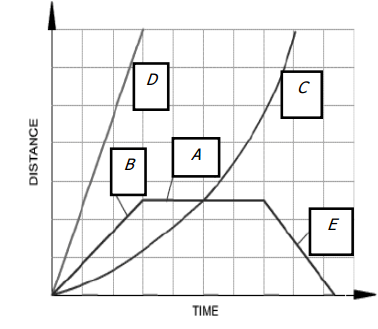
What is happening at E?
a)
Stationary
b)
Accelerating
c)
Fast steady speed; moving away from the starting position
d)
Steady speed; returning to start position
113.
Which runner had a head start?
a)
A
b)
B
c)
C
114.
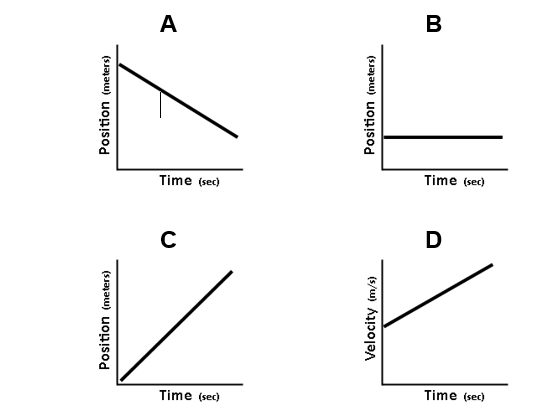
Which graph shows the object standing still?
a)
A
b)
B
c)
C
d)
D
115.
David walks 3 km north, and then turns east and walks 4 km. What is the distance?
a)
7 km
b)
3 km
c)
4 km
d)
1 km
116.

Which is the length of the path an object has traveled?

a)

displacement

b)

distance

c)

motion

d)

reference point

117.
A scalar is a magnitude _____.
a)
With direction.
b)
Without direction.
118.

What is a magnitude?

a)

A numeric value.

b)

A direction.

119.
Which statement describes a vector?
a)
It has magnitude but no direction
b)
It has direction but no magnitude
c)
It has both direction and magnitude
d)
It has constant magnitude but no
 direction
120.

Velocity is a

a)

Vector

b)

Scalar

121.

Distance is a

a)

Vector

b)

Scalar

122.
A measurement of how fast an object is moving
a)
Velocity
b)
Speed
c)
Vector
d)
Acceleration
123.
What is velocity?
a)
the quickness of an object
b)
the location of an object
c)
acceleration
d)
speed in a specific direction
124.

Speed is

a)

Vector

b)

Scalar

125.

What is speed?

a)

It is how far you go

b)

It is the distance traveled over a period of time

c)

It is how fast you accelerate

d)

It is the change in the postilion of a object

126.
Is this a scalar quantity or a vector quantity?
A deer running 15 meters per second due west
a)
Scalar
b)
Vector
127.
Which of the following is a unit of time?
a)
sec
b)
mi
c)
m/s
d)
km
128.
What is the formula to calculate speed?
a)
Speed = time/distance
b)
Speed = distance/time
c)
Speed = distance x time
d)
Speed = time x distance
129.
a)
Balanced
b)
Unbalanced
130.
a)
Balanced
b)
Unbalanced
131.
a)
Balanced
b)
Unbalanced
132.
a)
Balanced
b)
Unbalanced
133.
How will this object move? 
a)
It won't move. 
b)
It will move to the right. 
c)
It will move to the left. 
d)
It will move up. 
134.
A wheeled cart is moving to the right at a constant speed.  Two forces of equal magnitude are acting upon the cart. Which of the following best describes the forces and motion of the cart?
a)
Balanced Forces, Constant Speed
b)
Balanced Forces, Acceleration
c)
Unbalanced Forces, Constant Speed
d)
Unbalanced Forces, Acceleration
135.
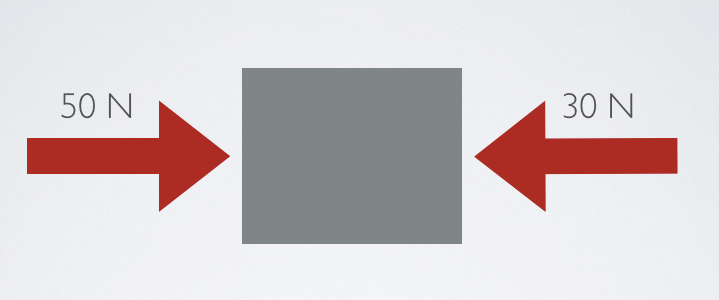
What is the net force?
a)
30 N left
b)
25 N right
c)
5 N left
d)
55 N right
136.
What is the net force?
a)
40 N left
b)
0 N Balalnced
c)
400 N right
d)
40 N right
137.
Which could be an example of a balanced force?
a)
An asteroid moving at a constant speed through space 
b)
A car accelerating from a stop sign
c)
A box of dishes falling from a counter 
d)
A rocket taking off 
138.
What is the net force?
a)
10 N
b)
0 N
c)
25 N
d)
1 N
139.
The tendency of an object at rest to stay at rest unless it is acted upon by a force is called ___________________
a)
inertia
b)
motion
c)
gravity
d)
lubricant
140.

These forces are...

a)

Balanced

b)

Unbalanced

141.

These forces are...

a)

Balanced

b)

Unbalanced

142.

These forces are...

a)

Balanced

b)

Unbalanced

143.

The net force is...

a)

50 N

b)

0 N

c)

100 N

d)

2500 N

144.
Balanced or unbalanced?
a)
balanced
b)
unbalanced
145.
The sum of all forces acting on an object.
a)
Contact Force
b)
Balanced Force
c)
Unbalanced Force
d)
Net Force
146.
If an object is not moving the forces acting upon it are _____________
a)
unbalanced
b)
weak
c)
balanced
d)
Hulk Smash!
147.

What is true about this image?

a)

It shows unbalance forces.

b)

It shows balanced forces.

c)

The people on the right are winning.

d)

The people on the left are winning.

148.

What is true about this picture?

a)

the forces are balanced

b)

the net force is 10N

c)

The net force is 3 N

d)

The net force is 7N

149.
What type of force is shown in the picture?
a)
The Cat force
b)
Star Wars Force
c)
Unbalanced force
d)
Balanced  force
150.
What is a Force?
a)
The distance
b)
Mass
c)
A push or pull
d)
Give me a  failing grade 
151.
An _______ force must act on an object for it to CHANGE it's motion
a)
balanced
b)
unbalanced
c)
gravitational
d)
electrical
152.

If the net force is equal to zero, the forces acting on the object are

a)

balanced

b)

unbalanced

153.
Balanced forces do not change the objects speed or 
a)
direction
b)
distance 
c)
time
d)
mass
154.
The unit of force is
a)
m/s
b)
m/s^2
c)
newton
d)
kg
155.
Forces that have a net force of zero ( the object is still).
a)
Balanced force
b)
Unbalanced force
156.
What is the net force?
a)
5000 N right
b)
4000 N right
c)
40 N left
d)
4000 N left
157.
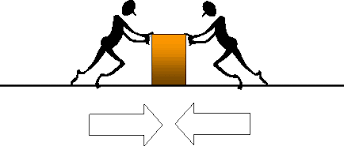
Jonny and Patty are pushing against a basketball. Both of them push against theball on opposite sides with a force of 20 N to keep the ball still. What is the net force?
a)
400 N
b)
24 N
c)
0 N
d)
40 N
158.
What is the net force in this picture?
a)
50 Newtons to the right
b)
950 Newtons to the right
c)
950 Newtons to the left
d)
50 Newtons to the left
159.
What will cause an object to move?
a)
Applied forces
b)
Balanced forces
c)
Unbalanced forces
160.
If an object is stationary (not moving) the forces acting upon it are _____________
a)
unbalanced
b)
weak
c)
balanced
d)
Hulk Smash!
161.
Which one is balanced?
a)
top
b)
bottom
c)
both
162.
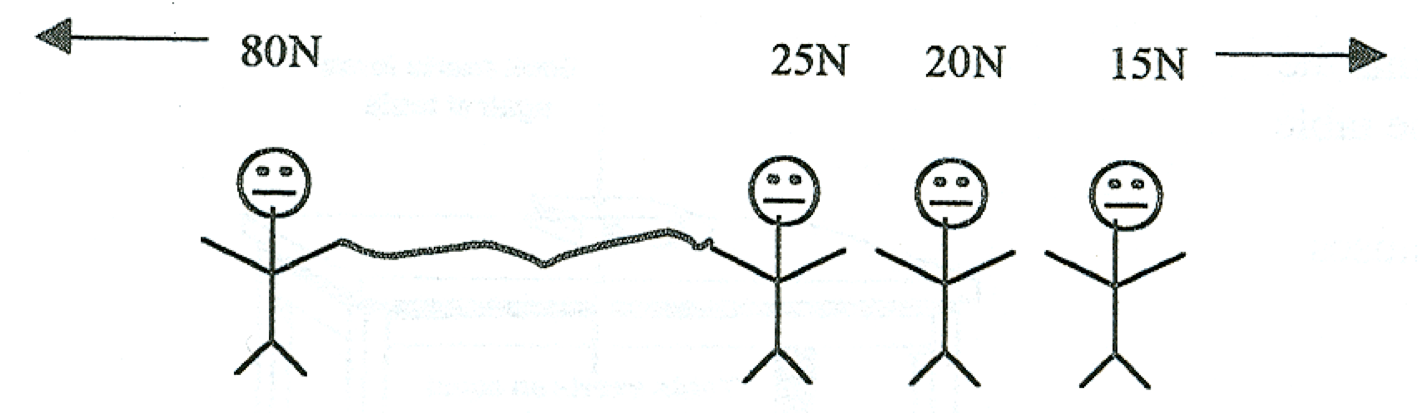
Who wins the tug of war with what net force?
a)
The person on the left with 20 N
b)
The person on the left with 80 N
c)
The people on the right with 20 N
d)
The people on the right with 100 N
163.

Two forces act on an object to the right at the same time. What force is required to bring the object into equilibrium?

a)

9 N to the right

b)

9 N to the left

c)

3 N to the left

d)

18 N to the left

164.
When objects remain in the same place, it is called...
a)
gravity
b)
friction
c)
balanced force
d)
unbalanced force
165.
A measure of how much matter an object has is--
a)
weight
b)
gravity
c)
mass
d)
volume
166.
What is the definition of "weight"?
a)
measure of the force of gravity on your body
b)
the time it takes to get on a ride 
c)
the amount of matter in an object
d)
the size of an object
167.
On which celestial object would you weigh the most?
a)
Earth
b)
Jupiter
c)
Sun
d)
You would weigh the same on all celestial objects
168.

On which celestial object (outer space) would your mass be the greatest?

a)

Earth

b)

Jupiter

c)

Sun

d)

Your mass doesn't change on different celestial objects
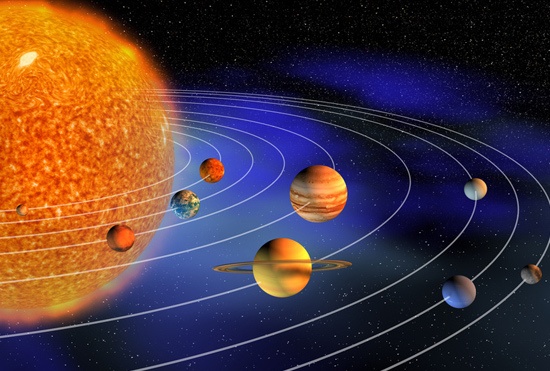
169.

Why do all of the planets orbit the sun rather than Earth?

a)

the sun has more mass

b)

the sun is a star

c)

the Earth is heavier

d)

the sun is in the middle of the milky way
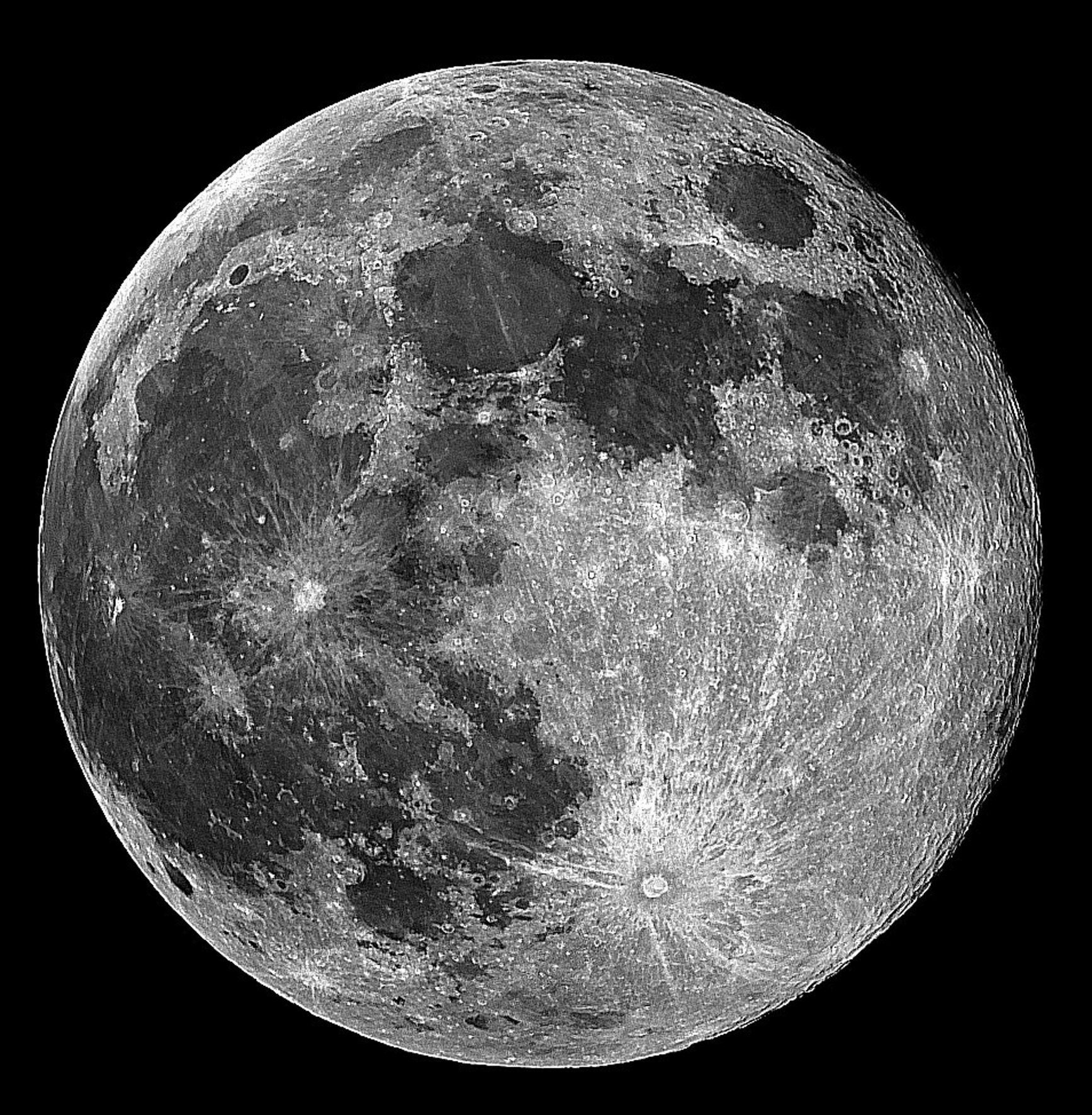
170.
As an object's mass increases, its gravitational pull will ____________.
a)
decrease
b)
increase
c)
stay the same
d)
get weaker
171.
If an object has more mass, then it will
a)
weigh more.
b)
weigh less.
c)
weigh the same as an object with less mass.
d)
always have more volume than an object with less mass.
172.
Why would you weigh less on the moon compared to Earth?
a)
less air
b)
less sunlight
c)
more gravitational pull
d)
less gravitational pull
173.
As distance between two objects increase the pull of gravity 
a)
Increases
b)
Decreases
c)
Stays the same
174.
Which of the following never changes no matter where in the universe?
a)
weight
b)
force
c)
mass
d)
pounds
175.
Two factors effecting the magnitude of the force of gravity between 2 objects are...
a)
mass and distance 
b)
mass and matter
c)
distance and weight 
d)
weight and mass
176.
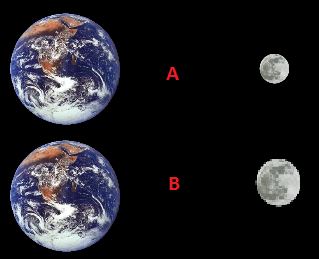
Which system has the greater gravitational attraction between the two objects (if any)?
a)
System A
b)
System B
c)
Same gravitational attraction fro System A and System B
177.
What best describes the mass and weight of a person as they move around the universe?
a)
mass and weight changes
b)
Mass and weight stays constant
c)
weight remains constant, mass changes
d)
Mass stays constant, weight changes
178.
If a bowling ball and a feather were dropped at the same time, in a room with no air resistance (vacuum), which object will hit the ground first?
a)
Bowling Ball
b)
Feather
c)
Both would hit at the same time
d)
Neither one would hit the ground because air is what pushing things down.
179.

What is the effect of friction on a skydiver?

a)

It increases their speed

b)

It decreases their speed

c)

It has no effect

d)

It only acts at the start

180.

______________ is a force that always acts in the direction opposite of motion.

a)

applied

b)

friction

c)

gravity

d)

normal

181.
Question Image

Match the following Types of Friction to their descriptions

a)

Static Friction

1.

Pushing a stationary car

b)

Slide Friction

2.

Sledding down a hill

c)

Fluid Friction

3.

A plane flying through the air

d)

Rolling Friction

4.

A skateboarder going down a ramp

182.

Which of the following is an example of a fluid?

a)

Rock

b)

Water

c)

Wood

d)

Metal

183.

Static friction acts on objects when they are:

a)

Moving on a surface

b)

Resting on a surface

c)

Rolling on a surface

d)

Floating in water

184.

What are the two factors that affect the friction between two surfaces?

a)

The color of the surfaces and the temperature of the environment

b)

The types of surfaces involved and how hard the surfaces are pushed together

c)

The speed of the objects and the weight of the objects

d)

The size of the surfaces and the distance between them

185.

A forces applied when the objects involved are in direct contact.

a)

Contact forces

b)

Normal forces

c)

Non-contact forces

186.

Generated between two bodies in contact with each other by rubbing between them.

a)

Push or pull

b)

Tension

c)

Elasticity

d)

Friction

187.

Is the force usually exerted by a surface on an object that is resisting against it.

a)

Friction

b)

Normal force

c)

Elasticity

d)

Tension

188.

Is the force of attraction that causes an apple to fall to the ground

a)

Tension force

b)

Applied force

c)

Gravitational force

d)

Normal force

189.
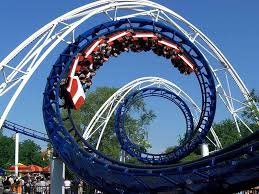
What force ultimately slows the roller coaster to a stop?
a)
Applied
b)
Normal
c)
Friction
d)
Magnetic
190.
What type of force?
a)
Magnetic
b)
Gravitational
c)
Applied
d)
Normal
191.
Some forces can act over a distance, and others can only act by contact.  Which type of force can act only when two objects touch each other?
a)
gravitational 
b)
frictional
c)
electrical 
192.

Which sentence below describes a contact force?

a)

A baseball bat hits a baseball

b)

A book falls to the floor

c)

A leaf floats in the air and falls to the ground.

d)

A magnetic force pulls a paper clip toward a magnet

193.

Which is the following is NOT a non-contact force?

a)

Applied force

b)

Gravitational force

c)

Electrical force

d)

Magnetic force

194.

The force that is transmitted through a string, rope, cable or wire when it is pulled tight by forces acting from opposite ends.

a)

Buoyancy Force

b)

Air Resistance

c)

Tension Force

195.

A type of fictional force that acts upon objects as they travel through the air.

a)

Normal Force

b)

Applied Force

c)

Air Resistance Force

196.

A force exerted by a compressed or stretched spring upon any object that is attached to it.

a)

Spring Force

b)

Tension Force

c)

Elastic Force

197.

The force of pushing a chair across the floor of a room

a)

Normal force

b)

Applied Force

c)

Gravitational Force

d)

Spring Force

198.

What force is F1 (downward force)

a)

Friction force

b)

Gravitational Force

c)

Normal Force

d)

Applied force

199.

What force is F2 (rightward force)

a)

Friction force

b)

Gravitational Force

c)

Normal Force

d)

Applied force

200.

What force is F3 (upward force)

a)

Friction force

b)

Gravitational Force

c)

Normal Force

d)

Applied force

201.

What force is F4 (leftward force)

a)

Friction force

b)

Gravitational Force

c)

Normal Force

d)

Applied force

202.

A forces applied when the objects involved are in not in direct contact with each other.

a)

Contact forces

b)

Normal forces

c)

Non-contact forces

203.
The sum of all forces acting on an object and direction
a)
Contact Force
b)
Balanced Force
c)
Unbalanced Force
d)
Net Force
204.

A leftward force is applied to a crate to push it across the floor at a constant speed. Which is the correct force diagram?

a)
b)
c)
d)
205.

A hockey puck glides to the right across the ice at a constant speed. Choose the right force diagram below.

a)
b)
c)
d)