wayground logo

Free Printable Worksheets

Font size

S
M
L
XL
Worksheets

Blue Flashcard Review

Total questions: 70

Worksheet time: 1hrs 22mins

Name
Class
Date
1.

What is the biggest difference between the Geocentric Model and the Heliocentric Model?

a)

the shape of the planets' orbits

b)

the movement of the moon

c)

the center of the solar system

2.
This image shows the:
a)
Geocentric Solar System
b)
Heliocentric Solar System
3.
A model of the solar system in which Earth and the other planets revolve around the SUN.
a)
Heliocentric
b)
Geocentric
4.

Copernicus' and Galileo's view of the universe

a)

Heliocentric

b)

Geocentric

5.

Ptolemy's and Aristotle's view of the universe

a)

Heliocentric

b)

Geocentric

6.

a small, rocky, natural satellite

no temperature extremes

no atmosphere

no life

revolves around the earth

a)

space probe

b)

comet

c)

planet

d)

moon

7.

What are caused by wind patterns and differences in water densities?

a)

ocean currents

b)

tides

c)

waves

d)

blizzards

8.

What other event is likely to happen where earthquakes occur?

a)

tides

b)

tornadoes

c)

blizzards

d)

volcanoes

9.

How long does it take the earth to revolve around the sun?

a)

24 hours

b)

1 month

c)

365 days

d)

too long

10.
They are highest clouds in the sky. They look wispy, white and feathery. Usually mean good weather.
a)
Cumulus
b)
Cumulonimbus
c)
Cirrus
d)
Stratus
11.
They are low in the sky and look soft and fluffy. They have flat bases that are usually a little darker than the heaping top.
a)
Cirrus
b)
Cumulonimbus
c)
Cumulus 
d)
Stratus
12.
These clouds are the closest to the ground. Their name means layer- or sheet like. They bring light & continuous rain or snow and cover most of the sky. 
a)
Cirrus
b)
Stratus
c)
Cumulonimbus
d)
Cumulus
13.
what type of cloud is shown?
a)
cumulus
b)
cirrus
c)
stratus
d)
nimbostratus
14.
This is sometimes called a thunderhead cloud. It looks very tall like mountains and heavy rain/thunderstorms comes from it. 
a)
Cumulus
b)
Cirrus
c)
Stratus
d)
Cumulonimbus
15.
what type of cloud is shown?
a)
cumulus
b)
cirrus
c)
stratus
d)
cumulonimbus
16.
Cumulonimbus clouds mean ...
a)
fair weather (nice)
b)
thunderstorms
c)
rain/storms coming
d)
long periods of rain
17.

The smallest particle of an element is

a)

an atom

b)

a molecule

c)

a compound

18.

What are tides?

a)

the rise and fall of ocean water caused by the moon's gravity

b)

when the moon blocks the sun

c)

when the earth's shadow falls upon the moon

d)

cracks in the earth's crust

19.
What is the process that picks up and moves weathered rocks?
a)
deposition
b)
landslide
c)
weathering
d)
erosion
20.
The process of breaking up Earth's surface into sediment is called...
a)
sediment
b)
erosion
c)
weathering
d)
deposition 
21.
What is sediment?
a)
the process of rocks being broken down and carried away
b)
bits of rock, sand, and silt caused by the weathering of rocks
c)
the top layer of the soil
d)
decaying plant or animal material 
22.

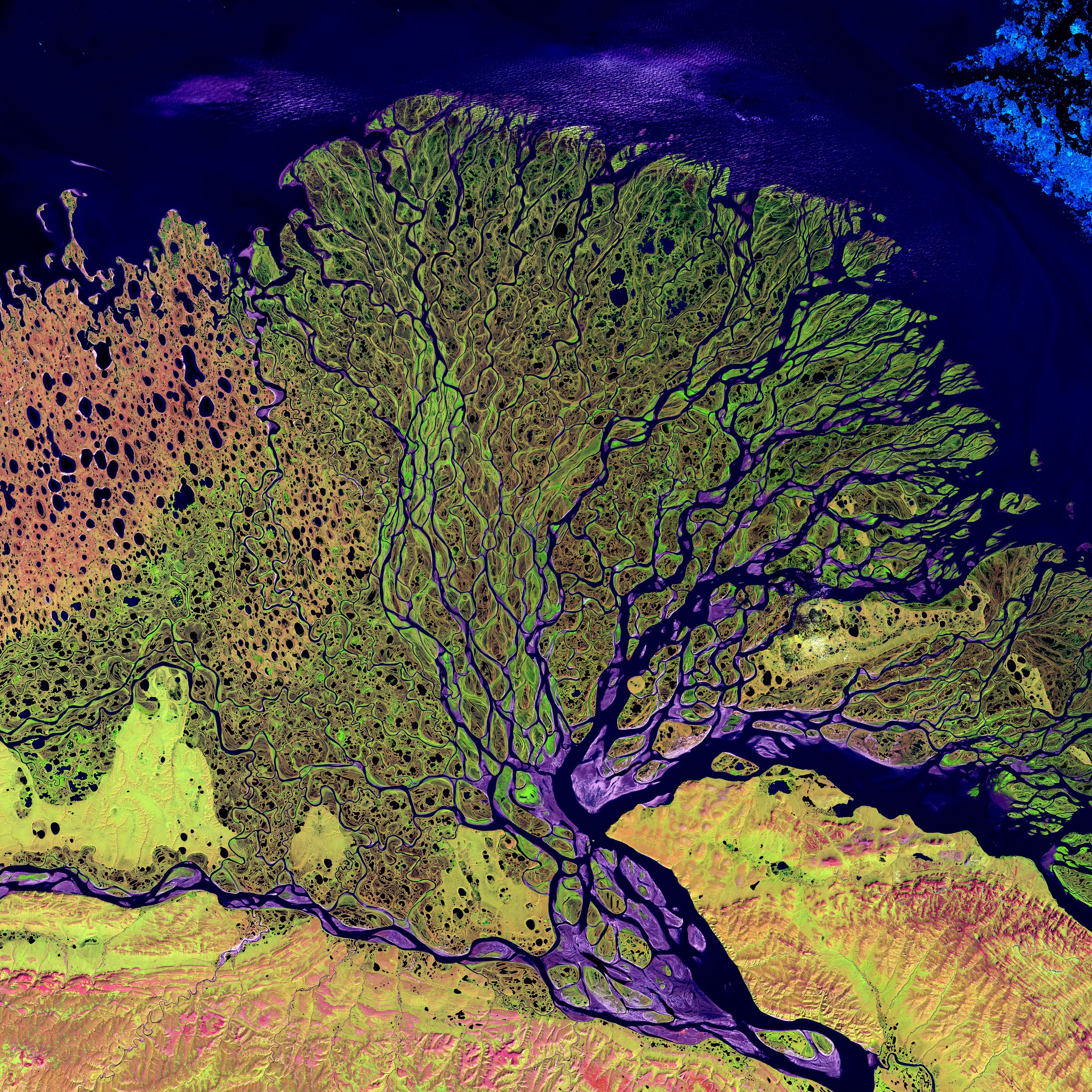
Deltas are mainly created by the process of -

a)

deposition

b)

weathering

c)

waves

d)

erosion

23.

5.7.5 What was discovered in Tazewell, Virginia that became an important energy resource?

a)

gold

b)

oil

c)

steel

d)

coal

24.

Which two planets are out of order in this list of our solar system?

Mercury-Earth-Venus-Mars-Jupiter-Saturn-Uranus-Neptune.

a)

Mercury and Earth

b)

Earth and Venus

c)

Saturn and Jupiter

d)

Uranus and Neptune

25.
The four inner planets are...
a)
Rocky and small
b)
Very large and made of ice
c)
Small and made of ice
d)
Very large and made of gases
26.
The outer planets are...
a)
Rocky and small
b)
Very large and made of ice
c)
Small and made of ice
d)
Very large and made of gases
27.
Which object has the most gravity?
a)
Earth
b)
moon
c)
Jupiter
d)
sun
28.
Name the planets in order from the one closet to the Sun
a)
Mercury, Venus, Earth, Mars, Jupiter, Saturn, Uranus, Neptune
b)
Neptune, Uranus, Saturn, Jupiter, Mars, Earth, Venus, Mercury
c)
Mercury, Earth, Mars, Venus, Saturn, Jupiter, Uranus, Neptune
d)
Mercury, Venus, Earth, Mars, Jupiter, Saturn, Uranus, Neptune, Pluto
29.

Which is the largest planet in our solar system?

a)

Earth

b)

Neptune

c)

Jupiter

d)

Uranus

30.

Which is the smallest planet in our solar system?

a)

Saturn

b)

Mercury

c)

Venus

d)

Mars

31.

What three bodies of water do Virginia's watersheds lead to

a)

Chesapeake Bay

b)

Gulf of Mexico

c)

North Carolina Sounds

d)

Great Lakes

32.

What natural resource covers most of Virginia?

a)

forests

b)

lakes

c)

mountains

d)

valleys

33.

What should we know about phytoplankton?

a)

Phytoplankton is dumb.

b)

Phytoplankton is at the base of the ocean ecosystem.

c)

Phytoplankton stinks.

d)

Phytoplankton provides much of the earth's oxygen.

34.

When 2 or more elements combine to form a new substance-

a)

compound

b)

molecule

c)

element

35.

A mixture in which one substance dissolves into another is called a -

a)

colloid

b)

compound

c)

solution

36.

Which shows liquid molecules heating up?

a)
b)
c)
37.
Which landform is represented by letter A?
a)
continental shelf
b)
continental slope
c)
abyssal plain
d)
trench
38.
Which landform is represented by letter B?
a)
continental slope
b)
rift zone
c)
abyssal plain
d)
mid-ocean ridge
39.
Which landform is represented by letter C?
a)
continental shelf
b)
seamount
c)
abyssal plain
d)
trench
40.
This is the deepest part of the ocean basin.
a)
continental shelf
b)
trench
c)
abyssal plain
d)
mid-ocean ridge
41.
The edges of the continents slope down from the shore into the ocean.  This the part of the continent located under the water
a)
continental shelf
b)
continental slope
c)
abyssal plain
d)
mid-ocean ridge
42.
On the bottom of the ocean, there is a mountain range that divides the ocean floor into two parts.  This area is also known as underwater volcanic mountains.
a)
continental shelf
b)
continental slope
c)
abyssal plain
d)
mid-ocean ridge
43.

Mixtures can be _____ separated.

a)

physically

b)

chemically

44.

Most of the ocean life is found on the _______.

a)

seamount

b)

continental slope

c)

abyssal plain

d)

continental shelf

45.
What is the name of the largest and most powerful surface current in the North Atlantic Ocean? 
a)
Gulf of Mexico 
b)
Pacific Steam 
c)
Gulf Stream
d)
Atlantic Ocean steam 
46.

An averaged-sized yellow star-

a)

earth

b)

sun

c)

venus

47.

What covers 70% of earth?

a)

water

b)

humans

c)

plants

d)

air

48.

The layers of air that surround Earth are called the-

a)

sky

b)

troposphere

c)

ozone

d)

atmosphere

49.
___________is the result of the weight of a column of air pushing on an area.
a)
air pressure
b)
density
c)
volume
d)
none of the above
50.

What two things increase as you go deeper beneath the Earth's surface?

a)

temperature and salinity

b)

temperature and pressure

c)

pressure and condensation

51.

Which best describes Earth’s crust?

a)

It is the thickest layer of Earth.

b)

It is a thin layer of rock.

c)

It is thick and dusty.

d)

It is more dense than the other layers of Earth.

52.

Which best describes Earth’s core?

a)

It is the thickest layer of Earth.

b)

It is made of iron and nickel.

c)

It is thin and rocky.

d)

It is neither solid nor liquid.

53.

-thickest layer of earth

-made of molten rock

a)

mantle

b)

crust

c)

inner core

d)

outer core

54.

The amount of moisture in the air is called _________________.

a)

Evaporation

b)

Rain

c)

Humidity

d)

Condensation

55.

Large, continent-sized blocks that move slowly on the mantle are called-

a)

plates

b)

crusts

c)

shelves

d)

Legos

56.

What causes the seasons to change?

a)

revolution of Earth and tilt of Earth

b)

constellation - a pattern of stars

c)

gravity

d)

it moves steadily and smoothly

57.
A device that is used to measure atmospheric pressure is a ___________.
a)
barometer
b)
thermometer
c)
kilometer
d)
micrometer
58.
What type of rock is formed due to pressure and heat within the earth?
a)
igneous
b)
sedimentary
c)
metamorphic
59.
What type of rock is formed when magma from a volcano cools and hardens on the earth's surface?
a)
sedimentary
b)
metamorphic
c)
igneous
d)
lava
60.
Which type of rock is formed when smaller parts of older rocks become cemented together?
a)
igneous
b)
sedimentary
c)
pebbles
d)
metamorphic
61.
What type of rock are fossils often found in?
a)
igneous
b)
metamorphic
c)
sedimentary
d)
magma
62.
To clean spectacles, people often breathe out on the spectacles. This is an example of__________.  
a)
Condensation
b)
Evaporation
63.

Clouds are formed by the process of ______________________.

a)

precipitation

b)

evaporation

c)

condensation

d)

collection

64.

Which of these is NOT a form of precipitation?

a)

sleet

b)

freezing rain

c)

hail

d)

fog

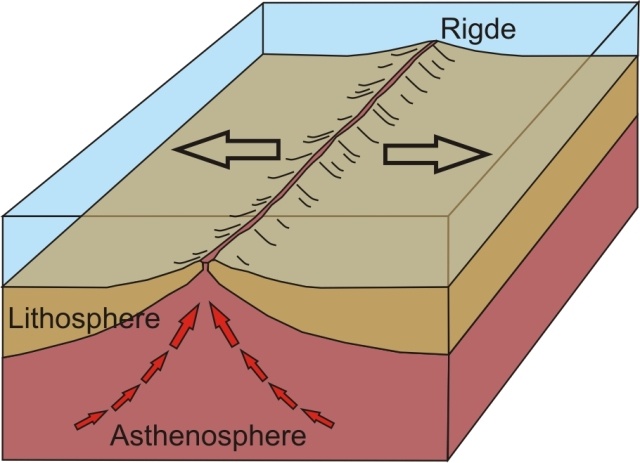
65.
What kind of plate boundary is shown here?
a)
divergent
b)
convergent
c)
transform
d)
subducting
66.
What kind of plate boundary is shown here?
a)
divergent
b)
convergent
c)
transform
d)
submergent
67.
What kind of plate boundary is shown here?
a)
divergent
b)
convergent
c)
transform
d)
strike slip
68.
Day and night are caused by...
a)
the tides
b)
the tilt of the Earth's axis
c)
the revolution of the Earth around the Sun
d)
the rotation of the Earth on its axis
69.

How often does the moon revolve around the Earth?

a)

twice a month

b)

once a month

c)

once a year

d)

once a day

70.
What instrument measures wind speed?
a)
thermometer 
b)
wind vane
c)
barometer
d)
anemometer