
 Worksheets
Darwin, Natural Selection, Evolution
Total questions: 37
Worksheet time: 37mins
A behavioral change in individuals of a species that allow for better survival. (acquired traits)
Variation
Adaptation
Behavior
Environment
The differences among individuals of a species, like different bird beaks, are called
genes.
variations.
traits.
theories.
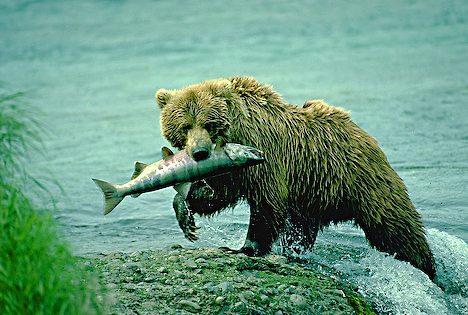
A grizzly bear survives because he is well-adapted to his environment. When he reproduces he passes on those traits to his offspring. This process is called:
natural selection.
selective breeding.
random mutations.
variations in a species.

The peppered moth species color changed over time to camouflage it on the darker-colored tree bark. This is an example of a/n:
variation.
dominant trait.
recessive trait.
adaptation.
Why might it be helpful for a species to have a lot of variations?
They can't be seen by predators.
If the environment changes, they might be better able to adapt.
It is helpful in asexual reproduction.
They don't recognize each other.

If a sick person takes an antibiotic but it doesn't kill all of the bacteria causing the sickness, how might we explain this?
Variations in the bacteria allowed of them to be less affected by the antibiotic.
Bacteria cannot be killed by antibiotics.
You cannot cure a bacterial infection.
Bacteria do not cause sicknesses.

Changes in inherited characteristics can cause a species to change or 'branch off' into a new one. This change over time is called?
Graduation.
Selective Breeding.
Revolution.
Evolution.
Another term for Natural Selection is:
breeding.
symbiosis.
mutualism.
survival of the fittest.

What was the name of the scientist who proposed the theory of evolution?
Lamarck
Einstein
Mendel
Darwin

Evolution means...
that change over time occurs in a population.
that everything is the same.
that organisms never change.
negative traits are acquired in populations.
Any variation that can help a species survive in a given environment is called...
an adaptation.
a characteristic.
a homologous structure.
a vestigial structure.
The difference in the physical traits of an individual from those of other individuals in a group is called a(n)
change.
adaption.
species.
variation.

"Survival of the Fittest" describes the theory of:
natural selection.
gravity.
heredity.
genetic flow.
Modern whales developed their traits through natural selection. What occurs during the process of natural selection?
Organisms choose mates from other species to create new species.
Breeders selectively cross organisms with desired traits.
Only the fittest organisms can survive and reproduce.
Organisms remain exactly the same over time.

Why did the population of peppered moths in England change from light to dark after the Industrial Revolution?
Light moths were easy to see against sooty trees and were eaten.
Light moths were killed by soot.
The birds that ate the dark moths were killed by soot.
Dark moths were produced by industrial processes.

The example of the peppered (brown) moths living near English industrial cities demonstrates that:
a change in an environment can result in the evolution of species living there.
evolution occurs so slowly that is it not possible to determine that it has happened in less than a million years.
the environment near these cities has always favored dark colored moths.

what did Charles Darwin observe in finch populations of the Galapagos Islands off the coast of South America?
different species on different islands
all species on one of the islands
identical species on all the islands
the same species as North America

Darwin wrote that organisms with traits that are best suited to the environment will ________________
increase in number.
become extinct.
decrease in number.
remain stable.
For Darwin, how have animals and plants survived?
through luck
through natural selection
through careful management
through choice

The variety of living things on Earth is called:
genetic flow.
biodiversity.
assimilation.
genetic drift.

Charles Darwin’s observation that finches of different species on the Galápagos Islands have many similar physical characteristics supports the hypothesis that these finches
have the ability to interbreed.
have the ability to interbreed.
acquired traits through use and disuse.
all eat the same type of food.
descended from a common ancestor.

A mutation is:
a change in genetic code.
a change that is harmful to the organism.
splitting of chromosomes into alleles.
defective DNA.

What is a species?
A group of organisms that can mate with each other and produce fertile offspring.
A group of organisms that can mate and produce offspring even if those offspring are infertile.
A group of organisms that genetically are very different from each other.
Indivual organisms that live in the same environment.

Bird's beaks evolve mainly due to the type of ___________________ available.
food
water
shrubs
mates
Heredity is:
survival of the fittest.
the passing of genetic traits from parent to offspring.
the record of time as evidenced by fossils.
unexplained.

Which of the following can be learned by using the fossil record?
when organisms changed or evolved
when organisms appeared on Earth
when organisms became extinct
All the above

How do fossils provide evidence that evolution has happened on Earth?
Fossils show how the sizes of certain animals has changed drastically over millions of years.
Fossils show that some species have gone extinct.
Fossils show how life forms present today are different than those from the past.
Different sedimentary rock layers provide evidence for how the environment has changed over time.

A bird with a narrow beak that can probe for insects illustrates:
a behavioral adaptation.
mimicry.
a structural adaption.
an instinctive behavior.

A chameleon lies next to a large blue flower so predators can NOT find it. This is an example of
camouflage.
mimicry.
physiological adaptation.

Some butterflies have spots on their wings that look like snake eyes. This is called:
disguise.
instinct.
camouflage.
mimicry.

The sharp teeth of lions are what type of adaptation?
Structural
Physilogical
Behavioral

Some types of birds migrate to the warmer places in the winter. This is a _____________________ adaptation.
structural
physilogical
behavioral

Some animals pretend to be dead to protect themselves from predators
Structural
Behavioral
Physiological

Snake produces venom.
Structural Adaptation
Behavioral Adaptation
Physiological Adaptation
Mimicry

