
 Worksheets
Comp 2 Science Review part 5
Total questions: 68
Worksheet time: 2hrs 33mins
Name
Class
Date
1.
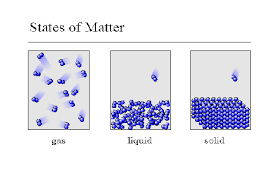
At higher temperatures
a)
particles in an object have less energy
b)
particles in an object move faster
c)
a gas contracts
2.
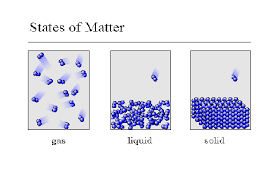
A gas
a)
has a definite shape but no definite volume
b)
has a definite volume but no definite shape
c)
has fast-moving particles
3.
Freezing
a)
Solid to gas
b)
Liquid to solid
c)
Gas to solid
d)
Liquid to gas
4.
Boiling
a)
liquid to gas
b)
gas to solid
c)
gas to liquid
d)
solid to liquid
5.
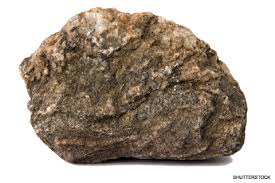
Which state of matter has tightly packed molecules?
a)
solid
b)
liquid
c)
gas
6.

Which state of matter has a definite shape?
a)
solid
b)
liquid
c)
gas
7.
What is happening when my ice cream changes from a solid to a liquid?
a)
freezing
b)
melting
c)
burning
d)
evaporation
8.
Define a liquid.
a)
Indefinite shape, indefinite volume
b)
Definite shape, definite volume
c)
Found in stars
d)
Definite volume, indefinite shape
9.
The state of matter that has no definite size or shape is
a)
Solid
b)
Liquid
c)
Gas
10.
Particles (molecules) in a ______________________ have more energy than the other states of matter.
a)
gas
b)
solid
c)
liquid
11.
Particles of a liquid
a)
are tightly packed together and stay in a fixed position.
b)
have no viscosity.
c)
decrease in volume with increasing temperature.
d)
are free to move around one another but still touch.
12.
What term describes a solid changing to a gas?
a)
Deposition
b)
Sublimation
c)
Evaporation
d)
Freezing
13.
Particles (molecules) in a ______________________ have more energy than the other states of matter.
a)
gas
b)
solid
c)
liquid
14.
What is condensation?
a)
gas to solid
b)
gas to liquid
c)
liquid to solid
d)
solid to liquid
15.
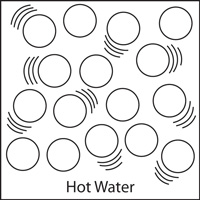
The speed of the molecules determines the _____.
a)
volume
b)
density
c)
pressure
d)
temperature
16.
Which has a greater distance between particles?
a)
Solid
b)
Liquid
17.
The slower the particles in a substance move,
a)
the colder it is.
b)
the warmer it is.
c)
the more energy it has.
d)
the less energy it has.
18.
Thermal energy is...
a)
heat energy.
b)
the energy of motion
c)
energy of nuclear processes.
d)
an indication of physical change.
19.
A chemical change
a)
doesn't really change much.
b)
creates a new substance
c)
is a change in the state of matter
20.
A physical change is...
a)
a change that doesn't change the identity
b)
a change that makes something new.
c)
a chemical reaction
21.
_________________________ is a measure of the average kinetic energy of the particles in a material.
a)
thermal
b)
friction
c)
temperature
d)
expansion
22.
The movement of thermal energy from an object at a higher temperature to an object at a lower temperature is called ____________.
a)
thermal
b)
expansion
c)
temperature
d)
heat
23.
Thermal energy always moves from ____________ objects to ______________ objects.
a)
cooler, warmer
b)
warmer, cooler
c)
faster, slower
d)
slower, faster
24.
Thermal energy stops moving when the objects have the same temperature.
a)
True
b)
False
25.
An increase in the volume of a substance when the temperature increases is called ___________________________________.
a)
kinetic energy
b)
thermal expansion
c)
temperature
d)
heat
26.
Thermal energy keeps moving away from warmer objects to cooler objects until both are the same temperature.
a)
True
b)
False
27.
No more energy can be removed from matter at:
a)
its freezing point
b)
0°C
c)
absolute zero
d)
273 K
28.
A measure of the average kinetic energy of the individual particles in an object is called:
a)
thermal energy
b)
conduction
c)
convection
d)
temperature
29.
When you touch something that feels cold,
a)
heat from your hand moves into the cold substance.
b)
coldness moves from the cold substance into your hand.
c)
it melts.
d)
it freezes.
30.
Energy that moves particles of matter is
a)
temperature
b)
thermal energy
c)
heat
d)
friction
31.
The temperature of a substance increases as___.
a)
the substance expands
b)
the average kinetic energy of its particles increases
c)
the substance's volume increases
d)
the substance's mass increases
32.
You're holding hands with your best friend. Your friend's hands are REALLY warm and yours are really cold. After a few minutes, this has changed. How might you explain what happened?
a)
The cold energy from your hand transferred to your friend's hand through conduction.
b)
The heat energy from your friend's hand transferred to your hand through conduction.
c)
The cold energy from your hand transferred to your friend's hand through convection.
d)
The heat energy from your friend's hand transferred to your hand through convection.
33.
When a popsicle melts, the particles in the popsicle _____.
a)
gain thermal energy and speed up
b)
there are no particles in popsicles
c)
lose thermal energy and slow down
d)
stay the same
34.
The Law of Conservation of Energy states:
a)
Energy can be created or destroyed but not transformed
b)
Energy cannot be created or destroyed, it can only transformed
c)
Energy can't be created, destroyed or transformed
35.
At THE FREEZING POINT, the particles in an object have no kinetic energy.
a)
True
b)
False
36.
The more particles an object has at a given temperature, the more thermal energy it has.
a)
True
b)
False
37.
Object A is much larger than Object B, but both are made of the same material. If both objects are at the same temperature, the thermal energy of Object A is THE SAME AS the thermal energy of Object B.
a)
True
b)
False
38.
When heat is absorbed by an object, the speed of the particles in the object IS UNCHANGED.
a)
True
b)
False
39.
The transfer of thermal energy from a warmer object to a cooler object is called ___________.
a)
Heat
b)
Temperature
40.
________________is a measure of the average kinetic energy of the individual particles in an object.
a)
Temperature
b)
Heat
41.
The amount of thermal energy in an object depends on its __________, the number of particles in it, and how those particles are arranged.
a)
Temperature
b)
Heat
42.
The Law of Conservation of Energy states:
a)
Energy can created or destroyed but not transformed
b)
Energy cannot be created or destroyed, it can only transformed
c)
Energy can't be created, destroyed or transformed
43.
According to the Law of Conservation of energy, the amount of energy before and after a reaction must be the same. Which statement below is true?
a)
The total amount of energy is conserved
b)
The total amount of energy is less after a reaction
c)
The total amount of energy is more after a reaction
44.
Which energy transformation below matches?
A book falling?
A book falling?
a)
chemical to sound and heat
b)
kinetic to sound and heat
c)
electrical to sound and heat
45.
Which energy transformation below matches?
Water moving over a dam to move a generator?
Water moving over a dam to move a generator?
a)
kinetic to chemical
b)
kinetic to electrical
c)
solar to electrical
46.
Which energy transformation below matches?
Green plants?
Green plants?
a)
chemical to mechanical
b)
chemical to heat
c)
solar to chemical
47.
Which energy transformation below matches?
Animals eating food?
Animals eating food?
a)
electrical to potential
b)
chemical to kinetic
c)
potential to chemical
48.
Which energy transformation below matches?
Burning coal or carbon-based fuel at a powerplant?
Burning coal or carbon-based fuel at a powerplant?
a)
chemical to heat to electrical
b)
mechanical to chemical to sound
c)
electrical to chemical to heat
49.
Which energy transformation below matches?
An electrical circuit?
An electrical circuit?
a)
chemical to heat, sound, light, mechanical
b)
solar to heat, sound, light, mechanical
c)
electrical to heat, sound, light, mechanical
50.
Potential or kinetic?
Stretched bow and arrow?
Stretched bow and arrow?
a)
kinetic
b)
potential
51.
Potential or kinetic?
Running?
Running?
a)
potential
b)
kinetic
52.

At which point is potential energy greatest?
a)
W
b)
X
c)
Y
d)
Z
53.
__________ is stored energy.
a)
Potential
b)
Kinetic
c)
None of the above
d)
All of the above
54.
The faster an object moves, the ________ kinetic energy it has.
a)
more
b)
less
c)
none of the above
d)
same
55.

What kind of energy is in a moving skateboard?
a)
Potential
b)
Kinetic
c)
Both potential and kinetic energy
d)
none of the above
56.

What kind of energy is in a rock at the edge of a cliff?
a)
Potential
b)
Kinetic
c)
Both potential and kinetic energy
d)
none of the above
57.
Which is the best example that something has kinetic energy?
a)
a. a car parked on a steep hill
b)
b. a tennis ball rolling across the court
c)
c. a picture hanging on the wall
d)
d. a piece of coal before it's burned
58.
Energy due to motion is ____________ energy.
a)
Potential
b)
Energy
c)
Kinetic
d)
Friction
59.
Gravitational potential energy depends on the ________ and ________ of the object.
a)
Height and mass
b)
Friction and movement
c)
Mass and Movement
d)
Height and Friction
60.
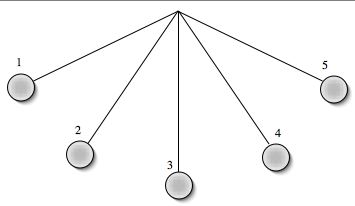
When a pendulum swings, at which point is kinetic energy highest?
a)
1
b)
2
c)
3
d)
4
61.
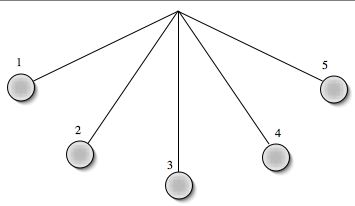
When a pendulum swings, at which point is potential energy at its greatest?
a)
1
b)
2
c)
3
d)
4
62.
Energy can be _____________ or changed from one type to another.
a)
destroyed
b)
transferred
c)
created
d)
ignored
63.
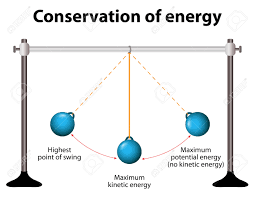
Conservation of energy states that energy cannot be ________ or ________, but can be altered from one form to another.
a)
created, destroyed
b)
gravity, force
c)
heat, created
64.
What are the two factors that affect kinetic energy?
a)
time and energy
b)
power and mass
c)
mass and speed
d)
time and work
65.
Which of the following is an exmaple of a change of kinetic energy into gravitational potential energy?
a)
a person parachuting out of a plane
b)
a car racing around an oval track
c)
a person skiing down a hill
d)
a person walking up a hill
66.
Which of the following is an example of a change of kinetic energy into gravitational potential energy?
a)
a person parachuting out of a plane
b)
a car racing around an oval track
c)
a person skiing down a hill
d)
a person walking up a hill
67.
What would have the greatest kinetic energy?
a)
A car driving down a hill.
b)
A person running down a hill.
c)
A ball rolling down a hill.
d)
leaves rolling down a hill
68.
Which is an example of potential energy?
a)
a roller coaster speeding down a hill
b)
the pulled back string on an archers's bow
c)
releasing the strings on a guitar
d)
an electric current lighting a light bulb
100 %

