wayground logo

Free Printable Worksheets

Font size

S
M
L
XL
Worksheets

Chemistry

Total questions: 55

Worksheet time: 46mins

Name
Class
Date
1.
What is the atomic number for an element with three protons?
a)
2
b)
1
c)
3
d)
6
2.
What is the atomic symbol for sodium?
a)
Na
b)
So
c)
NaCl
d)
S
3.
True or False? Neutrons have a negative charge
a)
True
b)
False
4.
An atom's mass number equals the number of...
a)
protons plus the number of electrons
b)
protons plus the number of neutrons
c)
protons
d)
neutrons
5.
Which statement about the atomic nucleus is correct?
a)
The nucleus is made of protons and neutrons and has a negative charge
b)
The nucleus is made of protons and neutrons and has a positive charge
c)
The nucleus is made of electrons and has a positive charge
d)
The nucleus is made of electrons and has a negative charge
6.
Which statement best describes an electron?
a)
Smaller mass than a proton and a negative charge
b)
Smaller mass than a proton and a positive charge
c)
Greater mass than a proton and a negative charge
d)
Greater mass than a proton and a positive charge
7.
A particle that moves around the nucleus is a(n)...
a)
Proton
b)
Neutron
c)
Electron
d)
Quark
8.
What does the nucleus consist of?
a)
Protons + Electrons
b)
Neutrons + Electrons
c)
Atoms
d)
Protons + Neutrons
9.
Matter always has mass.
a)
true
b)
false
10.
What is the smallest?
a)
worm
b)
molecule
c)
galaxy
d)
atom
11.
What charge does a Proton have?
a)
Negative
b)
Positive
c)
Neutral
d)
Contrated
12.
What charge does an Electron have?
a)
Negative
b)
Positive
c)
Neutral
d)
Complicated
13.
How many Hydrogen atoms are in Water (H2O)
a)
1
b)
2
c)
3
d)
4
14.
Anything that has mass and takes up space is called
a)
heterogeneous
b)
homogeneous
c)
matter
d)
density
15.
Which subatomic particle has a neutral charge?
a)
Proton
b)
Neutron
c)
Electron
16.
The smallest part of an element is known as the 
a)
Periodic Table
b)
Atom
c)
Group
d)
Period
17.
What is the mass of an atom if it has 11 protons, 12 neutrons, and 11 electrons?
a)
22
b)
11
c)
34
d)
23
18.
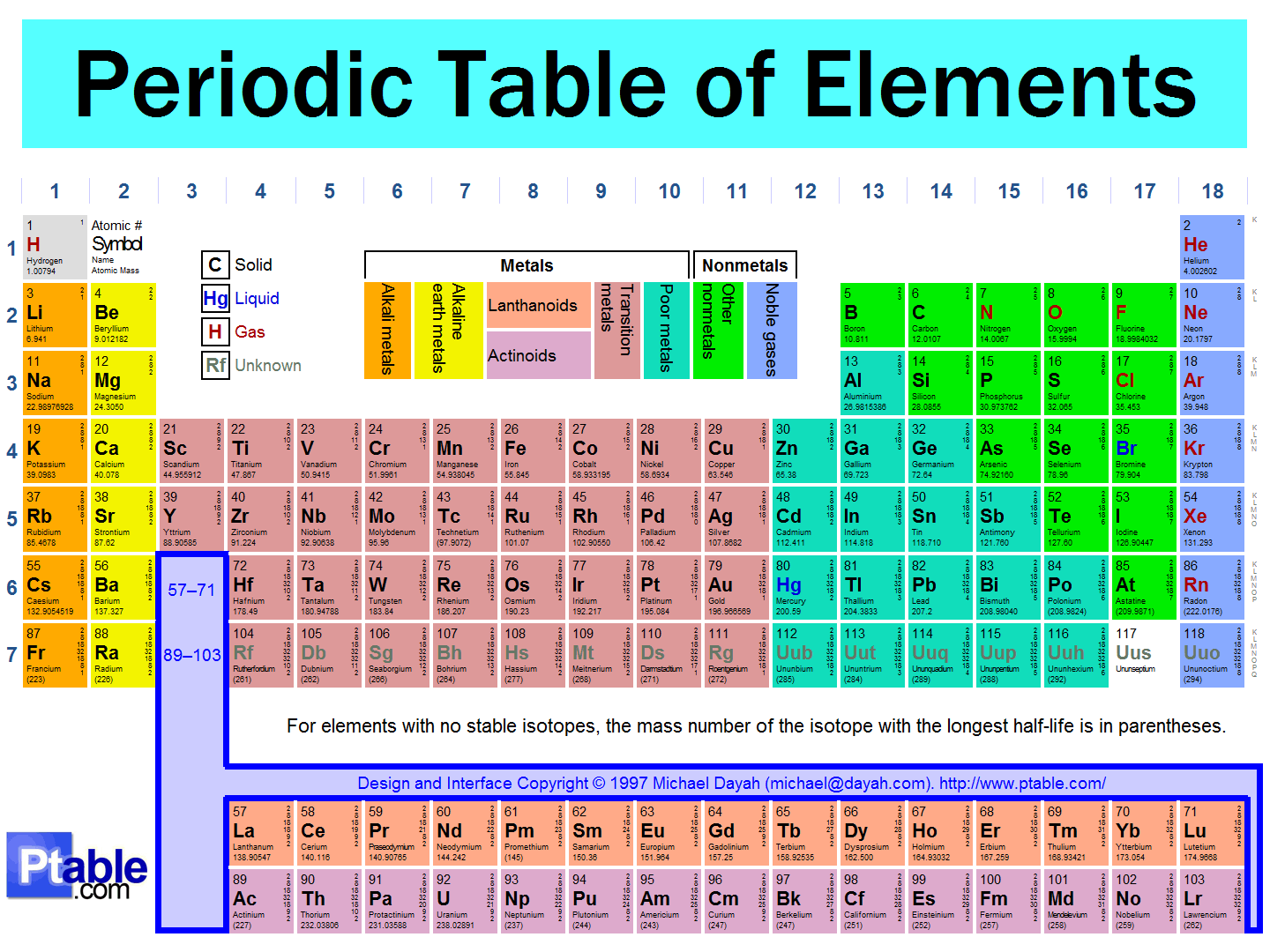
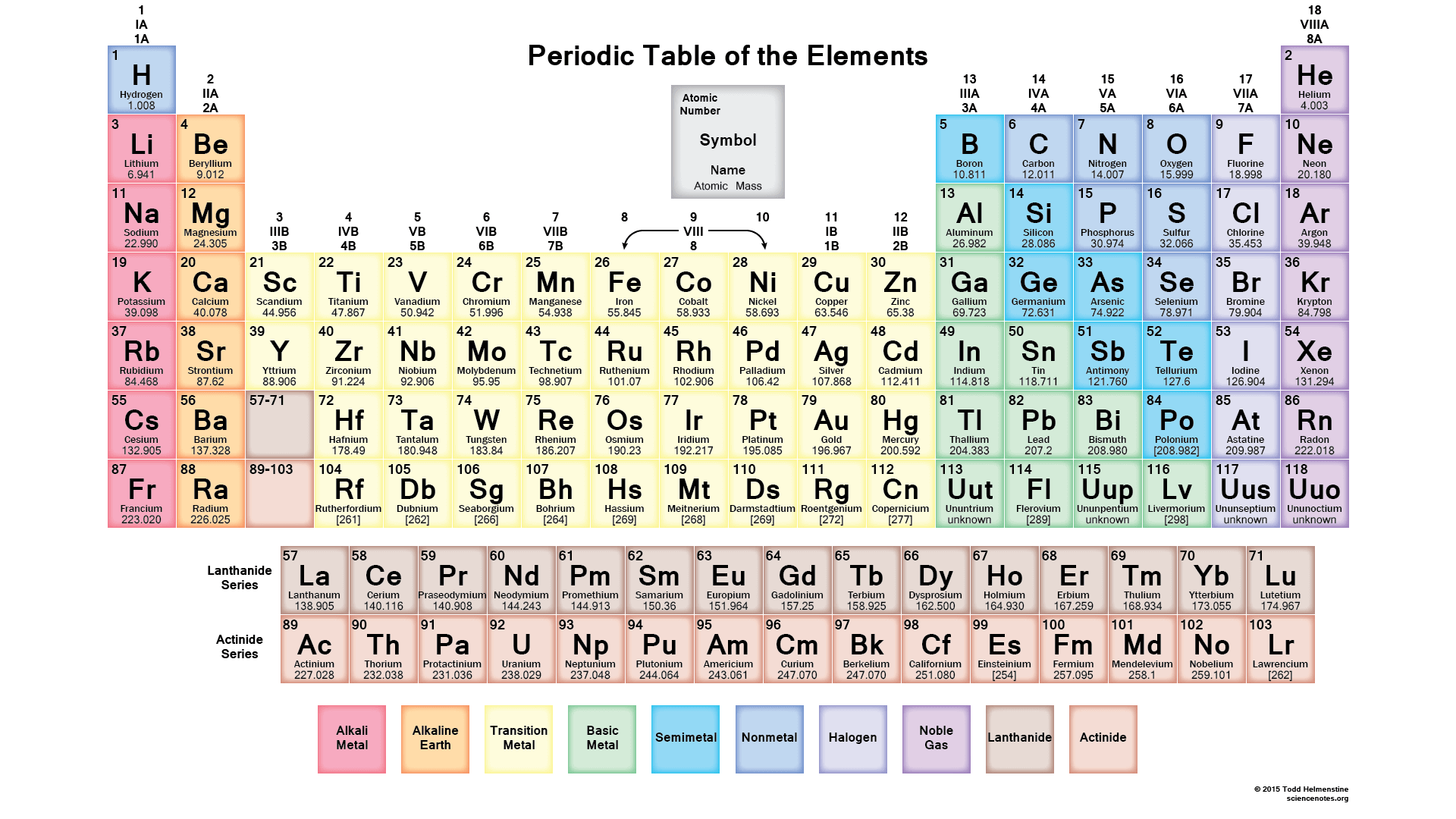
Which one of these is NOT located in the element square on the Periodic Table?
a)
Atomic Number
b)
Atomic Mass
c)
Room Temperature
d)
Chemical Symbol
19.
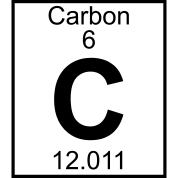
What is the number of protons that the element in this image contain?
a)
14
b)
7
c)
15
d)
18
20.
What is the atomic number?
a)
the number of protons
b)
the number of protons and neutrons
c)
the number of neutrons
d)
the number of protons and electrons
21.
What is the mass number?
a)
the number of protons
b)
the number of protons and neutrons
c)
the number of neutrons
d)
the number of protons and electrons
22.
The pH scale is a range from:
a)
1-7
b)
0-14
c)
1-5
d)
1-20
23.
A(n) ______ is a substance with a pH less than 7
a)
Acid
b)
Alkaline
c)
Base
d)
Buffer
24.
A(n) _______ is a substance with a pH greater than 7.
a)
Base
b)
Acid
c)
Buffer
d)
Water
25.
What is the only substance with a neutral pH of 7?
a)
Milk
b)
Orange Juice
c)
Water
d)
Blood
26.

In a test of pH levels, a baking soda has a pH of 9 and bleach has a pH of 12. What is true about there relationship?

a)

Both of the solution are Bases

b)

Both of the solution are Acids

c)

The Baking soda is an acid and the Bleach is a base

d)

The baking soda is a base and the Bleach is an Acid.

27.
According to the pH range which substance is more acidic than lemon juice
a)
Hydrochloric acid
b)
cabbage
c)
milk
28.
Bleach is a strong base, what is the pH level of bleach?
a)
13
b)
14
c)
1
d)
2
29.
Tastes Sour
a)
Acids
b)
Bases
c)
Salts
d)
All
30.
Tastes bitter.
a)
Acids
b)
Bases
c)
Salts
d)
All
31.
Bleach is a strong base, what is the pH level of bleach?
a)
13
b)
14
c)
1
d)
2
32.
a)

Element

b)

Compound

c)

Homogeneous Mixture

d)

Heterogeneous Mixture

33.

Sweet Tea, everything is mixed evenly and looks the same.

a)

Heterogeneous Mixture

b)

Homogeneous Mixture

34.

H2 is an example of a(n)...

a)

Element

b)

Compound

c)

Molecule

d)

Heterogeneous Mixture

35.
a)

Element

b)

Compound

c)

Homogeneous Mixture

d)

Heterogeneous Mixture

36.
a)

Element

b)

Compound

c)

Homogeneous Mixture

d)

Heterogeneous Mixture

37.
a)

Element

b)

Compound

c)

Homogeneous Mixture

d)

Heterogeneous Mixture

38.

The vertical (up and down) columns in the Periodic Table are called

a)

groups

b)

towers

c)

periods

d)

atomic numbers

39.
The Modern Periodic Table of Elements is arranged by
a)
atomic mass
b)
atomic number
c)
valence electrons
d)
number of isotopes
40.
Sodium (Na) is found in period 
a)
3
b)
2
c)
4
d)
1
41.
Sodium (Na) is found in group 
a)
1
b)
2
c)
3
d)
4
42.
What does the 6 represent?
a)
atomic mass
b)
atomic number
c)
element name
d)
chemical symbol 
43.
What does 12.011 represent?
a)
atomic mass
b)
atomic number
c)
element name
d)
chemical symbol 
44.
This appears on the left side of a chemical formula, and represents how many molecules there are.
a)
an atom
b)
the subscript
c)
a molecule
d)
the coefficient
45.
How many hydrogen atoms are in this chemical formula?
a)
4 hydrogen atoms
b)
1 hydrogen atom
c)
2 hydrogen atoms
d)
3 hydrogen atoms
46.
How many oxygen atoms are in this chemical formula?
a)
7 oxygen atoms
b)
4 oxygen atoms
c)
3 oxygen atoms
d)
1 oxygen atom
47.

Is this balanced?

2HgO → 2Hg + O2

a)

Yes

b)

No, Hg is not balanced.

c)

No, O is not balanced.

48.

Is this balanced?

2Al + O2 → Al2O3

a)

Yes

b)

No, O is not balanced.

c)

No, Al is not balanced.

49.
The total amount of matter (atoms) before and after a chemical reaction (change), remains the same.
a)
True
b)
False
50.
Which type of property is the ability to conduct electricity?
a)
physical property
b)
chemical property
51.
Properties that can be observed without changing the identity of the substance.
a)
Physical
b)
Chemical
52.
Example for physical property
a)
odor
b)
burns in air
c)
reacts with water to create hydrogen gas
d)
rust
53.
Which of the following is NOT an example of a physical change?
a)
crumpled paper
b)
pencil sharpening
c)
shrunken clothing
d)
rust
54.
A change where one or more new substances are created.
a)
Physical Change 
b)
Chemical Change 
55.
Fizzing, foaming, and burning are all examples of
a)
Chemical change
b)
Physical change