Wayground logo

Free Printable Worksheets

Font size

S
M
L
XL
Worksheets

p2h1o5t3o7s29

Total questions: 61

Worksheet time: 48mins

Name
Class
Date
1.

The moon revolves around the earth in about

a)

a year

b)

a month

c)

a day

d)

24 hours

2.

We can store _______ energy in a bungee cord.

a)

kinetic

b)

heat

c)

powerful

d)

potential

3.

All of our energy comes from

a)

moon

b)

sun

c)

power plant

d)

earth

4.

Mr. Cent

a)

Mechanical, Radiant, Chemical, electrical, nuclear, trees

b)

Mechanical, Radiant, Chemical, electrical, Neutron, Thermal

c)

Mechanical, Radiant, Chemical, electrical, nuclear, Thermal

d)

None of these

5.

The scientific rule that states that energy cannot be created or destroyed is called the ______________.

a)

Law of scientific conservation of energy

b)

Energy efficiency

c)

Science law

d)

Law of conservation of energy

6.

The amount of useful energy you get from a system is its

a)

Energy Eggs

b)

Energy Efficiency

c)

Good Energy

d)

Mechanical Energy

7.

Biomass energy is_______

a)

Good Energy

b)

Energy from dead things.

c)

Energy

d)

Energy from recent living things

8.

Light humans can see

a)

Visible light

b)

Infrared radiation

c)

Energy

d)

Light

9.

The whole mass of air that surrounds the earth

a)

Atmosphere

b)

air

c)

mesosphere

d)

Exosphere

10.

Select the correct atmospheres of earth.

a)

mesosphere

b)

metosate

c)

thermosphere

d)

thermal

e)

ionosphere

11.

What do you do after you form your hypothesis?

a)

Test it

b)

Record it

c)

Say it

d)

Tell your teacher

12.

When do you see a full moon?

a)

After first quarter

b)

Before 3 quarter

c)

After new moon

d)

After waxing gibbous

13.

2 or more substances mixed together - particles keep their identity (stay separate)

a)

Heterogeneous Mixture

b)

Homogeneous mixture

14.

Negatively charged particle that orbits the nucleus of an atom

a)

Neutron

b)

Proton

c)

Electron

d)

Atom

15.

The tightness across the surface of water caused by the polar water molecules pulling on each other.

a)

Adhesion

b)

Cohesion

c)

Surface tension

d)

None

16.

A name given to water because of its ability to dissolve more substances that any other solvent.

a)

Universal Solvent

b)

Polar moleclue

c)

Capillary action

d)

Surface tension

17.

What is the 6th grade definition of a hypothesis?

a)

an educated guess

b)

a prediction

c)

A testable prediction to an outcome

d)

An If/then statement

18.

Is this a good hypothesis? If maple saplings receive more sunlight, then they will grow taller.

a)

Yes

b)

No

19.
a)

The man

b)

The car will run out of gas

c)

The car running

d)

The bank

20.

2 L = _____mL

a)

2000

b)

200

c)

20

d)

2,000

21.

What is the total mass? ____ g

a)

167.5

b)

167

c)

100

d)

7.5

22.

How many atoms of Hydrogen does a molecule of water contain?

a)

1

b)

2

c)

3

d)

4

23.

What property of water is represented in this picture?

a)

polar molecule

b)

surface tension

c)

high specific heat

d)

capillary action

e)

Other

24.

Water is called the _______ _________ because of it's ability to dissolve many substances.

a)

polar express

b)

universal solvent

c)

capillary action

d)

surface tension

25.

What energy transformation occurs when gasoline burns in an automobile?

a)

heat to electrical + mechanical

b)

chemical to light + heat

c)

chemical to mechanical + heat

d)

mechanical to electrical + chemical

26.

Sound and wind are examples of which form of energy?

a)

Mechanical

b)

Radiant

c)

Thermal

d)

Sound

27.

What phase of the moon would we see from Earth?

a)

Full Moon

b)

New Moon

c)

First Quarter

d)

No moon

28.
What do the planets orbit in our Solar System?
a)
Each other
b)
The Moon
c)
The Earth
d)
The Sun
29.
What is the 5th planet from the Sun?
a)
Mars
b)
Jupiter
c)
Venus
d)
Earth
30.
What is the Sun?
a)
A Star
b)
A Moon
c)
A Planet
d)
A Child
31.
Which planet has been re-classified as a dwarf planet?
a)
Mars
b)
Mercury
c)
Neptune
d)
Pluto
32.
GRAVITATIONAL POTENTIAL ENERGY DEPENDS ON
a)
MASS AND VELOCITY
b)
MASS AND WEIGHT
c)
WEIGHT AND HEIGHT
d)
HEIGHT AND DISTANCE
33.
WHICH OF THE FOLLOWING IS NOT AN EXAMPLE OF POTENTIAL ENERGY?
a)
A BALL TRAVELING AT 10 M/S
b)
A COMPRESSED SPRING
c)
WATER BEING STORED AT A WATER DAM
d)
A STRETCHED RUBBER BAND
34.
YOUR BODY OBTAINS ENERGY FROM THE FOOD YOU EAT. WHAT IS THE FORM OF ENERGY IN FOOD?
a)
KINETIC
b)
ELASTIC
c)
GRAVITATIONAL
d)
CHEMICAL
35.
Where are electrons of an atom found?
a)
Nucleus
b)
Electron Cloud
c)
Some are in the nucleus and some in the electron cloud.
d)
They are moving everywhere.
36.
Which of the following is a positively charged subatomic particle found in the nucleus of an atom?
a)
Electron
b)
Proton
c)
Neutron
d)
Quark
37.

An atom has an atomic number of 15 and a mass number of 31. How many protons are there in the atom?

a)

15

b)

31

c)

16

d)

47

38.
What carries no charge 
a)
Neutrons
b)
Electrons
c)
Protons
39.
What is the Atomic Mass?
a)
6.941
b)
7
c)
3
d)
6
40.
An atom has 5 protons and 7 neutrons. What is the mass number of the atom?
a)
5
b)
7
c)
2
d)
12
41.
What is in the nucleus of an atom?
a)
Neutrons and protons 
b)
Protons
c)
Protons and Electrons
d)
Electrons and Nuetrons
42.
Letter A is?
a)
evaporation
b)
transpiration
c)
condensation
d)
accumulation 
43.
How does capillary action happen?
a)
water is polar
b)
it drags other water molecules up the tubes
c)
it sticks to the tubes
d)
ALL OF THESE REASONS
44.
The property where water molecules are attracted to other types of molecules (surfaces).
a)
adhesion
b)
capillary action
c)
cohesion
d)
universal solvent
45.
Which letter represents the positive end?
a)
A
b)
B
c)
C
d)
D
46.
A nonliving element in an ecosystem is an 
a)
animal
b)
abiotic factor
c)
biotic factor
d)
organism
47.
A living or once-living organisms in an ecosystem is a
a)
population
b)
biotic factor
c)
abiotic factor
d)
community
48.
Which of the following is not an abiotic factor?
a)
sun
b)
temperature
c)
soil
d)
grass
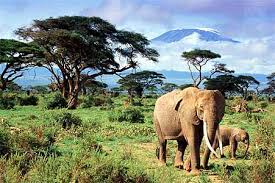
49.
What are the biotic factors in this image?
a)
sunlight, elephants, and grasses
b)
sunlight, water,  and air
c)
elephants, plants, trees 
50.

Qualitative vs Quantitative

a)

Qualitative is looks/ texture and quantitative is numbers

b)

Qualitative is color and quantitative is smooth

c)

Qualitative is numbers and quantitative is color

51.
What type of graph is this?
a)
Bar Graph
b)
Line Plot
c)
Pictograph
d)
Tally Chart
52.
What is the name of this graph?
a)
line plot
b)
line graph
c)
bar graph
d)
frequency table
53.

Tides are controlled by_____________

a)

the force of the wind

b)

the gravitational pull of the moon, Earth, and sun

c)

tsunamis

d)

earthquakes

54.

The cause of tides that are higher high tides and lower low tides know as spring tides is

a)

the moon, Earth, and sun are aligned at right angles with gravitational forces working in different directions

b)

the moon, Earth, and sun are aligned in a straight line to combine gravitational forces

55.
What is a difference between spring and neap tides?
a)
Spring tides occur when the earth and sun are IN LINE with the new or full moon. 
b)
Spring tides occur when moon in 3rd or 1st quarter phases
c)
Spring tides are LOWER than neap tides
d)
Spring tides occur in Spring and neap tides can occur in any season
56.
What do we call tides that have a smaller range that happen when the sun and moon are at right angles to each other?
a)
Neap Tide
b)
Spring Tide
c)
Larger Change
d)
Smaller Change
57.
What type of tide would this arrangement of earth-moon-sun create?
a)
full moon tide
b)
new moon tide
c)
neap tide
d)
spring tide
58.
This image shows the:
a)
Geocentric Solar System
b)
Heliocentric Solar System
59.
What did Galileo Improve?
a)
The astrolabe
b)
the stars
c)
The Telescope
d)
cat food.
60.

What is a channel of water that flows into a larger one?

a)

Estuary

b)

Floodplain

c)

Wetland

d)

Tributary

61.

An area of land where the surface water and ground water drain into a particular body of water.

a)

Aquifer

b)

Subsidence

c)

Watershed

d)

Divide