wayground logo

Free Printable Worksheets

NEW

Font size

S
M
L
XL
Worksheets

Ecology Pt. 2 & Evolution Mock Test

Total questions: 61

Worksheet time: 43mins

Name
Class
Date
1.
Limiting factors are sometimes helpful because they can keep the population from getting too large.
a)
True
b)
False
2.
Food, water, sunlight, shelter, and space are resources that are  __________.
a)
limiting factors
b)
wet
c)
messy
d)
found in rocks
3.
If the population of a certain predator increases, there is often _______ its prey
a)
a decrease the population of
b)
an increase of the population of 
c)
great news for its prey of
d)
no  impact found on
4.

In the graph to the right, what is the population of deer at the carrying capacity of the environment?

a)

3

b)

7

c)

70

d)

40

5.
The formation of new species as a result of evolution. 
a)
Evolution
b)
Natural Selection
c)
Speciation 
d)
Species
6.
The trace or remains of an organism that lived long ago, most commonly preserved in sedimentary rock.
a)
Fossils
b)
Natural Selection
c)
Speciation 
d)
Species
7.
The process by which individuals that are better adapted to their environment survive and reproduce more successfully than less well adapted individuals do; a theory to explain the mechanism of evolution.
a)
Fossils
b)
Natural Selection
c)
Speciation 
d)
Species
8.
A characteristic that improves and individual’s ability to survive and reproduce in a particular environment.
a)
Fossils
b)
Natural Selection
c)
Adaptation
d)
Species
9.
The process in which inherited characteristics within a population change over generations such that new species sometimes arise.
a)
Evolution
b)
Natural Selection
c)
Selective Breeding
d)
Species
10.
 A group of individuals that are closely related and can produce fertile offspring.
a)
Evolution
b)
Natural Selection
c)
Selective Breeding
d)
Species
11.
The human practice of breeding animals or plants that have certain desired traits. 
a)
Evolution
b)
Natural Selection
c)
Selective Breeding
d)
Species
12.

The owl butterflies are known for their huge eye-spots, which resemble owls' eyes. It is known that many small animals hesitate to go near patterns resembling eyes with a light-colored iris and a large pupil, which matches the appearance of the eyes of many predators that hunt by sight. What type of adaptation is this?

a)

Camouflage

b)

Mimicry

c)

Creativity

d)

Predaotion

13.
Which of the following best describes the process of natural selection in the case of the peppered moths that we discussed in class? 
a)
The moths were covered in soot from the Industrial Revolution and became black moths.
b)
The white moths decided to change their wings from white to black in order to blend in
c)
 the white moths were tastier than the black moths, so they were eaten by more predators.
d)
The white moths were easier to see on the blackened trees than black moths and were eaten by more predators.
14.
Who developed the theory of Natural Selection? 
a)
Gregor Mendel 
b)
Charles Darwin
c)
Jean Baptiste de Lamarck
d)
 Leonardo Decaprio
15.

Natural Selection is best defined as

a)

Organisms better equipped to survive in their environment and produce offspring than the less adapted organisms of the same species do.

b)

The process by which the fastest and strongest organisms in the population will beat out all other organisms and therefore survive and reproduce more successfully.

c)

The theory of evolution that is an organism does not use a physical feature over time, they will eventually lose that feature altogether.

d)

The theory of evolution that a drastic event changing an environment must occur for organism to evolve.

16.

Which of the following is not one of the four parts of natural selection?

a)

Overproduction

b)

Extinction

c)

Struggle to survive

d)

Successful reproduction

17.
Which of these best illustrates natural selection
a)
An organism with favorable genetic variations will tend to survive and breed successfully.
b)
A population monopolizes all of the resources in its habitat, forcing other species to migrate.
18.
Speciation is defined as
a)
 the process of creating a new community of organisms
b)
 the process of changing an organisms environment
c)
the process of extinction of a species
d)
the process of creating a new species
19.
___________________  is selection and variation that happens more gradually. Over a short period of time it is hard to notice. Over a long time, the population changes. Change is slow, constant, and consistent
a)
Charles Darwin
b)
Punctuated Equilibrium
c)
 Gradualism
d)
Evolution
20.

The following scenario is an example of ________________.


Small variations appear over a long period of time for a group of tree frogs which include color patterns that help them hide from predators and poisonous skin secretions that deter predators from seeking them out as a food source. As time progresses, these traits become standard in the population of tree frogs.

a)

Charles Darwin

b)

Punctuated Equilibrium

c)

Gradualism

d)

Evolution

21.

________________is the theory that a species can go unchanged for a long period of time, and then a drastic change occurs forcing evolutionary change; often through mutations in the genes of a few individuals.

a)

Charles Darwin

b)

Punctuated Equilibrium

c)

Gradualism

d)

Evolution

22.

The following scenario is an example of __________________.


A species of turtles exists and are unchanged for many thousands of years. Suddenly, a fungus that breaks down their shells leaves them unprotected. The turtles must adapt within the environment to become resistant to the fungus. Some turtles die. The remaining turtle's bodies adapt as necessary and they return to a state of unchanged.

a)

Gradualsism

b)

Evolution

c)

Punctuated Equilibirium

d)

Natural Selection

23.

_________ are found mostly in sedimentary rock.

a)

evolution

b)

fossils

c)

living remains of different species

d)

gold

24.
organisms will go unchanged/unevolved until something drastic happens to separate a species, such as a natural disaster.
a)
Punctuated Equilibrium
b)
Gradualism
25.

Evolution occurring gradually and slowly over long periods of time

a)

Homeostasis

b)

Stasis

c)

Punctuated Equilibrium

d)

Gradualism

26.

The hypothesis that physical structures with no known purpose are leftovers from an ancestor.

a)

Homologous Structure

b)

Vestigial Structure

c)

Anatomical Analogy

d)

Developmental Homology

27.

This graph shows that over time this species slowly changes causing evolution to go forth. What evolutionary method does this graph show?

a)

Punctuated equilibrium

b)

Evolutionary graduation

c)

Speciation

d)

Gradualism

28.

This graph shows that over time this organism goes unchanged for a period of time, and then changes suddenly causing a new species to arise. What evolutionary method does this graph show?

a)

Punctuated equilibrium

b)

Evolutionary graduation

c)

Speciation

d)

Gradualism

29.

The light-colored mice have been selected over the dark- colored mice because they were able to __________ themselves, and over several generations the dark colored mice were able to survive and reproduce successfully. This is an example of what evolutionary theory?

a)

Hide, Gradualism

b)

Camouflage, Punctuated Equilibrium

c)

Mimic, Natural Selection

d)

Camouflage, Natural Selection

30.
Which layer formed first?
a)
Rock Layer W
b)
Rock Layer X
c)
Rock Layer Y
d)
Rock Layer Z
31.
Structures that are inherited from a common ancestor are homologous.
a)
True
b)
False
32.
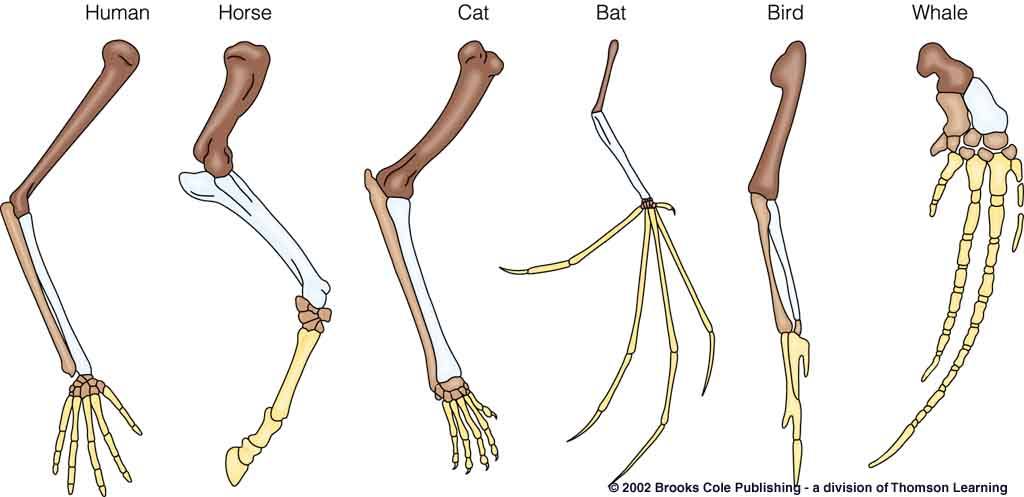
Humans, birds, whales, and lizards all have similar arm bones. What is the reason for this?
a)
The function of these bones is the same in all animals
b)
They live in similar environments
c)
They have a common ancestor
d)
All organisms resemble humans
33.
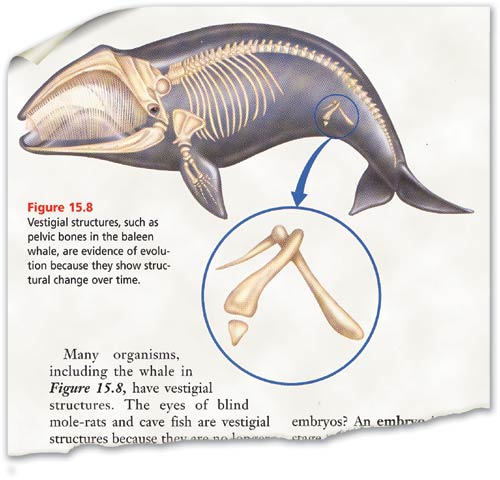
The hind leg bones in a whale are examples of
a)
homologous structures
b)
analogous structures
c)
fossils
d)
vestigal structures
34.
The structures shown are_________
a)
homologous
b)
heterologous
c)
analogous
d)
vestigial
35.
The  number of individuals a habitat can sustain with the resources it has available
a)
Carrying capacity
b)
Limiting factors
c)
Resources
d)
Population
36.
A supply of materials in a habitat
a)
Resources
b)
Biomes
c)
Organisms
d)
Groceries
37.
Which of the following is an EXAMPLE of a limiting factor?
a)
Water
b)
the color of the sky
c)
Migration
d)
Thick fur
38.
What is the carrying capacity of the following graph?
a)
1000
b)
8000
c)
800
d)
600
39.

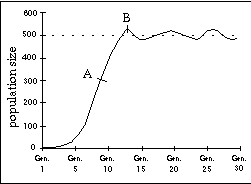
What is the carrying capacity of the graph?

a)

around 400

b)

more than 500

c)

less than 500

d)

around 600

40.
If the amount of food or resources available increases, the carrying capacity for an animal:
a)
Stays the same
b)
Increases
c)
Decreases
d)
Fluctuates
41.
If the carrying capacity of a predator decreases, what will happen to the carrying capacity of the prey?
a)
Will Increase
b)
Will Decrease
c)
Will stay the same
d)
Will fluctuate
42.
Limiting factors are sometimes helpful because they can keep the population from getting to large.
a)
True
b)
False
43.
Will competition increase/decrease the carrying capacity of an ecosystem for the animal in competition?
a)
Decrease
b)
Increase
44.
Temperature, light, air, water, and soil are all  _____  parts of the environment
a)
alive
b)
biotic 
c)
abiotic
d)
living
45.
Environmental factors that keep a population from increasing. 
a)
Carrying Capacity
b)
Limiting Factors
46.
Which is NOT an example of a limiting factor.
a)
Climate
b)
Available Food & Water
c)
Available Space & Shelter
d)
Species color
47.

Natural disasters such as flooding and tornadoes are linked to which type of succession?

a)

primary

b)

secondary

c)

old field

d)

ecosystem

48.
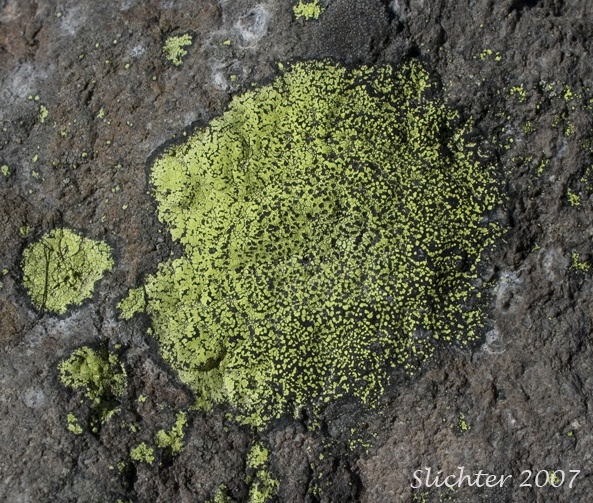
How do lichens contribute to primary succession?
a)
Lichens decompose organic matter from animals and plants
b)
Lichens begin to break down rock to form soil
c)
Lichens are nitrogen fixing bacteria
d)
Lichens convert carbohydrates into fossil fuels.
49.
What is formed during primary succession that doesn't need to be formed during secondary succession?
a)
pioneer species
b)
soil
c)
climax community
d)
lichens
50.
What type of succession is shown going from figure A to figure B?
a)
primary succession
b)
eutrophication
c)
secondary succession
d)
intermediate
51.
After a forest fire, an ecosystem would start regrowth through -
a)
primary succession
b)
secondary succession
c)
climax community
d)
limiting factors
52.
Which catastrophic event will most likely have the effect of returning an ecosystem to primary succession?
a)
A tornado
b)
A volcanic eruption
c)
A flood
d)
A drought
53.
succession that occurs in an area with no soil
a)
ecological succession 
b)
primary succession 
c)
secondary succession
d)
pioneer speciles
54.
succession that occurs in an area where soil is already present
a)
ecological succession 
b)
primary succession 
c)
secondary succession
d)
pioneer speciles
55.
starts with bare rock followed by lichen
a)
primary succession 
b)
secondary succession
c)
both types of succession
56.
this type of succession occurs after a forest fire
a)
primary succession
b)
secondary succession
c)
both
57.

What is the role of the pioneer species in Primary Succession?

a)

To kill any remaining organisms from before the disturbance

b)

To break down rock and rebuild soil

c)

To provide food for large animals

d)

To put fresh oxygen into the air

58.
What is the name given to lichen or algae after a primary succession?
a)
pioneer species
b)
volunteer species
c)
founder species
d)
conqueror species
59.

After a volcanic eruption, lava covers the land. What is the order that plants grow to repopulate the area?

a)

Lichens → Shrubs → Grasses → Trees

b)

Lichens → tree → shrubs→Grasses

c)

Grasses → Lichens → Shrubs → Trees

d)

Lichens → Grasses → Shrubs → Trees

60.

Which is an example of a climax community in this image?

a)

The empty pond

b)

The shallow pond/marsh

c)

The meadow/field

d)

The forest with the deer

61.

Which of these is an example of a climax community?

a)
b)
c)
d)