
 Worksheets
Earth/Space Systems and Cycles
Total questions: 112
Worksheet time: 2hrs 35mins
Which of these best explains why the sun is not visible during the night?
That sides of the sun faces away from the Earth.
The sun stops creating light at night.
The moon blocks the sun from view.
That side of Earth faces away from the sun.
A model of a plate boundary is shown. What most likely happens as the plates slide past each other?
The ocean floor widens.
An earthquake occurs.
A mountain Forms
Magma comes to the surface.
Which of these is an impact made by humans?
Marble forming from sedimentary rock
Limestone forming from shells of ocean animals
Oceans drying and exposing limestone
Marble being dug from a rock quarry
Lobster pots are used by fisherman to catch lobsters in shallow water. In which area of the ocean would commercial fisherman most likely place their lobster pots?
On the continental slope
On top of a mid-ocean ridge
On the bottom of an ocean trench
On the continental shelf
High and low tides on the coast are caused mostly by-
the gravity from the mood
underwater earthquakes
storms over the ocean
the tilt of Earth

Which pari of organisms needs to switch places for the ocean food chain to be correct?
White shark and phytoplankton
animal-like plankton and fish
phytoplankton and fish
white shark and animal-like plankton

Students made a classroom barometer that can be used to measure-
air pressure
precipitation
wind direction
temperature
Coal is important for VA because it-
is formed from plant and animal remains
can be divided into four types
is found in many areas of the country
can be used for energy
Which type of storm cause the most flooding in areas located near an ocean coastline?
tornado
hurricane
blizzard
freezing rain
Which of these best describes a tornado?
a winter storm that produces frozen percipitation
a rotating funnel-shaped cloud with strong winds and thunderstorms
a severe weather condition with low temperatures and blowing snow
A storm that forms over warm ocean water and has extremely strong winds
Which weather term best describes these words: Rain, Snow, Sleet
humidity
atmosphere
precipitation
barometric pressure
Certain storms from over water near the equator, usually between the months of June and November. Warm, moist air rises quickly over the ocean, causing a strong, whirling storm with high winds and heavy rains. This type of storm is known as a --
tornado
hurricane
blizzard
sandstorm
Which factor is usually recorded when gathering weather data?
number of gases in the air
temperature of the air
type of gases in the air
amount of air in an area
Tornadoes are most likely to produced from which type of cloud?
cirrus
stratus
cumulus
cumulonimbus
Usually, cumulonimbus clouds are associated with weather that is---
dry
stormy
fair
foggy
What tool is used to measure the relative amount of water in the air?
a barometer
an anemometer
a hygrometer
a thermometer
Which instrument could tell you the conditions are right for flying a kite?
anemometer
barometer
rain guage
weather vane
Which do meteorologists use to measure the amount of precipitation that falls during a storm?
anemometer
arometer
rain guage
weather vane
Which of these is the most responsible for the changes of the seasons on Earth?
position of the moon
tilt of earth on its axis
temperature of the sun
distance to mars
which of these takes about one year to complete?
earth to orbit the sun
the sun to orbit the earth
earth to rotate on its axis
the moon to orbit earth
Earth makes a complete revolution around the sun about once every--
day
year
season
minute
Which of these describes rotation?
mercury goes around the sun every 88 days.
the moon goes around earth every 28 days.
earth orbits the sun about every 365 days
earth makes on turn on its axis every 24 hours
The motion of Earth around the Sun most affects the
timing of tides
length of a month
cycle of the seasons
phases of the Moon
The time between today's sunrise and tomorrow's sunrise would be about
12 hours
24 hours
36 hours
48 hours
The rotation of the Earth on its axis causes-
seasons
years
months
days
The moon revolves around
itself
the Earth
the Sun
the solar system
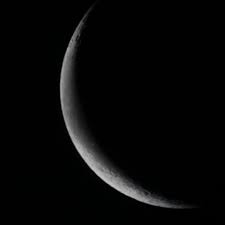
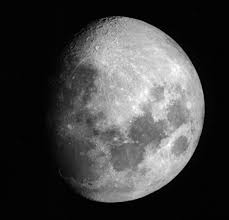
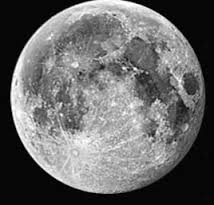
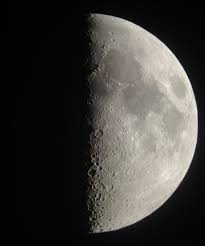


The surface of the Moon is made up of--
craters, highlands, and flat areas
swirling gases
large bodies of water
a mixture of gases and water
About 400 years ago, Galileo became the first person to record what the moon looked like through a telescope. He was able to tell that the moon had--
many craters
plants but no animals
active volcanoes
polar ice caps
The Apollo 11 mission was able to retrieve samples of the Moon's surface because it was the first mission to have astronauts-
land on the moon
orbit a planet
return to Earth
walk in space
Which layer of Earth is the thinnest?
inner core
crust
outer core
mantle
Earth is composed of four layers. Many scientists believe that as Earth cooled, the denser materials sank to the center and the less dense materials rose to the top. The least dense layer is the--
crust
mantle
outer core
inner core
Which of these best describes the relationship between Earth's layers?
the hottest layers are closest to the core
the more liquid layers are closest to the crust
the lightest layers are closest to the the core
the more metallic layers are closest to the crust
What layer of the Earth is located just below the crust?
inner core
mantle
continental shelf
outer core
Pumice is formed when lava from a volcano cools Which rock type is pumice?
gaseous rock
igneous rock
sedimentary rock
metamorphic rock
Granite is a hard material and forms from cooling magma. Granite is a type of-
lava stone
igneous rock
volcanic dust
sedimentary rock
A student made observations of four rock samples. Which of these observations most likely describes a sedimentary rock?
sample 1 has bands of light and drak crystals
sample 2 has pink, gray and white crystals grown together
sample 3 is a made up of one ug, pale pink crystal
sample 4 is made up of layers of sand grains cemented together
Which of these can be mined from Earth and used as an energy source?
coal
gravel
granite
limestone
Which of these often occur as the Earth's crustal plates move?
hurricanes
floods
tornadoes
earthquakes
Which surface feature is most likely caused by the movement of the Earth's crustal plate?
canyons
deltas
lakes
volcanoes
A scientists found a fossil of an organism that hd gills. when the organism was living, the area in which it lived was most likely covered by--
forest
grassland
bare rock
water
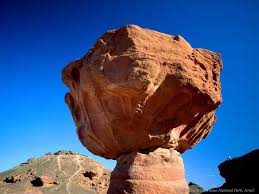
The process that breaks down rocks and other materials on Earth's surface is called
Weathering
Erosion
Deposition
Decomposition


_____ is the process by which soil and sediment (weathered rock) are transported (moved) from one place to another by water, wind, glaciers, and gravity
Erosion
Deposition
Weathering
Running Water
Which of these human activities most relies on high-quality soil?
hiking
hunting
coal mining
growing crops
A student is hiking through a forest taking pictures for science class. Which picture would most likely be used as an example of human impact on Earth?
a trail built by cutting down trees
a river erodign away the riverbanks
a bird nest made of dead branches
a group of butterflies landing on flowers

Which ocean floor feature is labeled "F"?
Continental Shelf
Abyssal Plain
Ocean Trench
Continental Slope

A shallow area of sediment near the shore...
Continental Shelf
Ocean Trench
Continental Slope
Abyssal Plain
Which of these are the deepest parts of the oceans?
Continental Shelf
Abyssal Plain
Ocean Trench
Continental Rise

"A" on the diagram labels the...
Continental Shelf
Abyssal Plain
Continental Slope
Ocean Trench
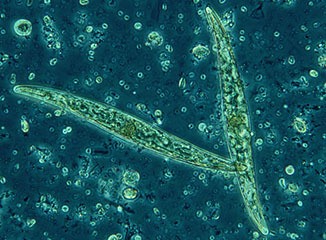
Plant-like plankton is called...
Photosynthesis
Phytoplankton
Decomposer
Consumer
As the depth of the ocean water increases, the temperature...
increases (warmer)
decreases (colder)
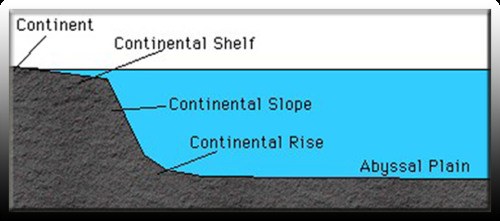
Which ocean floor feature is the steep cliff-like drop beyond the continental shelf?
Continental Shelf
Continental Slope
Abyssal Plain
Ocean Trench

Which part of the ocean floor is labeled "D"?
Mid-Ocean Ridge
Continental Slope
Blue-Ridge Mountains
Abyssal Plain

Phytoplankton provides much of the Earth's...
Nitrogen
Carbon Dioxide
Oxygen
Helium
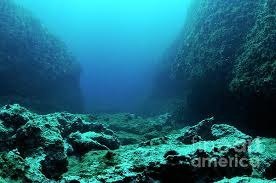
As the depth of ocean waters increases, the pressure...
increases (more pressure)
decreases (less pressure)

"C" on the Ocean Floor diagram represents the...
Continental Slope
Abyssal Plain
Continental Rise
Ocean Trench
A gently sloping area that connects the steep walls of the continental slope to the bottom of the ocean floor is called the... (sediments/deposition)
Abyssal Plain
Ocean Trench
Continental Rise
Mid-Ocean Ridges

Animal-like plankton is called...
phytoplankton
zooplankton

Where are you walking when you are wading in the ocean?
Ocean Trench
Abyssal Plain
Continental Slope
Continental Shelf

As the depth of the ocean water increases, the amount of light...
Increases (more light)
Decreases (less light)

Which ocean floor feature is labeled "G"?
Continental Slope
Ocean Trench
Continental Rise
Abyssal Plain
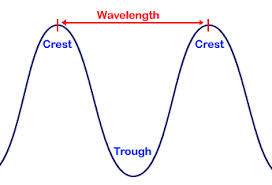
The distance between two crests or two troughs on a wave is the...
Crest
Trough
Wavelength

What do the arrows on the map represent?
Size of waves
Water density
Ocean currents
Time between tides


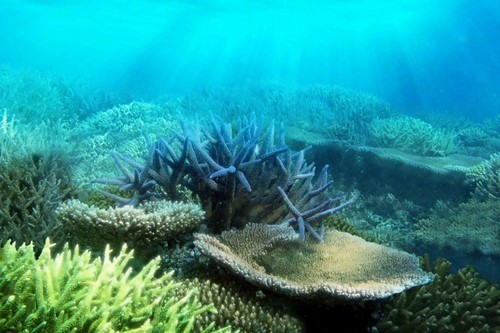
Part of a coral reef is shown. A coral reef is---
a rock
an ecosystem
an ocean current
an underwater cave



