wayground logo

Free Printable Worksheets

Font size

S
M
L
XL
Worksheets

Unit 1 Science Review 2022

Total questions: 116

Worksheet time: 2hrs 56mins

Name
Class
Date
1.
Which of the following is the smallest unit of life that can carry out all life functions?
a)
the mitochondria
b)
the vacuoles
c)
the nucleus
d)
the cell
2.
Which structures are found in every living cell?
a)
cell membrane and cytoplasm
b)
chloroplasts and mitochondria
c)
a cell wall and nucleus
d)
chloroplasts and cell wall
3.
Which cell structure is found in plant and animals cells and controls what can come into or leave a cell?
a)
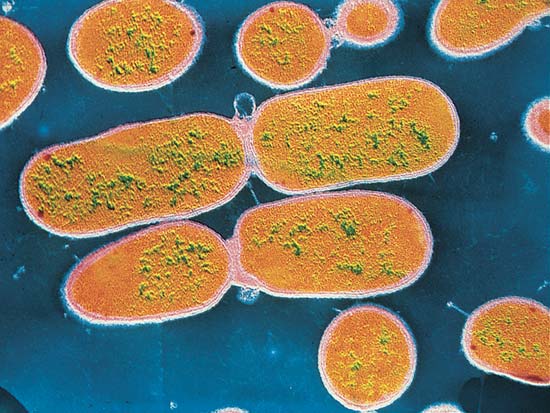
cell membrane
b)
cytoplasm
c)
nucleus
d)
vacuole
4.
What is the function of the cell nucleus found in both plant and animal cells?
a)
to produce energy
b)
to control cell activity
c)
to remove waste products
d)
to allow molecules to enter the cell
5.
Cell organelles that are responsible for digesting food, worn out organelles and other cellular wastes are called ___________________.
a)
Mitochondria
b)
Vacuoles
c)
Lysosomes
d)
Chlororplasts
6.
Chloroplasts in plant cells allow the plant to perform a function that animal cells cannot do.  What is the main function of the chloroplasts found in plant cells?
a)
to absorb light energy and manufacture food
b)
to remove waste materials by active transport
c)
to manufacture chemical energy from food
d)
to control the shape of the cell
7.
All cells need energy to function.  Which cell organelle is responsible for producing energy in the cell?
a)
chloroplasts
b)
mitochondria
c)
nucleus
d)
vacuoles
8.
What is the function of a cell wall?
a)
to protect and support the cell
b)
to perform different functions in each cell
c)
to prevent water from passing through it
d)
to prevent oxygen from entering the cell
9.
In what part of the plant cell does the process of photosynthesis take place?
a)
nucleus
b)
mitochondria
c)
chloroplasts
d)
vacuoles
10.
_ are organelles responsible for digesting certain materials within the cell.
a)
vacuoles
b)
chloroplasts
c)
lysosomes
d)
cell membrane
11.
Which of the following is not part of the cell theory?
a)
cells must contain DNA 
b)
all living things are made from cells
c)
cells can only come from other cells
d)
cells are the basic unit of life
12.
The basic unit of structure and function in a living things.
a)
chloroplast
b)
nucleus
c)
cell
d)
cell membrane
13.
Which of the following is NOT a way desert animals have adapted to survive in the desert?
a)
Thick Fur
b)
Are active at night
c)
Small size
d)
Live in burrows
14.
What is NOT an inherited trait of humans?
a)
Favorite type of music
b)
Freckles
c)
Hair color
d)
Height
15.

An animal cell has the following except a/an...

a)

Nucleus

b)

Lysosome

c)

Cell Wall

d)

Endoplasmic reticulum

16.
The vacuoles in ________ cells are smaller.
a)
Animal
b)
Plant
17.
Which cell can change it's shape?
a)
Animal
b)
Plant
18.
This cell can produce it's own food through photosynthesis. 
a)
Animal
b)
Plant
19.
This cell can produce it's own food through photosynthesis. 
a)
Animal
b)
Plant
20.
Which organelle belongs in plant cells only?
a)
Cell Membrane
b)
Mitochondrion
c)
Chloroplast
d)
Nucleus
21.
Which organelle belongs in both plant and animal cells?
a)
Cytoplasm
b)
Chloroplast
c)
Large Central Vacuole
d)
Cell Wall
22.
The ___________ is the basic unit of life
a)
organ
b)
cell
c)
atom
d)
tissue
23.
This organelle is in both plants and animals. It is a barrier between the cell and the environment.  It controls what goes in and out of a cell.
a)
cell wall
b)
cell membrane
c)
cell organelles
d)
mitochondria
24.
Tiny cell structures that carry out specific functions within the cell.
a)
membranes
b)
nucleus
c)
organelles
d)
animalicules
25.
What shape are most plant cells?
a)
round / irregular
b)
rectangular
26.

What are cells?

a)

Cells are the smallest unit of any organism that is microscopic, meaning it is too small to be seen.

b)

Cells can be seen with our eyes on both animals and plants, and have different organelles with different functions.

c)

Cells are too small to be seen with our eyes and are only found on animals.

d)

Cells are the smallest unit of any organism, but have no purpose and can sometimes be seen with our eyes.

27.

What are plant cells made of?

a)

Cell wall, cell membrane, cytoplasm, nucleus, and chloroplasts

b)

Stem, leaves, green, petals, flowers

c)

Photosynthesis, membranes, arms, and legs

d)

Jello, bodyguards, fences, and brains

28.

Which is the best description of a cell wall's function?

a)

keeps the organelles inside of the cell

b)

holds the cell up and keeps a square shape so the cell can stack on top of each other

c)

responsible for directing the activities of a cell

d)

is responsible for turning carbon dioxide and water into sugars and oxygen

29.

What is the best description of a chloroplasts function?

a)

holds the cell up and keeps a square shape so the cell can stack on top of each other

b)

regulates what comes in and out of the cell

c)

helps to keep the cell's organelles in place

d)

contains chlorophyll, which is molecule that allows the cell to use light energy to turn water and carbon dioxide into sugars and oxygen

30.

Choose the statement below that is TRUE.

a)

Plant and animal cells both have cell walls so the cell can maintain its shape.

b)

Animal cells do not have chloroplasts because animals do not require the use of photosynthesis to produce their food.

c)

Plant cells do not have a nucleus because plants are not living organisms like animals are.

d)

Animal cells do not have cytoplasm because an animal cell's organelles are free to move around as they please.

31.
What are somatic cells?
a)
body cells
b)
sex cells
32.
What are gametes?
a)
sex cells
b)
body cells
c)
human cells
d)
plant cells
33.
What is the purpose of mitosis?
a)
to grow, replace, and repair cells
b)
to create sex cells
c)
to create 2 different cells
d)
to create haploids
34.
What is the advantages of reproducing sexually instead of asexually?
a)
easy to find a partner
b)
to create identical cells
c)
to create genetic diversity
d)
there are no advantages
35.
Mitosis forms 
a)
4 identical daughter cells
b)
2 identical daughter cells
c)
4 different daughter cells
d)
2 different daughter cells
36.
How many parents does asexual reproduction involve?
a)
one 
b)
two
c)
three
d)
four
37.
Which type of asexual reproduction is taking place?
A planarian is a non-parasitic flatworm.  If a planarian was injured by a predator, it could re-grow its body parts.  If the body parts were not eaten by the predator, the part could re-grow into a whole new planarian as well.
a)
Budding
b)
Fission
c)
Vegetative propagation
d)
Regeneration
38.
The offspring from asexually reproduced organisms are?
a)
Different than their parents
b)
Identical to parents
c)
Like a combination from both parents
d)
A different species
39.
If two organisms reproduce sexually, then their offspring will exhibit a genetic makeup that is -
a)
identical to only one parent
b)
identical to all of its siblings
c)
a unique combination of traits
d)
the recessive traits of each parent
40.
Prokaryotes (bacteria) reproduce asexually via -
a)
spore formation
b)
bud creation
c)
vegetative propagation
d)
binary fission
41.
All of the offspring of an organism have the same genetic material, which is identical to the parent organism. From this, we can conclude that this organism -
a)
makes its own food
b)
is unicellular
c)
live in a marine habitat
d)
reproduces asexually
42.
The genetic material of an offspring of sexually reproducing organisms is best described as–
a)
identical to that of the other offspring
b)
a copy of the genetic material of the mother
c)
a copy of the genetic material of the father
d)
genes from both parents, in unique combinations
43.
Fishermen work hard to catch and remove all the starfish that get into their “underwater farms” where they raise clams & oysters. In the past, they put the starfish into their boats, cut them up with knives, and then throw the pieces of starfish overboard. They thought this would kill the starfish. What they did not know was that each piece of starfish will grow into a whole new animal. What type of asexual reproduction is taking place?
a)
Regeneration
b)
Vegetative propagation
c)
Budding
d)
Fission
44.
Is the following asexual or sexual reproduction?
A labradoodle is a type of dog that is crossed between a labradoor retriever and a poodle.  The labradoodle puppy takes on the traits of both of its parents.  Female dogs have a pregnancy period of almost 70 days.
a)
Sexual
b)
Asexual
45.
 A white cat had a litter of kittens that were orange, grey, and black and white spotted. Is this the result of sexual or asexual reproduction? And how would you characterize the offspring listed above?
a)
Sexual reproduction with uniform offspring
b)
Asexual reproduction with diverse offspring
c)
Sexual reproduction with diverse offspring
d)
Asexual reproduction with uniform offspring
46.
The reproductive part of a plant is called the
a)
roots
b)
stems
c)
flowers
47.
This structure makes food for the plant.
a)
roots
b)
stems
c)
leaves
48.
This structure holds up the plant.
a)
roots
b)
stems
c)
leaves
49.
These are brightly colored and attract pollinators like bees.
a)
leaves
b)
stems
c)
petals
50.
This structure anchors the plant in the soil.
a)
roots
b)
stems
c)
flowers
51.
This is the male part of the flower.
a)
Stamen
b)
Pistil
52.
The female reproductive parts of the plant.
a)
Stamens
b)
Pistils
53.
This structure protects the developing seed and makes the fruit.
a)
anther
b)
ovary
c)
roots
54.
The main function of the leaves of a plants is....
a)
carry out photosynthesis
b)
support the plant
c)
get water to all plant parts
d)
anchor the plant
55.
The ___ of the plant supports it and holds it upright.
a)
root
b)
stem 
c)
leave
d)
flower
56.
What part of the seed serves as food for the plant?
a)
embryo
b)
radicle
c)
cotelydon
d)
epicotyl
57.
This is the top part of the pistil of a flower which receives the pollen grains; germination happens here.
a)
petal
b)
sepal
c)
filament
d)
stigma
58.
This is the male part of the flower; it makes pollen.
a)
filament
b)
ovary
c)
sepal
d)
stamen
59.
This is the oval shaped part of a flower that contains pollen and is usually on the filament.
a)
anther
b)
sepal
c)
stamen
d)
stigma
60.
These are found at the bottom of the pistil of a flower; they are tiny egg cells that will become seeds.
a)
ovaries
b)
ovules
c)
anthers
d)
sepals
61.
This is the stalk that holds the anther.
a)
stamen
b)
stigma
c)
filament
d)
pistil
62.

How many stages are in an incomplete life cycle?

a)

1

b)

2

c)

3

d)

4

63.

Complete or Incomplete Metamorphosis?

a)

Complete because it has 3 stages

b)

Complete because it has 4 stages

c)

Incomplete because it has 3 stages

d)

Incomplete because it has 4 stages

64.
How many stages does a complete metamorphosis have? 
a)
1
b)
2
c)
3
d)
4
65.

Which correctly lists the stages of incomplete metamorphosis in order?

a)

egg, nymph, adult

b)

egg, adult, nymph

c)

nymph, adult, egg

d)

adult, nymph, egg

66.

What process is represented in the diagram?

a)

Evolution

b)

Change

c)

Metamorphosis

d)

Growth

67.

the stage in which the young animal looks just like the adult.

a)

Nymph

b)

Metamorphosis

c)

Larva

d)

Heredity

68.
What is heredity?
a)
A kind of genetic disorder
b)
The way DNA divides
c)
A trait you inherit from your parents
d)
The passing down of traits from parents to children
69.
What is the relationship between DNA and chromosomes?
a)
Chromosomes are made of DNA
b)
DNA is made of chromosomes
c)
DNA and chromosomes are the same thing.
d)
All of the above are correct
70.
How many pairs of chromosomes exist in each of your cells?
a)
10
b)
12
c)
23
d)
46
71.
Why are your chromosomes arranged in pairs?
a)
Scientists have no idea
b)
Because you get one from your mom and one from your dad
c)
Because pairs can divide easier
d)
Because DNA is awesome
72.
Which statement is true?
a)
Your DNA is the same as your siblings.
b)
Your set of DNA is identical to your mothers.
c)
Your set of DNA is identical to your fathers.
d)
Your DNA is unique to you.
73.
DNA can best be described as 
a)
The bricks of a building
b)
A cookbook of recipes
c)
People living in a community 
d)
The energy plant that fuels a city
74.
Which trait is completely determined by your DNA?
a)
Your personality
b)
Your intelligence
c)
Your natural hair color
d)
Your weight
75.
Put in order smallest to largest:
a)
Chromosome - DNA - Gene
b)
Gene - DNA - Chromosome 
c)
DNA - Gene  Chromosome
d)
Chromosome - Gene  - DNA
76.
Which is true about DNA?
a)
Only animals have DNA in their cells
b)
DNA research is simple and quick
c)
DNA contains many genes
d)
None of the above are true.
77.

Chromsomes are made of_____.

a)

Ribonucleic Acid

b)

Golgi Bodies

c)

Gametes

d)

Deoxyribonucleic Acid

78.

Recessive alleles are represented by

a)

lowercase letters

b)

Capital letters

79.

Heterozygous are shown by

a)

different letters like a and x = ax

b)

different alleles like A and a = Aa

c)

a letter and a number like 1 and a = 1a

d)

animals

80.

Homozygous are shown by

a)

same alleles like a and a = aa

b)

same alleles like A and A = AA

c)

are different alleles like A and a

81.

Genotype is

a)

the genetic makeup

b)

the trait you see

c)

a gene

d)

the type of gene

82.

phenotype is

a)

the genetic makeup

b)

the trait you see

c)

a photograph

d)

is a type of pheno

83.

Punnett Squares are used for what?

a)

Determine the chances of traits of offspring

b)

Multiplication

c)

Determine alleles and how to pair them up

d)

To show squares within a square

84.

Homozygous is

a)

identical alleles

b)

different alleles

c)

letters

d)

numbers

85.

Heterozygous is

a)

identical alleles

b)

different alleles

c)

letters

d)

numbers

86.

What is the percentage of homozygous recessive traits?

a)

25%

b)

50%

c)

75%

d)

100%

87.

What is the percentage of homozygous recessive traits?

a)

25%

b)

50%

c)

75%

d)

100%

88.

What is the probability of the offspring showing the dominant trait?

a)

25%

b)

50%

c)

75%

d)

100%

89.

What is the chance of the offspring being heterozygous?

a)

25%

b)

50%

c)

75%

d)

100%

90.

This is a picture of ?

a)

Gene

b)

Chromosome

c)

Medicine

d)

Genotype

91.

A genotype is?

a)

medicine and agriculture

b)

a genetic variation

c)

gentic make up of an organism

d)

a recessive trait

92.

The passing of traits from parents to offspring

a)

Genetics

b)

Heredity

c)

Pedigree

d)

Selective breeding

93.

The study of how traits pass from parents to offspring.

a)

Genetics

b)

Heredity

c)

Selective breeding

d)

Pedigree

94.

When an organism’s genotype has two different alleles for a trait.

a)

genotype

b)

heterozygous

c)

phenotype

d)

homozygous

95.

How the traits appear or are expressed

a)

Genotype

b)

Phenotype

c)

Heterozygous

d)

Homozygous

96.
How many generations are shown in this pedigree?
a)
1
b)
2
c)
3
d)
4
97.
What do half colored symbols represent?
a)
The individual is a carrier (heterozygous).
b)
The individual expresses the trait.
c)
The individual has both recessive alleles.
d)
The individual has both dominant alleles.
98.
How many females are in this pedigree?
a)
3
b)
4
c)
6
d)
7
99.
Of 12 hamsters just born, 9 have brown fur and 3 have white fur. The trait for white fur is considered to be ________.
a)
recessive
b)
weak
c)
strong
d)
dominant
100.
 A pea plant is heterozygous for height (Tt) and it is crossed with a homozygous short (tt) plant. Use a Punnett square to determine the probability of one of their offspring being short.
a)
100%
b)
75%%
c)
50%
d)
25%
101.
 One dog carries homozygous, long-haired traits (SS), and its mate carries homozygous short-haired traits (ss). Use a Punnett square to determine the probability of one of their offspring having long hair.
a)
100%
b)
75%
c)
50%
d)
25%
102.
 Look at the Punnett square. If the two parents represented in the Punnett square have four offspring, what does the Punnett square tells you?
a)
two of the offspring will definitely be heterozygous.  
b)
one of the offspring will definitely show the recessive trait.
c)
there is a 50% chance for each of the 4 offspring to have the genotype Rr.
d)
there is a greater chance for the offspring to be RR than rr.
103.
Which of the following is a term for a group of similar organisms that can reproduce fertile offspring?
a)
individual
b)
population
c)
species
d)
fossil
104.
Mutations are important because they bring about
a)
death of the organism in which they develop
b)
genetic variation needed for a population to evolve
c)
benefits for the individual, not for the population
d)
Hardey-Weinberg equilibrium within a population
105.
Extinction can occur because of which of the following?
a)
All can be causes of extinction.
b)
Increased competition with other species
c)
New predators within the environment
d)
Loss of habitat and/or catastrophes
106.
Finches on the Galapagos Islands had different beaks in order to help them do what?
a)
Build nests
b)
Fight off predators
c)
Collect food sources
d)
Compete with rivals
107.
A remnant or trace of an organism from the past is called a _______.
a)
Ancestor
b)
Skeleton
c)
Fossil
d)
Imprints
108.
Inherited trait that helps an organism survive is a(n) __________.
a)
Fossil
b)
Adaptation
c)
Ancestor
d)
Natural selection
109.
Survival of the fittest or when favorable adaptations reproduce faster is called what?
a)
Evolution
b)
Adaptation
c)
Natural selection
d)
Fossilization
110.
This occurs when no more of a species is living.
a)
Fossilization
b)
Adaptation
c)
Extinction
d)
Natural selection
111.
According to the diagram, which organism is older?
a)
ammonite
b)
coral
c)
gastropod
d)
trilobite
112.
The diagram shows fossils in different rock layers. Which of these statements about the age of these fossils is most likely correct?
a)
Fossil A and C are the same age
b)
Fossil B is older than fossil C
c)
Fossils A is older than fossil B
d)
Fossil D is older than fossil C
113.
What would happen if the Giraffes never evolve?
a)
they would survive
b)
They would thrive
c)
They would become extinct
d)
They will find another source of food
114.
The ability of an organism to survive and reproduce in its specific environment 
a)
diversity.
b)
evolution
c)
adaptation
d)
 fitness
115.
Why are advantageous traits more likely to be passed onto offspring?
a)
Because they are more likely to survive and reproduce.
b)
Because they come from dominant alleles.
c)
Because they come from recessive alleles.
d)
Because the trait is an acquired phenotype.
116.
Farmers breed cows to produce high amounts of milk. This is an example of...
a)
Natural Selection 
b)
Variations in a species 
c)
Selective Breeding 
d)
inbreeding