wayground logo

Free Printable Worksheets

NEW

Font size

S
M
L
XL
Worksheets

Chapter 7 Review Quiz - Intro to Chemistry

Total questions: 77

Worksheet time: 55mins

Name
Class
Date
1.
This is anything that has mass and takes us space.
a)
physical properties
b)
physical changes
c)
matter
d)
solid
2.
state of matter that has a fixed volume and a fixed shape
a)
solid
b)
liquid
c)
gas
d)
phases of matter
3.
What phase change can happen if enough heat energy is added to a solid?
a)
it melts
b)
it freezes
c)
it condenses
d)
particles slow down
4.
a state of matter that has a definite volume but no definite shape
a)
solid
b)
liquid
c)
gas
d)
phases
5.
a state of matter that has no definite shape or volume
a)
solid
b)
liquid
c)
gas
d)
phases
6.
characteristics that can be observed or measured without changing an object into a new substance
a)
physical change
b)
physical properties
c)
condensation
d)
freezing
7.
a change of state when a gas becomes a liquid
a)
melting
b)
freezing
c)
condensation
d)
boiling
8.
change of state when a liquid becomes a  gas
a)
evaporation
b)
condensation
c)
melting
d)
freezing
9.
What causes phase changes?
a)
adding or taking away particles
b)
adding or taking away matter
c)
adding or taking away heat energy
d)
adding or taking away physical properties
10.
What happens to the particles of a substance when heat energy is added?
a)
particles speed up and move closer
b)
particles slow down and move apart
c)
particles slow down and move closer
d)
particles speed up and move apart
11.
In which phase of matter are the particles close together and vibrating just a little?
a)
solid
b)
liquid
c)
gas
d)
physical property
12.
In which phase of matter are the particles farthest apart and moving fast?
a)
solid
b)
liquid
c)
gas
d)
phase changes
13.
In which phase of matter are the particles sliding past each other and a bit further apart?
a)
solid
b)
liquid
c)
gas
d)
phase changes
14.
What happens to particles of a substances when heat energy is taken away?
a)
particles speed up and move closer
b)
particles slow down and move apart
c)
particles slow down and move closer
d)
particles speed up and move apart
15.
What phase of matter is shown in the diagram?
a)
solid
b)
liquid
c)
gas
d)
physical change
16.
What phase of matter is shown in the diagram?
a)
solid
b)
liquid
c)
gas
d)
phase change
17.
What phase of matter is shown in the diagram?
a)
solid
b)
liquid
c)
gas
d)
physical changes
18.
What happens to the particles of a substance during thermal expansion?
a)
particles speed up and move farther apart
b)
particles speed up and move closer together
c)
particles stop
d)
particles cool off and get closer
19.
At higher temperatures
a)
particles in an object have less energy
b)
particles in an object move faster
c)
a gas contracts
20.
The opposite phase of melting is 
a)
freezing 
b)
sublimation
c)
condensation 
d)
deposition 
21.
Boiling
a)
liquid to gas
b)
gas to solid
c)
gas to liquid
d)
solid to liquid
22.
The drops of water that appear on the outside of a glass of cold juice on a warm day are an example of?
a)
sublimation
b)
condensation
c)
evaporation
23.
Which of these is an example of sublimation?
a)
water turning to ice
b)
ice cream dripping
c)
a puddle drying up
d)
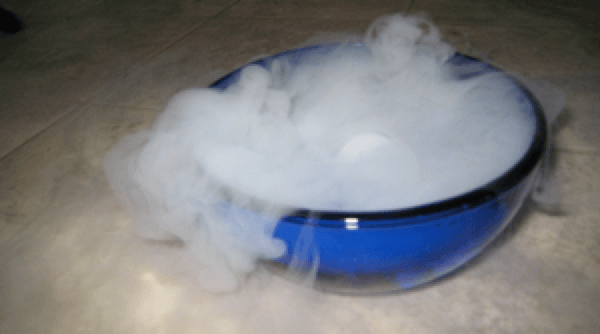
dry ice being used to make fog
24.
How are the particles moving in liquids?
a)
Sliding past one another
b)
moving past one another with great speed
c)
vibrating in a fixed postion
25.
What would cause a decrease in particle movement?
a)
decrease atoms
b)
increase in space between atoms
c)
decrease in temperature
d)
increase in mass
26.
Blue Color
a)
Physical Property
b)
Chemical Property
27.
Density
a)
Physical Property
b)
Chemical Property
28.
Flammability (burns)
a)
Physical Property
b)
Chemical Property
29.
Solubility (dissolves)
a)
Physical Proeprty
b)
Chemical Property
30.
Reacts with acid
a)
Physical Property
b)
Chemical Property
31.
Sour taste
a)
Physical Property
b)
Chemical Property
32.
Melting point
a)
Physical Property
b)
Chemical Property
33.
Your friend decides to toast a piece of bread, but leaves it in the toaster too long. The bread is black and the kitchen if full of smoke. 
a)
Physical Change
b)
Chemical Change
34.
You blow dry your wet hair. 
a)
Physical Change
b)
Chemical Change
35.
In baking biscuits and other quick breads, the baking powder reacts to release carbon dioxide bubbles. The carbon dioxide bubbles cause the dough to rise. 
a)
Physical Change
b)
Chemical Change
36.
You take out your best silver spoons and notice that they are very dull and have some black spots. 
a)
Physical Change
b)
Chemical Change
37.
A straight piece of wire is coiled to form a spring. 
a)
Physical Change
b)
Chemical Change
38.
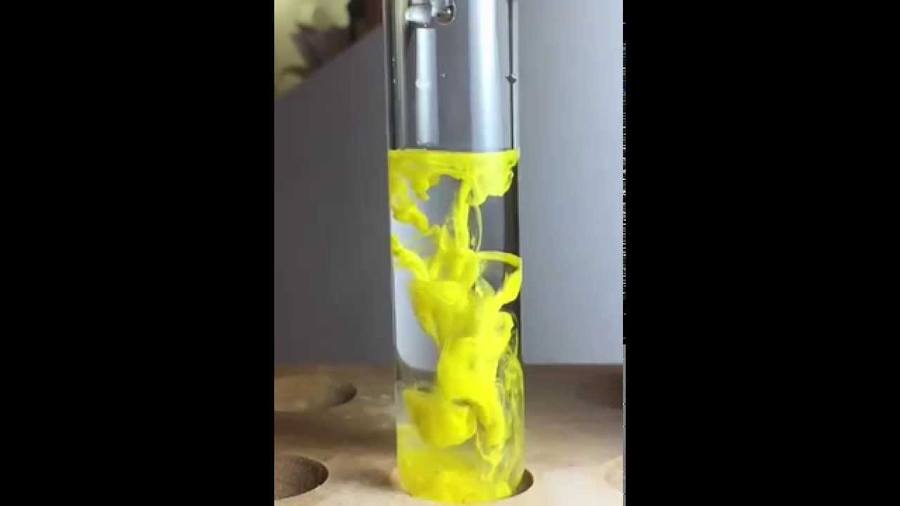
Food color is dropped into water to give it color. 
a)
Physical Change
b)
Chemical Change
39.
In a fireworks show, the fireworks explode giving off heat and light. 
a)
Physical Change
b)
Chemical Change
40.
Chewing food to break it down into smaller particles represents a _________ change, but the changing of starch into sugars by enzymes in the digestive system represents a ___________change. 
a)
Chemical then Physical 
b)
Physical then Chemical
c)
Both Physical
d)
Both Chemical
41.
Which of the following is an example of sublimation?
a)
Dry Ice
b)
Water boiling into steam
c)
Ice cream melting
d)
Water freezing into ice
42.
Any change in the state of matter of a substance is a...
a)
Physical Change
b)
Chemical Change
43.
A change in matter that forms one or more new substances with new chemical properties is a/an...
a)
Physical Change
b)
Chemical Change
44.
Which of the following indicates a chemical change?
a)
Change in state of matter
b)
Temperature change
c)
Change in size 
d)
Change in shape
45.
A solid substance that forms when 2 liquid solutions are combined?
a)
Sublimation
b)
Precipitate
c)
Condensation
d)
Freezing
46.
Which of the following indicates a PHYSICAL change?
a)
Change in temperature
b)
Change in shape
c)
Formation of a precipitate
d)
Change in color
47.
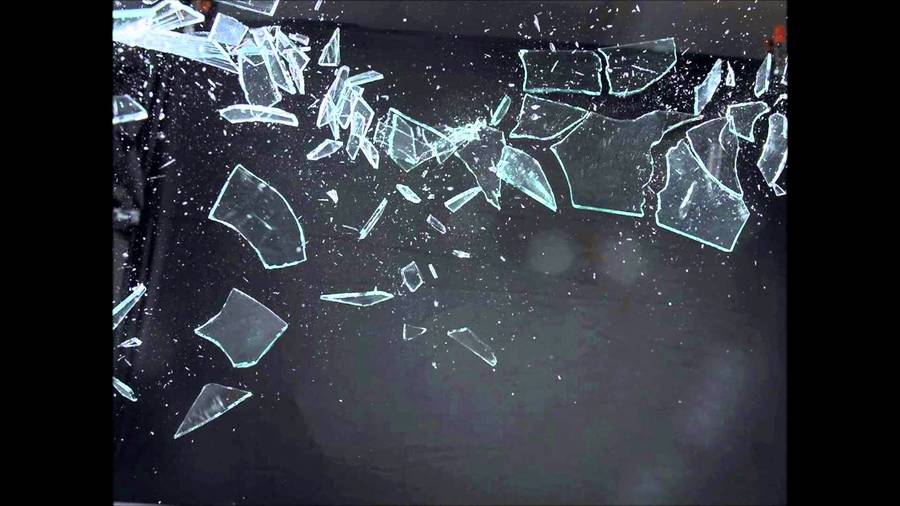
Chemical or Physical?  Glass breaking into tiny shards
a)
Chemical Change
b)
Physical Change
48.
Physical or Chemical Change?  Iron rusts
a)
Physical Change
b)
Chemical Change
49.
Physical or Chemical Change? 
a)
Physical Change
b)
Chemical Change
50.
Physical or Chemical Change?
a)
Physical Change
b)
Chemical Change
51.
Physical or Chemical Change?  Cutting an orange into wedges.
a)
Physical Change
b)
Chemical Change
52.
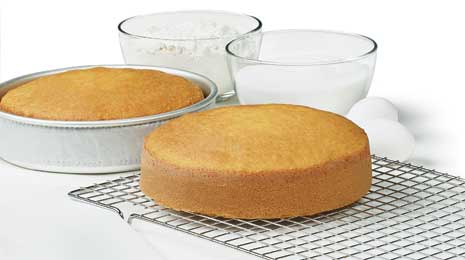
Physical or Chemical Change?  Baking a cake.
a)
Chemical Change
b)
Physical Change
53.
Physical or Chemical Change?  Logs burning in a campfire.
a)
Physical Change
b)
Chemical Change
54.
Physical or Chemical Change?  Sodium metal burning in water.
a)
Physical Change
b)
Chemical Change
55.
Physical or Chemical Change?  Making a paper airplane.
a)
Physical Change
b)
Chemical Change
56.

___________ are the smallest unit of an element that maintains the properties of that element.

a)

Atoms

b)

Elements

c)

Compounds

d)

Mixtures

57.

An _______________ is made up of one or more of the same kind of atom chemically combined.

a)

atom

b)

element

c)

molecule

d)

compound

58.

A ______________ is made up of different kinds of atoms chemically combined.

a)

element

b)

compound

c)

mixture

d)

molecule

59.

A _____________ contains a variety of elements and compounds that are not chemically combined with each other.

a)

compound

b)

element

c)

molecule

d)

mixture

60.

A __________________ is a substance that has definite physical and chemical properties such as appearance, melting point, and reactivity.

a)

mixture

b)

pure substance

c)

compound

d)

element

61.

Each element has a place in an arrangement called the ____________________________________.

a)

Elements Table

b)

Elementary Table

c)

Kitchen Table

d)

Periodic Table of the Elements

62.

A ______________ mixture is one that does not have a uniform composition.

a)

heterogeneous

b)

homogenous

c)

pure substance

63.

A _________________ mixture is one where the substances are evenly spread throughout.

a)

heterogeneous

b)

homogeneous

c)

pure substance

64.

In a ______________, one substance is dissolved in another substance.

a)

solution

b)

suspension

c)

colloid

65.

Tea and air are examples of ________________.

a)

solutions

b)

suspensions

c)

colloids

66.

Fruit Loops, pizza, and Skittles are examples of ____________________ mixtures.

a)

heterogeneous

b)

homogeneous

c)

pure

67.

Coffee, mouthwash, and Juice are examples of __________________ mixtures.

a)

heterogeneous

b)

homogeneous

c)

pure

68.

Instant coffee is made by dissolving a powder in hot water. Instant coffee is a ___________________ .

a)

pure substance

b)

mixture

69.

Baking soda is the common name for sodium bicarbonate, or NaHCO3. It can be produced through chemical reactions involving carbon dioxide and sodium hydroxide.

a)

pure substance

b)

mixture

70.

Blood is a fluid found in the bodies of humans and other animals. It can be physically separated into plasma, red blood cells and white blood cells. Blood is a ___________________

a)

pure substance

b)

mixture

71.

Chalk is a mineral found in rocks. It contains carbon, oxygen and calcium atoms. Chalk is a ___________________ .

a)

element

b)

compound

72.

Nickel has the chemical symbol Ni and atomic number 28. It is a silvery-white metal and cannot be broken down physically or chemically into a more simple substance. Nickel is a ___________________ .

a)

element

b)

compound

73.

In the lab, Maya is using a substance that has a chemical formula and contains two different elements. Maya’s substance is a(n) _______ .

a)

element

b)

compound

c)

heterogeneous mixture

d)

homogenous mixture/solution

74.

Granite is an igneous rock that contains the minerals quartz, feldspar, mica and others. The exact composition will vary from sample to sample. Granite is a(n) _______ .

a)

element

b)

compound

c)

heterogeneous mixture

d)

homogenous mixture/solution

75.

Kool aid, a liquid containing water mixed evenly with kool aid powder is a

a)

element

b)

compound

c)

heterogeneous mixture

d)

solution

76.
Carbon is considered an element while carbon dioxide is considered a compound. This is because carbon dioxide is –
a)
a gas at room temperature.
b)
made of two different elements.
c)
given off by green plants.
77.
Compounds are different than elements because compounds are -
a)
A combination of two or more elements.
b)

B)not able to be broken down into parts

c)
made from the same type of atoms
d)
a pure substance, elements are not