Wayground logo

Free Printable Worksheets

Font size

S
M
L
XL
Worksheets

DCA2

Total questions: 65

Worksheet time: 58mins
Name
Class
Date
1.
Water freezing into ice is an example of a...
a)
Physical Change
b)
Chemical Change
2.

Which of the following indicates a chemical change?

a)

Change in state of matter

b)

Change in temperature

c)

Change in size

d)

Change in shape

3.
Which of the following DOES NOT indicate a chemical change/reaction is occurring?
a)
Color Change
b)
Formation of a Precipitate
c)
Formation of gas/bubbles
d)
State of matter change
4.
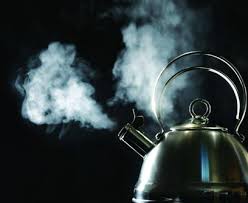
Physical or Chemical Change?
a)
Physical Change
b)
Chemical Change
5.
Which type of rock results from melting and cooling of magma?
a)
Igneous
b)
Metamorphic
c)
Sedimentary
d)
Extrusive
6.
Which type of rock forms from extreme heat and pressure?
a)
Igneous
b)
Sedimentary
c)
Organic
d)
Metamorphic
7.
A metamorphic rock changes into an igneous rock by what two processes?
a)
Melting and cooling
b)
Extreme heat and pressure
c)
Compaction and cementation
d)
Weathering and erosion
8.
Wind, water, and ice breaking down rock is called
a)
Erosion
b)
Deposition
c)
Compaction
d)
Weathering
9.
The process in which dissolved minerals crystallize and glue sediment together.
a)
compaction
b)
deposition
c)
organic rock
d)
cementation
10.
When sediments are pressed together tightly, this is called ____________.
a)
Compaction
b)
Cementation
c)
Weathering
d)
Erosion
11.
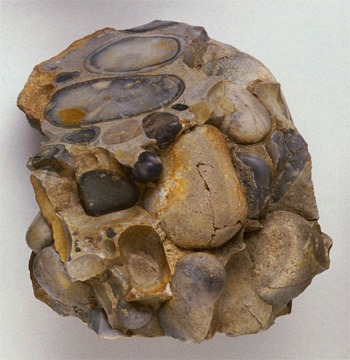
This rock was formed by smaller pieces of rock that settled at the bottom of a lake millions of years ago. What type of rock is this?
a)
Sedimentary
b)
Igneous
c)
Metamorphic
12.
This rock started as lava that cooled and then was heated and put under pressure over time. What type of rock is this?
a)
Sedimentar
b)
Igneous
c)
Metamorphic
13.
This rock started as molten magma. What type of rock is this?
a)
Sedimentary
b)
Igneous
c)
Metamorphic
14.
This rock is made from tiny pieces of other rocks that settled to the bottom of a valley millions of years ago. What type of rock is this?
a)
Sedimentary
b)
Igneous
c)
Metamorphic
15.
This rock was formed by lots of fossils that settled on top of each other over time. What type of rock is this?
a)
Sedimentary
b)
Igneous
c)
Metamorphic
16.
The state of matter having no definite shape or volume.
a)
solid
b)
liquid
c)
gas
17.
As a material is heated, it's particles....
a)
get smaller
b)
slow down
c)
get cooler
d)
move more quickly
18.
The motion energy of particles is called...
a)
kinetic energy
b)
connecting energy
c)
electrostatic energy
d)
gravitational energy
19.
Temperature is a measure of particle...
a)
kinetic energy
b)
size
c)
colour
d)
electrostatic force
20.
Absolute zero is the temperature (in Kelvin), at which, only in theory...
a)
all particles stop moving
b)
time stands still
c)
space and time merge
d)
energy goes to infinity
21.

At higher temperatures

a)

particles in an object have less kinetic energy

b)

particles in an object move faster

c)

a gas contracts

22.
When thermal energy is added to a substance, the substance's particles move:
a)
More rapidly at an increased diestance from each other.
b)
More rapidly with less distance between each other.
c)
More slowly with a greater distance between each other.
d)
More slowly with a reduced distance between each other.
23.
All matter is made of _____ that are constantly moving.
a)
insulators
b)
particles
c)
convection
d)
pieces of plastic
24.
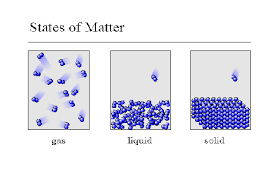
Which substance is the gas?
a)
A
b)
B
c)
C
25.
An inflated balloon is placed in a refrigerator. Which statement describes the movement of the gas particles in the balloon?
a)
The particles move more slowly and become closer together.
b)
The particles move more slowly and become further apart.
c)
The particles move faster and become closer together.
d)
The particles move faster and become further apart. 
26.
Which of the following statements about the particle of a gas is true?
a)
Gases can be compressed because their particles are smaller than those of liquids or solids.
b)
Gases can be compressed because there is plenty of space between their particles.
c)
Gases can be compressed because they have low boiling points.
d)
Gases can be compressed because their particles are more elastic than those of liquids or solids.
27.
Which of the following statements about the kinetic particle theory is not true?
a)
The particles of a gas move faster than those of a liquid.
b)
The particles of a solid have more kinetic energy than those of a gas.
c)
The particles that make up matter are always moving.
d)
The forces of attraction between the particles of a solid are very strong.
28.

Particles in a solid move __________, than particles in a liquid

a)

faster

b)

slower

c)

more randomly

d)

more fluidly

29.
How many atoms of carbon (C) are in C6H12O6?
a)
3
b)
6
c)
12
d)
24
30.
Element or compound?
H2O
a)
element
b)
compound
31.
Which is the correct formula for:
 three hydrogen (H)
one sulfur (S)
four oxygen (O)
a)
H3SO4
b)
HSO4
c)
H4S3O
d)
H2O
32.
How many atoms are there TOTAL in:
H2SO4
a)
6
b)
5
c)
7
d)
3
33.
How many elements are in C6H12O6?
a)
1
b)
2
c)
3
d)
4
34.
The substances at the beginning of a chemical equation are called the ____
a)
product
b)
yield
c)
chemical symbol
d)
reactants
35.
What is changed in a chemical reaction like this one? 
NaOH + HCl   
→  NaCl + H2O
a)
the number of atoms is changed
b)
molecules and compounds are changed 
c)
atoms are changed
d)
elements are changed 
36.

CaCO3 represents a chemical

a)

Symbol

b)

Formula

c)

Equation

d)

Reaction

37.

In chemical reactions, what does the principle of conservation of mass mean?

a)

Atoms is not created or destroyed.

b)

The total mass of the reactants is greater than the total mass of the products.

c)

The total mass of the reactants is less than the total mass of the products.

d)

Matter is not changed.

38.
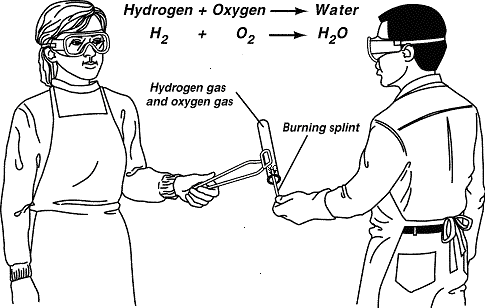
Identify the reactant(s) and product(s) of the reaction.
a)
All three are reactants and none are products.
b)
Hydrogen and water are the reactants, and oxygen is the product.
c)
Water and oxygen are the reactants, and hydrogen is the product.
d)
Hydrogen and oxygen are the reactants, and water is the product.
39.
What is the left part of a chemical equation called?
2H2 + O2 --> 2H2O
a)
Reactants
b)
Products 
c)
Yields 
d)
Chemical Equation 
40.
Is the following reaction balanced?
NaHCO3 --> Na2CO3 + H2O + CO2
a)
yes
b)
no
41.
Is the following equation balanced?
4Fe + 3O2 --> 2Fe2O3
a)
yes
b)
no
42.

What happens when a new substance is produced during a reaction?

a)

chemical change

b)

physical change

43.

Which change describes a substance that changes shape, form, or appearance but is still the same substance?

a)

physical change

b)

chemical change

44.

broken glass

a)

physical change

b)

chemical change

45.
Cake batter baked in an oven
a)
Chemical Change
b)
Physical Change
46.
If I have a block of wood with a density of 0.5 g/cm3 and I cut it in half, the density of one of the halves of wood would now be. . . 
a)
0.25 g/cm3 
b)
1.0 g/cm3
c)
0.5  g/cm3
d)
5.0  g/cm3
47.
Which of the following represents a physical change?
a)
burning a candle
b)
lighting a match
c)
mixing a batch of lemonade
d)
baking a cake
48.
Which of these are substances?
a)
A only
b)
A and C
c)
D and A
d)
A and B
49.
Which of the following is NOT a compound? 
a)
O2
b)
MgO
c)
CH4
d)
H2O
50.
A piece of gold has a mass of 40g and a volume of 2 cm3. What is its density?
a)
1/20 g/cm3
b)
80 g/cm3
c)
20 g/cm3
d)
40 g/cm3
51.
What are the reactants in this chemical equation?
a)
Water and carbon dioxide
b)
Water, carbon dioxide, heat and light
c)
propane and oxygen
d)
propane, oxygen and carbon dioxide
52.
Does this image prove the Law of Conservation of Mass?
a)
Yes
b)
No
53.
Which is the correct word equation for the following reaction? 
When iron is exposed to air and water over time, a chemical reaction occurs.  The iron (Fe) reacts with the oxygen (O2) to form a reddish substance called iron oxide (Fe2O3).  You may have seen this on buildings, subway rails, or pipes that are made of iron and are outside!
a)
Iron Oxide --> Iron + Oxygen
b)
Iron Oxide + Oxygen --> Iron
c)
Iron + Oxygen --> Iron Oxide
d)
Iron + Iron Oxide --> Oxygen
54.
Based on this chemical equation, for every molecule of calcium chloride used , how many molecules of sodium bicarbonate (baking soda) are used?
a)
1
b)
4
c)
6
d)
2
55.

Which of the following shows a physical change of the original substance?

a)

A and C

b)

B and C

c)

A and D

d)

B and D

56.
Which of the following land features would take the largest amount of time to change?
a)
location of continents
b)
shape of volcano
c)
position of sand dunes
d)
landslides
57.
This is an example of -
a)
convergent
b)
divergent
c)
transform
58.
The theory of _______ states that Earth’s crust and upper mantle are broken into sections that are in constant, slow motion.
a)
plate tectonics
b)
continental drift
c)
seafloor spreading
d)
divergent boundaries
59.
Which layer has convection currents?
a)
Inner Core
b)
Outer Core
c)
Mantle
d)
Crust
60.
What is the correct order (starting from the surface) of Earth’s layers?
a)
mantle, outer core, inner core, crust
b)
crust, mantle, outer core, inner core
c)
outer core, inner core, crust, mantle
d)
crust, outer core, inner core, mantle
61.
What is the transfer of kinetic energy from one substance to another?
a)
Heat
b)
Energy
c)
Thermal energy
d)
Temperature
62.

Ice cubes are placed in a glass of water that is at room temperature. Which statement best describes the temperature of the water after 10 minutes?

a)

The temperature decreases because some of the water's heat is lost to the ice.

b)

The temperature decreases because some of the ice's heat is lost to the water.

c)

The temperature increases because some of the coolness of the water is absorbed by the ice.

d)

The temperature increases because some of the coolness of the ice is absorbed by the water.

63.
What happens when ice cubes melt in a glass?
a)
Heat travels from the ice to the warmer water.
b)
No energy is transferred.
c)
Heat is transferred from the warmer water to the ice cubes.
d)
The water warms up due to the humidity
64.
An aluminum plate and a plastic plate have been in the freezer all night long.  When you remove them the next morning, 
a)
the plates have the same temperature.
b)
the plastic plate has a higher temperature.
c)
the plastic plate has a lower temperature.
d)
the aluminum plate has a lower temperature.
65.

Melony's mother told her, "Close the freezer! You're letting the cold out!" Melony decided to reply:

a)

"Actually, energy moves from high to low, so I'm letting heat in"

b)

"Actually, air isn't matter"

c)

Nothing, Melony's mother was right

d)

"Actually, temperature is just the motion of particles, so I'm not letting the particles out, I'm just speeding them up."