wayground logo

Free Printable Worksheets

Font size

S
M
L
XL
Worksheets

Science Review 4

Total questions: 59

Worksheet time: 59mins

Name
Class
Date
1.
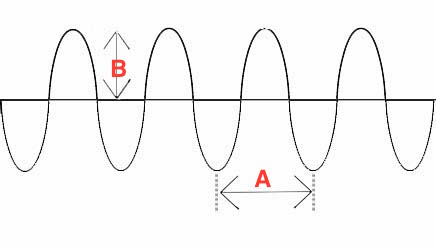
What part of the wave is shown at letter A?
a)
crest
b)
trough
c)
wavelength
d)
frequency
2.
Which part of the wave is shown at letter B?
a)
crest
b)
trough
c)
wavelength resting point
3.
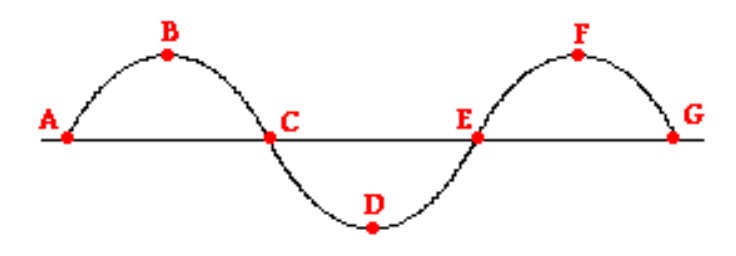
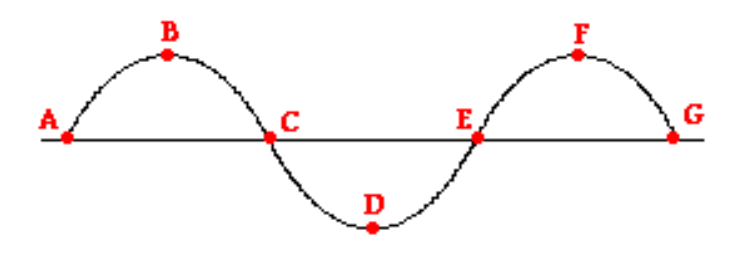
Which part of the wave is shown at letter C?
a)
crest
b)
wavelength
c)
resting point
d)
amplitude
4.
Which part of the wave is shown at letter D?
a)
trough
b)
resting point
c)
wavelength
d)
frequency
5.
Which part of the wave is shown at letter E?
a)
trough
b)
crest
c)
resting point
d)
amplitude
6.
What does a wave carry?
a)
boats
b)
matter
c)
energy
d)
water
7.
What is the frequency of this wave?
a)
3 Hertz
b)
4 Hertz
c)
5 Hertz
d)
6 Hertz
8.
If there is no wave, the particles would be at the _____________________.
a)
wavelength
b)
resting point
c)
trough
d)
beach
9.
When wavelength increases, what happens to the frequency?
a)
it increases
b)
it decreases
c)
it stays the same
10.
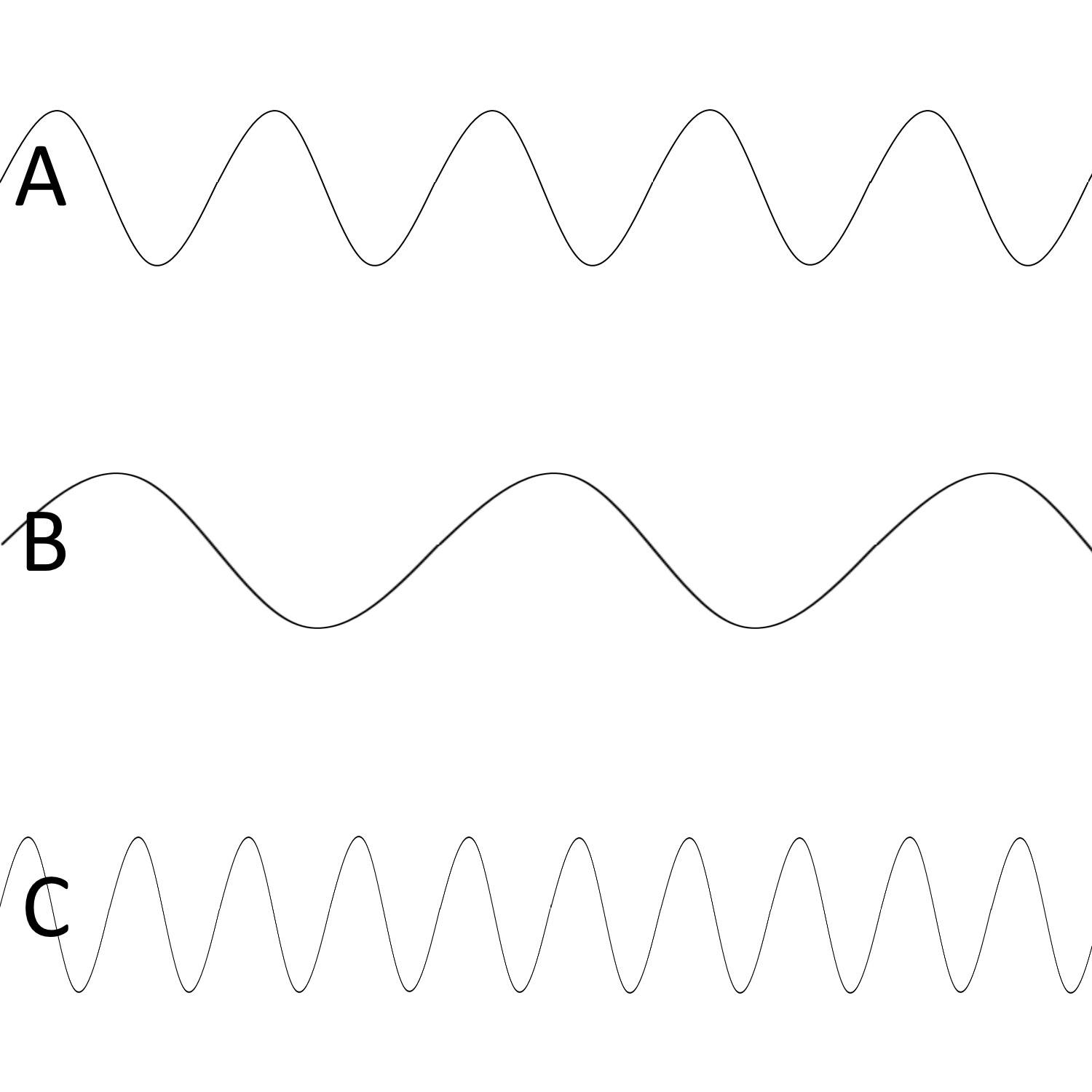
Which wave has a longer wavelength?
a)
wave C
b)
wave D
11.
Which wave has a greater frequency?
a)
wave B
b)
wave C
12.
Which wave has the most energy?
a)
top wave
b)
bottom wave
13.
Frequency is
a)
The amount of time of one wave cycle
b)
The number of wave cycles per unit of time
c)
The length of one wave crest to another crest
d)
The length of one wave cycle
14.
Which wave has the largest wavelength?
a)
A
b)
B
c)
C
d)
None (same wavelength)
15.
Which wave has the largest frequency?
a)
A
b)
B
c)
C
d)
None (same frequency)
16.
Which type of light has the highest energy of this group?
a)
red
b)
yellow
c)
green
d)
blue
17.
Which type of light has the smallest frequency of this group?
a)
red
b)
yellow
c)
green
d)
blue
18.
What property of the wave is represented by the letter "B"?
a)
amplitude
b)
crest
c)
trough
d)
wavelength
19.
Which letter(s) represent the trough of the wave?
a)
A
b)
B & D
c)
D
d)
C & G
20.
Which letter(s) represent the crest of the wave?
a)
A
b)
B & D
c)
B & F
d)
F
21.
Which of the following can sound travel through?
a)
solid
b)
liquid
c)
gas
d)
all of the above
22.
Electromagnetic waves include the following except
a)
radio waves
b)
X-rays
c)
doing the wave at a football game
d)
microwaves
23.
When a wave strikes and object and bounces off. (example echo)
a)
medium
b)
refraction
c)
reflection
d)
interference
24.
When a wave bends as it passes through at an angle from one medium to another.(example: pencil in a glass of water-)
a)
medium
b)
refraction
c)
reflection
d)
interference
25.

The distance from the resting point of the wave to the crest or trough is called the _________________.

a)

wavelength

b)

amplitude

c)

circular

26.

Select the best description of how you could use a jump rope to create a wave with a LONG WAVELENGTH.

a)

move the rope slow and fast in repetitions

b)

move the rope more slowly

c)

move the rope more quickly

d)

move the rope fast and slow in repetitions

27.
What is a natural resource?
a)
Resources we get from our house
b)
Resources we get from people
c)
Resources we get from nature
28.
Any useful material that is found in nature:
a)
Natural Resource
b)
Human Resource
c)
Plants
29.
A resource that is not easily replaced...
a)
Renewable
b)
Nonrenewable
30.
Can be replaced within a human lifetime
a)
Nonrenewable resource
b)
Renewable resource
31.
Which group includes ALL renewable resources?
a)
Coal, trees, water, oil
b)
Water, wind, sun, plants
c)
Minerals, sun, natural gas, water
32.
Which of the following natural resources are nonrenewable?
a)
Water
b)
Animals
c)
Natural gas
d)
Wind
33.
Which of the following natural resources are nonrenewable?
a)
Water
b)
Animals
c)
Natural gas
d)
Wind
34.
Which one is not a natural resource? 
a)
Water
b)
Plants
c)
Play dough 
d)
Air
35.
Fossil fuels are nonrenewable because...
a)
they are used to produce heat
b)
they take a long time to form
c)
they can be found underground
36.
What does conserving resources mean?
a)
Use as much of the resources as you can
b)
Only use the resources at school
c)
Protecting the resource so it does not run out
37.

Renewable or Non-renewable: Coal?

a)

Renewable

b)

Non-renewable

38.

Renewable or Non-renewable: Wind?

a)

Renewable

b)

Non-renewable

39.

Renewable or Non-renewable: Natural Gas?

a)

Renewable

b)

Non-renewable

40.

Renewable or Non-renewable: Oil?

a)

Renewable

b)

Non-renewable

41.

Renewable or Non-renewable: Trees?

a)

Renewable

b)

Non-renewable

42.

Renewable or Non-renewable: Soil?

a)

Renewable

b)

Non-renewable

43.

Renewable or Non-renewable: Plants?

a)

Renewable

b)

Non-renewable

44.

Renewable or Non-renewable: Animals?

a)

Renewable

b)

Non-renewable

45.
Is the resource renewable or non-renewable: sun
a)
renewable
b)
non-renewable
46.
Hydroelectric energy uses...
a)
water to make electricity.
b)
hydrogen to make electricity.
c)
lightning in water to make electricity.
47.
What is one or more commands or algorithms designed to be carried out by a computer?
a)
Algorithm
b)
Program
c)
Bug
d)
Code
48.
Coding is...
a)
Using only symbols to write a secret message
b)
Using only words to write directions
c)
Writing instructions in a language that computers understand 
d)
Hurting my brain
49.
How does a cell phone send a picture to another cell phone?
a)
It changes the picture into text.
b)
It sends the picture through sound waves.
c)
It downloads the picture into light waves.
d)
It codes the picture into digital information.
50.
Digital devices use _____ to send and transmit information.
a)
binary code
b)
Morse code
c)
pixels
d)
bits
51.
A remote control sends signals to a television through:
a)
sound waves
b)
wires
c)
light waves
d)
binary code
52.
Cell phones convert sound waves into ____, which are sent from tower to tower.
a)
light waves
b)
sound waves
c)
radio waves
d)
Morse code
53.
How does light travel
a)
It curves around corners
b)
Really slow
c)
In a straight line
d)
In circles
54.
What is light?
a)
A form of energy
b)
A form of sound
c)
bright stuff
d)
A form of excitement
55.
What is the correct order of the colors of the rainbow?
a)
Red, orange, yellow, green, blue, indigo, violet
b)
red, orange, yellow, blue, green, indigo, violet
c)
orange, yellow, red, blue, purple, indigo
d)
red, orange, yellow, green, indigo
56.
Human innovation in action that involves the generation of knowledge and processes to develop systems that solve problems and extend human capabilities.
a)
Science
b)
Math
c)
Technology
d)
Want
57.
What is one cause of air pollution?
a)
litter found on the side of the road
b)
water used as a coolant by power plants
c)
burning fossil fuels
d)
Dropping litter
58.

Which of these activities is most likely to have a negative impact on Earth's environment?

a)

Planting Trees

b)

Constructing highways

c)

Recycling paper and plastic

d)

None of the above

59.
Which of the following options is an example of non-renewable resources?
a)
Corn & wheat
b)
Wind & Water
c)
Animals
d)
Coal & Natural Gas