
 Worksheets
G5 FOOD CHAIN - HOW ANIMALS USE FOOD
Total questions: 64
Worksheet time: 35mins
The energy of the food chain starts with...............
the first trophic level in the food chain is...................................
Producer
Tertiary consumers
Primary consumers
plants can make its own food.
true
false
plants depend on the.......................to make food.
sun
water
soil
sand
select all the examples of producers.
apple
grass
corn
eagle
snake
....................................get energy directly from the sun.
producers
consumers
grasshopper
ectotherm
select all consumers.
herbivore
carnivore
omnivore
banana
carrot
........................are animals eat plants only.
........................are animals eat meat (other animal) only, as they depend on meat for energy.
Producers
........................are animals eat plants and animals.
Producers
select all herbivores.
giraffes
bees
deer
pigs
sharks
select all carnivores.
sharks
snakes
tigers
wolves
butterflies
select all omnivores.
pigs
some birds
lions
horses
the arrows in the food chain shows.........................
flow of energy
flow of food
life stage
Each part of a food chain is...........................................
a trophic level
an energy level
amount of food
a temperature level
......................sorts living things according to their position in the food chain.
trophic level
energy level
endotherm
ectotherm
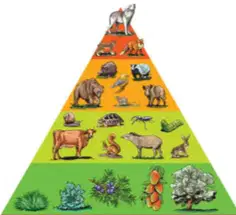
this diagram shows the,,,,,,,,,,,,,,,,,,,,,,,,,,,,,,,,,
trophic level
endotherm
metabolism
ectotherm
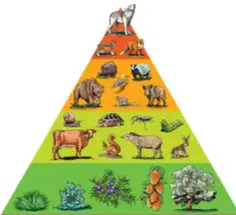
the first dark green box down refers to.....................
producers
primary consumers
secondary consumers
tertiary consumers
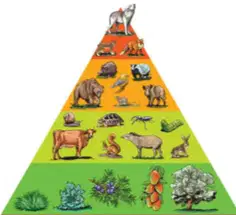
The light green box above the dark green one, refers to........................................................
producer
primary consumer
secondary consumer
tertiary consumer
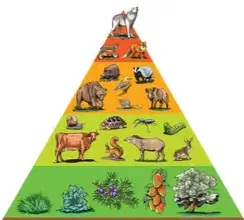
the orange box refers to...........................
producers
primary consumers
secondary consumers
tertiary consumers

the uppermost red triangle refers to the....................
producers
primary consumers
secondary consumers
tertiary consumers
.....................................provides an immediate source of energy as glucose or starch.
Plant food
Slice of meat
an egg
cup of milk
If the grass was eaten by the grasshopper then the bird ate the grasshopper in the end the snake ate the bird, so the grass is considered as.................................
producer
primary consumer
tertiary consumer
secondary consumer
If the grass was eaten by the grasshopper then the bird ate the grasshopper in the end the snake ate the bird, so the grasshopper is considered as.................................
producer
primary consumer
secondary consumer
tertiary consumer
If the grass was eaten by the grasshopper then the bird ate the grasshopper in the end the snake ate the bird, so the bird is considered as.................................
producer
primary consumer
secondary consumer
tertiary consumer
If the grass was eaten by the grasshopper then the bird ate the grasshopper at the end the snake ate the bird, so the snake is considered as.................................
producer
primary consumer
secondary consumer
tertiary consumer
The insects like bee, butterfly, and grasshopper are from.........................
herbivores
carnivores
omnivores
producers
The bird which eats seeds and insects is considered..........................
herbivore
carnivore
omnivore
producer
..............................animal maintains temperature from energy inside bodies.
............................animal depends on their environment to warm its body.
Ectotherm
Endotherm
........................means keep stable and consistent.
maintain
develop
change
.............................animals known as warm blooded animals.
endothermic
ectothermic
.............................animals known as cold blooded animals.
endotherm
ectotherm
Select all endothermic animals.
mammals
birds
humans
insects
snakes
Select all endothermic animals.
camel
dog
cat
lizard
most fish
Select all ectothermic animals.
insects
most fish
reptiles
humans
birds
Select all ectothermic animals.
grasshopper
snakes
lizard
dog
mammals
.................................is the process of breaking down food to build molecules.
Metabolism
.................................movement means moving from one place to another place.
locomotor
non-locomotor
twisting
bending
stretching
.................................movement means moving in a fixed point.
locomotor
non-locomotor
flying
running
jumping
Select all locomotor movements.
flying
running
jumping
twisting
stretching
Select all non-locomotor movements.
dancing
bending
twisting
stretching
running
Animals with fast metabolism.........................
select all correct answers.
need to eat more frequently
need food that provide energy more quickly
need to eat small amount of food
Metabolism of all endothermic animals depends on.......................
select all correct answers.
speed
size
warm environment
cold environment
small endothermic animal that is moving quickly (fast) has,,,,,,,,,,,,,,,,,,,,,,,,,,,metabolism.
fast
slow
Big or large endothermic animal that is moving slowly has.........................metabolism.
fast
slow
pocket mouse has a.......................metabolism.
fast
slow
sloth has a.......................metabolism.
fast
slow
the metabolism of an ectothermic animals depends on the.............................
speed
size
temperature of the surrounding environment
ectothermic animal staying in a sunny place will have..................body
warm
cold
ectothermic animal in a cold and snowy weather will have.......................body.
warm
cold
Animal with a warm body due to staying in a sunny place will have............................metabolism.
fast
slow
Animal with a cold body due to cold and snowy weather will have.............................metabolism.
fast
slow
Large endotherms have.........................metabolism.
fast
slow
Small endotherms have......................................metabolism.
fast
slow
small endotherms become..........................than large endotherms.
cold faster
warm faster
If your body is a car the glucose is......................
gasoline
engine
metabolism
which kind of energy stored in the food?
chemical energy
kinetic energy
heat energy
electric energy
During metabolism...............................in the food transformed to..........................of movement.
chemical energy - kinetic energy
kinetic energy - chemical energy
heat energy - kinetic energy
chemical energy - electrical energy
A rabbit is running will have....................metabolism.
fast
slow
A snake with a warm body will have...........................metabolism.
fast
slow
A butterfly on a cold weather day, will have.........................................metabolism
fast
slow
A sleeping hippo at night will have.................metabolism.
fast
slow
A camel in a very hot and dry desert will maintain its normal body temperature.
true
false

