
 Worksheets
STAAR REVIEW #1
Total questions: 61
Worksheet time: 3hrs 3mins
Which of these describes one or more living organisms that depend on another organism to survive?
bacteria living in the mouth of a dog
aloe vera plants growing next to a fence
mold living on a rock
pufferfish releasing carbon dioxide into pond water.
Aquatic plants have adaptations that help them live in water. For example, the part of the plant that makes food is located on the TOPS of FLOATING plant leaves.
This adaptation helps the plants---
stay anchored
avoid predators
absorb sunight
capture fish
Which observation describes how a lizard interacts with a living element in its environment?
The lizard basked on one of the rocks.
The lizard ate a cricket off of a leaf.
The lizard drank water.
The lizard scattered sand with its tail.
All of the following observations are ways that a bird interacts with nonliving parts of its environment EXCEPT---
reacting to morning sunlight by singing
drinking and taking a bath in a puddle of water
responding to cold temperatures by fluffing its feathers
feeding insects to its chicks
Which organism obtains energy without depending on another organism?
oak tree
mushroom
cottontail rabbit
mountain lion
Which of these living organisms was interacting with another living organism in the environment?
A fire ant digging a tunnel in sandy soil.
A blue jay drinking water from a puddle.
A bee collecting pollen from a tree.
A hawk circling in the air over a tree.

Which fact best describes one way this bird changes its environment to meet its needs?
Builds nests on hillsides covered with dense vegetation
Usually raises one group of young each year
Hunts for insects and spiders on plant leaves
Feeds on sugar water and peanut butter at feeders
Some beetles break down the remains of dead animals. Some mushrooms break down the remains of dead trees. How do these actions most BENEFIT plants?
By returning nutrients to the soil.
By releasing oxygen into the air.
By making space for new animals.
By decreasing the population of herbivores.

Which statement correctly describes the transfer of energy in a food chain in this wetland?
Energy is transferred from hawks to shrews to grasshoppers to marsh grasses.
Energy is transferred from marsh grasses to crickets to hawks to frogs.
Energy is transferred from grasshoppers to crickets to frogs to hawks.
Energy is transferred from cattails to crickets to shrews to hawks.

What role does the prickly pear cactus play in a desert food web?
It obtains energy from producers
It returns nutrients to the soil
It preys upon other organisms
It provides energy to consumers
What planet is closest to the sun?
Mars
Earth
Venus
Mercury
What is at the center of our solar system?
asteroid belt
Earth
sun
moon
Which planet is third from the sun?
Mars
Earth
Mercury
Venus
Which planet is a gas giant?
Mercury
Earth
Saturn
Venus

Starting with the sun, name the inner planets in order.
Mercury, Earth, Venus, Mars
Mars, Mercury, Venus, Earth
Mercury, Mars, Venus, Earth
Mercury, Venus, Earth, Mars
I am the planet between Mercury and the Earth. Who am I?
Mercury
Venus
Mars
Earth
What is the correct order of the planets?
Mars, Venus, Earth, Mercury, Jupiter, Saturn, Uranus, Neptune
Mercury, Venus, Earth, Jupiter, Saturn, Uranus, Neptune
Mercury, Venus, Earth, Mars, Jupiter, Saturn, Uranus, Neptune
Mercury, Venus, Earth, Mars, Jupiter, Saturn, Uranus, Neptune, Pluto
Each winter since 1980, a family measures the snowfall in their year and records the yearly average. This average is most common when describing what feature of the area?
Weather
Climate
Water cycle
Erosion patterns
A team of meteorologists are recording daily temperatures in their city and comparing the measurements with data collected over several decades. What type of information are they investigating?
Weather, because they are measuring temperature
Climate, because they are comparing data over time
Weather, because the measurements can change daily
Climate, because the data is collected for only one city

What is the role of the sun in the water cycle?
provide heat energy for evaporation
provide heat energy for condensation
dry out the soil for runoff to occur
provide thermal energy for accumulation

What process is shown by letter B in the diagram?
condensation
transpiration
evaporation
precipitation
During evaporation, water changes from a _________ to a __________.
solid, liquid
gas, liquid
liquid, gas
liquid, solid

What process is show by letter A in the diagram?
condensation
evaporation
accumulation
precipitation

What is it called when plants release water vapor through their leaves?
sublimation
respiration
transpiration
precipitation

What is it called when water droplets form on the outside of a cool glass?
Condensation
Transpiration
Precipitation
Evaporation

What step of the water cycle is shown in this picture?
Condensation
Runoff
Precipitation
Evaporation


This is an example of what type of matter?
solid
liquid
gas
What does density tell you about an object?
how big it is
if it will sink or float
how heavy it is
what color it is


Jacob added 50mL of salt to 250mL of water. He stirred it until it completely dissolved. He was asked by Mr. Lopez to separate the salt from the water. After the water evaporated how much salt was left in the beaker?
There was 300mL left in the beaker.
There was 50mL left in the beaker.
There was 200mL left in the beaker.
There was no salt left in the beaker.
I have a mixture of Wood chips, sand, iron filings, and gravel. Here is a way to separate them:
- Use a sieve to separate the the sand and iron filings from the gravel and wood chips.
What would be step 2?
Use the sieve again to separate the iron filings and the sand
Use a magnet to separate the iron filings from the sand
Use a tweezers to pick out the iron filings
use a filter and water to separate the sand from the iron filings

How do structures like whiskers and antennae help organisms?

How do these body coverings help organisms in their environments?
Something an animal has or does that helps it survive is called a(n) _____
organism
camouflage
adaptation
omnivore
Why do birds have different feet?
They take in different amounts of oxygen, causing changes
They are herbivores, so they have different feet
Their internal structures are different
Feet adaptations allow them survive in different environments
A hummingbird’s _________ is long and straw-like so that it can sip nectar from inside flowers.
Lungs
Ears
Beak
Antennae

The function of these body coverings is similar because of --
A marbled tree frog is very difficult to see when it is resting on a tree, because its coloring blends in well with the tree bark.
Teeth
Beak
Flowers
Camouflage
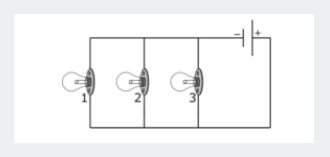

A student builds a circuit made up of a battery, two light bulbs, and a switch. What will the student most likely observe in this circuit?
Light bulb 1 and light bulb 2 will both be on
Light bulb 1 will be off, but light bulb 2 will be on
Light bulb 1 and light bulb 2 will both be off
Light bulb 1 will be on, but light bulb 2 will be off

The diagram shows a series circuit with three lit bulbs. How many of the bulbs will remain lit if the wire is cut a the point shown by the arrow?
0
1
2
3

Students constructed a circuit using different-colored lightbulbs. What will happen if Switch 3 is closed and the other switches are left open?
Only the white bulb will operate
None of the bulbs will operate
Only the white and yellow bulbs will operate
Only the red and blue bulbs will operate

The diagram shows an electric circuit with four bells that a student plans to build. When the student connects the wire as shown, which of the bells will ring?
Bell 1 only
Bells 1 and 4 only
Bells 3 and 4 only
Bells 1, 2, 3, and 4


Why is electrical wiring usually made from copper?
Because copper is shiny
Because copper conducts electricity
Because copper is not magnetic
Because copper insulates electricity

Rube Goldberg was an artist who drew cartoons that showed a very complicated way to do a simple task. The picture shows a cartoon like the ones Goldberg drew. Which form of energy is used to turn on the switch? (5.6A)
Light energy
Thermal energy
Electrical energy
Mechanical energy

Open the circuits below. Which of these circuits will have three lights still lit?
The top circuit
The middle circuit
The bottom circuit
All of the circuits

