
 Worksheets
5th Grade Plant and Animal Cells Review
Total questions: 62
Worksheet time: 46mins
Name
Class
Date
1.
The main function of chloroplasts is:
a)
To control what enters and leaves the cell.
b)
To break down food to release energy for the cell.
c)
To control all activities of the cell.
d)
To produce food for the cell using the sun's energy.
2.
Plants and animals are made up of millions of tiny what?
a)
atoms
b)
cells
c)
particles
d)
dots
3.
Animal cells have_______________.
a)
cell walls
b)
chloroplasts
c)
cytoplasm
d)
large vacuoles
4.
Michael looked at a cell through a microscope. He identified a nucleus, chloroplast, and cytoplasm. What kind of cell did Michael observe?
a)
animal
b)
plant
c)
vertebrate
d)
bacteria
5.
Which piece of equipment is the best to use to observe the structure of a cell?
a)
magnifying glass
b)
binoculars
c)
telescope
d)
microscope
6.
What organelle is NOT found in animal cells?
a)
chloroplast
b)
cell membrane
c)
nucleus
d)
mitochondria
7.

Directs all cell activities and the DNA is located there. "The brain"
a)
Lysosomes
b)
Nucleus
c)
Cell Wall
d)
Cytoplasm
8.
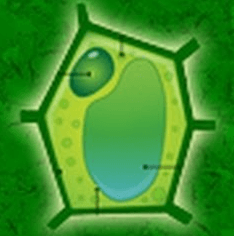
A rigid layer that lies outside the cell's membrane is...
a)
Cytoplasm
b)
Cell membrane
c)
Cell Wall
d)
Flagella
9.
What is the jelly-like substance inside of cells called?
a)
chloroplast
b)
photosynthesis
c)
cell membrane
d)
cytoplasm
10.

a)
found only in plants
b)
contains chlorophyll
c)
produces energy
11.
surrounds the cell; regulates what enters/leaves cell: holds the cell together
a)
vacuole
b)
cell wall
c)
cell membrane
d)
lysosome
12.
Which of these are characteristics of most cells?
a)
make their own food
b)
can only be seen using a microscope
c)
they all have a cell wall
d)
they are found only in humans
13.
What does the plant cell structure chloroplast do?
a)
directs the cell's activities
b)
stores nutrients, water, or waste
c)
makes food
d)
supports the plant cell
14.
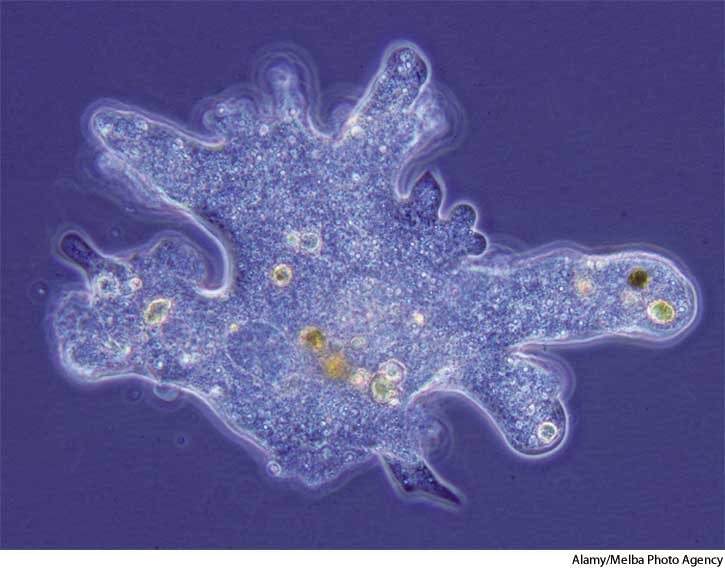
An Amoeba is a unicellular, animal-like protist that lives in ponds and streams. According to cell theory, where did this cell come from?
a)
another pre-existing amoeba cell.
b)
energy from sun that allowed the protist to reproduce.
c)
a multicellular organism.
d)
the nonliving environment.
15.

Robert Hooke, Anton van Leeuwenhoek, Theodor Schwann, Rudolf Virchow, and Matthias Schliden were all responsible for what theory?
a)
The Theory of Gravity
b)
The Theory of Relativity
c)
The Cell Theory
d)
The Theory of Continental Drift
16.

What tool do you use to view the cells?
a)
metric ruler
b)
centrifuge
c)
microscope
d)
telescope
17.
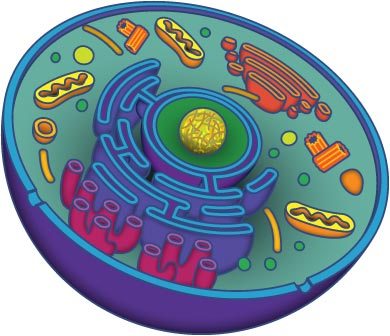
All living things are made up of...
a)
cells
b)
cell tissues
c)
organ
d)
organ systems
18.
All cells come from___________ cells.
a)
pregnant
b)
pre-existing
c)
paternal
d)
pin size
19.
An organism made of one cell is called
a)
unicellular organism
b)
multicellular organism
20.
what is a cell classified as?
a)
a basic unit of structure and function of all living organisms
b)
a unit based on only plants and animals that are living
21.
In order to sustain life, all cells must...
a)
digest nutrients and water
b)
excrete waste and fluids
c)
must be able to maintain a homeostasis environment (aka cellular respiration and regulation)
d)
All of the above
22.
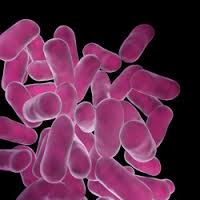
How are unicellular organisms different from multicellular organisms?
a)
There are no differences.
b)
They are made of many cells.
c)
They are only classified as prokaryotes.
d)
They are made of only one cell.
23.

This cell is simple. Only genetic material, cytoplasm and ribosomes inside.
a)
Eukaryotic
b)
Prokaryotic
c)
Plant
d)
Animal
24.

Complex cell. Can be plant or animal. Contains membrane bound organelles.
a)
Eukaryotic Cell
b)
Prokaryotic Cell
c)
Bacteria
d)
Blood cell
25.
This organelle protects/holds the DNA
a)
Mitochondria
b)
Chloroplasts
c)
Nucleolus
d)
Nucleus
26.
This function of this organelle is to break down glucose to make cell energy.
a)
Chloroplasts
b)
Mitochondria
c)
Nucleus
d)
ATP
27.
The function of this organelle is to store water. Large ones are found in plants.
a)
Lysosome
b)
Golgi Body
c)
Cytoplasm
d)
Vacuole
28.
This organelle traps sunlight and uses that energy to convert it to food.
a)
Mitochondria
b)
Chloroplasts
c)
Lysosomes
d)
Chlorophyll
29.
This is a green pigment found in plants.
a)
Chloroplasts
b)
Chlorophyll
c)
Cytoplasm
d)
MItochondria
30.
This cell sends one way chemical signals throughout the body.
a)
Nerve Cell
b)
Red Blood Cell
c)
White Blood Cell
d)
Xylem
31.
This plant structure is designed to allow water to move up/out to rest of plant
a)
Xylem
b)
Pholem
c)
Roots
d)
Leaves
32.
This plant structure is designed to allow glucose to be transported throughout the entire plant.
a)
Xylem
b)
Pholem
c)
Roots
d)
Leaves
33.
Specialized cells that absorb water by osmosis
a)
Nerve Cell
b)
Xylem
c)
Palisade Cell
d)
Root Hair Cell
34.
A structure which allows substances to pass into and out of the cell
a)
nucleus
b)
cytoplasm
c)
cell membrane
d)
mitochondria
35.
A structure not found in animal cells
a)
cell wall
b)
cell membrane
c)
nucleus
d)
mitochondria
36.
The site of photosynthesis
a)
cell wall
b)
mitochondria
c)
chloroplast
d)
cytoplam
37.
Found in most animal cells
a)
vacuole, cell membrane, mitochondria
b)
Mitochondria, chloroplast, nucleus
c)
cytoplasm, nucleus, mitochondria
d)
cell wall, cell membrane, nucleus
38.
Groups of similar cells that carry out a particular job are called:
a)
animals
b)
plants
c)
tissues
d)
organs
39.
Bacteria
a)
are multicellular and have a nucleus
b)
are multicellular and don't have a nucleus
c)
are unicellular and have a nucleus
d)
are unicellular and don't have a nucleus
40.
Amoeba
a)
are multicellular and have a nucleus
b)
are multicellular and don't have a nucleus
c)
are unicellular and have a nucleus
d)
are unicellular and don't have a nucleus
41.

thin cell covering that holds the parts of the cell together
a)
cell membrane
b)
cell wall
c)
cell
d)
mitochondria
42.

rigid non-living wall that surrounds the plasma membrane and encloses and supports the cells of most plants
a)
mitochondria
b)
nucleus
c)
cell membrane
d)
cell wall
43.

thin structures that contain most of all of an individual's makeup
a)
chloroplasts
b)
chromosomes
c)
cell wall
d)
cell membrane
44.
What structures make plant cells appear green?
a)
ribosomes
b)
cell membranes
c)
chloroplasts
d)
mitochondria
45.
Cell membrane
a)
surrounds the cell
b)
protects the cell from harmful chemicals or other cells
c)
allows materials and substances to pass in or out of the cell
d)
all of these answers
46.
Cell wall
a)
rigid outer layer of animal cell that protects it and gives it its shape
b)
rigid outer layer of plant cell that protects it and gives it its shape
c)
innermost layer of cell membrane that
d)
none of these answers
47.
Chloroplast
a)
plant organelle responsible for photosynthesis
b)
plant organelle that gives plants their green color
c)
organelle found only in plant or plant-like cells
d)
all of these answers
48.

What is the total magnification of a microscope with two lenses when one lens has a magnification of 10x, and the other lens has a magnification of 30x?
a)
15x
b)
30x
c)
40x
d)
300x
49.
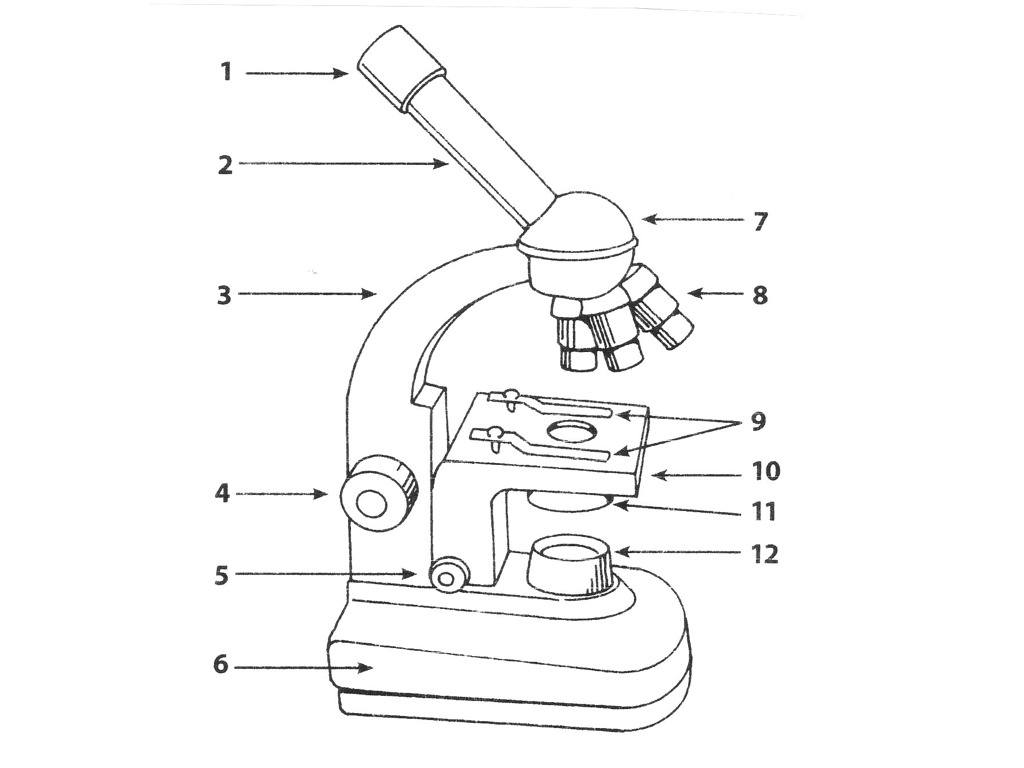
A microscope is an instrument that.
a)
makes faraway objects look closer.
b)
makes small objects appear larger.
c)
decreases the size of small objects.
d)
increases the size of small objects.
50.

If the eyepiece of your scope has a power of 10, and the selected objective lens has a power of 20,what is the total magnification?
a)
20x
b)
30x
c)
200x
d)
2000x
51.

If you move the slide left while viewing, in which direction will it appear to move?
a)
right
b)
left
c)
up
d)
down
52.

If your teacher asks you to move a microscope to table, how do you carry it?
a)
by the body tube and the eyepiece
b)
with one hand
c)
one hand on the arm and the other under the base
d)
with one hand on the base and the other on the eyepiece.
53.

What is part 1?
a)
eye piece
b)
body tube
c)
arm
d)
coarse adjust
54.

What part is 3?
a)
eye piece
b)
base
c)
arm
d)
coarse adjust
55.

What part is 5?
a)
coarse adjustment
b)
fine adjustment
c)
diaphragm
d)
stage
56.

What is part 6?
a)
arm
b)
base
c)
body tube
d)
illuminator
57.
Hold the slide in place on the stage
a)
Stage
b)
Stage Clips
c)
Aperature
d)
Light Source
58.
Moves the stage slightly to sharpen the image
a)
Body Tube
b)
Course Focus Knob
c)
Aperature
d)
Fine Focus Knob
59.
Place where slide is placed on while being viewed
a)
Base
b)
Stage Clips
c)
Diaphragm
d)
Stage
60.
What power do you start with when using a microscope?
a)
High power
b)
Medium power
c)
Low power
d)
Extra high power
61.
Who was the person who used his microscope to observe a thin slice of cork, and concluded that the cork was made up of cells?
a)
Robert Hooke
b)
Bill Nye
c)
Matthias Schleiden
d)
Rudolf Virchow
62.
Which scientist came up with the first IDEA for a microscope?
a)
Janssen
b)
Leewenhoek
c)
Hooke
d)
Bill Nye
(BILL BILL BILL)
(BILL BILL BILL)
100 %

