wayground logo

Free Printable Worksheets

Font size

S
M
L
XL
Worksheets

Earth and Space Final (practice)

Total questions: 201

Worksheet time: 4hrs 35mins

Name
Class
Date
1.
Which of the following is the BEST example of convection currents?
a)
Eating cereal
b)
Riding a bike
c)
Boiling soup on the stove
d)
The Earth spinning on its axis
2.
About how long does it take the moon to make one complete cycle around the earth?
a)
65 days
b)
8 days
c)
365 days
d)
29.5 days
3.
Which season is taking place in the Northern Hemisphere in Position 4?
a)
Winter
b)
Spring
c)
Summer
d)
Fall
4.
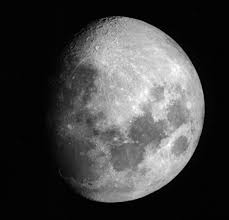
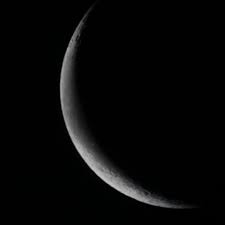
Name the moon phase
a)
waning crescent
b)
waxing crescent
c)
waning gibbous
d)
waxing gibbous
5.
Name the moon phase
a)
waning crescent
b)
waxing crescent
c)
waning gibbous
d)
waxing gibbous
6.
What causes smog?
a)
The burning of particulates
b)
The formation of ozone
c)
Acid Rain
d)
the interaction of sunlight with pollutants produced by fossil fuels
7.
The largest planet is
a)
Jupiter
b)
Saturn
c)
Neptune
d)
Pluto
8.
The hottest planet is 
a)
Venus
b)
Earth
c)
Mercury
d)
Mars
9.
Which is NOT an example of conduction?
a)
a pot cooking on a stove
b)
holding an ice cube
c)
walking on hot sand
d)
air from an air vent
10.
What energy process is causing the fish to cook?
a)
convection
b)
conduction
c)
radiation
d)
induction
11.
How is heat transferred through convection?
a)
direct contact
b)
empty space
c)
heat rising and cool falling
d)
particles bumping into each other
12.
How is heat transferred through conduction?
a)
Direct contact
b)
Empty space
c)
Heat rising
d)
Cold falling
13.
In our solar system, what is it that separates the inner and outer planets? 
a)
the sun
b)
the moon
c)
the asteroid belt
d)
the milky way
14.
What is true during a lunar eclipse?
a)
the moon has stopped rotating
b)
the moon is reflecting the sun's light
c)
the moon is in the shadow of the Earth
d)
the moon is reflecting the sun's light on the dark side
15.
Kiley touched her hand to a hot pan. This is an example of:
a)
Conduction
b)
Convection
c)
Radiation
d)
Fission
16.

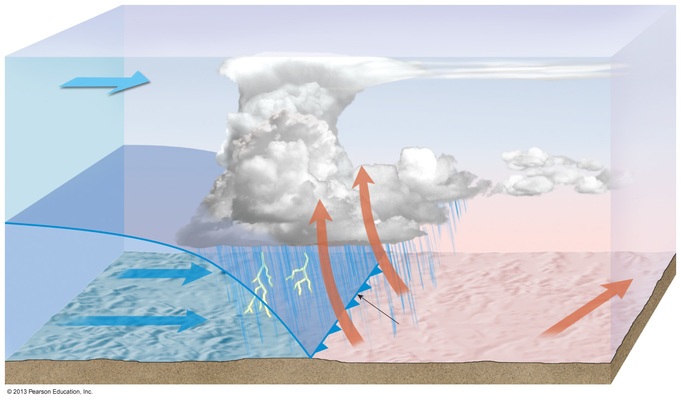
Which cloud is most likely to produce thunderstorms?

a)
b)
c)
d)
17.

What is the current pressure reading?

a)

76

b)

80

c)

129

d)

20

18.

The hottest stars

a)

include earth's sun.

b)

are less massive.

c)

are furthest from the sun.

d)

are the brightest stars.

19.

Why do the planets move around the sun?

a)

The sun's atmosphere is powerful.

b)

The sun has a strong gravitational pull.

c)

The sun has strong radiation.

d)

The sun gives off a lot of energy.

20.

Why do we only see one side of the moon?

a)

The moon rotates at the same speed the earth rotates.

b)

The moon doesn't rotate.

c)

The moon rotates at the same speed it revolves around earth.

d)

The moon revolves at the same pace the earth rotates on its axis.

21.

Helium in the sun is produced from

a)

nuclear fusion.

b)

changing hydrogen from a liquid to a gas

c)

chemical reaction

d)

nuclear fission

22.

For condensation to take place, water droplets need to cling to

a)

dust

b)

heat

c)

ice

d)

wind

23.

Of the terrestrial planets, Earth and Venus are which of the following?

a)

about the same size

b)

different in density

c)

similar to gas planets

d)

very different in size

24.

All of the planets in our solar system, except Venus and Uranus, have this in common:

a)

they orbit the sun in a counter clockwise direction

b)

they all have at least one moon

c)

they all support life forms

d)

they are all about the same size

25.

Which process leads a star to glow and produce energy?

a)

nuclear fission

b)

nuclear fusion

c)

gravitational pull

d)

protostar development

26.

The pressure in Troy Missouri on Christmas is 32 mm Hg and in Hawk Point it is 29 mm Hg. This is actually quite a large difference in pressure!

a)

There will be no wind

b)

There will be really really fast winds

c)

Wind speed will be about average

d)

None of these

27.

About how old is the universe?

a)

14 million

b)

14 billion

c)

300 thousand

d)

5 million

e)

500

28.

Which of the following are greenhouse gases?

a)

carbon dioxide, methane, water vapor

b)

carbon dioxide, methane, oxygen, argon

c)

methane, nitrogen, helium

d)

water vapor, ice crystals

e)

nitrogen, oxygen, carbon dioxide

29.
What will the Sun become at the end of its lifecycle?
a)
red giant
b)
red dwarf
c)
white dwarf
d)
super nova
30.
What is the term used for a cloud of gas and dust?
a)
gas giant
b)
solar dust
c)
solar cloud
d)
nebula
31.
What is the correct order for describing the stages of the aging of the Sun?
a)
A, B, then C
b)
A, C, then B
c)
B, C then A
d)
B, A then C
32.
What two factors are primarily used to describe climate?
a)
temperature and density
b)
temperature and precipitation
c)
precipitation and density
d)
winds and humidity
33.
The Coriolis Effect is caused by
a)
Earth rotating around the sun
b)
Earth rotating on its axis
c)
The tides
d)
Gravity
34.

a body of air that has a consistent temperature and moisture content

a)

front

b)

low pressure

c)

airmass

d)

high pressure

35.
the temperature at which air's relative humidity is 100%
a)
precipitaion
b)
dew point
c)
humidity
d)
rain
36.

a day during which the sun's direct rays point toward the equator

a)

solstice

b)

equinox

c)

equator

d)

latitude

37.
the boundary between two air masses
a)
cloud
b)
dew
c)
air pressure
d)
front
38.
the amount of water vapor in the air
a)
dew
b)
precipitation
c)
cloud
d)
humidity
39.

Why does Earth have seasons?

a)

the sun's axis is tilted

b)

the moon revolves around it

c)

its axis is tilted as it revolves around the sun

40.

The ______________ is the source of all energy in our atmosphere.

a)

Sun

b)

moon

c)

coriolis effect

41.

Which of the following is typical of a tropical climate?

a)

cool, moist air

b)

cold, dry air

c)

warm, moist air

42.

What is the main cause of ocean tides?

a)

change in water temperature

b)

the gravitational pull of the moon

c)

heat from the sun

43.

Why are tides continually rising and lowering every day?

a)

because the position of the moon is constantly changing

b)

because the direction of the wind is constantly changing

c)

because deep ocean currents are constantly changing

44.

What is a benefit Earth gets from having a magnetic field?

a)

It makes auroras

b)

It helps us see the stars at night

c)

It protects us from solar winds from the sun

d)

It keeps our atmosphere from escaping into space

45.
What causes the temperature to increase in the stratosphere?
a)
Nitrogen
b)
Ozone
c)
Water Vapor
d)
carbon dioxide
46.
What decreases as you go up in the atmosphere?
a)
Altitude
b)
Atmosphere
c)
Meteors
d)
Air Pressure
47.
Which of the following is the correct order of the atmosphere layers from Earth to space?
a)
troposphere, stratosphere, mesosphere, thermosphere, exosphere
b)
troposphere, mesosphere, thermosphere, exosphere, stratosphere
c)
thermosphere, stratosphere, mesosphere, troposphere, exosphere
d)
troposphere, stratosphere, mesosphere, exosphere, thermosphere
48.
Which best explains why the moon has phases?
a)
The moon’s position changes in relation to the sun and Earth. 
b)
The sun’s position changes in relation to the moon and Earth. 
c)
The Earth casts a shadow on the moon as it rotates. 
d)
The moon rotates along its axis
49.
Which outer planets have rings?
a)
Just Saturn
b)
Saturn and Jupiter
c)
Jupiter, Neptune, and Saturn
d)
all 4 of them
50.

What is the pressure?

a)

138

b)

55

c)

76

d)

3

51.

What is the wind speed?

a)

138

b)

20

c)

76

d)

3

52.

What is the percentage of cloud cover?

a)

50

b)

75

c)

100

d)

0

53.

What is NOT an interaction between the Earth and the Sun?

a)

Seasons

b)

Ocean Currents

c)

Climate

d)

Mineral deposits

54.
Why do other stars appear so much smaller than the sun?
a)
They are much smaller
b)
They are so far away
c)
They are not as bright
d)
They are dwarf stars
55.

Heat transfer through electromagnetic waves

a)

Conduction

b)

Radiation

c)

Convection

56.

Heat Transfer through density differences

a)

Conduction

b)

Convection

c)

Radiation

57.
About how long does it take the moon to make one complete cycle around the earth?
a)
65 days
b)
8 days
c)
365 days
d)
28 days
58.
What Moon phase is this?
a)
Waxing Crescent
b)
Waning Gibbous
c)
Waxing Gibbous
d)
Waning Crescent
59.
What Moon phase is this?
a)
Waxing Crescent
b)
Waning Gibbous
c)
Waning Crescent
d)
Waxing Gibbous
60.
In which layer of the atmosphere does weather occur?
a)
Mesosphere
b)
Thermosphere
c)
Stratosphere
d)
Troposphere
61.
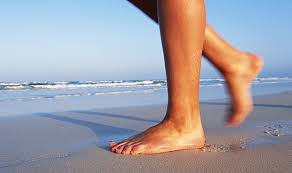
Walking on the warm sand sand with your bare feet demonstrates this type of heat transfer. 
a)
conduction
b)
convection
c)
radiation
62.
Which is the best example of conduction?
a)
hot air blow drying hair
b)
sun heating up a car
c)
water boiling on the stove
d)
ice cube melting in your hand
63.
What causes warm air to rise?
a)
the fact that it's less dense than cold air 
b)
The fact that it weighs more than cold air 
c)
The fact that it has higher pressure than cold
d)
the fact that its more dense than cold air 
64.
When the Northern Hemisphere of Earth is Leaning away from the Sun, What season is the Southern Hemisphere experiencing?
a)
Summer
b)
Winter
c)
Spring
d)
Fall
65.
The line up for a solar eclipse is: 
a)
Sun-Earth-Moon
b)
Earth-Sun-Moon
c)
Sun-Moon-Earth
d)
Earth-Moon-Mars
66.

What causes an eclipse of the moon?

a)

When the sun is between moon and earth

b)

When the moon is in between earth and sun

c)

When the earth is in between moon and sun

d)

When sun, moon and earth creates a right angle position

67.

the rising and falling of ocean water due to gravity

a)

ocean currents

b)

waves

c)

tides

d)

inertia

68.

A solar eclipse occurs when the Moon passes between Earth and the Sun. During which phase of the lunar cycle can a total solar eclipse occur?

a)

full moon

b)

new moon

c)

waning gibbous

d)

waxing gibbous

69.

Which of the following statements best explains how the Sun and the Solar System formed?

a)

They were formed from an explosion of gas and rocks.

b)

They were formed from matter collecting in a molecular cloud.

c)

They were formed from a large star breaking into smaller pieces.

d)

They formed from many collisions of rocks in space until enough matter collected to attract hydrogen.

70.

The new moon is the phase in which the “far side” of the Moon is illuminated, while the Earth-facing side is in darkness. Which letter in the figure corresponds to the new-moon phase of the lunar cycle?

a)

Position A

b)

Position B

c)

Position C

d)

Position D

71.
_______________ is the atmospheric conditions over a short period of time, reported as a forecast.
a)
Weather
b)
Climate
c)
Temperature
d)
Humidity
72.
As the air temperature increases, the air's capacity for water vapor: 
a)
increases
b)
decreases
c)
remains the same
d)
is unrelated to air temperature and can either increase or decrease
73.
If the air is only holding one-third as much moisture as it can possibly hold, what is the relative humidity?
a)
50%
b)
25%
c)
33%
d)
67%
74.
Estimate the relative humidity (%) if the air temperature is 23 degrees C and the humidity is 15g. (USE YOUR BLUE HUMIDITY GRAPH)
a)
15%
b)
23%
c)
75%
d)
100%
75.
Estimate the relative humidity (%) if the air temperature DROPS TO 18 degrees C and the humidity stays at  15g. (USE YOUR BLUE HUMIDITY GRAPH)
a)
15%
b)
18%
c)
75%
d)
100%
76.
A dry-bulb temperature of 30°C and a wet-bulb temperature of 29°C were recorded at a weather station. What are the relative humidity and the most likely weather conditions? (use your dry-bulb-wet bulb chart)
a)
Relative humidity is 29% with clear skies
b)
 Relative humidity is 29% with a good chance of snow
c)
Relative humidity is 93% with clear skies.
d)
 Relative humidity is 93% with a good chance of rain.
77.
Air has a dry-bulb temperature of 2 °C and a wet-bulb temperature of -2 °C, what is the relative humidity?
a)
11%
b)
20%
c)
36%
d)
67%
78.
Clouds are classified by their
a)
color and size
b)
color and shape
c)
height and size
d)
height and shape
79.
When warm moist air moves inland up the side of a mountain, _______ has occurred to form clouds.
a)
convective cooling
b)
frontal wedging
c)
orographic lifting
d)
evaporation
80.
f the air had 2 grams of vapor, what percent would the relative humidity be? 
a)
 20%
b)
25%
c)
2%
d)
 2.5%
81.
The temperature at which air is saturated with water vapor and condensation occurs is called
a)
humidity
b)
air pressure
c)
dew point
d)
relative humidity
82.
Coriolis effect
a)
caused by Earth's rotation
b)
caused by Earth's revolution
c)
caused by Earth's tilt
d)
caused by Earth's winds
83.
Some Solar radiation doesn't reach Earth because _____
a)
it is reflected off particles in the atmosphere
b)
it is absorbed by clouds and particles in the atmosphere
c)
it is reflected off clouds
d)
all are correct
84.
Heated air moves which direction
a)
up
b)
down
c)
right
d)
left
85.
What is the function of the ozone layer?
a)
to allow UV rays to get to Earth
b)
to block UV rays from getting to Earth
c)
To keep oxygen in
d)
to allow meteors to get to Earth
86.
As you go higher in the troposphere, the temperature _______________.
a)
decreases
b)
increases
c)
stays the same
d)
gets very hot
87.
This is the layer where most commercial jet airliners fly.
a)
Troposphere
b)
Stratosphere
c)
Mesosphere
d)
Thermosphere
88.
This is the layer where meteors, or shooting stars, burn up.
a)
Troposphere
b)
Stratosphere
c)
Mesosphere
d)
Thermosphere
89.
What is the order of the atmospheres from closest to earth to the farthest away from earth?
a)
Troposphere, Stratosphere, Mesosphere, Thermosphere
b)
Stratosphere, Troposphere, Thermosphere, Mesosphere
c)
Troposphere, Mesosphere, Thermosphere, Stratosphere, 
d)
Atmosphere, Mesosphere, Troposphere, Thermosphere
90.

Paleoclimatologists study the climate and its changes throughout Earth’s history. What observation by paleoclimatologists led scientists to predict that the average temperature of the planet is rising due to the combustion of fossil fuels?

a)

increases in average temperatures with increasing volcanic activity

b)

direct correlation between atmospheric carbon dioxide level and global temperature

c)

a recent rise in global temperature as atmospheric pollution increased

d)

changes in sea level that correspond to average global temperature

91.

The graph above shows global carbon dioxide emissions and how temperatures have varied from the mean temperature. Which conclusion is scientifically valid and supported by the empirical evidence reported in the graph?

a)

The increase in mean temperature directly resulted in an increase of carbon dioxide emissions.

b)

The increase in mean temperature directly resulted in a decrease of carbon dioxide emissions.

c)

The increase in carbon dioxide emissions directly resulted in an increase of mean temperature.

d)

The increase in carbon dioxide emissions directly resulted in a decrease of mean temperature.

92.

Which type of eclipse is shown here?

a)

Lunar Eclipse

b)

Solar Eclipse

93.

Which type of eclipse is shown in the diagram?

a)

Lunar Eclipse

b)

Solar Eclipse

94.
**According to the diagram, where will high ocean tides and low ocean tides most likely be located?
a)
high tides at A and B; low tides at C and D
b)
high tides at B and D; low tides at A and C
c)
high tides at A and C; low tides at B and D
d)
high tides at C and D; low tides at A and B
95.
Which type of air mass would most likely form over the northern Pacific Ocean?
a)
mP
b)
cP
c)
mT
d)
cT
96.
Approximately how many years ago did Earth and other planets in our solar system form?
a)
8.2 billion years ago
b)
542 million years ago
c)
13.8 billion years ago
d)
4600 million years ago
97.
Which process produces the largest amount of energy given off by stars?
a)
nuclear fusion of lighter elements into heavier elements
b)
nuclear fusion of heavier elements into lighter elements
c)
radioactive decay of lighter elements into heavier elements
d)
radioactive decay of heavier elements into lighter elements
98.
During explosive volcanic eruptions, large amounts of ash entering Earth’s atmosphere often rise to an altitude of 20 kilometers. What is the most likely effect of this ash cloud?
a)
a decrease in the insolation reaching Earth’s surface
b)
a decrease in the thickness of Earth’s stratosphere layer
c)
an increase in the insolation reaching Earth’s surface
d)
an increase in the thickness of Earth’s stratosphere layer
99.
What type of front is this? What direction is it moving in?
a)
warm front, northwest
b)
warm front, southeast
c)
cold front, northwest
d)
cold front, southeast
100.
Cool air. Does it rise or sink?
a)
It rises.
b)
It sinks.
101.
What direction does high pressure move?
a)
clockwise
b)
counterclockwise
102.
What direction does low pressure move in?
a)
clockwise
b)
counterclockwise
103.
An air mass formed over an ocean is 
a)
continental
b)
maritime
104.
An air mass that formed over land is
a)
continental
b)
maritime
105.
A continental polar air mass is
a)
moist and warm
b)
moist and cold
c)
dry and warm
d)
dry and cold
106.
A maritime tropical air mass is 
a)
moist and warm
b)
moist and cold
c)
dry and warm
d)
dry and cold
107.
Which direction is the warm front travelling?
a)
north
b)
south
c)
west
d)
east
108.

The revolution of the moon around the Earth causes the moon's shape to seem to change.

a)

True

b)

False

109.

What causes the phases of the moon that we see from Earth?

a)

The moon's rotation on its axis

b)

The moon's revolution around Earth

c)

The Earth's rotations on its axis

d)

The Earth's revolution around the Sun

110.

Half of the moon always faces the sun.

a)

True

b)

False

111.

What is the name of this phase of the moon?

a)

First quarter moon

b)

Waxing crescent moon

c)

Third quarter moon

d)

New Moon

112.

Which phase of the moon is represented here?

a)

First quarter moon

b)

New Moon

c)

Full Moon

d)

Third quarter moon

113.

What is the name of this phase of the moon?

a)

Waxing crescent moon

b)

Waning crescent moon

c)

Third quarter moon

d)

First quarter moon

114.

Which phase of the moon is represented here?

a)

Full Moon

b)

New moon

c)

Third quarter moon

d)

First quarter moon

115.

What is the name of this moon phase?

a)

First quarter moon

b)

Third quarter moon

c)

Waxing gibbous moon

d)

Waning gibbous moon

116.

What phase of the moon is represented here?

a)

Waxing crescent moon

b)

First quarter moon

c)

Waning gibbous moon

d)

Waning crescent moon

117.

Which moon phase is represented in this photo?

a)

Third quarter moon

b)

New moon

c)

Waning gibbous moon

d)

Full moon

118.

What phase of the moon is pictured here?

a)

Waxing gibbous moon

b)

First quarter moon

c)

Waning gibbous moon

d)

Third quarter moon

119.
Weathering is caused by......
a)
sun
b)
rain
c)
wind
d)
All of the above
120.
If the air temperature is 20°C and the relative humidity is 58%, what is the dewpoint?
a)
5°C
b)
12°C
c)
15°C
d)
38°C
121.
Which weather station model shows the highest relative humidity?
a)
1
b)
2
c)
3
d)
4
122.
Which station model represents a location that is currently receiving some form of precipitation?
a)
1
b)
2
c)
3
d)
4
123.
The altitude of the ozone layer near the South Pole is 20 kilometers above sea level. Which temperature zone of the atmosphere contains this ozone layer?
a)
troposphere
b)
stratosphere
c)
mesosphere
d)
thermosphere
124.

When cold air pushes up warm air it caused thunderstorms. What type of front is this?

a)

cold

b)

warm

c)

stationary

d)

occluded

125.

The graph shows the relationship between temperature and water vapor in the air. What can you conclude from this graph?

a)

temperature has no effect on humidity

b)

the water the air is, the less water vapor it can hold

c)

as the temperature of the air increases, the amount of water vapor in the air decreases

d)

as the temperature of the air decreases, the amount of water vapor in the air decreases

126.

Which of the moons in the figure are in a crescent phase?

a)

2 and 4

b)

2 and 8

c)

4 and 6

d)

6 and 8

127.

What is the primary atomic reaction that takes place within the sun and converts hydrogen atoms into helium atoms?

a)

nuclear fusion

b)

atomic fusion

c)

particle radiation

d)

nuclear radiation

128.

The diagram below shows models of the gas giants that include the tilt of each axis of rotation. Which gas giant does model 1 represent?

a)

Jupiter

b)

Mercury

c)

Neptune

d)

Uranus

129.
What type of storm front is this? 
a)
warm front
b)
cold front
c)
stationary front
d)
occluded front
130.
A front is
a)
where warm air is cooling at earth's surface
b)
a line where hot and cold air are separating
c)
a line where two different air masses meet
d)
where cold air is rising and forming rain clouds
131.
Which most likely produces clear, cool weather?
a)
zero air pressure
b)
stable air pressure
c)
a low pressure system
d)
a high pressure system
132.

True or false: When the Sun's rays strike Earth at a lower angle, such as in the subtropics and polar regions, the same energy is spread out over a much larger area than when the rays strike Earth more directly.

a)

True

b)

False

133.

What type of front is the result of a cold air mass moving rapidly and overtaking a warm front?

a)

cold front

b)

occluded front

c)

stationary front

d)

warm front

134.

The heat energy involved in the change of state, or phase, in water is

a)

mechanical heat.

b)

sensible heat.

c)

fusion heat.

d)

latent heat.

135.

Relative humidity is

a)

the amount of water vapor in the air compared to the average amount.

b)

the amount of moisture in the air relative to your one's senses.

c)

the amount of water vapor in the air relative to the water vapor capacity of the air.

d)

the amount of water in the air per volume of air.

136.

A mass of air always becomes saturated when it reaches the

a)

highest temperature of the day.

b)

lowest temperature of the day.

c)

specific humidity point.

d)

dew-point temperature.

137.

An air parcel is considered unstable when it

a)

either remains as it is, or changes its initial position.

b)

continues to rise until it reaches an altitude at which the surrounding air has a similar temperature.

c)

resists displacement upward.

d)

ceases to ascend.

138.

A thunderstorm is associated with ________ clouds.

a)

cirrostratus

b)

stratocumulus

c)

cumulonimbus

d)

altostratus

139.
When a lunar eclipse occurs, the moon is in which phase? 
a)
New Moon
b)
Waxing crescent
c)
Waning gibbous
d)
Full moon
140.
According to the nebular hypothesis, our solar system formed from a huge rotating cloud made mostly of _________ and _________.
a)
Carbon and hydrogen
b)
Helium and hydrogen
c)
Oxygen and helium
d)
Nitrogen and oxygen
141.

Why does the area around the equator stay the same temperature all year?

a)

The equator rotates slower than the poles.

b)

The equator remains the same distance from the sun.

c)

The equator always receives direct sunlight.

d)

The equator has 18 hour days.

142.
What type of tides would this arrangement of earth-moon-sun create?
a)
neap tide
b)
spring tide
c)
new moon tide
d)
full moon tide
143.
If tides alternate from high to low and there are two of each type of tide a day, about how many hours will generally be between each different tide?
a)
2 hours
b)
6 hours
c)
12 hours
d)
24 hours
144.
Which body has the greater effect on Earth's tides?
a)
Sun
b)
Saturn
c)
Moon 
d)
Venus
145.
How does the sun creates energy?
a)
fusion of Hydrogen nuclei to Helium in the core of the sun
b)
fission of Hydrogen nuclei to Helium in the core of the sun
c)
Fusion of Helium nuclei to Hydrogen in the core of the sun
146.
What is the Earth's tilt in degrees?
a)
25.3 degrees
b)
32.5 degrees
c)
28.5 degrees
d)
23.5 degrees
147.
How does the warm waters of the Gulf Stream affect the climate in North Carolina? 
a)
It makes it colder and drier
b)
It makes it warmer and wetter
c)
It makes it colder and wetter
d)
It makes it warmer and drier
148.
Which planets have rings?
a)
All Jovian planets.
b)
Only Saturn.
c)
Saturn and Uranus.
d)
Saturn and Neptune.
149.
What Moon phase is this?
a)
Waning Crescent
b)
Waxing Crescent
c)
Waxing Gibbous
d)
Waning Gibbous
150.
A solar eclipse can occur only during the _________________.
a)
Full moon
b)
New moon
c)
Quarter moon
151.
Why do the Sun and Moon appear to be the same size in the sky?
a)
The Sun is 400 times bigger, but the Moon is 100 times closer.
b)
The Sun is 100 times bigger, but the Moon is 400 times closer.
c)
The Sun is 400 times bigger, but the Moon is 400 times closer.
d)
The Moon is 400 times bigger, but the Sun is 400 times closer.
152.

What prevents the sun from exploding outward due to nuclear fusion?

a)

the pull of the planets in the solar system

b)

the sun's atmosphere

c)

the pull of its gravity

d)

the mass of the sun

153.

what happens during nuclear fusion

a)

Helium atoms break down to make Hydrogen

b)

Hydrogen reacts with Oxygen to create fire

c)

Hydrogen atoms are forced together to create Helium

d)

Uranium and Plutonium split apart and release radiation

154.

You visited the beach at 12 pm (noon) and it is high tide. If you return 6 hours later what tide will you see?

a)

high

b)

low

155.
What is the tilt of the Moon's orbit with respect to the Earth's orbit with the Sun?
a)
23.5 degrees
b)
2 degrees
c)
8 degrees
d)
5 degrees
156.
When we look at the sun, what layer are we viewing?
a)
photosphere
b)
chromosphere
c)
corona
d)
convection zone
157.
The Nebular Theory is:
a)
A theory on how the Milky Way galaxy was formed
b)
A theory on how the universe was formed
c)
A theory on how the solar system will be destroyed
d)
A theory on how the solar system was formed
158.

Why do we only see one side of the moon

a)

Light doesn't illuminate the other side of the moon

b)

The angle at which earth faces the moon doesn't allow for illumination of the opposite side of the moon

c)

The moon is tidally locked due to the gravitational pull of the earth

d)

The moon period of revolution is too slow due to the sun's gravitation pull on the moon.

159.

Air masses will continue to rise as long as:

a)

they are cooler than the surrounding air

b)

they are warmer than the surrounding air.

c)

they have more water than the surrounding air

d)

they have less water than the surrounding air

160.

At 25 C, air can hold 23 grams of water vapor. If the air had 16 grams of water vapor, what would the relative humidity be?

a)

25%

b)

70%

c)

64%

d)

92%

161.

What is the relative humidity when the dry-bulb temperature is 22°C and the wet-bulb temperature is 16°C?

a)

47%

b)

61%

c)

54%

d)

64%

162.
As the air temperature increases, the air's capacity for water vapor: 
a)
increases
b)
decreases
c)
remains the same
d)
is unrelated to air temperature and can either increase or decrease
163.

if you keep water content the same and increase the air temperature, RH will ______.

a)

increase

b)

stay the same

c)

decrease

d)

increase, then decrease

164.

As the DPT approaches the Air Temperature the chances of rain will

a)

not change

b)

increase

c)

decrease

d)

increase then decrease

165.
Locations in the Northern Hemisphere are warmest in summer because sunlight in summer is
a)
least intense and of shortest duration
b)
least intense and of longest duration
c)
most intense and of shortest duration
d)
most intense and of longest duration
166.

Insolation varies with:

1) Angle 2) Duration 3) Transparency of Atmosphere

a)

1) and 2) only

b)

1) and 3) only

c)

2) and 3) only

d)

1), 2) and 3)

167.

Latent heat is

a)

the heat absorbed or released at a boiling process during a change of phase

b)

the heat absorbed or released at a constant temperature during a change of phase

c)

the heat absorbed or released at a constant temperature during a change of phase of 1 kg object

d)

the heat absorbed or released by an object to increase or decrease its temperature by 1 degree Celcius

168.

For condensation to take place, water droplets need to cling to

a)

dust

b)

heat

c)

ice

d)

wind

169.
What will the Sun become at the end of its lifecycle?
a)
red giant
b)
red dwarf
c)
white dwarf
d)
super nova
170.
The Coriolis Effect is caused by
a)
Earth rotating around the sun
b)
Earth rotating on its axis
c)
The tides
d)
Gravity
171.
What two factors are primarily used to describe climate?
a)
temperature and density
b)
temperature and precipitation
c)
precipitation and density
d)
winds and humidity
172.
Which of the following is the correct order of the atmosphere layers from Earth to space?
a)
troposphere, stratosphere, mesosphere, thermosphere, exosphere
b)
troposphere, mesosphere, thermosphere, exosphere, stratosphere
c)
thermosphere, stratosphere, mesosphere, troposphere, exosphere
d)
troposphere, stratosphere, mesosphere, exosphere, thermosphere
173.

What is the pressure?

a)

138

b)

55

c)

76

d)

3

174.

What is the wind speed?

a)

138

b)

20

c)

76

d)

3

175.
Walking on the warm sand sand with your bare feet demonstrates this type of heat transfer. 
a)
conduction
b)
convection
c)
radiation
176.
What causes warm air to rise?
a)
the fact that it's less dense than cold air 
b)
The fact that it weighs more than cold air 
c)
The fact that it has higher pressure than cold
d)
the fact that its more dense than cold air 
177.
Estimate the relative humidity (%) if the air temperature is 23 degrees C and the humidity is 15g. (USE YOUR BLUE HUMIDITY GRAPH)
a)
15%
b)
23%
c)
75%
d)
100%
178.
A dry-bulb temperature of 30°C and a wet-bulb temperature of 29°C were recorded at a weather station. What are the relative humidity and the most likely weather conditions? (use your dry-bulb-wet bulb chart)
a)
Relative humidity is 29% with clear skies
b)
 Relative humidity is 29% with a good chance of snow
c)
Relative humidity is 93% with clear skies.
d)
 Relative humidity is 93% with a good chance of rain.
179.
Clouds are classified by their
a)
color and size
b)
color and shape
c)
height and size
d)
height and shape
180.
The temperature at which air is saturated with water vapor and condensation occurs is called
a)
humidity
b)
air pressure
c)
dew point
d)
relative humidity
181.
Some Solar radiation doesn't reach Earth because _____
a)
it is reflected off particles in the atmosphere
b)
it is absorbed by clouds and particles in the atmosphere
c)
it is reflected off clouds
d)
all are correct
182.

Paleoclimatologists study the climate and its changes throughout Earth’s history. What observation by paleoclimatologists led scientists to predict that the average temperature of the planet is rising due to the combustion of fossil fuels?

a)

increases in average temperatures with increasing volcanic activity

b)

direct correlation between atmospheric carbon dioxide level and global temperature

c)

a recent rise in global temperature as atmospheric pollution increased

d)

changes in sea level that correspond to average global temperature

183.
**According to the diagram, where will high ocean tides and low ocean tides most likely be located?
a)
high tides at A and B; low tides at C and D
b)
high tides at B and D; low tides at A and C
c)
high tides at A and C; low tides at B and D
d)
high tides at C and D; low tides at A and B
184.

Which type of eclipse is shown in the diagram?

a)

Lunar Eclipse

b)

Solar Eclipse

185.
During explosive volcanic eruptions, large amounts of ash entering Earth’s atmosphere often rise to an altitude of 20 kilometers. What is the most likely effect of this ash cloud?
a)
a decrease in the insolation reaching Earth’s surface
b)
a decrease in the thickness of Earth’s stratosphere layer
c)
an increase in the insolation reaching Earth’s surface
d)
an increase in the thickness of Earth’s stratosphere layer
186.
Which direction is the warm front travelling?
a)
north
b)
south
c)
west
d)
east
187.
Which station model represents a location that is currently receiving some form of precipitation?
a)
1
b)
2
c)
3
d)
4
188.

When cold air pushes up warm air it caused thunderstorms. What type of front is this?

a)

cold

b)

warm

c)

stationary

d)

occluded

189.

Which of the moons in the figure are in a crescent phase?

a)

2 and 4

b)

2 and 8

c)

4 and 6

d)

6 and 8

190.
According to the nebular hypothesis, our solar system formed from a huge rotating cloud made mostly of _________ and _________.
a)
Carbon and hydrogen
b)
Helium and hydrogen
c)
Oxygen and helium
d)
Nitrogen and oxygen
191.

Relative humidity is

a)

the amount of water vapor in the air compared to the average amount.

b)

the amount of moisture in the air relative to your one's senses.

c)

the amount of water vapor in the air relative to the water vapor capacity of the air.

d)

the amount of water in the air per volume of air.

192.
Gravity pulls gases and dust particles in space toward one another, squeezing them into a smaller and smaller space. The temperature at the center rises high enough for nuclear fusion of hydrogen to begin.
What stage in a stars life cycle is this describing? 
a)
The birth of a star
b)
The death of a star
c)
Black Hole
d)
Stellar Nebula
193.
In the death of a large mass star gravitational collapse is so complete that no energy or matter can escape. This is called a... 
a)
Neutron Star
b)
Black Hole
c)
Black Dwarf
d)
Supernova
194.
A supernova can create a
a)
pulsar/neutron star
b)
black hole
c)
recycled star dust
d)
all of these
195.
Which of the following list the correct order of the life cycle of massive stars?
a)
Nebula --> protostar --> main sequence --> red supergiant --> supernova --> blackhole
b)
Nebula --> protostar --> main sequence --> red giant --> planetary nebula --> white dwarf --> black dwarf
c)
Nebula --> protostar --> main sequence --> supernova --> red giant --> blackhole
d)
Nebula --> protostar --> blackhole --> red supergiant --> supernova --> main sequence
196.

What stage of a star's life is this?

a)

Main Sequence

b)

Nebula

c)

Red Giant

d)

Supernova

197.

Insolation varies with:

1) Angle 2) Duration 3) Transparency of Atmosphere

a)

1) and 2) only

b)

1) and 3) only

c)

2) and 3) only

d)

1), 2) and 3)

198.
What is the dew point at this station?
a)
75 degrees
b)
61 degrees
c)
987 degrees
d)
11 degrees
199.
What is the Dew Point Temperature if the dry-bulb temperature on your sling psychrometer is 20ºC and the wet-bulb temperature is 15ºC?
a)
14ºC
b)
12ºC
c)
10ºC
d)
-18ºC
200.
Which planet is tipped on its side nearly 90 degrees?
a)
Jupiter
b)
Saturn
c)
Uranus
d)
Neptune
201.
Stars vary greatly in .........
a)
Size and temperature only
b)
Size and color only
c)
Size, color and temperature
d)
Color and temperature