wayground logo

Free Printable Worksheets

Font size

S
M
L
XL
Worksheets

ChemComm EOC review #2

Total questions: 90

Worksheet time: 2hrs 12mins

Name
Class
Date
1.

Since 2006, oil production in NM has....

a)

steadily increased

b)

steadily decreased

c)

stayed the same

d)

decreased and then increased.

2.

pH is the measure of

a)

acidity

b)

basicity

c)

voltage

d)

the rate of reaction

3.

Which chemical tastes bitter?

a)

Acid

b)

Base

4.

Which chemical tastes sour?

a)

Acid

b)

Base

5.

Which chemical produces hydrogen ions (H3O+) when mixed with water?

a)

Acid

b)

Base

6.

Which chemical produces hydroxide (-OH) when mixed with water?

a)

Acid

b)

Base

7.

Which chemical feels slippery on the skin?

a)

Acid

b)

Base

8.

Which pH number below reflects a weak acid?

a)

1

b)

6

c)

8

d)

13

9.

Which pH number below reflects a weak base?

a)

1

b)

6

c)

8

d)

13

10.

Which pH number below reflects a strong acid?

a)

1

b)

6

c)

8

d)

13

11.

This type of reaction absorbs thermal energy from its surroundings.

a)

endothermic

b)

exothermic

c)

decomposition

d)

synthesis

12.

This type of reaction releases thermal energy to its surroundings.

a)

endothermic

b)

exothermic

c)

decomposition

d)

synthesis

13.

After a chemical reaction, the beaker feels hot to the touch. This is likely a ____________ reaction.

a)

negative

b)

positive

c)

endothermic

d)

exothermic

14.
The rate of a reaction increases as temperature__________________.
a)
Decreases
b)
Increases
c)
Stays the Same
15.
Products will form faster if____________
a)
the particle size of the reactants are larger.
b)
temperature is decreased.
c)
concentration of the reactants are increased.
d)
the reaction is not stirred.
16.
A ______________ is a substance that increases the rate of a reaction without being used up during the reaction. 
a)
catalyst
b)
product
c)
reactant
d)
solute
17.
Catalysts permit reactions to proceed along a ___________energy path.
a)
lower
b)
higher
18.
Smaller particle size allows for a _________ surface area to be exposed for the reaction.
a)
larger
b)
smaller
19.
Increasing the temperature will increase the kinetic energy of particles, therefore increasing the collisions between particles.
a)
false
b)
true
20.

All of the following reactions are correctly balanced except-

a)

A

b)

B

c)

C

d)

D

21.
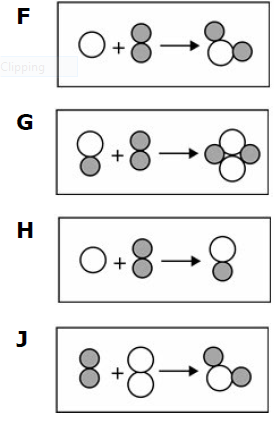
Which of the following models best demonstrates a balanced chemical equation?
a)
F
b)
G
c)
H
d)
J
22.

Coal contains carbon and other elements. Carbon dioxide forms when coal burns in the presence of oxygen. Which of these is the best evidence that a chemical reaction occurs when coal burns?

a)

The shape of the coal changes

b)

Oxygen is present

c)

A new substance is produced

d)

Coal is made up of more than one element

23.
The force that holds 2 atoms together is called a ________________.
a)
Chemical Reaction
b)
Chemical Bond
c)
Diatomic Chemical
d)
Glue
24.
Which of the following is a chemical change?
a)
water freezes to form ice
b)
sugar dissolves in water
c)
gasoline burns in a car engine
d)
a piece of metal expands when it is heated
25.

In the reaction methane + oxygen turns into carbon dioxide + water, the methane and oxygen are called _______________.

a)

reactants

b)

products

c)

neutrals

d)

energizers

26.

A change in the shape of an object is an example of _________________.

a)

a chemical change

b)

energy

c)

an endothermic change

d)

a physical change

27.

What type of change occurs when a new substance is formed that has different properties from the original substances?

a)

chemical change

b)

nuclear change

c)

physical change

d)

mutation

28.
Which of the following is an example of a physical change?
a)
souring milk
b)
mixing baking soda and vinegar
c)
rusting metal
d)
mixing oil and vinegar
29.
Which of the following is a chemical change?
a)
the rusting of iron
b)
dissolving salt in water
c)
melting an ice cube
d)
bending a copper wire
30.

Your mother used pancake mix, eggs, and milk to make pancakes. Which of these is the product?

a)

the pancake mix

b)

the eggs

c)

the milk

d)

the pancakes

31.

What tool do we use to measure temperature?

a)

Thermometer

b)

Ruler

c)

Balance

d)

Magnifying Glass

32.
Products will form faster if____________
a)
the particle size of the reactants are larger.
b)
temperature is decreased.
c)
concentration of the reactants are increased.
d)
the reaction is not stirred.
33.
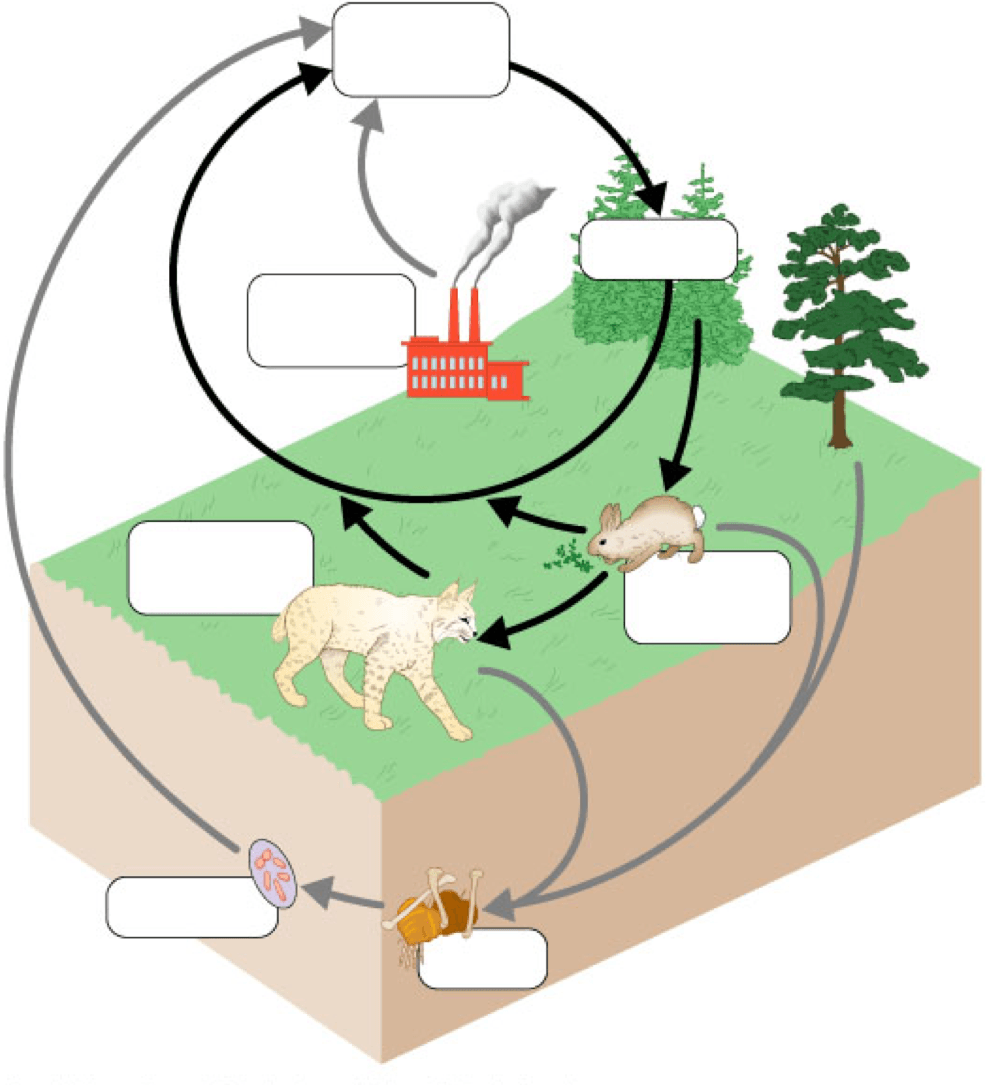
When humans burn fossil fuels, most of the carbon quickly enters the                       as carbon dioxide.
a)
Water
b)
Atmosphere
c)
Sun
d)
Air
34.
In what process is Carbon transformed into chemical energy?
a)
Photosynthesis
b)
Respiration
c)
Primary Production
d)
Secondary Production
35.
Which of the following removes carbon from the atmosphere?
a)
Combustion
b)
Respiration
c)
Photosynthesis
d)
Death
36.
Carbon can be found in...?
a)
The atmosphere
b)
Inside of the Earth
c)
Fossil fuels
d)
All of the above!
37.

The circulation of the element Carbon among Earth's atmosphere, land, oceans, and organisms is called _____________.

a)

the Carbon Cycle

b)

the Oxygen Cycle

c)

the Carbon dioxide Cycle

d)

the Water Cycle

38.

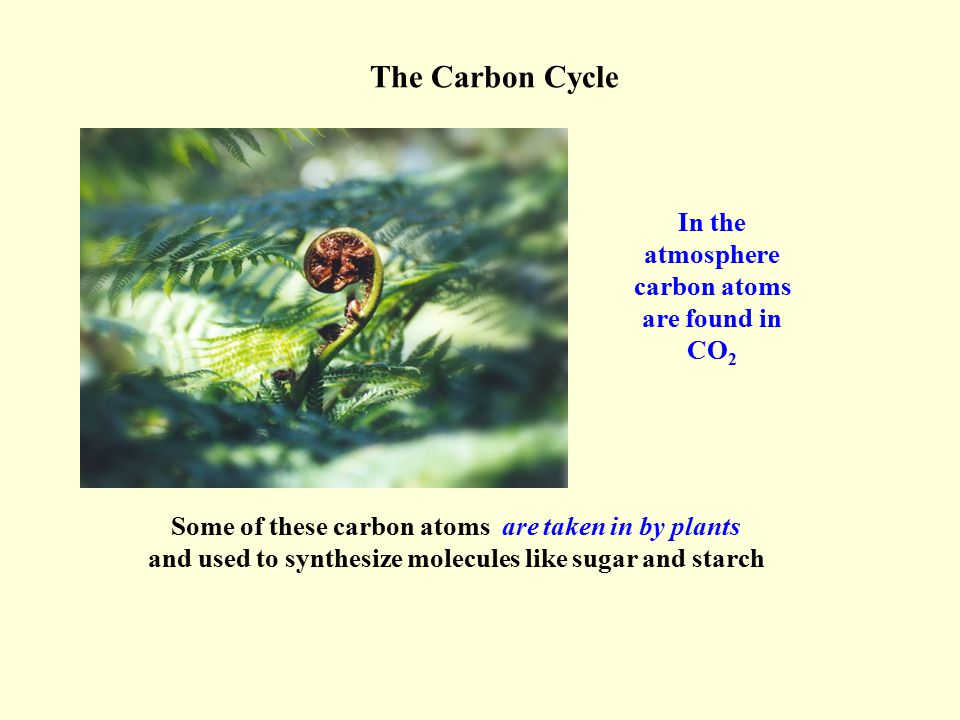
Carbon is used in the process called __________ by plants and algae to make food and the building blocks for growth.

a)

carbon cycle

b)

life

c)

photosynthesis

d)

decomposition

39.

Which is a true statement?

a)

Humans depend on oxygen, plants depend on carbon dioxide

b)

Plants produce carbon dioxide

c)

Humans depend on carbon dioxide, plants depend on oxygen

d)

Humans don't depend on plants for the air they need
40.

Over ________________ of years, once-living matter that remains in the ground can transform into fossil fuels.

a)

millions

b)

hundreds

c)

thousands

d)

a few handful

41.
Animals decomposing into the ground increases the amount of carbon in the soil.
a)
True
b)
False
42.
How does carbon get into the soil?
a)
when a human dies
b)
When a plant dies
c)
when an animal dies
d)
all of the above
43.
Carbon dioxide is easily dissolved in water.
a)
True
b)
False
44.
Carbon exist in many forms on Earth.
a)
True
b)
False
45.

Most of the mass of the trees around us comes from

a)

CO2 in water

b)

Atmospheric CO2

c)

CO2 released by decomposers

d)

Oxygen absorbed by the leaves

46.

Phytoplankton act as a carbon store when they

a)

Breathe in CO2

b)

Die and become a food source for other creatures

c)

Die and move down into the deepest part of the ocean

47.

According to this slide

a)

CO2 is causing marine life to die by "poisoning' the water

b)

CO2 is destroying sea shells

c)

CO2 is formed from the combustion of Octane

48.
What is the average weather for a particular time and region called?
a)
drought
b)
weather
c)
emissions
d)
climate
49.

The graph below shows CO2 emissions and temperatures from 1909 to 1949. What conclusion is best supported by the graph?

a)

There is no relationship between carbon dioxide concentrations and temperatures

b)

As carbon dioxide concentrations increase, temperatures increase

c)

As carbon dioxide concentrations increase, temperatures decrease

d)

As carbon dioxide concentrations decrease, temperatures increase

50.

What is carbon footprint?

a)

the total amount of greenhouse gases that are emitted into the atmosphere

b)

the release of a gas

c)

a place or environment where a plant or animal naturally or normally lives of grows

d)

a certain type of greenhouse gas

51.

Why is the carbon cycle important?

a)

It continuously reuses and recycles carbon in the ecosystem

b)

It helps animals to digest food

c)

It takes nitrogen and oxygen out of the atmosphere

52.
How does carbon in a grass plant get into a lion?
a)
The lion eats the grass
b)
Carbon from grass doesn't end up in a lion. 
c)
The carbon ends up in the food the lion eats. 
d)
The lion breathes in carbon given out by the plant
53.
What role do the oceans play in the carbon cycle?
a)
They have no role
b)
They are a major absorber (sink) of carbon dioxide
c)
both a and b
d)
neither a nor b
54.
If the climate becomes warmer, sea levels will _____________.
a)
rise,but this will have no impact on humans
b)
fall, which will increase the amount of available land
c)
rise, causing some pacific islands to disappear
d)
fall, which will have no impact on humans
55.

How are burning of fossil fuels and volcanic eruptions similar with respect to their effects on the carbon cycle?

a)

Both remove carbon from the atmosphere.

b)

Both add carbon to the atmosphere.

c)

Both add carbon to the lithosphere.

d)

Both remove carbon from the lithosphere.

56.

Subatomic particles with a negative charge

a)

Electrons

b)

Neutrons

c)

Protons

d)

Quarks

57.
subatomic particles found on the outermost shell & responsible for the atom's reactivity
a)
neutrons
b)
valence electrons
c)
isotopes
d)
ions
58.
Subatomic particles with a positive charge
a)
neutrons
b)
atomic mass
c)
protons
d)
isotopes
59.
Measure mainly of the nuclear particles: protons + neutrons
a)
Subatomic Particles
b)
Atomic Number
c)
Atomic Mass
d)
Gluons
60.
Value representing the number of protons in an element
a)
Atomic Mass
b)
Mass Number
c)
Valence Electrons
d)
Atomic Number
61.
Subatomic particles that are neutral in charge
a)
Neutrons
b)
Protons
c)
Nucleus 
d)
Electrons
62.
Atoms of the same element with a different number of neutrons
a)
Ion
b)
Gluons
c)
Isotope
d)
Quarks
63.
A charged atom
a)
Ion
b)
Isotope
c)
Electron Cloud
d)
Quark
64.
The smallest particle of an element that shows all the properties of that element.
a)
Subatomic Particles
b)
Atom
c)
Quarks
d)
Gluons
65.
A tiny but very dense, positively charged portion of the atom that holds most of the atomic mass
a)
Electron Shells
b)
Orbitals
c)
Electron Cloud
d)
Nucleus
66.
Calculation used to find the number of neutrons in an atom
a)
Atomic Mass - Atomic Number
b)
Atomic Number - Atomic Mass
c)
Atomic Mass - Electrons
d)
none of these
67.
What is the symbol for Potassium?
a)
P
b)
K
c)
Pb
d)
Pd
68.
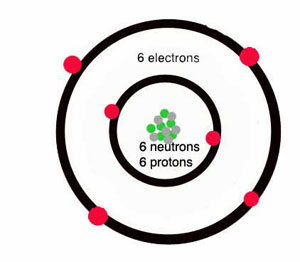
What is the symbol for Carbon?
a)
C
b)
Ca
c)
Cl
d)
H
69.
What is the name of this element?
a)
Helium
b)
Rubidium
c)
Hydrogen
d)
Mercury
70.
What two elements come together to make this substance in the picture?
a)
Oxygen and Carbon
b)
Sodium and Calcium
c)
Sodium and Chlorine
d)
Helium and Nitrogen
71.
What family is silver a part of?
a)
Transition Metals
b)
Noble Gases
c)
Alkali Metals
d)
Alkaline Earth Metals
72.
Silicon is a 
a)
Metal
b)
Nonmetal
c)
Metalloid
d)
Halogen
73.
Which particles make up the nucleus of an atom?
a)
protons and neutrons
b)
electrons and protons
c)
electrons, protons, and neutrons
d)
electrons and neutrons
74.

An isotope of an element has the same number of _________, but a different number of _________.

a)

Protons, electrons

b)

Protons, neutrons

c)

Electrons, neutrons

d)

Neutrons, protons

75.
What makes something radioactive?
a)
elements with an atomic number above 81
b)
an unstable nucleus
c)
contaminated sewage
d)
It decays over time
76.
In order of most to least penetrating radiation we have
a)
Alpha , Beta,  Gamma
b)
Beta , Gamma , Alpha
c)
Gamma, Beta, Alpha
d)
Gamma, Alpha, Beta
77.
Name the instrument used to detect radioactivity.
a)
voltmeter
b)
ohmeter
c)
seismograph
d)
geiger counter
78.
Which type of radioactive decay is occurring in this equation? 
a)
Alpha decay
b)
beta decay
c)
gamma decay
d)
positron emission
79.

You have 100 grams of a radioactive element that has a half-life of 1 day. How much would you have after 3 days?

a)

100g

b)

50g

c)

25g

d)

12.5g

80.

This is the radioactive decay of 100 grams of Sr-90. How much will remain after 50 years?

a)

100g

b)

50g

c)

25g

d)

12.5g

81.

This is the radioactive decay of 100 grams of Sr-90. How much will remain after 75 years?

a)

100g

b)

50g

c)

25g

d)

12.5g

82.

This is the radioactive decay of 100 grams of Sr-90. How much will remain after 25 years?

a)

100g

b)

50g

c)

25g

d)

12.5g

83.

This is the radioactive decay of 100 grams of Sr-90. How long is it's half-life?

a)

25 years

b)

50 years

c)

100 years

d)

200 years

84.

The WIPP site outside of Carlsbad was created by the Federal government .....

a)

to store extra nuclear warheads.

b)

to store crude oil for use in an emergency.

c)

for long-term storage of radioactive nuclear wastes.

d)

to provide a safe location for the government in case of nuclear war.

85.
If a balloon is cooled what will happen to the volume?
a)
Volume will increase
b)
Volume will decrease
c)
Volume will not change
86.
Which of the following would increase the (gas) pressure of a system?
a)
Increase the Temperature
b)
Pump in more gas
c)
Decrease the volume
d)
All of these
87.
When the temperature is constant (k) inside a balloon, if you add pressure on it, the volume will ..... 
a)
Decrease
b)
Increase
c)
Not Change at all
d)
Particles will solidify 
88.
Why does a car get low tire pressure in the COLD...what two variables are to blame? 
a)
Pressure and Temperature
b)
Temperature and Volume
c)
Volume and Pressure
d)
Temperature and Weight 
89.
Which of the following would increase the (gas) pressure of a system?
a)
Increase the Temperature
b)
Pump in more gas
c)
Decrease the volume
d)
All of these
90.
Which container will have lower pressure?
a)
left
b)
right
c)
they both have the same pressure