Wayground logo

Free Printable Worksheets

Font size

S
M
L
XL
Worksheets

Animal Behavior and Symbiosis 2019

Total questions: 51

Worksheet time: 32mins

Name
Class
Date
1.

A (an) ____ is an environmental change that directly influences the activity of an organism.

a)

stimulus

b)

behavior

c)

innate response

d)

fixed action pattern

2.

Which behavior is genetically based and NOT linked to past experiences?

a)

innate behavior

b)

habituation

c)

operant conditioning

d)

classical conditioning

3.

A _________ is defined as a way an animal responds to a stimulus.

a)

response

b)

instinct

c)

attitude

d)

behavior

4.

________________ behaviors result from an interaction between innate behaviors & past experiences.

a)

Genetic

b)

Hunting

c)

Innate

d)

Learned

5.
When animal learns to ignore harmless stimuli like a scarecrow, what type of learning is this? 
a)
innate learning
b)
classical conditioning 
c)
habituation 
d)
trial and error learning 
6.
When animals exhibit inherit, natural behaviors such as migrating or hibernating, this behavior is known as _________.
a)
instinct
b)
inherited traits
c)
learned behaviors
d)
learned trait
7.
Which of the following is an inherited behavior or instinct?
a)
A dog scratching the door to be let in
b)
A dog "playing dead" for a reward
c)
Birds scouring a parking lot for food 
d)
Birds building a nest
8.
Characteristics passed from parents to their offspring.
a)
behavior
b)
learned trait
c)
inherited trait
d)
function
9.
A behavior that is developed by observing others or by being taught is a 
a)
learned behavior 
b)
inherited trait
c)
adaptation 
d)
function
10.
Which of these is not an inherited trait?
a)
a bird building a nest
b)
a turtle burying its eggs
c)
a bear hibernating in winter
d)
a horse pulling a plow
11.
Which characteristic would most likely be inherited by a baby?
a)
brown hair
b)
crying a lot
c)
ability to jump high
d)
his ability to talk
12.
A dog rolls over and receives a treat. The dog rolls over again. This is an example of...
a)
learned behavior
b)
adaptive behavior
c)
inherited behavior
d)
instinctive behavior
13.
Which is an example of a learned characteristic?
a)
color of a dog's fur
b)
color blindness of a person
c)
the ability of a mouse to run a maze
d)
a person's ability to roll their tongue
14.
Which best describes an inherited trait?
a)
a characteristic one chooses to express
b)
a characteristic one receives from the food one eats
c)
a characteristic that is passed on from one's parents
d)
a characteristic that is influenced by one's surroundings
15.

An innate behavior can be described by which of the following?

a)

Must be learned

b)

Not necessary for survival

c)

Present at birth and performed correctly from the first time

d)

Learned from experiences

16.

Which of these is a LEARNED behavior?

a)

a peacock courting

b)

a whale migrating

c)

a dog sitting when told to

d)

a turtle hatchling crawling towards the ocean

17.

This arctic hare is difficult to see against the snowy backdrop, which protects it from predators. What is this called?

a)

hibernation

b)

migration

c)

courtship behavior

d)

camouflage

18.

A wolf cub came too close to a skunk, and was sprayed by its foul smelling chemical spray. Now, the wolf cub stays away from skunks. What type of behavior is this?

a)

innate behavior

b)

imprinting

c)

learned behavior

d)

migration

19.
A young killer whale learning how to hunt in a group (pod) is an example of 
a)
innate behavior
b)
learned behavior
c)
natural selection
20.
A chick following a lawnmower because it was the first moving object it ever saw is an example of
a)
imprinting
b)
conditioning
c)
trial and error
d)
insight
21.
Michael went to the circus and saw a seal balance a beach ball on its nose.  This is an example of a...
a)
instinct
b)
mimicry
c)
camouflage
d)
learned behavior
22.
The behavior that is set in an animal at birth
a)
Learned
b)
Imprinting
c)
Instinct
d)
Conditioning
23.
The conditioning stimuli Pavlov introduced to dogs to gain the response of salivation.
a)
Clapped hands
b)
Ringing a bell
c)
Food
d)
Blew a whistle
24.

Behaviors that organisms are BORN WITH are _______ behaviors.

a)

cyclic

b)

innate

c)

social

d)

trial and error

25.

Automatic response such as coughing or sneezing

a)

reflex

b)

stimulus

c)

instinct

d)

insight

26.

When a response to a stimulus becomes associated with another stimulus (dog produces saliva when hears bell ring)

a)

imprinting

b)

reflexing

c)

conditioning

d)

hibernating

27.
The way animals react to an external or internal reaction
a)
Hibernation 
b)
Migration 
c)
Stimulus 
28.

A dog learns to expect food whenever a bell is rung. This is an example of what type of learning?

a)

operant conditioning

b)

classical conditioning

c)

instinct

d)

habituation

29.

This picture is an example of which type of learning?

a)

insight learning

b)

imprinting

c)

classical conditioning

d)

operant conditioning

30.

Reasoning, habituation, and conditioning would both be classified as which type of behaviors…

a)

Inherited behaviors

b)

Learned Behaviors

c)

Innate Behaviors

d)

None of the above

31.

What is it called when a newborn animal recognizes and follows the first moving object it sees?

a)

shivering

b)

innate behaviors

c)

instincts

d)

imprinting

32.
Why is a spider spinning a web an innate behavior?
a)
It learns how to spin the web from its mother.
b)
It learns how to spin a web through insight learning.  
c)
It is born knowing how to spin a web.
d)
It learns how to spin a web through observational learning.
33.
A dog rolls over and gets a treat, so she rolls over again. This is an example of a...
a)
learned behavior
b)
inherited behavior
c)
physical trait
d)
instinct
34.

A remora fish attaches itself to the underside of a shark and eats leftover bits of food from the shark’s meals. The remora helps to clean the shark and remove parasites.

a)

Mutualism

b)

Commensalism

c)

Parasitism

d)

Not Symbiosis

35.

Ostriches and gazelles feed next to each other. They both watch for predators and alert each other to danger.

a)

Mutualism

b)

Commensalism

c)

Parasitism

d)

Not Symbiosis

36.

Barnacles create a home by attaching themselves to the skin of a whale. The barnacle is a filter feeder and obtains food as it rides on the whale. The whale is not affected.

a)

Mutualism

b)

Commensalism

c)

Parasitism

d)

Not Symbiosis

37.

Fleas obtain nutrients by feeding on the blood of a dog.

a)

Mutualism

b)

Commensalism

c)

Parasitism

d)

Not Symbiosis

38.

Oxpecker birds feed on ticks and other insects found on the rhino’s skin. The rhino provides protection for the oxpecker.

a)

Mutualism

b)

Commensalism

c)

Parasitism

d)

Not Symbiosis

39.

Bacteria living in a cow’s stomach help the cow digest cellulose in the grass. The bacteria are protected in the cow’s stomach and are provided with food (cellulose).

a)

Mutualism

b)

Commensalism

c)

Parasitism

d)

Not Symbiosis

40.

Hermit crabs live in shells made and then abandoned by snails. This neither harms nor benefits the snails.

a)

Mutualism

b)

Commensalism

c)

Parasitism

d)

Not Symbiosis

41.
 A flea feeds on a mouse’s blood and harms the mouse.
a)
parasitism
b)
commensalism
c)
mutualism
42.
A sparrow will build its nest under the nest of an osprey. The smaller birds get protection because other predators will not mess with the osprey. The osprey are not helped nor harmed by the sparrow.
a)
parasitism
b)
commensalism
c)
mutualism
43.
Orchids grow inside a bromeliad plant. The orchid obtains water and nutrients from the bromeliad, but does not help or harm it.
a)
parasitism
b)
commensalism
c)
mutualism
44.
A wasp lays its eggs on a caterpillar. When the wasp eggs hatch, the larva will eat the caterpillar and kill it. 
a)
parasitism
b)
commensalism
c)
mutualism
45.
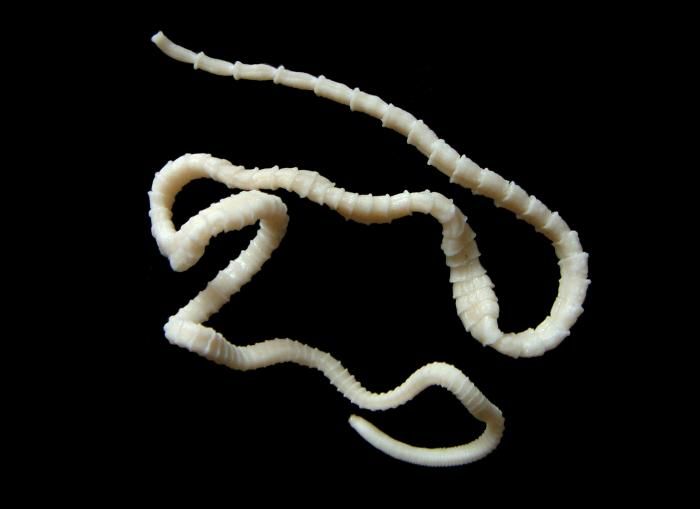
A tapeworm and a cat have this type of relationship.
a)
mutualism
b)
parasitism
c)
commensalism
d)
competition
46.
Which symbols best describe parasitism?
a)
+,+
b)
+,-
c)
+,0
d)
-,0
47.
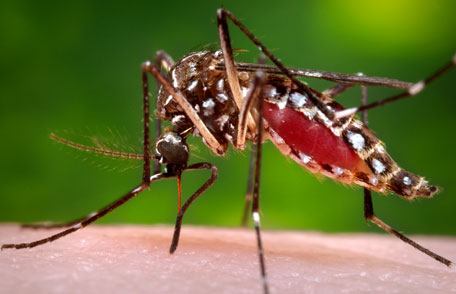
When a mosquito bites you, you are the __________ and the mosquito is the  ____________.
a)
host, hostess
b)
parasite, host
c)
host, parasite
d)
prey, predator
48.
A frog eats a fly. The frog and fly are demonstrating ________.
a)
mutualism
b)
competition
c)
predator/prey
d)
parasitism
49.

A relationship in which two species live closely together.

a)

resource

b)

mutualism

c)

succession

d)

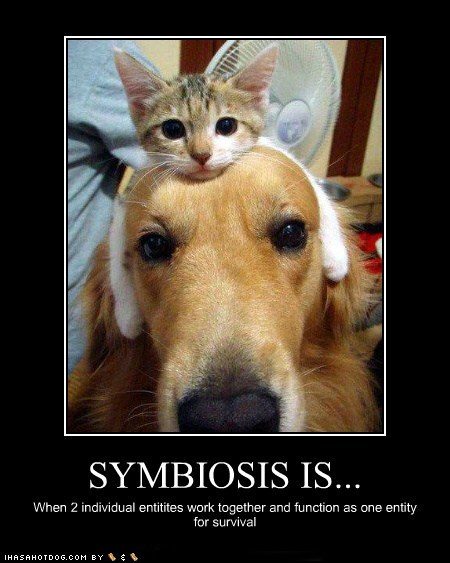
symbiosis

50.
Which symbols best describe mutualism?
a)
+,+
b)
+,-
c)
+,0
d)
-,0
51.
Which symbols best describe commensalism?
a)
+,+
b)
+,-
c)
+,0
d)
0,0