wayground logo

Free Printable Worksheets

Font size

S
M
L
XL
Worksheets

Physical Science FINAL EXAM REVIEW

Total questions: 130

Worksheet time: 2hrs 23mins

Name
Class
Date
1.

what is an atom

a)

smallest part of the universe

b)

smallest part of a substance

c)

smallest part of anything

d)

smallest part of water

2.

protons

a)

negative charge, nucleus

b)

positive charge, shells

c)

positive charge , nucleus

d)

neutral charge, nucleus

3.

neutrons

a)

no charge, shells

b)

positive charge, nucleus

c)

no charge, nucleus

d)

negative charge, shells

4.

electrons

a)

no charge, nucleus

b)

positive charge, nucleus

c)

negative charge, shells

d)

negative charge, nucleus

5.

atomic number

a)

number of protons

b)

number of neutrons

c)

number of electrons

d)

number of protons and neutrons

6.

mass number

a)

number of protons

b)

number of electrons

c)

number of protons and electrons

d)

number of protons and neutrons

7.

atomic symbol

a)

capital letter

b)

lowercase letter

c)

2 capital letters

d)

2 lowercase leters

8.

same number of protons, different number of neutrons

a)

atomic number

b)

mass number

c)

isotope

d)

ion

9.

a charged atom

a)

neutral

b)

isotope

c)

ion

d)

nucleus

10.
The group number tells us how many _________ there are in an element.
a)
groups
b)
valence electrons
c)
energy levels
d)
chemicals
11.
The characteristics or properties of metals include
a)
shiny and solid
b)
ductile and malleable
c)
lose electrons
d)
all of the above
12.
How many valence electrons do elements in group 17 have in their outer energy level?
a)
7
b)
17
c)
1
d)
0
13.
Which particle contributes the negative charge to the atom?
a)
proton
b)
electron
c)
neutron
d)
nucleus
14.
Water is an element?
a)
true
b)
false
15.

Which is a chemical change?

a)

Melting ice

b)

A candle burning

c)

Boiling water

d)

frost forming inside the freezer

16.

Which occurs when atoms link together in news ways to create a substance different from the original substances?

a)

A physical change

b)

A nuclear reaction

c)

a chemical change

d)

an inversion

17.

Which of the following indicate that a chemical reaction has occurred?

a)

The formation of gas bubbles

b)

An odor

c)

a change in color

d)

all of these indicate a chemical reaction

18.

What is needed for a combustion reaction to occur?

a)

Nitrogen

b)

Helium

c)

oxygen

d)

iron

19.

When reactants form products, a(n) ______ has occurred.

a)

Base

b)

Acid

c)

Chemical Reaction

d)

Mixture

20.

Which mixture is a solution?

a)

Muddy water

b)

potting soil

c)

cranberry juice

d)

milk

21.

Mixing food coloring with water is an example of a chemical change.

a)

True

b)

False

22.

Which is an example of a chemical reaction?

a)

Ice melting

b)

wood burning

c)

salt stirred into water

d)

rain falling

23.

What is a physical combination of two or more substances that are blended together without forming a new substance?

a)

Distillation

b)

Mixture

c)

Solute

d)

Solvent

24.

Using a magnet is one way to separate a mixture of sand particles and water

a)

True

b)

False

25.

What it the process called when acids and bases react to form salt and water?

a)

Neutralization

b)

Naturalization

c)

Normalization

d)

Nationality

26.
How many protons does Carbon have?
a)
3
b)
4
c)
5
d)
6
27.
Density is...
a)
the amount of mass in an object
b)
the amount of space an object takes up
c)
the amount of mass in a given space
d)
the weight of an object
28.
Basic unit of matter - the smallest piece of matter known
a)
Element 
b)
Atom
c)
Molecule
d)
Compound
29.
Negatively charged part of an atom located in levels outside the nucleus
a)
Proton
b)
Neutron
c)
Electron
d)
Neutron
30.
In a liquid, the molecules have a definite shape and a definite volume
a)
True 
b)
False
31.
Burning a piece of paper 
a)
Chemical Change 
b)
Physical Change 
32.
Mixing salt and water 
a)
Chemical Change 
b)
Physical Change 
33.
Melting Ice 
a)
Chemical Change 
b)
Physical Change 
34.
What is the symbol for chlorine?
a)
C
b)
Ch
c)
Ce
d)
Cl
35.
Milk turning sour
a)
Chemical Change
b)
Physical Change 
36.
A _________ is a substance made of two or more DIFFERENT elements chemically combined. 
a)
mixture
b)
compound
c)
substance 
37.
Salt Water 
a)
Compound 
b)
Mixture 
38.
A bar of gold is made of only one ______
a)
Plasma 
b)
Mixture 
c)
Element 
d)
Compound
39.
These are the two particles located inside the nucleus of an atom 
a)
Protons and Electrons 
b)
Protons and Neutrons 
c)
Electrons and Neutrons 
d)
Neutrons and Molecules 
40.
How many ATOMS are in the following compound:  C2H4O2
a)
3
b)
8
c)
1
d)
6
41.
How many MOLECULES are in the following compound:  CaCO3
a)
1
b)
3
c)
5
d)
0
42.
What is an atom which has gained or last electrons called?
a)
isotope
b)
atom
c)
ion
d)
balanced
43.
What type of mixture contains visible parts (like a salad or a pizza or granite)
a)
homogenous
b)
heterogenous
44.
What is matter
a)
Anything which is solid
b)
Anything that takes up space and has mass
c)
when something is wrong
45.
Phase changes (going from a solid to a liquid to a gas) are what types of changes?
a)
chemical
b)
physical
46.
On the Periodic Table each element increases by one _________
a)
electron
b)
proton
c)
neutron
d)
letter
47.
In this type of bond electrons are shared by two non-metals
a)
ionic
b)
covalent
c)
subatomic
48.
The Law of Conservation of Matter says
a)
Matter can be created, but not destroyed
b)
matter can be destroyed, but not created
c)
matter cannot be created or destroyed
49.
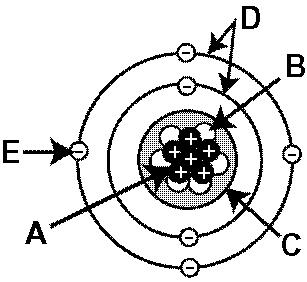
In the atom diagram shown, E is pointing to
a)
An electron
b)
a proton
c)
a neutron
d)
the nucleus
50.

In the atom diagram shown, A is pointing to the darker particles, these are known as

a)

electrons

b)

protons

c)

neutrons

d)

the nucleus

51.
A molecule is________
a)
two ions held together by opposite charges
b)
smaller than an atom
c)
can be physically separated into smaller atoms
d)
more than one atom bonded together by covalent bonds
52.
What charge does an electron have?
a)
Negative
b)
Positive
c)
Neutral
d)
Contrated
53.
Which of the following is found in the nucleus of an atom?
a)
electrons
b)
neutrons
c)
The center of an atom, composed of protons and neutrons
d)
molecules
54.

In this chemical equation, the elements in red are the_______.

a)

Products

b)

Reactants

c)

Subscripts

d)

Coefficients

55.

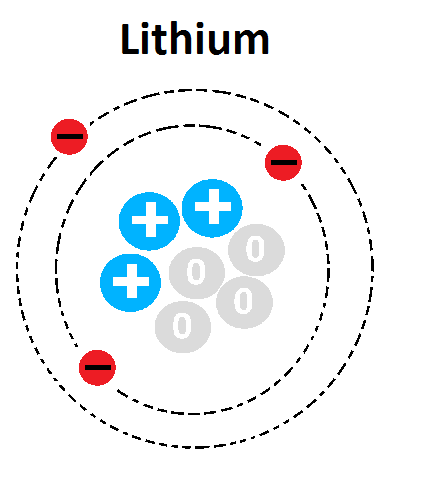
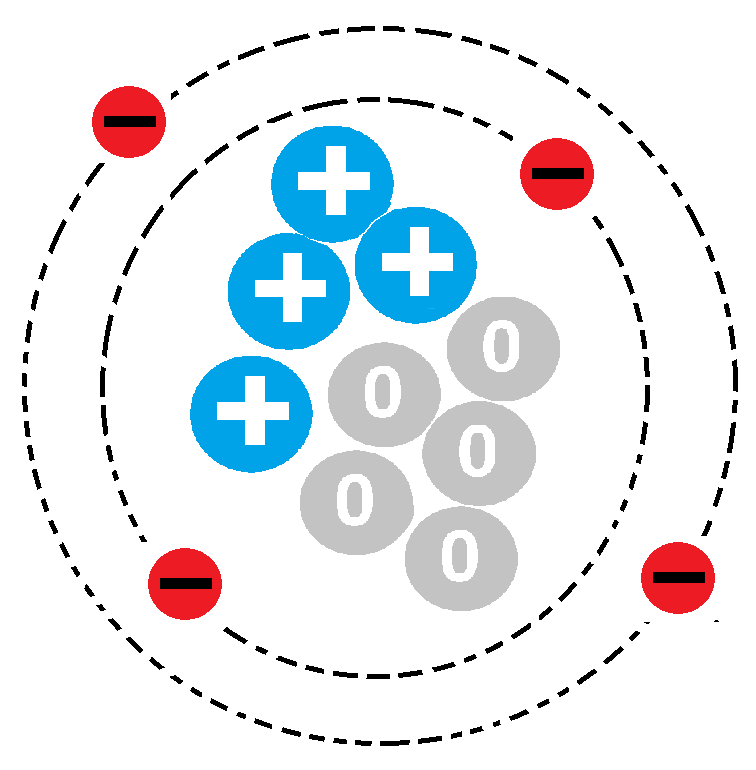
What is the atomic mass of this atom?

a)

1

b)

3

c)

4

d)

7

56.
What is the atomic number of this atom?
a)
4
b)
5
c)
9
d)
none of the above
57.
What is a valence electron?
a)
an electron that is found in the outermost orbital of an atom. 
b)
an electron found in the innermost orbital of an atom.
c)
an electron found in the middle orbital.
58.
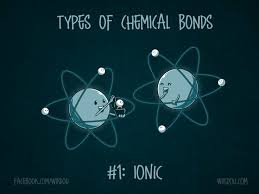
An ionic bond forms when 
a)
Valence electrons are shared
b)
a sea of mobile electrons surround the cations
c)
valence electrons are transferred between atoms
d)
none of the above
59.

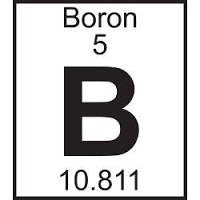
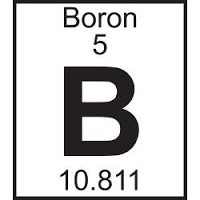
Using the information provided, determine how many electrons the a Boron atom contains.

a)

2.5

b)

5

c)

6

d)

10.81

60.
How many protons does this atom have?
a)
2.5
b)
6
c)
5
d)
10.811
61.

What do isotopes of carbon all have in common?

a)

They all have the same number of neutrons & mass number

b)

They all have the same atomic number and number of neutrons

c)

They all have the same atomic number and number of electrons

d)

They all have the same number of protons and neutrons

62.

What quantities vary between isotopes of an element?

a)

protons, electrons, and atomic mass

b)

protons, electrons, and atomic number

c)

neutrons and electrons

d)

neutrons and atomic mass

63.
What are the building blocks of MATTER?
a)
Atoms
b)
Cells
c)
Protons
d)
Neutrons
64.
What are the positively charged particles in an atom?
a)
Protons
b)
Neutrons
c)
Electrons
65.
The image shows the periodic grid for POTASSIUM. What is Potassium's atomic number?
a)
19
b)
39
c)
20
d)
Impossible to tell
66.
The image shows the periodic grid for POTASSIUM. What is Potassium's atomic mass?
a)
19
b)
39
c)
20
d)
Impossible to tell
67.
The image shows the periodic grid for POTASSIUM. How many PROTONS are found in a potassium atom?
a)
19
b)
39
c)
20
d)
Impossible to tell
68.
The image shows the periodic grid for POTASSIUM. How many ELECTRONS are found in a potassium atom?
a)
19
b)
39
c)
20
d)
Impossible to tell
69.
The image shows the periodic grid for POTASSIUM. How many NEUTRONS are found in a potassium atom?
a)
19
b)
39
c)
20
d)
Impossible to tell
70.
What holds atoms, molecules, and compounds together?
a)
Chemical Bonds
b)
Electromagnetism
c)
Magnetism
d)
Electricity
71.
A(n) _____ is the smallest particle of a compound that still has the compound’s properties.
a)
atom
b)
molecule
c)
element
d)
mixture
72.
A physical property can be observed by _________________.
a)
burning the substance
b)
changing the chemical identity of a substance
c)
using the senses
d)
placing the substance in acid
73.
Signs that a chemical change has occurred include
a)
a change in color
b)
the release of bubbles
c)
the production of an odor
d)
all of the above
74.

All the elements on the left side of the periodic table are called..

a)

Metals

b)

Metalloid

c)

Nonmetals

75.
A substance that is made up for one type of atom is called an:
a)
atom
b)
element
c)
compound
d)
mixture
76.
Which of these elements is a metal?
a)
argon
b)
carbon
c)
iron
d)
hydrogen
77.
Where on the periodic table are the metalloids found?
a)
Right Side
b)
Along the Zig Zag Line
c)
Right Side
78.
Which of the following represents a physical change?
a)
burning a candle
b)
lighting a match
c)
mixing a batch of lemonade
d)
baking a cake
79.
Which of the following is typically a good conductor of heat?
a)
Metal
b)
Nonmetal
c)
Metalloid
80.
Silicon is a semiconductor and has properties of both metals and nonmetals. What type of element is Silicon? 
a)
Metal
b)
Nonmetal
c)
Metalloid
d)
Pretty
81.
Nonmetals are located in what section of this periodic table?
a)
Blue
b)
Yellow
c)
Pink
82.
In the compound 2H2, the H stands for 
a)
Helium 
b)
Hydrogen
c)
Herculineum
83.
Which of the following is not a compound?
a)
HCl
b)
Cl
c)
NaCl
d)
CO2
84.
H2
a)
Element
b)
Compound
85.
CO2
a)
Element
b)
Compound
86.
CaCo3
a)
Element
b)
Compound
87.
H2O
a)
Element
b)
Compound
88.
Where are electrons of an atom found?
a)
Nucleus
b)
Electron Cloud
c)
Some are in the nucleus and some in the electron cloud.
d)
They are moving everywhere.
89.
Particles in an atom's nucleus that are neutral and have no charge are 
a)
megatrons. 
b)
electrons.
c)
neutrons.
d)
protons. 
90.
Matter can exist in 3 states:  ______, ________, and _________.
a)
sticky, hard, and soft
b)
big, little, and miniature
c)
solid, liquid, and gas
91.
The state of matter can be changed by __________.
a)
temperature
b)
particles
c)
elements
92.
Gas does not have _____ or ________.
a)
smell or taste
b)
air or particles
c)
a definite shape or volume
93.
Which of the following is evidence that a chemical change has taken place? 
a)
change in color
b)
change in size
c)
change in shape
d)
change in energy
94.
When dry ice (solid carbon dioxide) sublimes it goes directly from a solid to a gas. What type of change is occurring? 
a)
Chemical change
b)
Physical change
c)
None of the above 
95.
How many oxygen atoms are present in the following? 
4Ca(OH)2
a)
4
b)
6
c)
8
d)
1
96.
Why must we balance chemical equations? 
a)
Our teacher said so
b)
to abide by the law of conservation of energy
c)
to abide by the law of conservation of mass
97.
 Fill in the blank to balance the chemical equation. 
2KI  +  ____Cl  2KCl  +  I2
a)
1
b)
2
c)
3
d)
4
98.
What coefficient should go in the blank space to balance the chemical equation? 
2Al  +____  HCl   →    2AlCl3  +  3H2
a)
2
b)
4
c)
3
d)
6
99.
What does the Law of Conservation of Mass state?
a)
Matter cannot be gained or lost in a chemical reaction.
b)
Matter can only be lost in a chemical reaction.
c)
Matter can only be gained in a chemical reaction.
d)
Matter can be gained and lost in a chemical reaction. 
100.
What is the left part of a chemical equation called?
2H2 + O2 --> 2H2O
a)
Reactants
b)
Products 
c)
Yields 
d)
Chemical Equation 
101.
What is the right part of a chemical equation called...
2H2 + O2 --> 2H2O
a)
Reactants
b)
Products 
c)
Yields 
d)
Chemical Equation 
102.
What is the total number of atoms present in 5Na3PO4
a)
5
b)
40
c)
55
d)
8
103.
How many Mn atoms are found in the following compound?
3Cr(MnO4)6
a)
3
b)
4
c)
6
d)
18
104.
What is the little number after an element in a chemical equation called.
Example: H2
a)
Coefficient 
b)
Subscript
c)
Atom
d)
Equation
105.
Is the following equation balanced?...
Al + O2 --> 2Al2O3
a)
Yes!
b)
No!
106.
How many elements are in C6H12O6?
a)
1
b)
2
c)
3
d)
4
107.
Element or compound?
H2O
a)
Element
b)
Compound
108.
What is the number before a chemical formula called?
Ex: 2H2 + O2 --> 2H2O
a)
Coefficient
b)
Subscript
c)
Atom
d)
Equation
109.
How many aluminum atoms are in Al2(SO4)3?
a)
1
b)
2
c)
3
d)
4
110.
How many atoms are in the neurotransmitter serotonin? The formula for serotonin is C10H12N2O
a)
10
b)
20
c)
25
d)
23
111.
Is the following equation balanced?
2C2H2 + 5O2 --> 4CO2 + 2H2O
a)
yes
b)
no
112.
Is the following equation balanced?
4Fe + 3O2 --> 2Fe2O3
a)
yes
b)
no
113.
Is the following reaction balanced?
NaHCO3 --> Na2CO3 + H2O + CO2
a)
yes
b)
no
114.
Is the following reaction balanced?
2CH3OH + 3O2 --> 2CO2 + 4H2O
a)
yes
b)
no
115.
Which of the following equations are correctly balanced?
a)
12CO2 +H2O --> C6H12O6 + O2
b)
CO2 + 9H2O --> C6H12O6 + O2
c)
CO2 + H2O --> 3C6H12O6 + O2
d)
6CO2 + 6H2O --> C6H12O6 + 6O2
116.
CxHy +O--> H2O + CO2
a)
Decomposition
b)
Double replacement
c)
Combustion
d)
Single Replacement
117.
The following reaction is an example of what reaction type? 
CoCO3 → CoO + CO2
a)
Synthesis
b)
Decomposition
c)
Single Replacement
d)
Double Replacement
118.
Si + S8 --> Si2S4
a)
Synthesis (combination)
b)
Decomposition
c)
Single replacement
d)
Double replacement
119.
KOH + H3PO4 --> K3PO4 + H2O
a)
Synthesis (combination)
b)
Decomposition
c)
Single replacement
d)
Double replacement
120.
Pb(NO3)2 --> PbO + NO2 + O2
a)
Synthesis (combination)
b)
Decomposition
c)
Single replacement
d)
Combustion
121.
What are the products in the following chemical equation? 
2H2 + O2   -->   2H2O
a)
H2
b)
O2
c)
2H2 + O2
d)
2H2O
122.
What are the products in the following chemical equation? 
2H2 + O2   -->   2H2O
a)
H2
b)
O2
c)
2H2 + O2
d)
2H2O
123.
The following is what type of reaction:
NH3 + HCl  → NH4Cl
a)
Synthesis
b)
Decomposition
c)
Single Replacement Replacement
d)
Double Replacement Replacement
124.
The following is what type of reaction:
PbCl2 + AgNO3 → Pb(NO3)2 + AgCl
a)
Synthesis
b)
Decomposition
c)
Single Replacement
d)
Double Replacement
125.
What is decomposition?
a)
putting substances together
b)
breaking substances apart
c)
element replacing another element in a compoud
d)
burning of a subtance
126.
3Ca + 2AlCl3 --> 3CaCl2 + 2Al
a)
Synthesis
b)
Decomposition
c)
Single Displacement
d)
Double Displacement
127.
4Si   + S8   -->   2Si2S4
a)
Synthesis
b)
Decomposition
c)
Single Displacement
d)
Double Displacement
128.
2Pb(NO3)2   -->   2PbO +  4NO2  +  O2
a)
Synthesis
b)
Decomposition
c)
Single Displacement
d)
Combustion
129.
C4H12 + O2 → CO2 + H2O
a)
Synthesis
b)
Combustion
c)
Single Replacement
d)
Double Replacement
130.
3KOH + H3PO4 --> K3PO4 + 3H2O
a)
Synthesis 
b)
Decomposition
c)
Single displacement
d)
Double displacement