Wayground logo

Free Printable Worksheets

Font size

S
M
L
XL
Worksheets

Ecology Part 2 2020

Total questions: 50

Worksheet time: 37mins

Name
Class
Date
1.

A relationship between two organisms in which one organism benefits and the other is harmed.

a)

mutualism

b)

competition

c)

parasitism

d)

commensalism

2.

A relationship between two organisms in which one organism benefits and the other is unharmed.

a)

mutualism

b)

competition

c)

parasitism

d)

commensalism

3.

A relationship between two organisms in which both organisms benefit.

a)

mutualism

b)

competition

c)

parasitism

d)

commensalism

4.

Barnacles create home sites by attaching themselves to whales. This neither harms nor benefits the whales.

a)

mutualism

b)

parasitism

c)

commensalism

d)

competition

5.

Mistletoe extracts water and nutrients from the spruce tree to the tree's detriment (harm).

a)

mutualism

b)

parasitism

c)

commensalism

d)

predation

6.

Silverfish live and hunt with army ants. They share the prey. They neither help nor harm the ants.

a)

mutualism

b)

parasitism

c)

commensalism

d)

competition

7.
A mite lives in the base of the eyelashes of people who use mascara. It feeds on the mascara; it does not seem to harm people. What type of symbiotic relationship is this?
a)
mutualism
b)
commensalism
c)
parasitism
d)
predation
8.
A tapeworm lives in the intestines of a dog. It absorbs food the dog has eaten and grows larger in the process. The dog becomes weaker from malnutrition. What type of symbiotic relationship is this?
a)
mutualism
b)
commensalism
c)
parasitism
d)
predation
9.
NItrogen-fixing bacteria live in the roots of some plants. They provide nitrogen in a form the plants need and obtain a "home" and nourishment from the plants. What type of symbiotic relationship is this?
a)
mutualism
b)
commensalism
c)
parasitism
d)
predation
10.
Cleaner shrimp living in the ocean eat ectoparasites (parasites on the outer surface of the animal) off of fish. What type of symbiotic relationship is this?
a)
mutualism
b)
commensalism
c)
parasitism
d)
predation
11.
The  ____________ provides all the initial energy to plants.
a)
sun
b)
moon
c)
environment
d)
water
12.

____ make their own food through photosynthesis.

a)

Consumers

b)

Decomposers

c)

Producers

13.
What does a food chain contain? Choose ALL correct answers.
a)
consumer
b)
producer
c)
decomposer
d)
all of the above
14.

__________ eat decaying matter, dead plants and animals and in the process they break them down.

a)

Consumers

b)

Producers

c)

Decomposers

15.

_________ cannot make their own food, so they need to consume (eat) plants or animals.

a)

Consumers

b)

Producers

c)

Decomposers

16.

What is a lion considered?

a)

producer

b)

consumer

c)

decomposer

17.

What is grass considered?

a)

producer

b)

consumer

c)

decomposer

18.

What is bacteria or fungi considered?

a)

producer

b)

consumer

c)

decomposer

19.

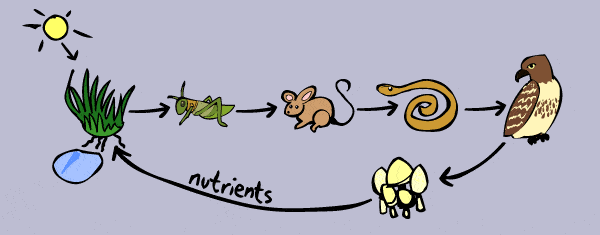
Where does the energy start in this food chain?

a)

plant

b)

sun

c)

deer

d)

wolf

20.

What's the role of consumers in a food chain?

a)

Use sunlight to make food

b)

Eat other species and keep them from overpopulating

c)

Break down dead stuff

d)

Add nutrients to the soil

21.

Which of these organisms would receive energy from the snake?

a)

plant

b)

rabbit

c)

mouse

d)

hawk

22.

Which organism eats the snake?

a)

frog

b)

hawk

c)

mushrooms

d)

grasshopper

23.

What eats the grasshopper?

a)

grass

b)

snake

c)

frog

d)

hawk

24.
What do the arrows show in a food chain picture?
a)
They always point to the smallest animals.
b)
They point to the animal that tastes the best.
c)
They always point to the producers.
d)
They point in the direction that energy is flowing.
25.
What is the name of the organism at the beginning of every food chain?
a)
producers
b)
consumers
c)
herbivores
d)
carnivores
26.
Which food chain is in the correct order?
a)
cat, grass, bird, snail
b)
bird, snail, grass, cat
c)
grass, snail, bird, cat
d)
grass, cat, bird, snail
27.
Which food chain is in the correct order?
a)
Sun, bird, caterpillar, plant
b)
bird, caterpillar, plant, Sun
c)
Sun, plant, caterpillar, bird
d)
caterpillar, Sun, bird, plant
28.

Using the picture, determine why having fewer insects affect the mice?

a)

The mice will not have enough insects to eat.

b)

It will not affect the mice.

c)

The mice will have too many insects to eat.

29.
Which of the following organisms is a producer?
a)
Sun
b)
Water Plant
c)
Mayfly 
d)
Trout
30.

What is this picture called?

a)

Food Web

b)

Food Chain

c)

Abiotic Factors

31.

What is this picture called?

a)

Food Web

b)

Food Chain

c)

Abiotic Factors

32.
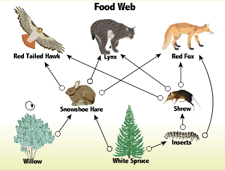
What does a food web represent?
a)
All connections of energy flow throughout all organisms in a ecosystem.
b)
The specific ways that mutualism is carried out.
c)
A single pathway or energy flow between organisms. 
d)
How carnivores get their food. 
33.
What is missing from this food chain?
Grass > Grasshopper > Bird > Snake
a)
Producer
b)
Primary Consumer
c)
Secondary Consumer
d)
Decomposer
34.
If the grasshopper were to be removed completely from the food web, what organism would be most effected?
a)
The squirrel
b)
The shrew
c)
The deer
d)
The rabbit
35.
Which organism recieves the least amount of energy from the producer?
a)
Owl
b)
Grasshopper
c)
Lilypad
d)
Mouse
36.
What does a food chain represent?
a)
How all living organisms within a habitat are connected.
b)
All of the things that a particular animal eats.
c)
How plants create their own food.
d)
A single path of energy transfer within a habitat.
37.
What is a trophic level?
a)
Each level represented within a food chain or web.
b)
Levels of ecosystems that the world is divided into.
c)
Different levels of nutrients present within an organism.
d)
The levels of sunlight an autotroph needs to survive. 
38.
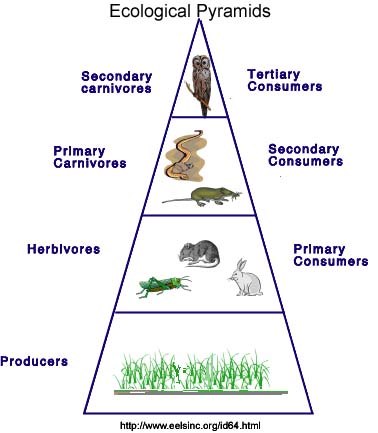
An energy pyramid represents what?
a)
How much sunlight is available for the ecosystem to use. 
b)
How much energy a particular organism needs. 
c)
How much energy is needed to build a pyramid. 
d)
The amount of energy available to the next 'feeder' in a food web.
39.
How much energy is available to be passed on to the next trophic level in an ecosystem?
a)
100%
b)
10%
c)
50%
d)
75%
40.
Why is there a limited amount of energy that can be passed on to the next feeding level?
a)
There is never enough sunlight available. 
b)
Some ecosystems have limited resources. 
c)
Organisms use some of the energy they get from eating.
d)
All the energy is available to be passed on. 
41.
The largest group of organisms found in a food web would be:
a)
Primary Consumers
b)
Producers
c)
Decomposers
d)
Tertiary Consumers
42.

What may happen if the snowshoe hare was removed from the food web pictured?

a)

The insects in the habitat would increase.

b)

The shrew population would decrease due to being the only hawk's food source.

c)

The willow tree population would decrease.

d)

The fox would die due to having no food source.

43.
The rabbit in this food web would be considered a:
a)
Decomposer
b)
Producer
c)
Secondary Consumer
d)
Primary Consumer
44.
The mouse in this food web would be considered a:
a)
Primary Consumer
b)
Producer
c)
Tertiary Consumer
d)
Secondary Consumer
45.
The shrew provides energy for the _______?
a)
cricket
b)
grasshopper
c)
frog
d)
snake
46.
Which organism has the most energy and which organism has the least amount of energy? Choose the best answer. 
a)
mosquito and grass
b)
mouse and grass
c)
grass and owl
d)
grass and small bird
47.
Temperature, light, air, water, and soil are all  _____  parts of the environment
a)
alive
b)
biotic 
c)
abiotic
d)
living
48.
The study of relationships between biotic and abiotic factors interacting in the same area.
a)
Ecology
b)
Biology
c)
Zoology
d)
Botany
49.
Lizards and cacti are biotic factors in a desert ecosystem that would rely on which abiotic factors?
a)
insects and sun
b)
water and insects
c)
snakes and temperature
d)
water and soil
50.

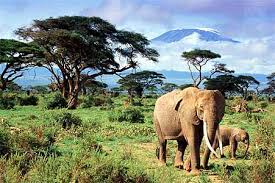
What are the biotic factors in this image?

a)

sunlight, elephants, and grasses.

b)

sunlight, water, and air.

c)

elephants, plants, and trees .