
 Worksheets
2018-19 Science Review
Total questions: 70
Worksheet time: 35mins
How many chambers are in a human heart?
one
two
three
four
What is the smallest part of an element that still has the same characteristics of that element?
A neutron
An electron
An atom
A proton
The amount of matter or "stuff" is the __________ of a substance.
weight
mass
density
volume
_____________________ is the amount of space a subtance takes up.
density
mass
volume
weight
Which of the following is not an example of matter?
Air
Water
A frog
Energy
Where is most of the mass of an atom located?
The electron cloud
The nucleus
Atoms don't have mass because they are tool small
none of the above
Is the abilit of a substance to burn easily a physcial property or a chemical property?
Physical
Chemical
Which of the following would be considered a compound?
O2
Li
H
H2O
Density is ____________________________.
a measure of the force of gravity acting on an object
a ratio of the mass of an object divided by the volume that object takes up
the amount of matter in an object
how awesome 7th grade science class was this year
You drop an object in a glass of water and that object sinks. What can you say about the density of that object compared to the density of water?
There is not enough information is given to answer the question.
The object is less dense than that water.
The object has the same density as water.
The object has a great density than that of water.
Which of the following would be considered an invasive species in a coral reef ecosystem?
Zooxanthellae
Lionfish
Reef Shark
Coral Polyp
A producer can get energy by ___________________
Eating other organisms
carrying out photosynthesis
decaying
Which of the following is an example of an aquatic ecosystem?
A tropical rainforest
A coral reef
The tundra
Grasslands
True or False: Ecosystems are made up of only biotic factors.
True
False
A tundra is similar to a desert in which of the following ways:
They are both home to a wide variety of species.
They both have extreme temperature fluctuations.
They both have very low amounts of annual precipitation.
They both have very high amounts of annual precipitation.
Coral Reefs are some of the most valuable ecosystems on our planet because ______________________.
They are home to a large number of marine species.
They provide a natural coastal protection.
The provide beauty and close to 30 billion dollars annually to the global economy.
All of the above.
Which of the following in not a biotic factor?
Dead tree
Air
A leaf
An ant
All of the members of one species living in a certain area is a) __________________________.
biome
community
limiting factor
population
Which of the following models shows the amount of energy available at each trophic level?
Food Court
Food Web
Food Pyramid
Food Chain
The driving force in the production of energy in all land based food chains is __________________.
plants
producers
consumers
the sun
Coral polyps secrete _____________ that creates the structure of the coral reef.
sediments
staghorn
calcium carbonate
camouflage
Coral reefs are endangered by
climate change
overfishing
pollution
all of the above
What is one way scientists trying to save the coral reefs?
by growing coral and planting it in the ocean
by restricting access to reefs
by adding new species of fish to the reefs
by adding fertilizer to the coral reefs
Which of the following is NOT a type of coral reef?
Fringing reefs
Barrier reefs
Atolls
Crustacean
Another word for speed and direction is
inertia
momentum
velocity
All of these are forces except
friction
mass
gravity
inertia
A force is
a push
a pull
any push or pull
none of the above
What is velocity
speed
speed and direction
momentum
One name for Newton's First Law of Motion is
Inertia
gravity
momentum
If an object changes its speed and direction it is
changing
moving
accelerating
Who discovered many concepts of physics, including the laws of motion?
Albert Einstein
Miss Radic
Ben Franklin
Isaac Newton
What is Newton's 1st Law of Motion?
An object at rest stays at rest unless acted up by an outside force and an object in motion stays in motion unless acted upon by an outside force
Force = mass x acceleration
For every action, there is an equal and opposite reaction
Inertia
What is Newton's 2st Law of Motion?
an object at rest stays at rest unless acted upon by an outside force and an object in motion will stay in motion unless acted upon by an outside force
Force = mass x acceleration
For every action there is an equal and opposite reaction
What is Newton's 3rd Law?
an object at rest stays at rest unless acted upon by an outside force and an object in motion will stay in motion unless acted upon by an outside force
Force = mass x acceleration
For every action there is an equal and opposite reaction
A roller coaster that is in motion is an example of
Kinetic energy
Potential energy
A pencil balanced on the edge of a desk, that could fall at any moment is an example of
Kinetic energy
Potential energy
Which of the following are functions of the liver?
releases digestive enzymes and bile
releases sperm and egg cells
collects urine in the frog
helps the frog breathe


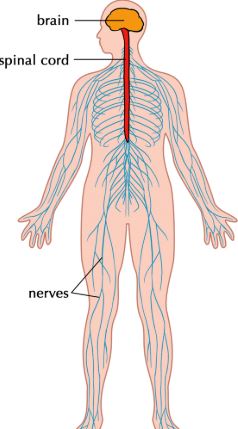
What system is pictured?
Skeletal
Circulatory
Nervous
Muscular
What system helps deliver nutrients and oxygen to all of your body cells?
Circulatory
Respiratory
Digestion
Excretory
What system supports and protects your internal organs?
Muscular
Digestive
Excretory
Skeletal

Which two body systems are working together to make this type of physical movement from the basketball player?
Circulatory and Excretory
Skeletal and Muscular
Nervous and Digestive
Respiratory and Skeletal
What system eliminates non solid waste from the body?
Integumentary
Digestive
Excretory
Respiratory

What is the function of the system pictured?
Helps pumps your blood through out your body.
Helps move and protect your body.
Helps take in oxygen and remove carbon dioxide.
Helps maintain body your temperature.
What system gathers information and responds to that information? Ex: Touching something that is hot and quickly pulling your hand away.
Skeletal
Muscular
Integumentary
Nervous
Which system provides shape and support, enables you to move, and stores minerals
Skeletal
Muscular
Integumentary
Respiratory
Which system includes the nose, trachea and the lungs?
Excretory
Respiratory
Circulatory
Muscular
Which two body systems deliver oxygen to your cells and take away carbon dioxide?
Respiratory and Nervous
Circulatory and Nervous
Circulatory and Excretory
Respiratory and Circulatory
What is the body system that sends and receives electrical signals from the brain?
Muscular
Skeletal
Nervous
Digestive
The muscular organ that pumps blood through out your body is your
Arteries
Diaphragm
Heart
Larynx
Why is plastic dangerous for animals?
They can be trapped in plastic things.
They can choke (zakrztusić się) with small plastic pieces and die.
They can eat plastic which fills their stomaches and they die of starvation because they don't feel hungry.
Plastic is not so dangerous for animals.
How can we help to reduce plastic pollution?
We should use paper/cloth bags.
We should use less plastic.
We should refill our drinking bottles not buy new ones.
We should avoid (unikać) plastic or styrofoam containers.
All answers are correct.
The island of trash in the Pacific Ocean is how big?
As big as New York City
The size of Delaware
The size of Hawaii
As big as Texas
What do scientists call plastics when they break down into tiny pieces?
Microtrash
Microplastics
Microparticles
Macroplastics
How does plastic trash cause marine life and sea birds to starve?
They mistake plastic for food, which clogs their stomachs and doesn't leave any room for real food.
Plastic takes up space in the water so marine animals have no place to live.
The plastic in the ocean is so dense that the marine life cannot find food easily.
Plastic doesn't cause marine life or sea bird to starve: they're smart enough to know the difference between plastic and food.

