
NEW
Font size
 Worksheets
US History Semester II Final Exam Review
Total questions: 70
Worksheet time: 2hrs 5mins


In what year did the United States enter World War I?
1941
1915
1917
1965
Secret message from Germany to convince Mexico to join in an alliance:
Mexican-German Alliance
Mexican-German Telegram
Zimmerman Telegram
British ship sunk by German submarines; there were 127 Americans killed.
Titanic
Mayflower
Lusitania
Movement of African Americans from the south to northern cities in search of jobs:
White flight
Jim Crow law
The Great Migration
Germany was using submarines to attack allied ships; they sometimes sank passenger ships.
Unrestricted submarine warfare
Guerrilla Warfare
No Man's Land
According to President Woodrow Wilson, why did American enter World War I?
to make the world safe for democracy.
to promote America as a nuclear super power.
to gain access to trade centers.
to defend and uphold the ideals of communism.
Why did the Senate oppose the Treaty of Versailles?
would enter America into a League of Nations
created a United Nations
contained a war-guilt clause for Germany
had Germany pay reparations
What is the League of Nations?
An international organisation that helps to promote trade
An international organisation that aims to promote peace among the countries
An international organisation that will fight other countries
An international organisation that will bring hope and stability in the world
Which of the following was NOT an overall significance to World War I?
African American mass movement North to cities
Increase of women in the workforce
Increased anti-immigrant feelings
The allies were defeated by the Central Powers

Which of the following allowed for US cities to expand and become more accessible to people?
the development of the automobile.
the skyscraper.
the invention of the elevator.
What can we conclude about America's immigration policy after World War I?
strict
loose
Which of the following does NOT describe the changing role of women in the 1920s?
woman began to change their style of dress including shorter dress, and shorter haircuts.
there was a wider variety of jobs that were available to women.
woman gained the right to vote through the 19th amendment.
women were allowed to fight in combat roles in the military.
The Scopes Monkey trial was about whether _______ should be taught in schools?
reading
biology
religion
evolution
What was the name of the program created by President FDR?
The Answer
The Solution
The New Deal
The Right Deal
Which of the following was NOT a main cause of the Great Depression?
Buying on credit- including stocks
overproduction and underconsumption of goods.
overspeculation in the stock market.
the dust bowl.
Which event signaled the end of the Great Depression?
World War I
World War II
The New Deal
The Cold War
What event caused America's entrance into World War II?
The attack on Pearl Harbor
Germany's invasion of Poland
Italy's invasion of Ethiopia
Why did President Truman give the order to drop nuclear bombs on Japan?
He hoped to destroy the centers of Japan’s defense industry.
He wanted to respond to the Japanese attack on Pearl Harbor.
He believed Japan was developing nuclear weapons in those cities.
He desired to end the war as quickly as possible in order to save lives.
The United Nations was created primarily to
replace national governments with one world government
resolve domestic disputes within member nations
improve international cooperation among nations of the world
support the spread of world communism
TRUE or FALSE
NATO was the first peacetime military alliance the United States entered into outside of the Western Hemisphere.
True
False


Who was the United States President during the Cuban Missile Crisis?
Harry Truman
Dwight Eisenhower
John F. Kennedy
Robert Kennedy
James Gregory
Who was the leader of the Soviet Union during the Cuban Missile Crisis?
Nikita Khrushchev
Joseph Stalin
Mikhal Gorbachav
Fidel Castro
Sergei Fedorov
Who was the Cuban Dictator during the Cuban Missile Crisis?
John F. Kennedy
Nikita Khrushchev
Fidel Castro
Dwight Eisenhower
Edwardo Obstinado
The failed US attempt to overthrow the communist Cuban government in 1961 was called the:
Bay of Pigs Invasion
Cuban Missile Crisis
Project to Eliminate Cuban Communism (PECC)
Inchon Invasion
Anti-Totalitarian Takeover (ATT)

Who won the 1960 presidential election?
Richard Nixon
Gerald Ford
John F. Kennedy
Dwight Eisenhower

Why is the 1960 presidential election significant?
First televised presidential debate
First time two communists run for president
First time two candidates agreed with each other
First time two Republicans run for president
What is the name for JFK's legislative agenda?
New Deal
New Frontier
Great Society
Fresh Start

Which JFK program made up of volunteers included helping people in developing nations?
Public Works Administration
Space Exploration
Peace Corps
Special Olympics

Who was JFK's vice-president who becomes president once he is assassinated?
Lyndon B. Johnson
Richard Nixon
Ronald Reagan
Bill Clinton
What was the purpose of the Berlin Wall?
to keep people inside West Berlin
to keep people in East Berlin from leaving to go to the West
to keep people from West Berlin from leaving to go the East
to keep United Nations troops from firing on troops from East Germany
What is the name of Johnson’s legislative program aimed at ending poverty and racial injustice?
the Job Corps
the Great Society
the New Frontier
the Fair Deal
What did Lyndon Johnson's Great Society do to the role of the president and the federal government?
expanded the role of the president and federal government.
decreased the role of the president and federal government.
What was the result of the case Plessey v. Ferguson?
The Supreme Court ruled in favor of Plessy saying segregation was illegal.
The Supreme Court never made a ruling.
The Supreme Court ruled that segregation was legal.
Plessy never took the case to the Supreme Court.
Which statement best summarizes the opinion concerning segregation in Brown v. Board of Education?
The Fourteenth Amendment does not mention public education.
Some earlier court decisions allowed schools to segregate students on the basis of race.
It is unconstitutional for public schools to segregate students on the basis of race.
An earlier court decision allowed “separate but equal” school facilities for white and African American children.

What happened as a result of the Montgomery Bus boycott?
Back Americans got equal rights.
Segregation on public transport was ruled to be unconstitutional.
Nothing happened, buses remained segregated.
Black Americans were never allowed on buses again.
What is a sit in?
Sitting on a bus
Sitting in an area where you are not allowed as a form of protest
Sitting on the floor rather than a chair
Sitting rather than standing at a lunch counter

Regenerated attention to the women's rights movement with her book "Feminine Mystique".
Frances Willard
Susan B. Anthony
Rosa Parks
Betty Frieden
During the 1950's and 1960's, which leader believed in more aggressive (physical if necessary) tactics in the civil rights movement ?
Medgar Evers
Rosa Parks
Malcolm X
Dr. Martin Luther King, Jr.
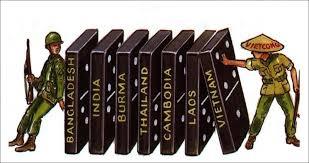


Why did the Americans support the French in Vietnam?
Because they wanted the French support against the UK
Because they wanted the French support in Europe against the USSR.
Because they felt it was right that the French should have an Empire.
Because they wanted the French support against Japan.
What can be considered a lasting effect of Nixon’s Watergate scandal?
Democratic control of the White House
Democratic control of Congress
An economic downturn
Public cynicism about government
Progress for Women’s Rights Movement since 1972 includes:
Greater participation in higher education
Leadership roles in politics and government
Gains in closing the income gap between men and women
All of the listed statements are achievements in women’s rights movement
The Iran Hostage Crisis resulted in which of the following?
A decline in popularity of President Jimmy Carter
A stronger trust in the American government
Improved relations with Iran
An increase in popularity of President Jimmy Carter
The collapse of the Berlin Wall represents
The ending of the cold war with Russia
The end of American involvement in world affairs
The declining power of Japan
The increase of Soviet power in Europe
Which of the following is a cause of the conservative tide in the 1980s?
Dissatisfaction with liberal policies
Emergence of the New Left
Reagan’s popularity
Emergence of the New Right
The handling of the Iraqi War by former President George W. Bush has most often been compared to the situation President Lyndon B. Johnson experienced in
Korea
Japan
Vietnam
Soviet Union

