wayground logo

Free Printable Worksheets

Font size

S
M
L
XL
Worksheets

8th Grade - Second Semester Final

Total questions: 94

Worksheet time: 1hrs 14mins

Name
Class
Date
1.

Air Pollution:

a)

Smoke and harmful gases

b)

Littering and dumping illegally on the ground

c)

Water, soil, minerals, wildlife, forests, etc.

d)

Where something exists or lives

2.

Water Pollution:

a)

Chemicals being released into oceans, lakes, rivers, etc.

b)

Protecting things in nature

c)

Sprays that kill bugs

d)

Prevent leakage in landfills

3.

Land pollution:

a)

Littering and dumping illegally on the ground

b)

Making something new out of something old

c)

Protecting things in nature

d)

Where something exists or lives

4.

Conservation:

a)

Protecting things in nature

b)

Sprays that kill bugs

c)

Littering and dumping illegally on the ground

d)

Making something new out of something old

5.

Recycling:

a)

Making something new out of something old

b)

Sprays that kill bugs

c)

Where something exists or lives

d)

Smoke and harmful gases

6.

Environment:

a)

Where something exists or lives

b)

Making something new out of something old

c)

Protecting things in nature

d)

Prevent leakage in landfills

7.
Which of the following organisms are LEAST closely related?
a)
organisms that share a domain
b)
organisms that share a family 
c)
organisms that share a genus 
d)
organisms that share a species 
8.
The scientific name for an organism is made from the:
a)
class and family name
b)
genus and species name
c)
domain and kingdom name
d)
kingdom and phylum name
9.
Term given to describe the 2 name naming system is:
a)
dichotmous key
b)
binomial nomenclature
c)
2 scientific names
d)
binomial key
10.
Who first proposed binomial nomenclature as a way of classifying organisms?
a)
Carl Linnaeus
b)
Carl's Jr.
c)
Charles Darwin
d)
Henry Groseclose
11.
Cells that have a true nucleus are called....
a)
eukaryotes
b)
prokaryotes
c)
unicellular
d)
multicellular
12.
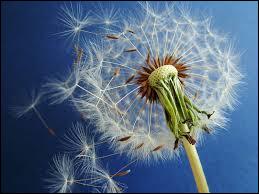
Dandelion, What kingdom does it belongs to?
a)
Plant Kingdom
b)
Animal Kingdom
c)
Fungi Kingdom
d)
Protista Kingdom
13.
The science of describing, classifying, and naming living things is called:
a)
Geology
b)
Biology
c)
Taxonomy
d)
Chemistry
14.

Which 2 organisms would be able to reproduce and produce fertile offspring?

a)

2 organisms in the same class

b)

2 organisms in the same family

c)

2 organisms in the same genus

d)

2 organisms in the same species

15.
The most specific of the classifications is?
a)
class 
b)
order 
c)
genus 
d)
species
16.
Mushrooms are an example of this Kingdom?
a)
Animalia
b)
Protista 
c)
Archea 
d)
Fungi
17.
All of the following are characteristics of all living things except....
a)
Have cell(s) 
b)
Need energy and water
c)
Need oxygen 
d)
Reproduce
18.
The scientific name of Humans is? 
a)
Homo Sapiens
b)
Homo Habilus 
c)
Canis Latrans
19.
A tool used by a taxonomist to identify an unknown organism is known as a __________.
a)
dichotomous key
b)
binomial nomenclature
c)
scientific name
d)
binomial key
20.
A student discovers an arachnid with a segmented abdomen, long legs, and a tail with no stinger. The student uses the dichotomous key below to identify it. Which arachnid has the student found?
a)
Whip Scorpion
b)
Wind Scorpion
c)
Daddy long legs
d)
Scorpion
21.
The part of the bridge used for transportation.  It could be for vehicles or for walking.
a)
piers
b)
abutments
c)
deck
d)
span
22.
All of the forces acting on a bridge.
a)
gravity
b)
loads
c)
wind
d)
weight
23.
What type of bridge is this? 
a)
Arch
b)
Suspension 
c)
Beam 
24.
What type of bridge is this
a)
Arch
b)
Suspension 
c)
Beam 
25.
What type of bridge is this? 
a)
Arch
b)
Suspension 
c)
Beam 
26.
Which is the strongest shape used in engineering?
a)
Triangle
b)
Square
c)
Circle
d)
Rectangle
27.
The force on a bridge because of its own weight.
a)
tension
b)
deck
c)
dead load
d)
live load
28.
These are made of members that are joined to form triangular shapes.
a)
joints
b)
truss
c)
loads
d)
infrastructure
29.
These forces pull on members in the trusses.
a)
tension
b)
compression
30.
These forces push on ends of members in a truss.
a)
tension
b)
compression
31.
The application of science and math in order to solve problems in the real world.
a)
experimenting
b)
researching
c)
engineering
d)
dreaming
32.
A force which acts to shorten the thing it is acting on is called:
a)
Tension
b)
Compression
c)
Gravity
d)
Motion
33.
A force which acts to expand or lengthen the thing it is acting on is called:
a)
Stretch
b)
Tension
c)
Failure
d)
Breaking Point
34.
 A projecting structure supported only at one end, like a shelf bracket or a diving board is known as a:
a)
Bridge Bracket
b)
Bridge Board
c)
Load Support
d)
Cantilever
35.

To spread forces out over a greater area, so that no one spot has to bear the brunt of the concentrated force is:

a)

Transfer

b)

Dissipate

c)

Buckling

d)

Snapping

36.
A local park is interested in building a bridge over a short ravine. They have stressed that keeping costs low is very important to them. What type of bridge would you recommend they build?
a)
Suspension
b)
Beam
c)
Cantilever
d)
Truss
37.

What is the term that refers to changes in the DNA sequence of a single gene?

a)

Mutagen

b)

Mutation

c)

Diversity

d)

Replication

38.

Mutations can benefit humans because they can:

a)

Cause illness

b)

Make an organism more suited to live in its environment.

c)

Make organisms live shorter lives

d)

Cause organisms to grow extra limbs.

39.
Where do mutations occur?
a)
DNA and RNA
b)
DNA 
c)
RNA
d)
mRNA and tRNA
40.
What causes mutations?
a)
Mistakes in replication or environmental substances
b)
The amino acids
c)
Passed down by genetics
d)
It's how your born
41.

Mutations are SOMETIMES helpful to the organism.

a)

true

b)

false

42.

True or false, mutations create genetic diversity?

a)

True

b)

False

43.

What types of living organisms have no genetic material at all?

a)

Insects

b)

Bacteria

c)

Plants

d)

All living organisms have genetic material

44.

Why do most changes to DNA have no effect at all?

a)

Because they're too minor to have any effect

b)

Because the changes are offset by RNA, which cannot change

c)

Because the changes are quickly repaired

d)

Because the changes only occur in a few cells
45.

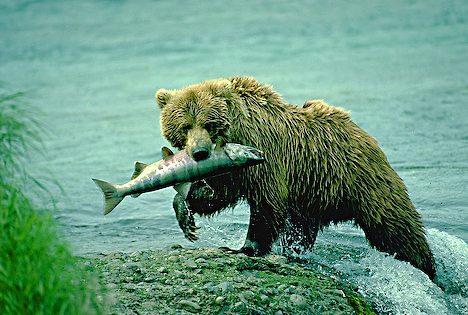
A grizzly bear survives because he is well-adapted to his environment. When he reproduces he passes on those traits to his offspring. this process is called

a)

Natural Selection

b)

Selective Breeding

c)

Random mutations

d)

Variations in a species

46.

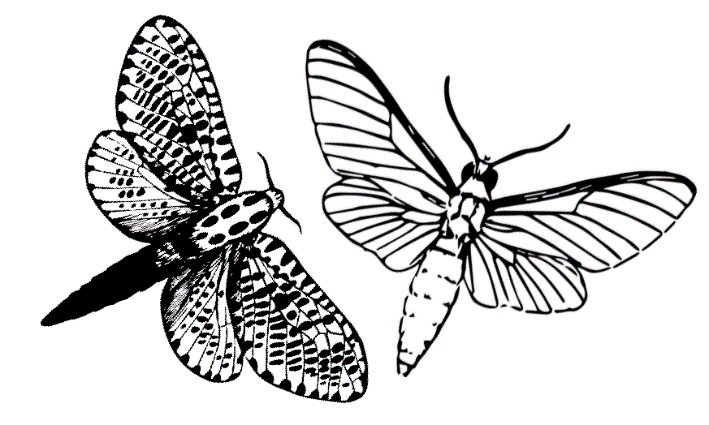
The peppered moth's color camouflaged it on the light colored tree bark. It's color was an example of a/n

a)

Variation

b)

Dominant trait

c)

Recessive trait

d)

Adaptation

47.

Where are hereditary traits stored in all organisms?

a)

In the blood

b)

In the brain

c)

In the DNA

d)

In the heart

48.

Why might it be helpful for a species to have a lot of variations?

a)

They can't be seen by predators

b)

If the environment changes, they might be better able to adapt

c)

It is helpful in asexual reproduction

d)

They don't recognize each other

49.

Heredity is:

a)

Survival of the fittest

b)

The passing of genetic traits from parent to offspring

c)

Believing in false gods

d)

Unexplained

50.

Another term for Natural Selection is:

a)

Breeding

b)

Commensulism

c)

Communism

d)

Survival of the fittest

51.
Survival of the Fittest and Evolution were proposed by what scientist?
a)
Charles Darwin
b)
Albert Einstein
c)
Steven Hawking
d)
Isaac Newton
52.
Behavioral changes of individuals of a species that allow for better survival. (Acquired traits)
a)
Variation
b)
Adaptation
c)
Behavior
d)
Environment
53.
When every organism of a species has died.
a)
Evolution
b)
Natural Selection
c)
Extinction
d)
Artificial Selection
54.
What is the advantage of having different shaped beaks?
a)
To look different from other species.
b)
To be able to eat the food readily available in the environment.
c)
To protect itself against predators.
d)
To protect itself against prey.
55.
Why are advantageous traits more likely to be passed onto offspring?
a)
Because they are more likely to survive and reproduce.
b)
Because they come from dominant alleles.
c)
Because they come from recessive alleles.
d)
Because the trait is an acquired phenotype.
56.

According to natural selection, light colored tree trunks would favor

a)

light colored moths

b)

dark colored moths

c)

red colored moths

d)

red and light colored moths

57.

An inherited trait that helps those organisms that have it to survive

a)

niche

b)

structure

c)

characteristic

d)

adaptation

58.

Which term refers to a farmer choosing the best corn from this year to plant next year?

a)

natural selection

b)

selective breeding

c)

genetic engineering

d)

genetic transformation

59.

This is any variation that makes an organism better suited to its environment.

a)

Evolution

b)

Graduation

c)

Species

d)

Adaptation

60.
Which of the following is a physical adaptation for the underlined animal?
a)
A snake unhinges its jaw to eat a rabbit it just caught.
b)
A hognose snake rolls over, slows its breathing, and hangs its tongue out to pretend to be dead.
c)
A herd of buffalo encircle their young to protect them from a pack of wolves.
d)
A dung beetle rolls a piece of dung across the desert.
61.
Which feature of a rose helps it grow without being eaten by large animals?
a)
flowers with bright colors
b)
sharp thorns
c)
small seeds
d)
deep roots
62.
Which adaptation (for the underlined animal) serves the function of defense?
a)
A walking stick looks like the twig on which it rests.
b)
A porcupine’s quills cause a predator to seek another meal.
c)
A whale filters plankton and krill from the water in which it swims.
d)
A penguin is dark on top and white below to blend in with the water.
63.
Which of the following is a physical adaptation for the underlined animal?
a)
A butterfly has bright colors to warn predators that it is poisonous.
b)
A hognose snake rolls over, slows its breathing, and hangs its tongue out to play dead.
c)
A herd of buffalo encircle their young to protect them from a pack of wolves.
d)
A dung beetle rolls a piece of dung across the desert.
64.
A resting state through the winter. 
Adaptation: Bear sleeping in a cave during the winter months
a)
Locomotion
b)
Hibernation
c)
Migration
d)
Defense
65.
How an animal protects itself Adaptation: Skunk and its spray
a)
Defense
b)
Hibernation
c)
Locomotion
d)
Migration
66.
 Which system is the esophagus in?
a)
digestive
b)
urinary
c)
integumentary
d)
skeletal
67.
 What is the main function of the respiratory system?
a)
take in oxygen and exhale waste like carbon dioxide
b)
move nutrients throughout the body
c)
take in carbon dioxide and exhale oxygen
68.
Where does digestion start?
a)
stomach
b)
mouth
c)
esophagus
69.
 What is the main job of the digestive system? 
a)
break down foods into nutrients that can be used by the body
b)
take in oxygen and exhale waste like carbon dioxide
c)
pump blood throughout the body
d)
makes the body hungry
70.
Which systems main function is to allow movement of the body?
a)
muscular
b)
digestive
c)
skeletal
d)
excretory
71.
The smallest units or parts of living things; the body's building blocks.
a)
cells
b)
organs
c)
tissues
d)
system
72.
Your large and small intestines are part of this body system.
a)
nervous
b)
digestive
c)
muscular
d)
skeletal
73.
A collection of the same kinds of cells working together to do the same job.
a)
cells
b)
tissues
c)
organs
d)
systems
74.
Which system provides shape and support, enables you to move, protects your internal organs, and stores minerals?
a)
skeletal
b)
muscular
c)
digestive
d)
nervous
75.
The main function of the excretory system is....
a)
To filter waste from the blood stream and carry it outside of the body.
b)
To transport nutrients to the body.
c)
To break down nutrients for absorption.
d)
To provide structure and support for the body.
76.
Your skin and hair are parts of your ___________
a)
endocrine system
b)
excretory system
c)
lymphatic system
d)
integumentary system
77.
The endocrine system communicates to the body using....
a)
electrical signals
b)
soluble gases
c)
digestive enzymes
d)
chemical hormones
78.
Which body system is required in producing offspring?
a)
Reproductive System
b)
Endocrine System
c)
Digestive System
d)
Immune System
79.
Which of the following examples is a function of the reproductive system?
a)
Circulating blood
b)
Produce Oxygen
c)
Absorb Nutrients
d)
Produce eggs in females
80.
Organs of this system include the kidneys and bladder
a)
Digestive
b)
Excretory
c)
Immune
d)
Skeletal
81.
This organ system consists of three types of tissues; skeletal, cardiac, and smooth
a)
Skeletal
b)
Muscular
c)
Reproductive
d)
Immune
82.
Includes brain, spinal chord and neurons. 
a)
nervous system 
b)
endocrine system 
c)
respiratory system 
d)
circulatory system 
83.
What kind of engineer designs bridges?
a)
biomedical engineer
b)
environmental engineer
c)
structural engineer
d)
computer engineer 
84.
What is the first version of a design called?
a)
proposal
b)
prototype
c)
provision
d)
prospect
85.
A model of an object (either smaller or larger than the original) with all parts in correct proportion of the original.
a)
Prototype
b)
Scale Model
c)
Mathematical Model
86.
What kind of information can be sent through the nervous system?
a)
hearing a fire alarm
b)
feeling a sharp pencil tip
c)
smelling pancakes or bacon
d)
all of the above and much more
87.
What are kidneys?
a)
curvy shapes that look like a human ear
b)
a pair of respiratory organs used for breathing
c)
red beans often used in chili and salads
d)
a pair of excretory organs that filter waste products from blood
88.
Smooth muscle is related to stomach in the same way that cardiac muscle is related to ________?
a)
lungs
b)
heart
c)
skeletal muscles
d)
strong
89.
This system transports essentials and removes wastes to and from the cells of the body.
a)
circulatory
b)
respiratory
c)
skeletal
d)
integumentary
90.
Which of these 3 systems work together to get the body the oxygen and sugar that it needs to make ATP(energy)?
a)
Digestive - Cardiovascular -Urinary
b)
Cardiovascular - Respiratory - Reproductive
c)
Respiratory - Digestive - Lymphatic
d)
Cardiovascular - Digestive - Respiratory
91.
What function do the endocrine system and nervous system have in common?
a)
Both relay messages to cells throughout the body.
b)
Both produce electrical signals that are carried by neurons
c)
Both produce hormones which are chemical messengers
d)
both remove wastes and toxins from the body
92.
What two systems work together to get rid of infection?
a)
Digestive and immune
b)
Respiratory and circulatory
c)
Circulatory and immune
d)
Immune and endocrine
93.
As part of the skeletal system, bones do all of the following except
a)
protect organs
b)
store calcium
c)
make nerve cells
d)
make blood
94.
The similarities of the bones in the diagram provide evidence that---
a)
The organisms shown lived in the same natural envionrment
b)
The organisms shown may have developed from a common ancestor
c)
The organisms shown have the same genetic diseases
d)
All vertebrate species have identical forelimbs