wayground logo

Free Printable Worksheets

NEW

Font size

S
M
L
XL
Worksheets

Sociology Final

Total questions: 65

Worksheet time: 37mins

Name
Class
Date
1.

The scientific study of society and human behavior.

a)

social sciences

b)

sociology

c)

psychology

d)

anthropology

e)

None of the answers is correct

2.

The observable facts or events that involve human society.

a)

sociology

b)

social phenomenon

c)

social sciences

d)

sociological perspective

3.

A Frenchman and the father of sociology; believed social behavior needed to be studied scientifically; coined the term sociology.

a)

George Herbert Mead

b)

Auguste Comte

c)

Max Weber

d)

Julian Samora

4.

An Englishwoman who conducted early sociological studies in Britain and the United States; one of the first "feminists;" best known for translating Comte's work into English

a)

Harriet Martineau

b)

Jane Addams

c)

Ruth Bader Ginsburg

d)

Julian Samora

5.

A German scholar who emphasized the role conflict plays in social change; coined terms bourgeoisie and proletariat, predicted class conflict.

a)

Booker T. Washington

b)

Auguste Comte

c)

Karl Marx

d)

Max Weber

6.

Developed the concept of the ideal type, a model against which social reality can be measured; influenced the development of the interactionist perspective.

a)

Max Weber

b)

Karl Marx

c)

Herbert Spencer

d)

George Herbert Mead

7.

Used community studies to underscore the significance of race in American society; believed that sociologists should be involved in social reform as well as academic study.

a)

Booker T. Washington

b)

Julian Samora

c)

WEB DuBois

d)

George Herbert Mead

8.

His study of suicide was groundbreaking, he believed suicide was not just an individual problem but a social problem, he coined terms mechanical/organic solidarity.

a)

Auguste Comte

b)

Max Weber

c)

Herbert Spencer

d)

Emile Durkheim

9.

The sole survivor of 9 children, he was pressured as a child, academically, compared society to a human body, Social Darwinism

a)

Auguste Comte

b)

Max Weber

c)

Herbert Spencer

d)

Emile Durkheim

10.

Views society as a set of interrelated parts that work together to produce a stable social system.

a)

Functionalist Perspective

b)

Conflict Perspective

c)

Feminist Perspective

d)

Interactionist Perspective

11.

Focuses on the forces in society that promote competition and change.

a)

Functionalist Perspective

b)

Conflict Perspective

c)

Feminist Perspective

d)

Interactionist Perspective

12.

Marginalized groups are often

a)

racial minorities

b)

ethnic minorities

c)

sexual minorities

d)

religious minorities

e)

All of these answers are correct

13.

TRUE or FALSE? Good sociology can help us to create good public policy.

a)

TRUE

b)

FALSE

14.

What perspective is based on everyone having a role to play?

a)

Feminism

b)

Functionalism

c)

Farxims

d)

Interactionism

15.

What Perspective or "ism" looks at the working class and the rich?

a)

Feminism

b)

Interactionism

c)

Functionalism

d)

Marxism

16.

This is an Example of....

a)

Role conflict

b)

Desocialization

c)

Social Structure

d)

Looking-glass-self

17.

What is Desocialization?

a)

Learning new norms

b)

Process of the giving up or loss of old norms

18.

What is Resocialization?

a)

Process by which one's sense of social values, beliefs, and norms are re-engineered

b)

Giving up old norms

19.

What is Achieved Status?

a)

A status you are born with

b)

A status you are given

20.

What is Master Status?

a)

A status you are given

b)

A status you are born with

c)

A status that has exceptional importance for social identity

21.

What is Ascribed Status?

a)

A status you are born with

b)

A status you are given

22.

What is Role Strain?

a)

Incompatible demands put into a single status

b)

A singular demand put into a single status

23.

What is an example of a Primary Group?

a)

Neighbor

b)

Friends

c)

Family

24.

What is an example of a Secondary Group?

a)

Classmates

b)

Family

c)

Baseball Team

25.

What is in and out groups?

a)

The division of different stereotypes

b)

Family

c)

Groups of people you like and don’t like

26.

What is Groupthink?

a)

A phenomenon when one person thinks for a group

b)

A phenomenon when a group of people get together and start to think collectively
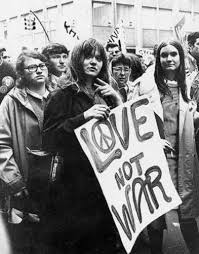
27.

A subgroup that pushes back on the mainstream culture in an attempt to change how society functions is known as the:

a)

Subgroup

b)

Radical Culture

c)

Counterculture

d)

Marginalized

28.

The spread of cultural traits from one culture to another is known as:

a)

Cultural Immersion

b)

Cultural Diffusion

c)

Counterculturalism

d)

Cultural Inclusion

29.

The beliefs and behaviors that a social group shares is known as:

a)

Culture

b)

Counterculture

c)

Subculture

d)

Religion

30.

There can be a culture without a society

a)

True

b)

False

31.

What is the most accurate difference between a culture and a society

a)

A society is always large

b)

A culture has a territory

c)

There is no difference between them

d)

A society has a territory

32.

_________________ define how to behave in accordance with what a society has defined as good, right, and important, and most members of the society adhere to them.

a)

Norms

b)

Narms

c)

Majorities

d)

Stereotypes

33.

A speed limit sign is an example of a/an:

a)

Formal Norm

b)

Informal Norm

34.
Which of the following is true concerning deviant behavior?
a)
Primary deviance usually leads to secondary deviance.
b)
What is considered deviant in one society may not be considered deviant in another society.
c)
Deviant behavior is also illegal behavior.
d)
Adults learn deviant behavior more quickly than children.
35.
How does primary deviance differ from secondary deviance?
a)
Primary deviance derives from primary groups.
b)
Secondary deviance is not as important as primary deviance.
c)
In primary deviance people identify with deviant behavior.
d)
Primary deviance is deviant behavior that only happens once in a while.
36.
It is so important to Chris to appear successful to others that he begins stealing goods from the
warehouse where he works and reselling them to obtain money. What is this an example of?
a)
ritualism
b)
conformity
c)
innovation
d)
retreatism
37.
Consider the following statement: “The more you hang around with a group of teenagers who shoplift, the more likely it is that you will become a shoplifter.” Which of the following theories would most strongly agree with this statement?
a)
control theory
b)
differential association theory
c)
labeling theory
d)
retreatism theory
38.
Theory focuses on how individuals come to be imprinted as a deviant
a)
Labeling Theory
b)
Control Theory
c)
Cultural Transmission Theory
d)
Differential Association Theory
39.
Any act that is labeled as such by those in authority, is prohibited by law, and is punishable by the government
a)
Recidivism
b)
Anomie
c)
Crime
d)
Rebellion
40.
When criminal acts are a defining characteristic of your lifestyle
a)
Primary Deviance
b)
Adolescent Deviance
c)
Alternative Deviance
d)
Secondary Deviance
41.
Students in George’s sixth-grade class avoid him because they know his father is in prison for auto theft. This is an example of
a)
ritualism
b)
rebellion.
c)
a stigma.
d)
attachment.
42.
A computer operator figures out a way to steal from the bank where he works by sending money to
a secret account. This is an example of
a)
retreatism.
b)
control theory.
c)
labeling theory.
d)
white-collar crime.
43.
The police and judicial courts are both part of
a)
the criminal justice system.
b)
control theory
c)
recidivism.
d)
retreatism.
44.
Which of the following is considered deviant behavior in industrial society?
a)
refusal to work
b)
owning private property
c)
competition among employees
d)
agrarian labor
45.
Rape, robbery, and aggravated assault are example of
a)
Organized Crime
b)
Violent Crimes
c)
White-Collar Crime
d)
Victimless Crime
46.
Crimes such as burglary, larceny, motor vehicle theft, and arson are classified as
a)
organized crime
b)
property crime
c)
white collar crime
d)
victimless crime
47.
Which of the following is a job that is created and maintained because of deviance? 
a)
educator
b)
security guard
c)
senator
d)
nurse
48.
Which of the 4 deviant responses outlined in strain theory would describe someone who acts like they want to succeed, but doesn't actually make an effort?
a)
Rebellion
b)
Retreatism
c)
Ritualism
d)
Innovation
49.
The process that teaches the norms, values, and other aspects of a culture to new group members.
a)
Internalization
b)
Socalization
c)
Primary Socialization
d)
Secondary Socialization
50.
Philosophers like John Locke theorize that ___________ makes us who we are
a)
Environment
b)
Genes
c)
Family
d)
Religion
51.
Our biological makeup determining who we are is an example of?
a)
Nature
b)
Nurture
52.
Which of the following is an example of nature?
a)
"I follow the moral teachings of Christianity"
b)
"I don't talk much because I was ignored as a child"
c)
"How could you say sports aren't important, everyone watches them and thats why I like them."
d)
"I get my temper from my father"
53.
Charles H. Cooley developed the Theory of the Looking Glass Self which states ____________.
a)
You must view others through their scope
b)
, the self develops through a process of reflection
c)
Put yourself in others people shoes before judging them
d)
Think of yourself before others
54.
George Herbert Mead's "I" refers to
a)
The "what do I want"/seeking self fulfillment
b)
individual cultural origins
c)
How other interpret our actions
d)
the symbols that others give us
55.
George Herbert Mead's "Me" refers to
a)
The "what do I want" sense of self
b)
How "my" internalized view has been created
c)
how others might interpret our actions.
d)
How my personal beliefs affect others
56.
Which agent of socialization has the most impact on our development?
a)
Education
b)
Family
c)
Mass Media
d)
Peer Groups
57.
unofficial aspects of culture that children are taught in school
a)
hidden curriculum
b)
rites of passage
c)
role taking
d)
peer group
58.
What did Mead call the part of the self that is internal; the secret self?
a)
the role-taking self
b)
the “me”
c)
the “I”
d)
the generalized self
59.
Which of the following is an example of a peer group?
a)
students and teachers
b)
children and parents
c)
classmates and friends
d)
players and coaches
60.
Which of the following is generally the first agent of socialization for most people?
a)
family
b)
mass media
c)
religion
d)
medicine
61.
. Which of the following best explains the difference between the game stage and the play stage?
a)
The game stage is more sophisticated, with several participants being involved, each with a distinct role.
b)
The play stage is more sophisticated because the child’s values, beliefs, and attitudes start to depend on general concepts.
c)
The play stage is less sophisticated because during this time all the child does is mimic the behavior of others without taking on any roles.
d)
The game stage is less sophisticated because the child is not yet able to understand the concept of role taking.
62.
. Which of the following best explains the difference between the game stage and the play stage?
a)
The game stage is more sophisticated, with several participants being involved, each with a distinct role.
b)
The play stage is more sophisticated because the child’s values, beliefs, and attitudes start to depend on general concepts.
c)
The play stage is less sophisticated because during this time all the child does is mimic the behavior of others without taking on any roles.
d)
The game stage is less sophisticated because the child is not yet able to understand the concept of role taking.
63.
Breaking with past experiences and learning new values and mores
a)
Resocialization
b)
Internalization
c)
Socialization
d)
Assimilation
64.
The four primary agents of socialization in the U.S. are
a)
family, work, religion, peers
b)
school, parents, heredity, culture
c)
family, school, peer group, mass media
d)
mass media, family, school, culture 
65.
Which of the following is NOT an example of a total institution?
a)
Prison
b)
Mental Institute
c)
Military boot-camp
d)
Public library