
Font size
S
M
L
XL
 Worksheets
Chemistry Review Spring 2019
Total questions: 114
Worksheet time: 2hrs 15mins
Name
Class
Date
1.
Metals tend to
a)
gain electrons
b)
lose electrons
2.
If my charge becomes 2+ what does that say about me?
a)
I am stealing 2 electrons
b)
I am losing 2 electrons
c)
I am in period 2
d)
I have an atomic # of 2
3.
If I gain electrons I become
a)
Positive because I've added to my atom
b)
negative because I've added electrons
c)
same because i'm balanced
d)
equal because now I have electrons
4.
When metals bond with non-metals they form what type of bonds
a)
covalent
b)
ionic
c)
cooperative
d)
lewis
5.
How do the following two elements bond together?
Na1+ F1-
Na1+ F1-
a)
NaF
b)
NaF3
c)
Na3F
d)
Na1F2
6.
How do the following two elements bond together?
Cr3+ O2-
Cr3+ O2-
a)
CrO
b)
Cr3O2
c)
Cr2O3
d)
CrO3
7.
How do the following two elements bond together?
K1+ S2-
K1+ S2-
a)
KS
b)
K8S
c)
K6S3
d)
K2S
8.
How do the following two elements bond together?
Al3+ O2-
Al3+ O2-
a)
AlO
b)
Al2O3
c)
Al3O6
d)
Al3O2
9.
PbS2
a)
lead sulfide
b)
lead sulfur
c)
lead II sulfide
d)
lead IV sulfide
10.
AgF
a)
silver fluoride
b)
silver fluorine
c)
monosilver monofluoride
d)
silver monofluorine
11.
When a metal loses electrons, it becomes this type of ion.
a)
anion
b)
cation
12.
When an ionic compound is formed, its charge is
a)
negative
b)
neutral (no charge)
c)
positive
13.
What is the formula for magnesium chloride?
a)
MgCl
b)
Mg2Cl
c)
MgCl2
d)
Mg(ClO3)2
14.
The chemical formula for an ionic compound of potassium and oxygen is
a)
KO.
b)
K2O.
c)
K2O2.
d)
KO2.
15.
The first step in naming an ionic compound is always...
a)
Naming the anion
b)
Changing the ending to -ide
c)
Naming the cation
d)
Writing the cation charge
16.
Name the following ionic compound: BeCl2
a)
beryllium chlorine
b)
beryllium II chloride
c)
beryllium chloride
d)
beryllium dichloride
17.
How many valence electrons does a bromine atom have?
a)
1
b)
2
c)
6
d)
7
18.
What is the correct formula for the compound, lithium oxide?
a)
LiO
b)
Li2O
c)
LiO2
d)
Li2O2
19.
What is the charge on the simple (single atom) ion that sulfur forms?
a)
1-
b)
2+
c)
3+
d)
2-
20.
What is the formula for the compound formed by magnesium ions and nitrogen ions?
a)
MgN
b)
Mg2N3
c)
Mg3N2
d)
MgN3
21.
What is the correct formula for Sodium Oxide?
a)
NaO
b)
NaO2
c)
Na2O
d)
Na2O2
22.
4Si + S8 --> 2Si2S4
a)
Synthesis
b)
Decomposition
c)
Single displacement
d)
Double displacement
23.
3Ca + 2AlCl3 --> 3CaCl2 + 2Al
a)
Synthesis
b)
Decomposition
c)
Single diplacement
d)
Double displacement
24.
3KOH + H3PO4 --> K3PO4 + 3H2O
a)
Synthesis
b)
Decomposition
c)
Single displacement
d)
Double displacement
25.
2Pb(NO3)2 --> 2PbO + 4NO2 + O2
a)
Synthesis
b)
Decomposition
c)
Single displacement
d)
Combustion
26.
3Mg + N2 --> Mg3N2
a)
Synthesis
b)
Decomposition
c)
Single displacement
d)
Combustion
27.
2NO2 --> N2 + 2O2
a)
Synthesis
b)
Decomposition
c)
Single displacement
d)
Combustion
28.
P4 + 3O2 --> 2P2O3
a)
Synthesis
b)
Decomposition
c)
Single displacement
d)
Combustion
29.
Fe + H2SO4 --> Fe2(SO4)3 + H2
a)
Synthesis (combination)
b)
Decomposition
c)
Single replacement
d)
Combustion
30.
Which reaction type is the following: C5H10O4 + O2 --> CO2 + H2O
a)
Decomposition
b)
Single Replacement
c)
Combustion
d)
Double Replacement
31.
Which of the following is the general formula for a decomposition reaction?
a)
A + B → AB
b)
AB → A + B
c)
AB + C → AC + B
d)
AB + CD → AC + BD
32.
When balancing equations a ____ can be placed to the left of a formula of a substance to make the equations balanced
a)
charge
b)
subscript
c)
random number
d)
coefficient
33.
What coefficient should be used to make the following equation balanced?
N2+O2--> _NO
N2+O2--> _NO
a)
1
b)
2
c)
3
d)
4
34.
Balance this equation:
__Li + __Cl2 -> __LiCl
__Li + __Cl2 -> __LiCl
a)
2Li + Cl2 -> 4LiCl2
b)
2Li + Cl2 -> LiCl2
c)
2Li + Cl2 -> 2LiCl
35.
C4H12 + O2 --> CO2 + H2O
a)
Synthesis
b)
Combustion
c)
Single Replacement
d)
Double Replacement
36.
H2SO4 + Fe -->H2 + FeSO4
a)
Synthesis
b)
Decomposition
c)
Single Replacement
d)
Double Replacement
37.
PbCl2 + AgNO3 ---> Pb(NO3)2 + AgCl
a)
Synthesis
b)
Decomposition
c)
Single Replacement
d)
Double Replacement
38.
NH3 + HCl ---> NH4Cl
a)
Synthesis
b)
Decomposition
c)
Single Replacement
d)
Double Replacement
39.
Which chemical reaction switches 2 elements?
a)
Double Replacement
b)
Single Replacement
c)
Combustion
d)
Decomposition
40.
Which chemical reaction takes place when 2 substances react to form a single product?
a)
Decomposition
b)
Double Replacement
c)
Single Replacement
d)
Synthesis
41.
At the end of chemical reactions, what is the total mass of the reactants compared to the total mass of the products?
a)
the product is doubled
b)
the product is half the mass of the reactants
c)
the mass is the same
d)
the mass changes depending on the reaction
42.
At the end of chemical reactions, what is the total mass of the reactants compared to the total mass of the products?
a)
the product is doubled
b)
the product is half the mass of the reactants
c)
the mass is the same
d)
the mass changes depending on the reaction
43.

Is this equation balanced?
a)
yes
b)
no
c)
Not enough information
d)
Left side is balanced
44.
Fill in the blanks with coefficient:
PCl5+_ H2O→_ HCl+H3PO4
PCl5+_ H2O→_ HCl+H3PO4
a)
4, 5
b)
1, 6
c)
3, 8
d)
2,2
45.
Which side of a chemical equation is the product side?
a)
Left (before the yields sign)
b)
Right (after the yields sign)
46.
Which problem is balanced?
a)
PbO2 + 2H2--> H2SO4
b)
SO2 + H20 --> H2SO4
c)
2Na + 2H2O --> 2NaOH + H2
d)
2Na + 2H2O --> 2NaOH + H
47.
Balance this equation
_Zn+_HCl-->_ZnCl2 +_H2
_Zn+_HCl-->_ZnCl2 +_H2
a)
1,1,2,1
b)
1,1,1,2
c)
1,2,1,1
d)
2,1,1,1
48.
Balance this equation.
_Mg + _Cl2 --> _MgCl2
_Mg + _Cl2 --> _MgCl2
a)
1, 2,1
b)
already balanced
c)
2,1,1
d)
1,1,2
49.
Balance this equation
_N2 + _H2 --> _NH3
_N2 + _H2 --> _NH3
a)
1,2,3
b)
1,3,2
c)
1,1,2
d)
2,1,1
50.

The blue numbers in the image below represent ________
a)
Charges
b)
coefficients
c)
subscripts
d)
none of the answers are correct
51.
N2 + H2 = NH4
a)
Balanced
b)
Unbalanced
52.
What does the Law of Conservation of Mass state?
a)
Matter cannot be gained or lost in a chemical reaction.
b)
Matter can only be lost in a chemical reaction.
c)
Matter can only be gained in a chemical reaction.
d)
Matter can be gained and lost in a chemical reaction.
53.
In chemistry, a "mole" is:
a)
The mass of an atom
b)
a large number used to count particles
c)
based on the volume of a substance
54.
How many atoms of iodine are in a mole of iodine?
a)
53
b)
63.55g
c)
126.9
d)
6.02 x 10²³
55.
The number 6.02 x 10²³ is called...
a)
Obama's number
b)
Bohr's number
c)
Trump's number
d)
Avogadro's number
56.
We use the periodic table to calculate...
a)
mass
b)
molar mass
c)
moles
57.
What is the molar mass of NaCl?
a)
58.45g/mol
b)
28g/mol
c)
12g/mol
d)
6.02 x 10²³
58.
What is the molar mass of C2H4O2?
a)
40g
b)
50g
c)
60g
d)
68g
59.
How do we get mass from moles?
a)
multiply by avogadro's number
b)
multiply by molar mass
c)
divide by avogadro's number
d)
divide by molar mass
60.
What would be the mass of 1.5mol H2O
a)
20
b)
27
c)
32
d)
40
61.
If I need 20.4 moles of sodium chloride, how much should I weigh out?
a)
0.549 g
b)
112 g
c)
1192 g
d)
5077 g
62.
Which has more molecules?
a)
1 mole H2O
b)
1 mole Al(OH)3
c)
1 mole NaCl
d)
There are all the same
63.
Heat and Temperature are the same thing
a)
True
b)
False
64.
Why water is used as a cooling agent in car engine?
a)
Water has low specific heat capacity.
b)
Water has high specific heat capacity.
c)
Water is denser than oil
d)
Water has low boiling point
65.
Heat is the movement of ______.
a)
radiation
b)
thermal energy
c)
cold
d)
fire
66.
The flow of thermal energy from warmer objects to cooler objects is called ______.
a)
heat
b)
movement
c)
friction
d)
energy
67.
To measure the temperature difference between two cups of water, you would use a _____.
a)
measuring cup
b)
ruler
c)
thermometer
d)
balance scale
68.
Is melting endothermic or exothermic?
a)
endothermic
b)
exothermic
69.
Is freezing endothermic or exothermic?
a)
endothermic
b)
exothermic
70.
What are the units of Q (heat)?
a)
Joules or calories
b)
grams
c)
°C or K
d)
J/g°C or cal/g°C
71.
What is the formula for ΔT?
a)
Tf - Ti
b)
Ti - Tf
c)
Ti + Tf
d)
Tf x Ti
72.
What is the symbol for Thermal Energy?
a)
Q
b)
t
c)
m
d)
C
73.
The amount of energy required to raise the temperature 1ºC for every kilogram is called____?
a)
Thermal Energy
b)
Specific Heat
c)
Temperature
d)
Kinetic Energy
74.
Which of the following has a full valence shell?
a)
Oxygen
b)
Neon
c)
Barium
d)
Carbon
75.
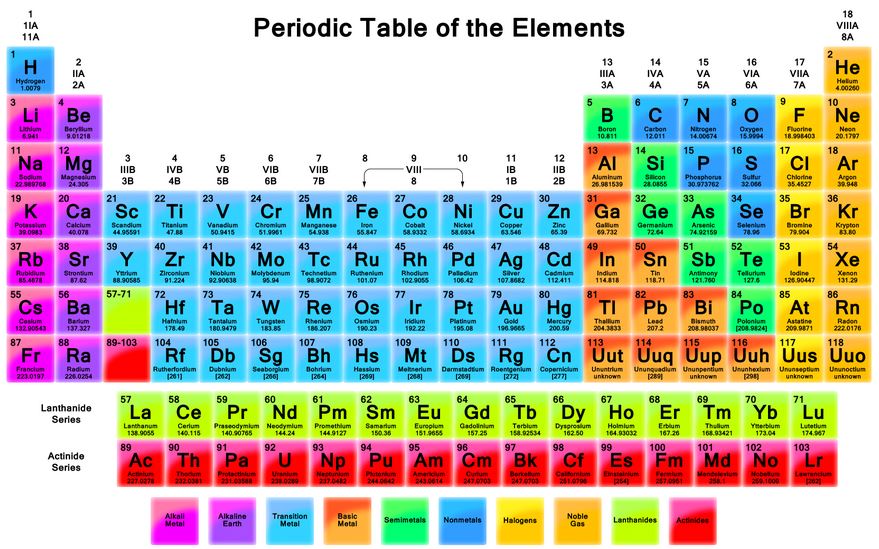
Elements on the LEFT side of the periodic table will most likely form:
a)
Positive ions
b)
Negative ions
c)
Neutral Ions
d)
None of these
76.
An ionic bond forms when atoms ___________ electrons.
a)
gain
b)
share
c)
increase
d)
transfer
77.
Which type of bond has an equal sharing of electrons?
a)
Polar Covalent
b)
Non Polar Covalent
c)
Ionic
d)
Metallic
78.
Which type of bond has an unequal sharing of electrons?
a)
Polar Covalent
b)
Non Polar Covalent
c)
Ionic
d)
Metallic
79.
Which type of bond has a transfer of an electron from on atom to another?
a)
Polar Covalent
b)
Non Polar Covalent
c)
Ionic
d)
Metallic
80.
All chemical bonds involve two atoms sharing electrons.
a)
True
b)
False
81.
Chemical bonds form when atoms
a)
combined nuclei
b)
give up neutrons
c)
gain protons
d)
share or transfer electrons
82.
If an atom loses two electrons what charge will it have?
a)
+ 2
b)
- 2
c)
+1
d)
-1
83.
If an atom gains one electron what charge will it have?
a)
-2
b)
-1
c)
+1
84.
Covalent compounds
a)
Share electrons
b)
transfer electrons
c)
contain a sea of electrons
d)
conduct electricity
85.
What is the number of valence electrons for Oxygen?
a)
8
b)
6
c)
2
d)
1
86.

How many valence electrons in this structure?
a)
6
b)
5
c)
4
d)
7
87.
When electrons are shared unequally a/an ___________ bond is formed
a)
ionic
b)
hydrogen
c)
polar covalent
88.
A lone pair is defined as
a)
A pair of bonding electrons
b)
One non-bonding electron
c)
A pair of non-bonding electrons
d)
A pair of electrons on the central atom
89.
What is the VSEPR theory used to predict?
a)
Bond Strength
b)
Polarity
c)
Molecular Shape
d)
Electronegativity
90.
Which of the following shapes has an unshared pairs of electrons on the central atom?
a)
Bipyramidal
b)
Bent
c)
Trigonal Planar
d)
Tetrahedral
91.
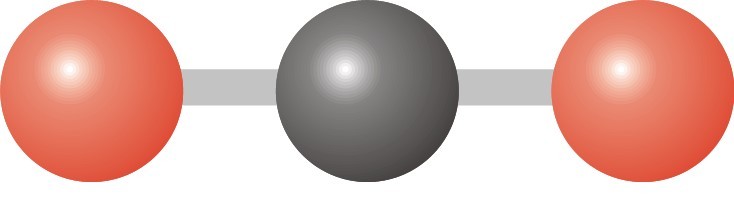
Which molecule would have this molecular geometry?
a)
BF3
b)
CH4
c)
PCl5
d)
CO2
92.
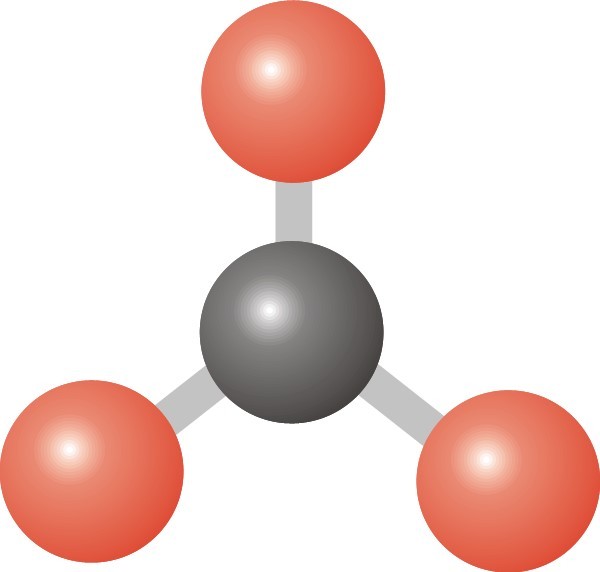
What molecule could this be?
a)
BF3
b)
CH4
c)
H2O
d)
CO2
93.
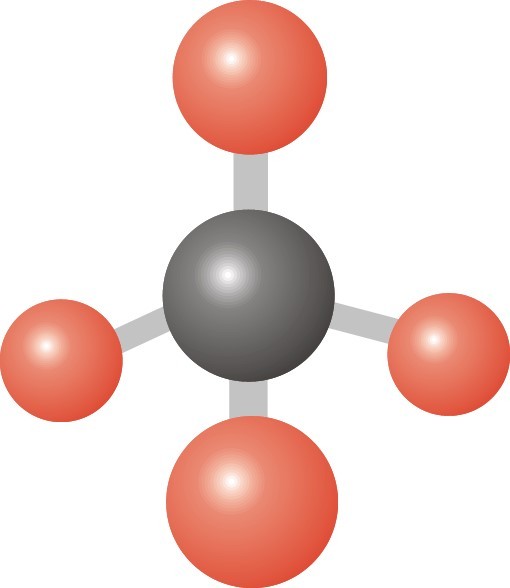
Who could this molecule be?
a)
CH4
b)
CO2
c)
PCl5
d)
BF3
94.
What molecular geometry would PH3 have?
a)
Trigonal Planar
b)
Trigonal Bipyramidal
c)
Bent
d)
Linear
95.
How many lone pairs of electrons are on the P atom in PF3?
a)
1
b)
2
c)
3
d)
0
96.
What is the measure of a tetrahedral bond angle?
a)
90 Degrees
b)
109.5 Degrees
c)
120 Degrees
d)
180 Degrees
97.

Will this molecule be polar or nonpolar? PH3
a)
polar
b)
nonpolar
98.

What molecular shape is the structure shown here? (BCl3)
a)
linear
b)
trigonal planar
c)
tetrahedral
d)
trigonal pyramidal
99.
How many carbon atoms are in methane?
a)
1
b)
2
c)
3
d)
4
100.
How many carbon atoms are in ethane?
a)
1
b)
2
c)
3
d)
4
101.
How many carbon atoms are in propane?
a)
1
b)
2
c)
3
d)
4
102.
How many carbon atoms are in butane?
a)
1
b)
2
c)
3
d)
4
103.
Hydrocarbons are compounds that contain
a)
Carbon and Nitrogen
b)
Carbon and Hydrogen
c)
Carbon, and Oxygen
d)
Carbon, Oxygen, and Hydrogen
104.
Which of the following elements must be present in any organic compound?
a)
Carbon
b)
Oxygen
c)
Potassium
d)
Hydrogen
105.
Which of the following compounds is an example of hydrocarbon?
a)
CO2
b)
C2H6
c)
C2H5OH
d)
CH3COOH
106.

Name this alkane
a)
Methane
b)
Ethane
c)
Propane
d)
Butane
107.
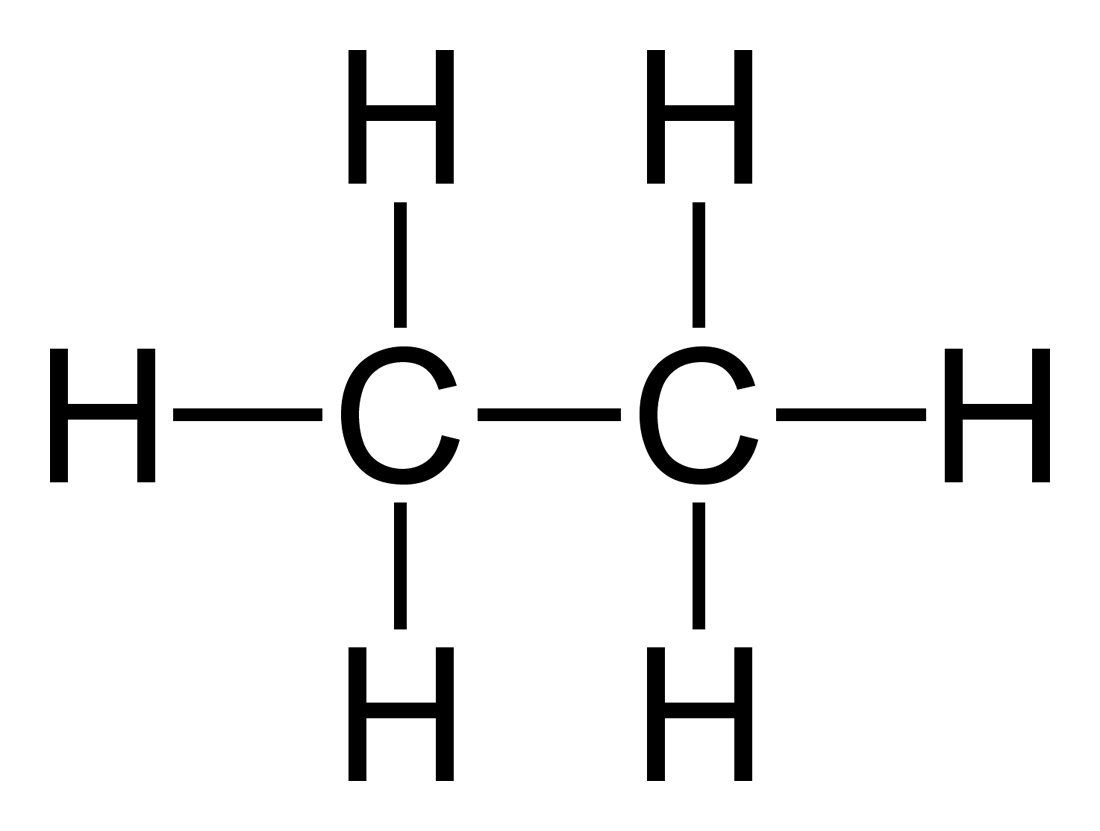
Name this alkane
a)
Methane
b)
Ethane
c)
Propane
d)
Butane
108.
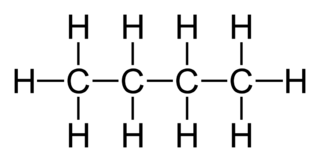
Name this alkane
a)
Methane
b)
Ethane
c)
Propane
d)
Butane
109.
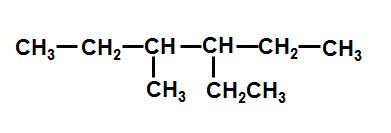
Give the IUPAC name for this compound
a)
3-methyl-4-ethylhexane
b)
3-ethyl-4-methylhexane
c)
3-methyl-4-ethylheptane
d)
3-ethyl-4-methylheptane
110.
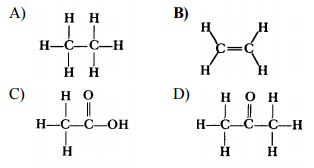
Which formula represents an unsaturated hydrocarbon?
a)
A
b)
B
c)
C
d)
D
111.

What chemical is this? (C5H10)
a)
Pentene
b)
Pentane
c)
Hexane
d)
Heptene
112.
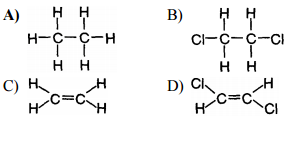
Which formula represents a saturated hydrocarbon?
a)
A
b)
B
c)
C
d)
D
113.
Alkanes are known as saturated hydrocarbons because they contain only carbon-hydrogen single bonds.
a)
True
b)
False
114.
How many hydrogen atoms are in butane
a)
4
b)
6
c)
8
d)
10
Reset

