wayground logo

Free Printable Worksheets

Font size

S
M
L
XL
Worksheets

Semester 1 Final Review

Total questions: 111

Worksheet time: 2hrs 48mins

Name
Class
Date
1.

What is the number before a chemical formula called?

Example: 2H2 + O2 ---> 2H2O

a)

Coefficient

b)

Atom

c)

Subscript

d)

Equation

2.

Which of the following equations are correctly balanced?

a)

12CO2 + H2O ---> C6H12O6 + O2

b)

CO2 + H2O ---> 3C6H12O6 + O2

c)

CO2 + 9H2O ---> C6H12O6 + O2

d)

6CO2 + 6H2O ---> C6H12O6 + 6O2

3.

Balance this equation:

H2 + Cl2 ---> HCl

a)

It is balanced.

b)

H2 + Cl2 ---> 2HCl

c)

3H2 + Cl2 ---> 6HCl

d)

H2 + 3Cl2 ---> 6HCl

4.
Breaking down a substance into simpler substances
a)
Displacement
b)
Synthesis
c)
Decomposition
d)
Oxidation
5.
What type of reaction is the equation C + O→ CO2?
a)
Synthesis Reaction
b)
Decomposition Reaction
c)
Single Displacement Reaction
d)
Double Displacement Reaction
6.
What type of reaction is the equation 2NaCl →2Na +Cl2?
a)
Synthesis Reaction
b)
Decomposition Reaction
c)
Single Displacement Reaction
d)
Double Displacement Reaction
7.
Cu + 2Ag(NO3) → 2Ag + Cu(NO3)
a)
Synthesis Reaction
b)
Decomposition Reaction
c)
Single Displacement Reaction
d)
Double Displacement Reaction
8.
Ca3(PO4)2 + 3 H2SO4 + 3 CaSO4 + 2 H3(PO4)
a)
Synthesis Reaction
b)
Decomposition Reaction
c)
Single Displacement Reaction
d)
Double Displacement Reaction
9.
Consider the chemical equation CH4 + 2 O2 → CO2 + 2 H2O. In this equation, CH4 is a
a)
product
b)
reactant
c)
displacement
10.
Consider the equation 4 Fe+3 O2 → 2 Fe2O3 . In this equation, 3 O2 is a
a)
product
b)
reactant
c)
compound
11.

Nonmetals tend to

a)

gain electrons

b)

lose electrons

12.

Metals tend to

a)

gain electrons

b)

lose electrons

13.
How do the following two elements bond together?
Na1+  F1-         
a)
NaF
b)
NaF3
c)
Na3F
d)
Na1F2
14.
How do the following two elements bond together?
Cr3+  O2-         
a)
CrO
b)
Cr3O2
c)
Cr2O3
d)
CrO3
15.
How do the following two elements bond together?
K1+  S2- 
a)
KS
b)
K8S
c)
K6S3
d)
K2S
16.
AgF
a)
silver fluoride
b)
silver fluorine
c)
monosilver monofluoride
d)
silver monofluorine
17.

When a nonmetal gains electrons, it becomes this type of ion.

a)

Anion

b)

Cation

18.

When a metal loses electrons, it becomes this type of ion.

a)

anion

b)

cation

19.
Nonmetals form ____ by ____ electrons.
a)
Cations, gaining
b)
Cations, losing
c)
Anions, gaining
d)
Anions, losing
20.
Which of the following BEST describes ionic bonds?
a)
Bond held together by a sea of electrons
b)
Bond of two ions of opposite charges held together by electrostatic forces
c)
Bond held together by the sharing of electrons
d)
Bond between hydrogen and an anion or polyatomic ion.
21.

Is this compound ionic or covalent?

a)

ionic

b)

covalent

22.

Is this compound ionic or covalent?

a)

ionic

b)

covalent

23.
How many valence electrons does a bromine atom have?
a)
1
b)
2
c)
6
d)
7
24.
Which is the Roman Numeral for +3?
a)
I
b)
II
c)
III
d)
+III
25.
The name of Cu₃N₂ is
a)
copper (III) nitride
b)
copper (II) nitride
c)
copper nitride
d)
tricopper dinitride
26.
How do covalent bonds form?
a)
Donating & receiving valence e- between atoms.
b)
Opposite slight charges attract each other between compounds.
c)
Scientists are still not sure how they form.
d)
Sharing valence e- between atoms.
27.
What two types of atoms make a covalent bond?
a)
2 Nonmetals
b)
1 Nonmetal and 1 Metal
c)
2 Metals
d)
2 Noble Gases
28.
Which of the following is NOT formed by a covalent bond?
a)
K2S
b)
H2O
c)
I2
d)
CO2
29.
What do we call a covalent bond where electrons are shared UNEVENLY or UNEQUALLY?
a)
Ionic
b)
Polar Covalent
c)
Nonpolar Covalent
d)
Van der Waals Force
30.
Which of the following is NOT considered a diatomic element?
a)
Carbon
b)
Nitrogen
c)
Chlorine
d)
Iodine
31.
What two types of atoms make a covalent bond?
a)
2 Nonmetals
b)
1 Nonmetal and 1 Metal
c)
2 Metals
d)
2 Noble Gases
32.
How are covalent bonds explained?
a)
When one atom takes the other atom's electron
b)
When the atom shares an electron with an another atom
c)
When the two nucleus merge
d)
When the neutrons leave the nucleus
33.

What is a valence electron?

a)

an electron that is found in the outermost shell of an atom.

b)

an electron found in the innermost shell of an atom.

c)

an electron found in the middle shell.

34.

The vertical (up and down) columns in the Periodic Table are called

a)

groups

b)

towers

c)

periods

d)

atomic numbers

35.
The Modern Periodic Table of Elements is arranged by
a)
atomic mass
b)
atomic number
c)
valence electrons
d)
number of isotopes
36.
Which is an alkali metal?
a)
Magnesium
b)
Iron
c)
Sodium
d)
Europium
37.
Which is a halogen?
a)
Helium
b)
Chlorine
c)
Oxygen
d)
Neptune
38.
How did Mendeleev arrange the elements?
a)
alphabetical 
b)
density
c)
melting point
d)
atomic mass
39.
The horizontal row on the periodic table is called a
a)
group
b)
family
c)
period
d)
atomic number
40.

Who invented the Periodic Table?

a)

Mendeleev

b)

Bohr

c)

Lewis

d)

Democritus

41.
Elements in the same ________ are more chemically similar.
a)
group
b)
period
c)
club
d)
table
42.
Which of the following is not a property of metals?
a)
brittle
b)
malleable
c)
lustrous
d)
conductive
43.

What is the name of group number 1?

a)

halogens

b)

noble gases

c)

alkali metals

d)

alkaline earth metals

44.

What is the name of group number 2?

a)

transition metals

b)

halogens

c)

metaloids

d)

alkaline earth metals

45.

What group number are the halogens found?

a)

18 (8A)

b)

1

c)

2

d)

17 (7A)

46.
Name group 18 on the periodic table.
a)
alkali metals
b)
alkaline earth metals
c)
transition metals
d)
noble gases
47.
Name groups 3 - 12 on the periodic table.
a)
noble gases
b)
halogens
c)
metalloids
d)
transition metals
48.

Who discovered the nucleus?

a)

Rutherford

b)

Bohr

c)

Thomson

d)

Dalton

49.

Who proposed a model with electrons moving in specific layers?

a)

Rutherford

b)

Bohr

c)

Thomson

d)

Dalton

50.

Who discovered the electrons?

a)

Rutherford

b)

Bohr

c)

Thomson

d)

Dalton

51.

What is the name of the group of elements that includes Mg and Ca

a)

Alkali Metals

b)

Alkaline Earth Metals

c)

Halogens

d)

Noble Gases

52.

What is the name of the group that contains Ar and Kr?

a)

Alkali Metals

b)

Alkaline Earth Metals

c)

Halogens

d)

Noble Gases

53.

Which of the following pairs of elements belong to the same group?

a)

H and He

b)

Li and Be

c)

C and Pb

d)

Ga and Ge

54.

Which of the following pairs of elements belong to the same period?

a)

Na and Cl

b)

Na and Li

c)

Na and Cu

d)

Na and Ne

55.
Ionization energy is the...
a)
energy needed to remove the outermost electron.
b)
ability of an atom to attract electrons from another atom.
56.
Electronegativity is the...
a)
energy needed to remove the outermost electron.
b)
ability of an atom to attract electrons from another atom.
57.
Which element has the smaller atomic radius: potassium (K) or bromine (Br)?
a)
potassium (K)
b)
bromine (Br)
58.
Which element has the greatest ionization energy: Aluminum (Al)    or    Chlorine (Cl)?
a)
Aluminum (Al)
b)
Chlorine (Cl)
59.
Which element has the greatest electronegativity: Nitrogen (N) or Arsenic (As)?
a)
Nitrogen (N)
b)
Arsenic (As)
60.
Which element has the greatest ionization energy: Aluminum (Al)    or    Chlorine (Cl)?
a)
Aluminum (Al)
b)
Chlorine (Cl)
61.
The Modern Periodic Table of Elements is arranged by
a)
atomic mass
b)
atomic number
c)
valence electrons
d)
number of isotopes
62.

Which has the larger Electronegativity?

a)

Carbon

b)

Nitrogen

63.

Which of the following will have a larger radius than Gallium (Ga)?

a)

Ge

b)

Al

c)

Mg

d)

Sr

64.

Which of these has the smallest atomic radius?

a)

K

b)

Rb

c)

Fr

d)

Cs

65.

Which has the smaller ionization energy?

a)

P

b)

Mg

66.

Which has the highest ionization energy?

a)

Ca

b)

As

c)

Br

67.
Subatomic particle with a charge of 0
a)
neutron
b)
proton
c)
electron
d)
quark
68.

Subatomic particles with a negative charge

a)

Electrons

b)

Neutrons

c)

Protons

d)

Quarks

69.
Subatomic particles with a positive charge
a)
neutrons
b)
atomic mass
c)
protons
d)
isotopes
70.

These are found in the nucleus and have a neutral charge.

a)

proton

b)

electron

c)

neutron

71.

In an atom, the number of protons is equal to the number of ____________.

a)

energy levels

b)

neutrons

c)

neurons

d)

electrons

72.
What are subatomic particles? 
a)
the nucleus 
b)
electron cloud
c)
positive charge
d)
electrons, protons, and neutrons
73.
How many neutrons does the isotope of lithium have?
a)
8
b)
3
c)
4
d)
5
74.
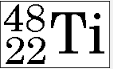
How many protons does this isotope of titanium have?
a)
48
b)
22
c)
26
d)
70
75.
How many neutrons does the isotope below have?     89 36Kr
a)
53
b)
36
c)
89
d)
125
76.
How many neutrons does an atom of the isotope Neon-22 have?
a)
12
b)
10
c)
22
d)
20
77.

Isotopes of an element have a different number of...

a)

Protons

b)

Neutrons

c)

Electrons

d)

Mass

78.
What is the mass number defined as?
a)
the number of protons
b)
the number of protons and neutrons
c)
the number of neutrons
d)
the number of protons and electrons
79.
What is the atomic number?
a)
the number of protons
b)
the number of protons and neutrons
c)
the number of neutrons
d)
the number of protons and electrons
80.

12 protons and 13 neutrons

a)

Mg-12

b)

Mg-13

c)

Mg-25

d)

Mg-24.305

81.

9 protons and 9 neutrons

a)

Fluorine-18

b)

Fluorine-9

c)

Fluorine-16

d)

Fluorine-18.998

82.
What are the units for molar mass?
a)
grams
b)
amu
c)
grams/mole
d)
liters
83.

Avogadro’s number is:

a)

6.02 x 10²²

b)

6

c)

6.02 x 10²³

d)

3.01 x 10²³

84.

Shivani measures out 6.0 moles of epsom salt (MgSO4) to put in her bath. How many grams of MgSO4 went in the bath?

a)

3.6 x 1024 g

b)

720 g

c)

0.050 g

d)

340 g

85.
How many molecules are there in 31.8 moles of water?
a)
5.28 x 10⁻²³ molecules
b)
1.91 x 1025 molecules
c)
5.28x 10⁻²⁵
d)
1.91 x 10²²
86.
What is Democritus known for?
a)
atomos
b)
combining and separating atoms
c)
saying the atom is empty space
d)
saying electrons orbit on specific paths
87.
What is Bohr known for?
a)
atomos
b)
combining and separating atoms
c)
saying the atom is empty space
d)
saying electrons orbit on specific paths
88.

Who discovered the Atomic Theory and when did they do it?

a)

Millikan in 1808

b)

Neils Bohr in 2021

c)

Democritus in 4th century BC

d)

John Dalton in 1808

89.

Who discovered the nucleus and when ?

a)

James Chadwick in 1897

b)

Democratis in 400 BC

c)

JJ Thompson in 1897

d)

Rutherford in 1911

90.
What atom matches this electron configuration?
1s22s22p63s23p64s23d10
a)
Zinc
b)
Copper
c)
Nickel
d)
Germanium
91.
What electron configuration matches an oxygen atom?
a)
1s22s22p63s2, 3p64s23d104p5
b)
1s22s22p4
c)
1s22s22p6
d)
1s22s22p63s23p64s23d1
92.
The electron configuration of an atom is 1s22s22p6.  The number of electrons in the atom is 
a)
3
b)
6
c)
8
d)
10
93.
Identify the Electron Configuration for Aluminum (Al)
a)
1s2s2p3s3p1
b)
1s2s2p3s3p3
c)
1s2s2p3s4p1
94.

What is the maximum number of electrons that an S orbital can have?

a)

1 electron

b)

2 electrons

c)

3 electrons

d)

4 electrons

95.

How many electrons can the d sublevel(orbital) hold?

a)

8

b)

10

c)

2

d)

4

96.
How many valence electrons does Chlorine have?
a)
5
b)
2
c)
7
d)
5
97.
Which of the following is a p block element?
a)
Ca
b)
Ar
c)
Re
d)
Au
98.

Which area on the periodic table represents the electrons in the "d" sublevel?

a)

representative elements

b)

columns 3-8

c)

rare earth elements

d)

transition elements

99.
Anions are _______ that form ____________ ions and __________ electrons.
a)
nonmetals, positive, lose
b)
nonmetals, negative, gain
c)
metals, positive, gain
d)
metals, positive, lose
100.
How many electron can be found in a p orbital?
a)
2
b)
3
c)
4
d)
6
101.
Which element is pictured?
a)
neon
b)
fluorine
c)
magnesium
d)
argon
102.

This could be the dot diagram of

a)

Mg

b)

Cl

c)

C

d)

O

103.

This is a correct dot diagram for nitrogen (N)

a)

true

b)

false

104.

This is a correct dot diagram for neon (Ne)

a)

true

b)

false

105.
This could be the dot diagram of
a)
P
b)
Ar
c)
Na
d)
B
106.
Most elements will gain or lose electrons so that they end up with _______ valence electrons.
a)
2
b)
6
c)
8
d)
10
107.
Which of the following is the correct Lewis structure for the compound PBr3?
a)
structure A
b)
structure B
c)
structure C
d)
structure D
108.
Which of the following is the correct Lewis dot structure for the molecule fluorine (F2)?
a)
A
b)
B
c)
C
d)
D
109.

According to this model what is warmer, the orange dot or the green dot?

a)

Orange dot

b)

Green dot

110.

A forest fire is burning near a cold lake. Which image correctly shows the convection cell that would develop?

a)

A

b)

B

c)

C

d)

D

111.

When air is heated, its density ___________.

a)

increases

b)

decreases

c)

remains the same