
Font size
 Worksheets
The Atom
Total questions: 60
Worksheet time: 2hrs 39mins

The smallest particle into which an element can be divided and still be the same element is a(n)
proton
neutron
electron
atom

Which subatomic particle has a positive charge?
proton
nuetron
electron
atom

Which subatomic particle has a negative charge?
proton
neutron
electron
atom

Which subatomic particle has a neutral (0) charge?
proton
nuetron
electron
atom

Why is the overall charge of an atom neutral (0)?
They have the same number of protons and neutrons.
They have the same number of protons and electrons.
They have the same number of electrons and neutrons.
Which TWO of the following subatomic particles are inside the nucleus?
protons
electrons
neutrons
There are no subatomic particles in the nucleus of an atom.
The number of which subatomic particle determines the element of an atom (if it's carbon, oxygen, nitrogen, etc.)?
proton
neutron
electron
Subatomic particles do no determine the element of an atom.

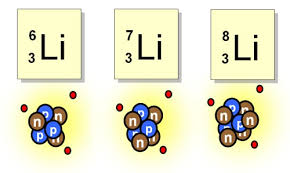
Use a periodic table to help you determine the element in the image. (Hint: Use the # of protons.)
lithium
oxygen
magnesium
carbon

Use a periodic table to help you determine the element in the image. (Hint: Use the # of protons.)
carbon
lithium
beryllium
nitrogen

Use a periodic table to help you determine the element in the image. (Hint: Use the # of protons.)
boron
beryllium
neon
lithium

How many protons does fluorine have?
19
1
9
10

How many neutrons does nitrogen have?
7
14
0
6

Using the diagram as a reference, how many electrons does lithium have in its OUTER shell?
1
3
8
2

How many electrons does silicon have?
28
14
0
10

Using the diagram as a reference, how electrons does carbon have in its OUTER shell?
2
6
4
1

Using the diagram as a reference, how electrons does neon have in its OUTER shell?
10
8
2
6



1s2 2s2 2p6 3s2

1s22s22p63s23p6
4s23d104p6
[Xe] 6s2 4f14 5d9
3s2 3p2

1s22s22p63s23p64s23d10


