Worksheets
Activate 2 Chemistry Review
Total questions: 59
Worksheet time: 40mins
the basic structural unit of matter
atom
matter
element
nucleus
the positively charged subatomic particle contained in the nucleus of an atom
proton
neutron
electron
matter
a subatomic particle, contained in the nucleus of an atom, having the same mass as a proton but no electrical charge
proton
neutron
electron
matter
a negatively charged subatomic particle that orbits the nucleus of an atom
proton
neutron
electron
matter
an arrangement of the elements according to their atomic numbers so that elements with similar properties are in the same column and properties repeat from row to row
Periodic Table of Elements
Atomic Theory
Isotopes
Subatomic Particles
a unique number for each element that equals the number of protons in an atom of that element
element name
element symbol
atomic number
atomic mass
the mass of an atom, calculated by adding the number of protons and neutrons in the nucleus of the atom
element name
element symbol
atomic number
atomic mass
a row on the Periodic Table of Elements
family
period
row
isotope
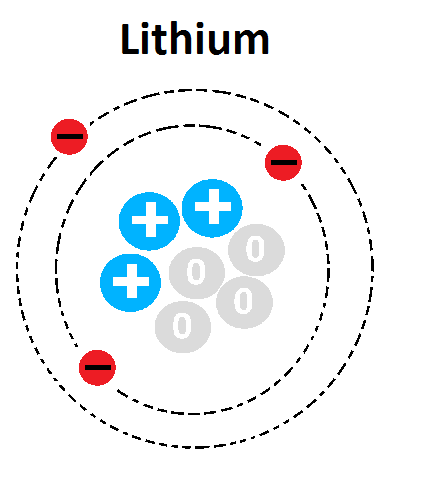


On the periodic table, Groups are
Horizontal rows
Vertical columns

How many valence electrons?
2
3
4
5


How many protons does an aluminium atom have? (Use the image to help you)
27
14
40
13
How many levels can the fist level of an BOHR model hold??
2
4
6
8
Which atom has 4 protons 4 neutrons and 2 electrons


Which group includes non-reactive gasses that have a full outer electron shell?
Alkai Metals
Alkaline Metals
Halogens
Noble Gases
Boron has an atomic number of 5 and a mass number of 11. Which is the correct electron configuration?
5 electrons in the first level
2 electrons in the first level and four in the second
2 electrons in the first level and 3 in the second
2 electrons in the first level, 8 in the second, and one in the third
Argon has an atomic number of 18 and a mass number of 40. How many neutrons are in an atom of Argon?
18
22
40
58
What is the definition of a solvent?
The substance that is dissolved.
The substance in which the solute is dissolved.
Unable to be dissolved.
If a material's composition varies from region to region, it can be classified as _______________
homogeneous
heterogeneous
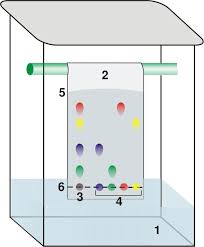
Dyes in water soluble markers may be separated by means of..
crystallization
sublimation
chromatography
sedimentation


Magnesium chloride + Sodium → ?
Sodium chloride + Magnesium
Magnesium chloride + Sodium (No change)
Sodium magnesium + Chlorine
Hydrochloric acid + magnesium hydroxide -->
Which is the process that breaks up rock on Earth’s surface?
deposition
melting
compaction
weathering
Any rock that forms from another rock as a result of changes in heat or pressure (or both) is a:
chemical rock
igneous rock
sedimentary rock
metamorphic rock

Which of these is an example of a metamorphic rock?
marble
limestone
granite
basalt
Pumice has air bubbles in it, which makes it very light. Pumice is an example of...
sedimentary rock
metamrophic rock
igneous rock
The mantle "flows" because of large differences in temperature from the bottom to the top, which create convection currents.
True
False
The mantle "flows" because of large differences in temperature from the bottom to the top, which create convection currents.
True
False