
 Worksheets
Leaving Certificate Chemistry: Families of Organic Compounds
Total questions: 80
Worksheet time: 56mins
A compound in which one or more of the hydrogen atoms in an alkane molecule have been replaced by halogen (Group VII) atoms.
(a)
The common name (as opposed to IUPAC name) for CHCl3.
(a)
The IUPAC name for CHCl3.
(a)
Name the compound CH3CH2CHClCH3.
(a)
Which compound has the higher boiling point?
A: CH2Cl2
B: CH3Cl
A
B
In general, as the length of a carbon chain increases, do the number of van der Waals forces increase or decrease?
Increase
Decrease
As the length of a carbon chain increases in a molecule, the strength of hydrogen bonding also increases. True or False?
True
False
An atom or group of atoms responsible for the characteristic properties of an organic compound.
(a)
Which compound has the higher boiling point?
A: Methanol
B: Propanol
Methanol
Propanol
Which intermolecular force is the strongest?
van der Waals forces
Hydrogen bonding
London forces
Dipole-dipole forces
An alcohol where the carbon atom joined to the -OH group is bonded to only one other carbon atom.
Primary alcohol
Secondary alcohol
Tertiary alcohol
Quaternary alcohol
An alcohol where the carbon atom joined to the -OH group is bonded to two other carbon atoms.
Primary alcohol
Secondary alcohol
Tertiary alcohol
Quaternary alcohol
An alcohol where the carbon atom joined to the -OH group is bonded to three other carbon atoms.
Primary alcohol
Secondary alcohol
Tertiary alcohol
Quaternary alcohol
Classify the alcohol:
Ethanol
Primary alcohol
Secondary alcohol
Tertiary alcohol
Quaternary alcohol
Classify the alcohol:
Propan-2-ol
Primary alcohol
Secondary alcohol
Tertiary alcohol
Quaternary alcohol
Classify the alcohol:
2-methylpropan-2-ol
Primary alcohol
Secondary alcohol
Tertiary alcohol
Quaternary alcohol
Which of the following is an application of ethanol (an alcohol)?
Fuel
Solvent
Making other solvents e.g. for making esters used in nail-polish reover
All of these
Classify the carbon chain in an alcohol as either polar or non-polar.
Polar
Non-polar
Classify the -OH group in an alcohol as either polar or non-polar.
Polar
Non-polar
Ethanol is soluble in water. True or False?
True
False
Hexane is soluble in water. True or False?
True
False
Classify the geometry, about the functional-group carbon atom, in alkanes.
Planar
Linear
Tetrahedral
Pyramidal
Classify the geometry, about the functional-group carbon atom, in alkenes.
Planar
Linear
Tetrahedral
Pyramidal
Classify the geometry, about the functional-group carbon atom, in alkynes.
Planar
Linear
Tetrahedral
Pyramidal
Classify the geometry, about the functional-group carbon atom, in aldehydes.
Planar
Linear
Tetrahedral
Pyramidal
Classify the geometry, about the functional-group carbon atom, in ketones.
Planar
Linear
Tetrahedral
Pyramidal
Classify the geometry, about the functional-group carbon atom, in carboxylic acids.
Planar
Linear
Tetrahedral
Pyramidal
Name the compound with formula: CH3CHO
Ethanal
Ethanol
Ethanone
Ethanoic acid
Name the compound with formula: C3H7CHO
Butanal
Butanol
Butanone
Butanoic acid
What type of intermolecular force is observed in aldehydes?
A: van der Waals forces
B: Hydrogen bonding
C: London forces
D: Dipole-dipole forces
van der Waals forces
Hydrogen bonding
London forces
Dipole-dipole forces
What type of intermolecular force is observed in aldehydes?
van der Waals forces
Hydrogen bonding
London forces
Dipole-dipole forces
Compounds with the same molecular formaula but different structural formula are known as structural (a) .
What is the bond angle, about the functional-group carbon atom, in carboxylic acids?
90o
120o
109.5o
107o
Which of the following compounds represents the compound with the formula C3H7COOH?
Ethanoic acid
Propanoic acid
Butanoic acid
Methanoic acid
The name of the carboxylic acid injected by ants when they bite.
Ethanoic acid
Propanoic acid
Butanoic acid
Methanoic acid
The name of the aromatic compound with formula C6H5COOH. Applications of this compound include food preservatives and antiseptic medicines.
(a)
The ester functional group contains one oxygen atom. True or False?
True
False
The ketone functional group contains two oxygen atoms. True or False?
True
False
The aldehyde functional group contains two oxygen atoms. True or False?
True
False
The aldehyde functional group contains one oxygen atom. True or False?
True
False
The ketone functional group contains one oxygen atom. True or False?
True
False
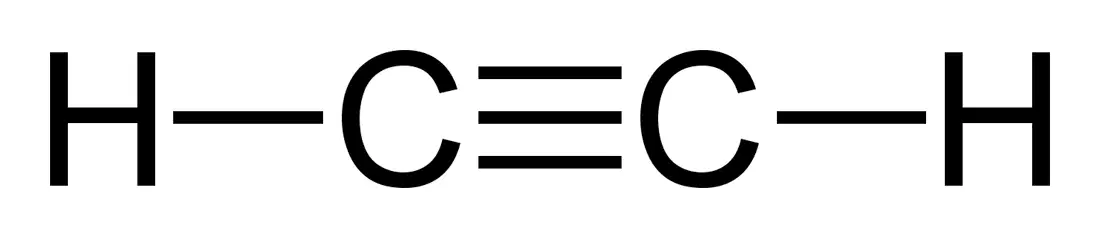
Identify the functional group shown.
Alkane
Alkene
Alkyne
Alcohol
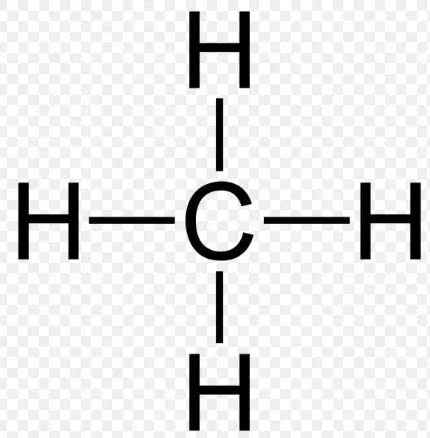
Identify the functional group shown.
Alkane
Alkene
Alkyne
Alcohol

Identify the functional group shown.
Alkane
Alkene
Alkyne
Alcohol

Identify the functional group shown.
Ketone
Ester
Aldehyde
Alcohol

Identify the functional group shown.
Ketone
Ester
Carboxylic acid
Alcohol

Identify the functional group shown.
Ketone
Ester
Carboxylic acid
Alcohol

Identify the functional group shown.
Ketone
Ester
Carboxylic acid
Aldehyde

Identify the functional group shown.
Ketone
Ester
Carboxylic acid
Aldehyde
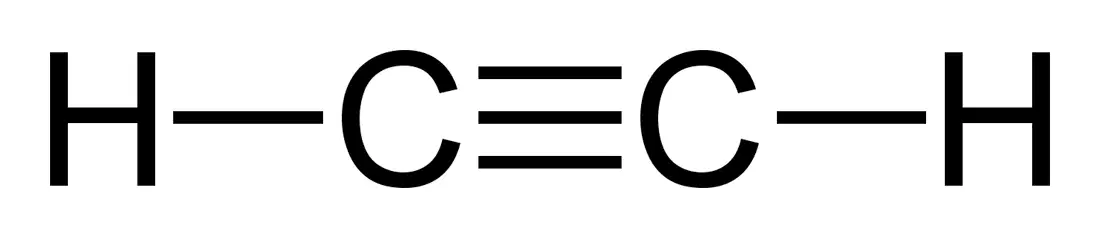
Identify the functional group shown.
(a)
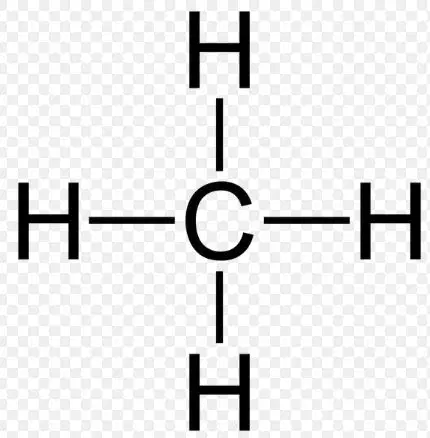
Identify the functional group shown.
(a)

Identify the functional group shown.
(a)

Identify the functional group shown.
(a)

Identify the functional group shown.
(a)

Identify the functional group shown.
(a)

Identify the functional group shown.
(a)

Identify the functional group shown.
(a)
A (a) reaction is a chemical reaction in which two molecules combine to form a larger molecule with the loss of a smaller molecule such as water.
Which of the following is the general formula for the alkanes?
CnH2n+2
CnH2n
CnH2n-2
CnHn+2
Which of the following is the general formula for the alkenes?
CnH2n+2
CnH2n
CnH2n-2
CnHn+2
Which of the following is the general formula for the alkynes?
CnH2n+2
CnH2n
CnH2n-2
CnHn+2
In an esterification reaction, the water is formed...
From the OH of the acid combining with the H of the alcohol O-H
From the H of the acid combining with the OH of the alcohol O-H
From the OH of the acid combining with the OH of the alcohol O-H
From the COOH of the acid combining with the OH of the alcohol O-H
Give the IUPAC name for the ester formed from the following carboxylic acid-alcohol combinations:
methanol and methanoic acid
Remember: ester names comprise 2 separate words.
(a)
Give the IUPAC name for the ester formed from the following carboxylic acid-alcohol combinations:
methanol and ethanoic acid
Remember: ester names comprise 2 separate words.
(a)
Give the IUPAC name for the ester formed from the following carboxylic acid-alcohol combinations:
propanol and ethanoic acid
Remember: ester names comprise 2 separate words.
(a)
Give the IUPAC name for the ester formed from the following carboxylic acid-alcohol combinations:
propanol and propanoic acid
Remember: ester names comprise 2 separate words.
(a)
Give the IUPAC name for the ester formed from the following carboxylic acid-alcohol combinations:
methanol and propanoic acid
Remember: ester names comprise 2 separate words.
(a)
Give the IUPAC name for the ester formed from the following carboxylic acid-alcohol combinations:
propanol and methanoic acid
Remember: ester names comprise 2 separate words.
(a)
Give the IUPAC name for the ester formed from the following carboxylic acid-alcohol combinations:
ethanol and ethanoic acid
Remember: ester names comprise 2 separate words.
(a)
The pi electrons in benzene are said to be (a) .
Note: one word answer
What type of orbitals contain the pi electrons in benzene?
s-orbitals
p-orbitals
d-orbitals
f-orbitals
All of the following compounds are classified as (a) compounds:
DDT, Naphthalene, Benzene, Aspirin, Ibuprofen, Salbutamol, Paracetamol, Vanillin, Toluene etc.
Note: one-word answer
In benzene, the delocalised electrons afford the benzene molecule extra (a) .
___________ __________ is a separation process used to isolate compounds at temperatures below their decomposition temperatures.
(a)
(a) liquids are liquids that do not mix with each other.
(a) are dispersions of oil droplets of one liquid in another liquid in which it is not soluble.
(a) is the main constituent of oil of cloves.
A (a) funnel is used to separate the organic layer from the aqueous (inorganic) layer in liquid-liquid (solvent) extraction.
Following solvent extraction, in organic synthesis, a compound such as magnesium sulfate is added to the organic layer. Magnesium sulfate acts as a ________ ________.
(a)
Solubility of alcohols, aldehydes, ketones and esters (in water) decreases as the length of the carbon chain...
Increases
Decreases

