
 Worksheets
Chemistry Practice Test
Total questions: 75
Worksheet time: 12hrs 2mins
This chemical formula is an example of what type of reaction?
2HNO3 + Be(OH)2 → Be(NO3)2 + 2H2O
Synthesis
Single replacement
Combustion
Decomposition
Neutrlalization
This chemical formula is an example of what type of reaction?
2KClO3 → 2KCl + 3O2
Synthesis
Single replacement
Combustion
Decomposition
Neutrlalization
This chemical formula is an example of what type of reaction?
4Fe + 3O2 → 2Fe2O3
Synthesis
Single replacement
Combustion
Decomposition
Neutrlalization
This chemical formula is an example of what type of reaction?
Cd(NO3)2 + Na2S → 2NaNO3 + CdS
Synthesis
Single replacement
Combustion
Decomposition
Double replacement
This chemical formula is an example of what type of reaction?
Sn + 2AgNO3 → Sn(NO3)2 + 2Ag
Synthesis
Single replacement
Combustion
Decomposition
Double replacement
This chemical formula is an example of what type of reaction?
2C2H6 + 7O2 → 4CO2 + 6H2O
Synthesis
Single replacement
Combustion
Decomposition
Double replacement
What type of compound is this?
C2H6
base
acid
salt
water
hydrocarbon
What type of compound is this?
LiNO3
base
acid
salt
water
hydrocarbon
What type of compound is this?
CH3COOH
base
acid
salt
water
hydrocarbon
What type of compound is this?
H2O
base
acid
salt
water
oxide
What type of compound is this?
Mg(OH)2
base
acid
salt
water
oxide
What type of compound is this?
SO2
base
acid
salt
water
oxide
A chemical reaction in which a substance is broken down into simpler substances is an example of
synthesis
decomposition
combustion
single replacement
Inexpensive iron metal can be used to obtain precious silver metal from a silver nitrate solution. Which reaction type best describes this reaction?
synthesis
decomposition
single replacement
double replacement
In the equation 2Al(s) + 3FeSO4(aq) → 3Fe(s) + Al2(SO4)3(aq) , iron has been replaced by
sulfur
sulfate
aluminum
oxygen

Which of the following statements are true for the following reaction:
H2CO3 + 2NaOH → Na2CO3 + 2H2O
I and III only
II and IV only
I, II, and III only
I, III, and IV only
Classify the following reaction: 2CH3OH + 3O2 → 2CO2 + 4H2O
synthesis
single replacement
double replacement
combustion
What type of reaction is represented by the equation C2F4 + F2 → C2F6
synthesis
double replacement
single replacement
combustion
What type of reaction is shown below, and what is the balanced equation for this reaction?
strontium phosphate + sulfurous acid → strontium sulfite + phosphoric acid
neutralization: Sr3(PO4)2 + 3H2SO4 → 3SrSO4 + 2H3PO4
neutralization: Sr3(PO4)2 + H2SO4 → SrSO4 + H3PO4
double replacement: Sr3(PO4)2 + 3H2SO3 → 3SrSO3 + 2H3PO4
double replacement: Sr3(PO4)2 + H2SO3 → SrSO3 + H3PO4
A strip of magnesium ribbon is added to a solution of hydrochloric acid to produce hydrogen gas. What is the other product that would result from this reaction?
Mg(s) + HCl(aq) → H2(g) + ?
O2
H2O
Mg
MgCl2
Aluminum foil is placed in a copper(II) bromide solution and a reaction occurs. What would you expect the products of this reaction to be?
AlBr3 and Cu
Al, Cu, and Br2
CuBr2 and Al
AlCu and Br2
Which of the following substances, when reacted, are responsible for forming Li2S and H2O?
sulfuric acid and lithium hydroxide
hydrosulfuric acid and lithium hydroxide
sulfuric acid and lithium metal
hydrosulfurous acid and lithium metal
Which of the following is NOT a property of an acetic acid solution?
conducts electricity
has a high pH
corrodes metal
has a low OH- concentration
Which of the following substances is most likely to have the lowest pH?
eggs
bleach
lemon
milk
Solution A has a pH of 9 while Solution B has a pH of 3. Which of the following statements best describes the relative concentration of hydrogen ions for the solutions?
The H+ concentration in solution B is six times higher than in solution A.
The H+ concentration in solution A is one million times higher than in solution B.
The H+ concentration in solution B is one million times higher than in solution A.
The H+ concentration in solution A is six times higher than in solution B.
Which of the following statements correctly relates pH and concentration of H+ and OH- ions in an aqueous solution?
As the concentration of H+ increases, concentration of OH- decreases, and pH decreases.
As the concentration of H+ increases, concentration of OH- increases, and pH increases.
As the concentration of H+ decreases, concentration of OH- increases, and pH decreases.
As the concentration of H+ decreases, concentration of OH- decreases, and pH decreases.
A solution is found to have an H+ ion concentration 1000 times lower than that of pure water. Which of the following conclusions would correspond to this observation?
a basic solution with a pH of 10
an acidic solution with a pH of 4
an acidic solution with a pH of 10
a basic solution with a pH of 4
What does the number 3 represent in 4NH3?
Subscript
Superscript
Coefficient
What does the number 4 represent in 4NH3?
Subscript
Superscript
Coefficient

How many Nitrogen (N) atoms are in 4NH3?
4
1
3
12

How many Hydrogen (H) atoms are in 4NH3?
4
1
3
12

How many total molecules is 4NH3?
4
1
3
12

In the equation shown, what are the reactant(s)?
N2 + H2
NH3
In the equation shown, what are the product(s)?
N2 + H2
NH3

Is this equation balanced?
Yes
No

Is this equation balanced?
Yes
No

To balance an equation you should:
ONLY change subscripts.
ONLY change coefficients.
Change BOTH subscripts and coefficients.
An atom with 1 valence electron 'needs' a full shell, so it can either gain 7 electrons or lose 1. Which is more likely to occur?
nothing
gain 7
lose 1
Valence electrons are found
in the outermost energy level (shell)
in the innermost energy level (shell)
some where in the electron cloud around the atom
What two types of atoms make a covalent bond?
2 nonmetals
2 metals
1 metal and 1 nonmetal`
How many valence electrons does Boron have?
1
2
3
4
When an atom loses an electron, it becomes a
positive ion
negative ion
Ionic bonds are between
metals and nonmetals
2 metals
2 nonmetals
Water (H2O) is an example of what?
molecular compound (covalent compound)
ionic compound
Salt (NaCl) is an example of what?
ionic compound
covalent compound
pH is the measure of the concentration of ______.
Acids
H+ ion
OH- ion
Bases
A substance that is 3 on the pH scale would be a(n):
acid
base
neutral
solute
Zn(OH)2 + HNO3 ---> H2O + Zn(NO3)2
What is a chemical reaction?
a process that transforms hazardous chemicals into less harmful substances and during which energy is absorbed
a process that rearranges atoms of one or more substances to form different substances
a process that occurs only in living organisms
a process that is usually reversible and does not create new substances
Which of the following is not an example of a chemical reaction?
baking a cake
chewing a piece of bread
melting ice into water
iron rusting
______ molecules are found in nature as pairs of two atoms of the same type covalently bonded together.
Diatomic
Monatomic
Polyatomic
Network
Bonds formed by sharing electrons between atoms are
ionic
metallic
covalent
dipole-dipole
Bonds formed by transferring electrons from one atom to another are
ionic
metallic
non polar covalent
covalent
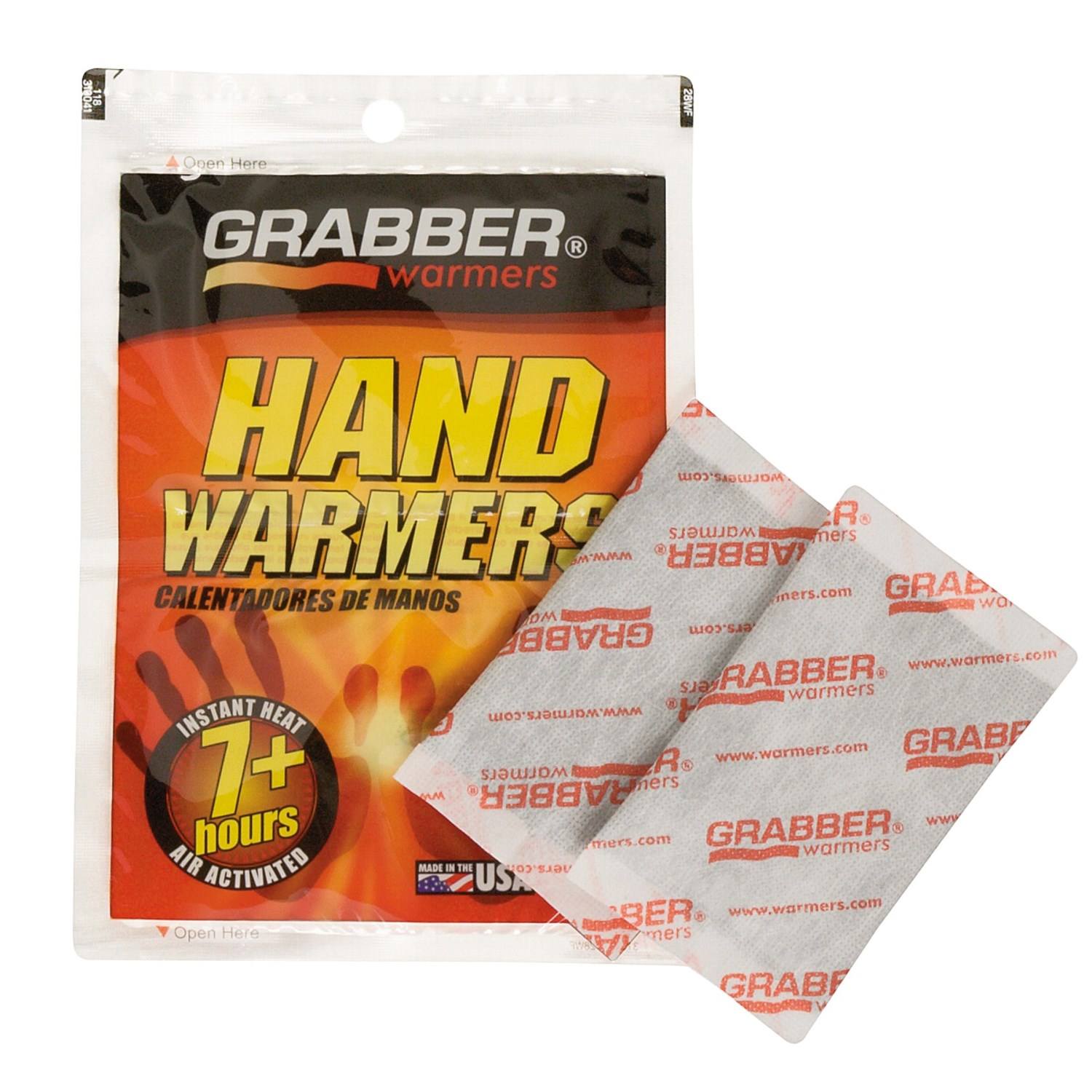

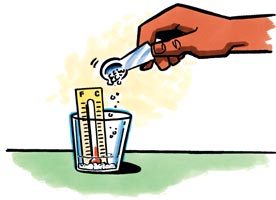
electrons have a _________ charge
positive
negative
neutral

Which of the following is true about the formation of bonds between molecules?
Energy is given off when bonds are formed between molecules.
Energy is absorbed by the molecule when bonds are formed.
Energy is neither given off nor absorbed when bonds are formed.
Energy is given off when bonds are broken.

The energy level of molecules will _________ during bond breaking and _________ during bond forming.
decrease, increase
increase, increase
increase, decrease
decrease, decrease

What is this an energy level diagram of?
Exothermic
Endothermic

What is this an energy level diagram of?
Exothermic
Endothermic

What is this an energy level diagram of?
Exothermic
Endothermic

Which element would be in group 16?
V
W
X
Y
Z

How would you classify this diagram?
Element
Compound
Mixture of Elements
Mixture of Compounds
Mixture of Elements and Compounds

How would you classify this diagram?
Element
Compound
Mixture of Elements
Mixture of Compounds
Mixture of Elements and Compounds

