
 Worksheets
Physics Spring Final Review
Total questions: 77
Worksheet time: 39mins
Potential energy is
stored energy above the ground
moving energy
the difference between stored and moving energy
the sum of all energy in the system
Where is the TOTAL energy of a roller coaster the greatest
At the top of the hill
At the bottom of the hill
In the middle of the hill
Equivalent at all points
As a roller coaster travels along a path, there is a change of energy in the system. What best describes that change?
The energy is destroyed as the roller coaster moves.
The energy is created by the roller coaster's height.
There is no change in the energy.
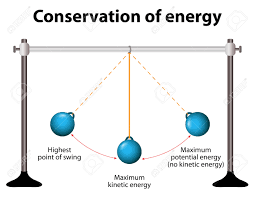
The energy transfers back and forth from potential to kinetic energy.
The mass of a roller coaster that is about to go down a 35-meter tall hill is 1500 kg. How much kinetic energy would it have at the bottom of the hill?
514500 J
918750 J
52500 J
825450 J
Lifting a 70-kilogram weight 2.0 meters above the floor increases its potential energy by about
35 J
1400 J
140 J
350 J
The amount of mechanical kinetic energy possessed by a 0.25 kg ball rolling at a speed of 2.5 meters per second is _____ Joules.
0.78
0.63
0.31
1.6
An automobile jack raises a 459 kg car 0.25 meters. The amount of work done by the jack against gravity is about _____Joules.
0.00054
1125
4500
1150
An electrical water heater raises the temperature of water by adding 8,000 joules of energy to the water in 40 seconds. The power that must be supplied to the heater is __________ watts.
0.005
200
3,200
320,000
As the speed of a rolling ball is increasing, the increasing speed is accompanied by
Increasing inertia.
Increasing momentum.
Decreasing momentum.
Both increasing inertia and momentum.
Which of the following has the greatest momentum?
A 0.52 kg soccer ball moving at a velocity of 10.0 m/s N
A 0.20 kg tennis ball moving at a velocity of 15 m/s S
A 1.2 kg basketball moving at a velocity of 7 m/s E
A 0.78 kg football moving at a velocity of 8 m/s W
A volleyball is served really fast. Another volleyball of equal mass is served really slowly. Which of the following statements is correct?
The fast-moving volleyball is harder to stop because it has more momentum.
The slow-moving volleyball is harder to stop because it has more momentum.
The fast-moving volleyball is easier to stop because it has more momentum.
The slow-moving volleyball is easier to stop because it has more momentum.
A force acting on a 4-kg object traveling at a velocity of 2 m/s causes the object to slow to a velocity of 1 m/s. What was the decrease in momentum of the object?
4 kgm/s
5 kgm/s
6 kgm/s
7 kgm/s
The impulse experienced by a body is equivalent to the body's change in
velocity.
kinetic energy.
force.
momentum.
A moderate force will break an egg. However, an egg dropped on the road usually breaks, while one dropped on the grass usually does not break because for the egg dropped on the grass,
the change in momentum is greater
the change in momentum is less
the time interval for stopping is greater
the time interval for stopping is less.
What impulse must be applied to a 25.0-kg cart to cause a velocity change of 12.0 m/s
300 Ns
0.480 Ns
2.10 Ns
13.0 Ns
A swimmer with a mass of 80 kg dives off a platform with a mass of 500 kg. If the swimmer's speed is 4 m/s immediately after leaving the platform, what is the approximate speed of the platform?
0.2 m/s
0.4 m/s
0.6 m/s
0.8 m/s
The law of conservation of momentum states that
the total initial momentum of all objects interacting with one another usually equals the total final momentum.
the total initial momentum of all objects interacting with one another does not equal the total final momentum.
the total momentum of all objects interacting with one another remains constant
the total momentum of all objects interacting with one another is zero.
Glider 1: mass= 2kg velocity=3m/s
Glider 2: mass= 2kg velocity=-6m/s
What is the total momentum of the two gliders after they collide?
12 kgm/s
6 kgm/s
-6 kgm/s
-12 kgm/s
A student on roller skates throws a basketball forward. How does the momentum of the student on skates compare tot he momentum of the basketball?
The velocity of the student is equal in magnitude but opposite in direction to the velocity of the basketball.
The velocity of the student is equal in magnitude and in the same direction to the velocity of the basketball.
The momentum of the student is equal in magnitude and in the same direction as the momentum of the basketball.
The momentum of the student is equal in magnitude but opposite in direction to the momentum of the basketball.
Which of the following colors of light has the highest energy?
blue
yellow
red
violet
Which of the following colors of light has the lowest energy?
red
green
blue
yellow
An increase in amplitude of a wave indicates-
the period of the wave increased.
the velocity of the wave increased.
the frequency of the wave increased.
the energy of the wave increased.
During an electrical storm, thunder associated with a distant lightning strike is heard:
after the lightning is seen because sound waves travel slower than light.
at the same time as the lightning because they occur at the same time.
before the lightning is seen because sound travels faster than light.
at the same time as the lightning because they travel at the same speed.
A ringing bell is located in a chamber. When the air is removed from the chamber, why can the bell be seen vibrating but not be heard?
Light waves travel slower than sound waves.
Sound waves have higher frequency than light waves.
Sound waves have greater amplitude than light waves.
Light waves can travel through a vacuum, but sound waves cannot.
Most of the objects that we see are visible to us because they ____ light
refract
diffract
absorb
reflect
Which of the following properties is the same for all electromagnetic waves in a vacuum?
frequency
wavelength
amplitude
speed
When trying to spear a fish in water, a person needs to take into account the way light bends as it moves from water into air. The bending of light as it passes from one medium into another is known as
reflection
diffraction
polarization
refraction

All of the waves below have the same velocity. Which wave has the lowest frequency?
A
B
C
D

Which diagram best represents the behavior of a ray of light in air as it enters a block of glass?
A
B
C
D

A light ray is incident on a plane mirror as shown in the diagram. What is the angle of reflection from the normal?
30°
50°
90°
40°
Visible light passes through glass. Other types of electromagnetic radiation are able to pass through other materials in a similar way. Which of the following are used in medical technology because they can pass through some parts of the human body?
microwaves
x-rays
infrared rays
ultraviolet rays
If you know the wavelength of any form of electromagnetic radiation traveling in a vacuum, you can determine its frequency because
all wavelengths travel at the same speed.
the speed of light varies for each form.
wavelength and frequency are equal.
the speed of light increases as wavelength increases.
Light travels through Lucite at a velocity of 2.00 x 10^8 m/s. What is the wavelength of a light ray with a frequency of 5.09 x 10^14 Hz as it travels through Lucite?
5.89 x 10^-7 m
3.39 x 10^14 m
3.93 x 10^-7 m
7.64 x 10^14 m
An object is placed 30.0 cm from a thin converging lens along the axis of the lens. The lens has a focal length of 10.0 cm. What is the distance from the image to the lens?
15.0 cm
-15.0 cm
60.0 cm
-60.0 cm
You are standing 1 meter from a plane mirror observing your image. How far do you appear to be from your image and what type of image is it?
1 meter, real
1 meter, virtual
2 meters, real
2 meters, virtual
Resonance occurs when one vibrating object transfers energy to a second object causing it to vibrate. The energy transfer is most efficient when, compared to the first object, the second object has the same natural
loudness
amplitude
speed
frequency
Positive electric charges
attract both positive charges and negative charges.
repel both positive charges and negative charges.
repel positive charges and attract negative charges.
attract positive charges and repel negative charges.
On a dry winter day, a student walks across a carpet. When the student touches a metal doorknob, he receives a mild shock. Which of the following describes what occurred?
The student became magnetized by walking across the carpet, and magnetically attracted the doorknob.
Charge accumulated on the student as he walked, and flowed to the doorknob when the student touched it
The student started a flow of current between the doorknob and the carpet.
The student reversed the electrical potential of the doorknob and the carpet.
In an electrical circuit, a voltage difference:
causes a short circuit.
supplies energy to make charges flow.
is the term used for rate of charge flow.
wastes energy.

What should the voltmeter read (approximately)?
1.5 volts
3.375 volts
3 volts
4.5 volts
A copper sphere, a glass sphere, a plastic sphere, and a rubber sphere are placed on individual insulating stands. A student touches each sphere with an electrically charged object. The sphere made of which material will distribute the electric charge fastest over its entire surface area?
Glass
Copper
Plastic
Rubber
The ability of an object to resist current is called:
potential difference.
electrical resistance.
electrical inertia.
alternating current.
The mathematical relationship between current, voltage, and resistance is known as ____ law.
Kirchoff's
Faraday's
Ohm's
Murphy's

In the circuit below, 3 amps of current passes through the light bulb. The resistance of the light bulb is 3 ohms:
What is the voltage of the battery?
1 volt
1 ohm
9 amps
9 volts
What is the power dissipated in a light bulb connected to a 120-volt outlet when 0.50 ampere flows through it?
0.0042 W
60.0 W
240 W
7,200 W

What is the total resistance of the circuit?
20 Ω
23 Ω
35 Ω
90 Ω
What happens to a circuit with fixed voltage if you increase the resistance of the circuit?
The current increases.
The current stays the same.
The voltage increases.
The current decreases.

Study the diagrams (all bulbs are identical)
Which of the circuit diagrams is/are a series circuit
I only
II only
III only
I and II only

Study the diagrams (all bulbs are identical)
The advantage of circuit II over circuit III is that...
in circuit II each branch has its own connection to the battery.
in circuit II if a single bulb burns out then all the remaining bulbs will lose power.
in circuit II there is only one path for the current to pass through.
in circuit II there much more resistance to slow the current.

Study the diagrams (all bulbs are identical)
The biggest disadvantage of circuit III over circuit II is that...
in circuit III each branch has its own connection to the battery.
in circuit III if a single bulb burns out then all the remaining bulbs will lose power.
in circuit III there is only one path for the current to pass through.
in circuit III there much more resistance to slow the current.

The diagram shows an electric circuit that contains an ammeter. Which of the following is most likely the reading on the ammeter?
1.0 A
1.6 A
2.6 A
2.0 A
The buildup of non-moving charge on an object is called ____ electricity.
inductive
static
contact
charged
Consider a thundercloud that has an electric charge of 40.0 C near the top of the cloud and -40.0 C near the bottom of the cloud. These charges are separated by about 2000 meters. What is the magnitude of the electric force between these two charges?
3.6 x 10⁶ N
3.6 x 10⁴ N
3.6 x 10⁵ N
3.6 x 10⁷ N
The temperature at which molecules in a substance have the lowest amount of energy possible is:
0 K
0ºC
273ºC
-300ºF
The smallest change of temperature is represented by:
one Celsius degree
one Fahrenheit degree
one Kelvin.
either one Kelvin or one Celsius degree.
The sum of all the kinetic and potential energy of the atoms or molecules measures the object's
thermal energy
specific heat
temperature
thermal conductivity
Air spaces between the feathers of a down-filled coat cause the coat to be a good thermal:
Radiator
Convector
Conductor
Insulator
A person strikes a ball with a bat. The temperature of the ball increases by 0.06°C. What accounts for the increase?
The kinetic energy of the moving bat was converted to the chemical energy of the ball.
The thermal energy of the bat was converted to potential energy in the ball.
The thermal energy of the bat was transferred to the ball.
The kinetic energy of the moving bat was used to increase the thermal energy of the ball.
A heated rock is placed in a container of water that is cooler than room temperature. Which of the following statements best describes what happens?
Cold is removed from the container of water until the rock, the container, and the water all reach the same final temperature.
The heated rock, the container, and the water all reach final temperatures that differ from each other.
Cold is removed from the container of water until the rock, the container, and the water each reach a final temperature lower than their original temperatures.
The heated rock loses heat to the container of water until the rock, the container, and the water all reach the same final temperature.

A heat sink, shown in the diagram, removes heat from a computer microprocessor while it is running. A silicone paste is sometimes used to fill in the gap between the heat sink and the microprocessor. Which of the following properties is most important for the silicone paste to have based on the heat sink’s function?
high tensile strength
high thermal conduction
high thermal insulation
high compression strength
Heat energy from the sun is transferred to Earth by:
convection
conduction
radiation
insulation
Holding your hand above the flame of a candle, you will receive the most heat by means of:
radiation
conduction
convection
insulation
Materials that absorb radiation most effectively are also the best emitters of radiation. A wood stove for providing heat in a home will be most effective if it is:
white
black
silver
red
The source of a material’s magnetism is the:
charge of its protons.
alignment of electrons in domains.
density of its nucleus.
mass of its neutrons.

Which compass in the diagram is pointing in the wrong direction?
A
B
C
D
The device that uses electromagnetic induction to produce electricity is called a
generator
motor
rotor
turbine
A generator's basic function is to convert _______ to ______.
electrical energy, mechanical energy.
alternating current, direct current.
mechanical energy, electrical energy.
high voltage, low voltage.
1. A motor’s basic function is to convert ____ to ____.
alternating current, direct current.
electrical energy, mechanical energy.
mechanical energy, electrical energy.
high voltage, low voltage.
Which of the following colors of light has the smallest wavelength?
red
green
blue
yellow
Which of the following colors of light has the longest wavelength?
violet
green
orange
yellow
Which of the following colors of light has the highest frequency?
red
green
orange
yellow
Which of the following colors of light has the lowest frequency?
red
green
orange
yellow

