
 Worksheets
Final Review Quizizz
Total questions: 45
Worksheet time: 11hrs 15mins
Which example best illustrates kinetic energy?
a light bulb that is turned on
a car that is parked on top of a hill
a comet that is flying through space
a battery that is connected to a circuit
Which example best illustrates potential energy?
a light bulb that is turned on
a car that is parked on top of a hill
a comet that is flying through space
a battery that is connected to a circuit

A skateboarder travels from location 1 to location 4 as shown below. At which location does the skateboarder have the most kinetic energy and the least potential energy?
1
2
3
4

A pendulum swings back and forth several times, as shown in the diagram. Assume friction is negligible. Which of the following graphs best illustrates the potential energy (PE) and the kinetic energy (KE) of the pendulum over a period of several swings?


While playing a game at a fair, a person lifts a mallet above her head. She then lets the mallet fall toward a target, as shown. Which of the following statements describes an energy change that takes place as the person lifts the mallet and then lets it fall toward the target?
Kinetic energy increases as the mallet reaches its highest point.
Potential energy decreases as the mallet reaches its highest point.
Kinetic energy converts to potential energy as the mallet falls toward the target.
Potential energy converts to kinetic energy as the mallet falls toward the target.

The graph shows the potential and kinetic energies of a falling rock at one point in time. Assume energy is conserved and no measurable heat is generated. Which graph best shows the potential and kinetic energies at a later time as the rock continues to fall?


The diagram represents four empty copper containers at room temperature. An equal amount of water at 90°C is added to each container. Which container will have the greatest change in temperature when the water and the container reach equilibrium?
1
2
3
4
Two identical objects, one hot and one cold, are placed near each other in a closed system. Which of the following graphs shows what happens to the temperatures of the objects over time?


A student slowly heats a solid on a hot plate. The solid has a melting point of 78°C. The student makes the graph shown from the data she records as the solid is heating. Which of the following statements best describes what happens to the molecules of solid between 5 and 10 minutes of heating?
The mass of the molecules increases.
The molecules undergo a chemical change.
The molecules absorb energy to change phase.
The average kinetic energy of the molecules increases.
A student slowly heats a solid on a hot plate. The solid has a melting point of 78°C. The student makes the graph shown from the data she records as the solid is heating. Which of the following statements best describes what happens to the molecules of solid between 0 and 5 minutes of heating?
The mass of the molecules increases.
The molecules undergo a chemical change.
The molecules absorb energy to change phase.
The average kinetic energy of the molecules increases.
Which molecules have the least average molecular kinetic energy?
air in a person's lungs
ice cubes in a glass of iced tea
raindrops in a puddle
boiling water
A brick with a temperature of 20°C is placed on top of an identical brick with a temperature of 70°C. After a while, what will the temperature of the two bricks most likely be?
10°C
20°C
45°C
70°C
When will heat stop flowing between two objects?
When one of the objects reaches it boiling point.
When one object becomes as hot as the other object is initially.
When both objects are at the same temperature.
When both objects cool down.

The graph shows how the temperature of a sample of water changes as energy is added to it. During which interval does a gas form?
Q to R
R to S
S to T
T to U
Perfume sprayed from a bottle spreads more easily in a water room of 25°C than in a cool room of 15°C. Which of the following correctly compares perfume molecules at 25°C to those at 15°C?
At 25°C, they have more mass.
At 25°C, they are moving faster.
At 25°C, they have less kinetic energy.
At 25°C, they are decreasing in volume.
Which molecules have the greatest average molecular kinetic energy?
air in a person's lungs
ice cubes in a glass of iced tea
raindrops in a puddle
boiling water
The graph shows how the temperature of a sample of water changes as energy is added to it. During which interval is it a liquid?
Q to R
R to S
S to T
S to R
Which of the following would cause the current to increase? Select all that apply.
increase voltage
decrease voltage
increase resistance
decrease resistance
add another resistor in series
The distance between two charges is represented by d. In which of the following diagrams is the attractive force between the two charges the least?


Which of the following circuits has the greatest current?


Which of the following circuit components represents an energy source?


Which of the following pairs of charges has the least repulsive force?


Which of the following pairs of charges has the greatest attractive force?
A positively charged object and a negatively charged object will
attract.
repel.
not apply an electric force.
attract then repel.
What happens to the electric force if two charges are brought closer together?
increases
decreases
remains the same
What happens to the current provided by the battery when more resistors are added in series?
the current increases
the current decrease
the current stays the same

How much current flow through the 2 Ω resistor?
4 A
6 A
3 A
24 A

The diagram shows an electrical circuit with three bulbs and three switches. The switches are labeled X, Y, and Z. When all three switches are closed, as shown, all three bulbs are lit. Which of the following statements describes what will happen if switch Z is opened?
Only bulb 1 will be lit.
Only bulb 3 will be lit.
All three bulbs will be lit.
None of the bulbs will be lit.
Electric charges can move most easily on which of the following?
metal
glass
plastic
rubber
A balloon is rubbed with a piece of cloth. As a result, the balloon has a negative charge. What has happened?
Electrons have moved from the inside to the outside of the balloon.
Positive charges have traveled from the balloon to the cloth.
Electrons have moved from the balloon to the cloth.
Electrons have traveled from the cloth to the balloon.
Why does a plastic rod have a negative charge after being rubbed with a piece of fur?
The fur gives up protons to the rod.
The rod gives up electrons to the air.
The fur gains protons from the rod.
The rod gains electrons from the fur.
What will happen when two objects with opposite electric charges are moved closer together?
The objects will attract each other with a greater force.
The objects will attract each other with a smaller force.
The objects will repel each other with a greater force.
The objects will repel each other with a smaller force.
The distance between two charges is represented by d. In which of the following diagrams is the attractive force between the two charges the greatest?
Some objects are attracted by magnets. Which object is attracted by a magnet?
an iron nail
an ice cube
a plastic knife
a wooden ruler
Precise measuring instruments require shock absorbers to eliminate small vibrations that can affect the results of an experiment. One type of shock absorber that can be used is an electromagnet that repels a magnetic platform placed above it. Which of the following setups would provide the greatest lift to the platform?


The diagram shows a bar magnet within a coil of conducting wire. The magnet is moved back and forth. The magnet never has contact with the wire. As the magnet is moved, the wire will
decrease in temperature.
become negatively charged.
demagnetize the bar magnet.
have an electric current.
Which of the following is a difference between electromagnetic waves and mechanical waves?
Electromagnetic waves transmit energy, and mechanical waves transmit information.
Electromagnetic waves are always longitudinal, and mechanical waves are always transverse.
Electromagnetic waves can travel through a vacuum, and mechanical waves require a medium.
Electromagnetic waves have only low frequencies, and mechanical waves have only high frequencies.
Which of the following statements describes what happens when a sound wave moves from air into water?
The speed of the sound wave increases.
The speed of the sound wave decreases.
The frequency of the sound wave increases.
The wavelength of the sound wave decreases.
Which of the following describes a difference between electromagnetic waves and mechanical waves?
Only mechanical waves have long wavelengths.
Only mechanical waves require a medium to travel.
Only electromagnetic waves have a range of frequencies.
Only electromagnetic waves transfer energy from one place to another.
Which of the following statements describes electromagnetic waves?
They have mass.
They are transverse waves.
They require a medium to propagate.
They travel at varying speeds through a vacuum.
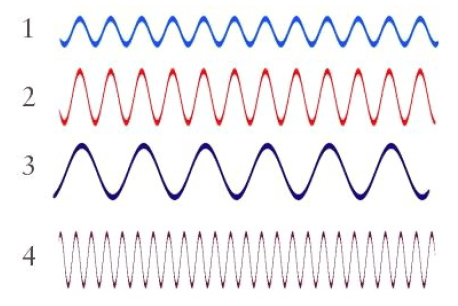
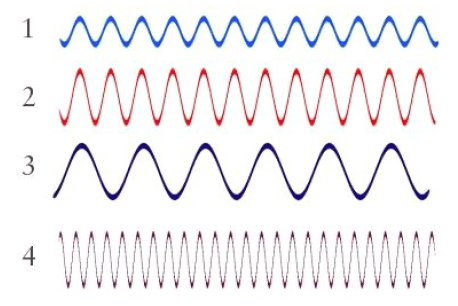
Why is light refracted as it changes medium?
The speed changes.
The amplitude changes.
The frequency changes.
The period changes.
Which of following are properties of electromagnetic waves? Select all that apply.
transverse
longitudinal
can travel through a vacuum
travel faster in solids than gases
travel faster in gases than solids
Which of following are properties of mechanical waves? Select all that apply.
transverse
longitudinal
can travel through a vacuum
travel faster in solids than gases
travel faster in gases than solids

