wayground logo

Free Printable Worksheets

NEW

Font size

S
M
L
XL
Worksheets

Unit 7 Review - Electromagnetism

Total questions: 62

Worksheet time: 1hrs 9mins

Name
Class
Date
1.

A moving charge is an electric

a)

circuit

b)

current

c)

battery

d)

resistor

2.

A device which impedes the flow of charge is called a

a)

current

b)

resistor

c)

circuit

d)

battery

3.

A system where electricity can flow is a called a

a)

circuit

b)

current

c)

battery

d)

resistor

4.

A device which turns chemical energy into electrical energy is called a

a)

resistor

b)

battery

c)

current

d)

circuit

5.

Components connected together in a linear path are in

a)

circuits

b)

currents

c)

series

d)

parallel

6.

Components connected along multiple paths are in

a)

series

b)

currents

c)

circuits

d)

parallel

7.

Measure of energy difference between two points

a)

ampere

b)

ohms

c)

voltage

d)

current

8.

Unit to measure the resistance of an electrical component

a)

Volt

b)

Current

c)

Ohm

d)

Amp

9.

A material which allows electricity pass through it

a)

insulator

b)

conductor

c)

currentor

d)

resistor

10.

The unit used to measure electric current

a)

Ampere

b)

Voltage

c)

Current

d)

Ohms

11.
A device used for lighting, usually shortened to LED is a Light Emitting
a)
Diode
b)
Diude
c)
Dyode
d)
Diohde
12.
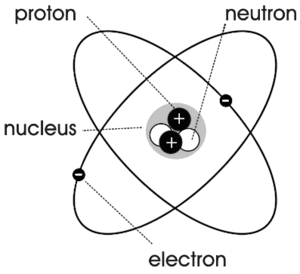
What type of particle from an atom causes a flow of electricity
a)
Neutron
b)
Nucleus
c)
Proton
d)
Electron
13.
Which way do electrons flow?
a)
From negative to positive
b)
From positive to negative
c)
from negative to negative
d)
From positive to positive
14.
When you remove a bulb from a three bulb circuit, and the other two bulbs go off, then the bulbs must have been connected in __________.
a)
parallel
b)
series
c)
open
d)
closed
15.
Which of the two circuits would have the brightest bulbs? 
a)
A
b)
B
16.

What is this?

a)

An Electric Feild

b)

An Electric Circuit

c)

A messed up spider

d)

An Electric Field

17.
____________ allows electricity to flow.
a)
A conductor
b)
An insulator
c)
A magnet
18.
____________ stops the flow of electricity.
a)
A conductor
b)
An insulator
c)
A magnet
19.
I am the crackle you hear when you touch a doorknob after rubbing your feet across a carpet.
a)
electric circuit
b)
electric discharge
c)
fuse
d)
conductor
20.
Lightning is an example of static electricity.
a)
true
b)
false
21.

Which equation defines Ohm's Law?

a)

V=IV

b)

R=VI

c)

I=V/R

d)

V=I/R

22.
The two types of current are...
a)
AC/DC
b)
Alternating Current
c)
Direct Current
d)
All of the above
23.

You can get more power by increasing...

a)

voltage

b)

amps

c)

either one or both

d)

neither

24.
An analog signal is sent in Discrete pulses in two states, on= 1 or off= 0.
a)
True
b)
False
25.

This is what analog signal looks like.

a)

True

b)

False

26.

What is a semiconductor?

a)

A non-metal with strong covalent bonds that oppose the flow of current.

b)

A person who directs the performance of an orchestra or choir.

c)

A substance with an electrical conductivity that can act as either a conductor or an insulator depending on the circumstance.

27.

Basic building blocks of all electronic circuits are

a)

Devices in which there is a flow of electrons

b)

devices in which there is no flow of electrons

c)

devices in which there is a controlled flow of electrons

d)

devices in which there is an uncontrolled flow of electrons

28.

What is the most common semiconductor material used for producing integrated circuits

a)

Quartz

b)

Silicon

c)

Diamond

d)

Tantalum

29.
True or False: All metals stick to magnets.
a)
True
b)
False
30.

Like magnetic poles push each other away

a)

true

b)

false

31.
What do magnets stick to?
a)
copper
b)
wood
c)
iron
d)
plastic
32.

What would happen if you touched a south pole end of a magnet to a north pole end of another magnet?

a)

they would be attracted to each other

b)

they would be repelled from each other

33.
The Earth acts as a large electromagnet, creating a magnetic field.
a)
True
b)
False
34.

Which direction does a compass always point?

a)

north

b)

south

c)

east

d)

west

35.

What would happen is a north pole of a magnet came close to a north pole of another magnet?

a)

they would be attracted to each other

b)

they would be repelled from each other

36.
Plastic rock behaves like ____________.
a)
A liquid
b)
A solid
c)
A gas
d)
Both a liquid and a solid
37.
The scientific name for the natural phenomenon known as the Northern Lights is...
a)
Aurora Borealis
b)
Aurora Australis 
c)
Anthophila
d)
Felis catus
38.

The area around a magnet is called the .....

a)

attraction zone

b)

work area

c)

magnetic field

d)

hot zone

39.
Auroras appear differently, depending on atmospheric element & altitude
a)
False
b)
True
40.
What happens when two north poles of a magnet are placed together?
a)
they repel
b)
they attract
c)
they cancel each other out
d)
the strength of the magnet is doubled
41.

Magnets can pull on things without touching them.

a)

True

b)

False

42.
The force of magnetism is stronger when magnets are ________________
a)
cold
b)
round
c)
closer together
d)
farther apart
43.
The dynamo theory is more scientifically valid than the rapid decay theory.
a)
True
b)
False
44.
Looking at the drawing. If you tried to move these 2 magnets closer together, what would you feel?
a)
Push Away
b)
Pull Closer together
c)
No Force
d)
Let the Force be with YOU
45.
Which is not a property of a magnet? 
a)
all magnets have two poles
b)
all magnets have a force of attraction or repulsion
c)
all magnets are surrounded by a magnetic field
d)
all magnets can be turned off
46.
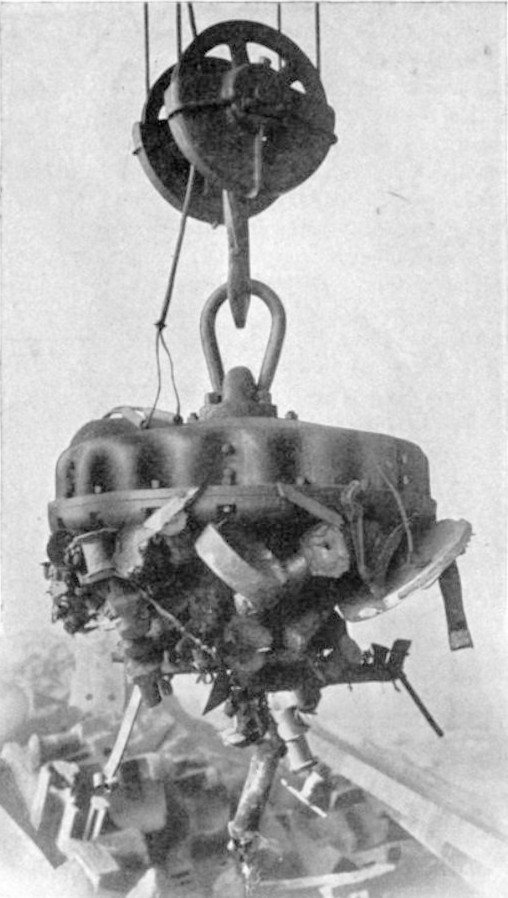
This large crane magnet functions only when the electrical current is ON.  The crane magnet is an example of what type of magnet?
a)
NIB Magnet
b)
Ceramic Magnet
c)
Electromagnet
d)
funnel magnet
47.
What subatomic particle causes magnetism in an atom? 
a)
protons
b)
neutrons
c)
electrons
d)
nucleus
48.
A material that has a strong attraction to magnets is called a _______. 
a)
Ferromagnetic Element
b)
Circuit
c)
Conductor
d)
Insulator
49.

Electromagnetism is magnetism produced by an electric current.

a)

true

b)

false

50.

A coil of wire with electric current flowing through it is called a(n) ____________.

a)

solenoid

b)

electromagnet

c)

electric motor

d)

electric generator

51.

A coil of wire with electric current flowing through it wrapped around a bar of iron or other ferromagnetic material is called a(n) ____________.

a)

solenoid

b)

electromagnet

c)

electric motor

d)

electric generator

52.

A device that uses an electromagnet to change electrical energy to kinetic energy is called a(n) ____________.

a)

solenoid

b)

electromagnet

c)

electric motor

d)

electric generator

53.

A device that changes kinetic energy to electrical energy through electromagnetic induction is called a(n) ____________.

a)

solenoid

b)

electromagnet

c)

electric motor

d)

electric generator

54.

Faraday’s law states what?

a)

An electric field produces a magnetic current, as long as the magnetic field is changing.

b)

An electric current is proportional to voltage and inversely proportional to resistance.

c)

A magnetic field produces an electric current, as long as the magnetic field is changing.

55.

What does a transformer do?

a)

It may either increase or decrease voltage.

b)

It may either increase or decrease current.

c)

It can only increase voltage.

d)

It always increases current.

56.
Which of these pairs of devices operate in reverse of each other?
a)
generator and motor
b)
generator and electromagnet
c)
motor and electromagnet
d)
electromagnet and resistor
57.
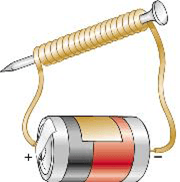
What do you make if you wrap a current-carrying wire around an iron bolt?
a)
electromagnet
b)
electric motor
c)
generator
58.
How are electromagnets different from magnets?
a)
magnets can be turned on/off
b)
you can turn an electromagnet on/off
c)
magnets are more powerful
d)
magnets have a North and South pole
59.
Which subatomic particle has a negative charge?
a)
Proton
b)
Neutron
c)
Electron
d)
Enlighton
60.
What is the device seen here?
a)
generator
b)
electric motor
c)
electromagnet
d)
magnet
61.

What would happen if you broke a bar magnet into 8 pieces?

a)

You would have 8 half magnets

b)

You would have 4 complete magnets

c)

You would have 8 complete magnets

d)

They wouldn't be magnets anymore

62.
The transformer shown is what type?
a)
step-up
b)
step-down
c)
current transformer
d)
isolation transformer